One often reads today in the MSM about how many Israelis have left Israel since Oct. 7. A recent Tel Aviv University Study reports that nearly 270,000 have left the country for at least three consecutive months since the Hamas invasion and notes that many of them are highly educated professionals. When these numbers are reported, especially by such Israel-bashing outlets such as Al Jazeera, the implication is that the war is too much for the Israeli population and that therefore the best and the brightest are leaving, with dire implications for the state as a whole.
Read more The Emperor’s New Running Shoes
Though the numbers are indeed concerning, they must be understood in context. First, the three-month time frame is rather short to be very telling, and the motivation for leaving is not clear. Some who are leaving are probably doing so because they find the war to be too stressful or they are not patriotic. Others may just be leaving on sabbaticals or exchange programs and will be returning. It must be remembered that Israelis have left even during times of peace. Between 2010 and 2019, an average of 60,000 per year have left compared to 90,000 during wartime. This is a very significant increase, but it also needs to be measured by the fact that since Oct. 7, about 60,000 people have immigrated to Israel.
It is also worth comparing these numbers to what has happened in Ukraine during its war with Russia. Ukraine has had 5.9 million refugees leave since Feb. 24, 2022, and if we compare the countries by share of population, it is 2.7 percent of Israel’s population compared to 22 percent of Ukraine’s. Of course, the impact of the war on the respective countries has been very different because the nature of the wars is very different. But one thing both countries have in common is that they are facing an existential threat from expansive and determined belligerents. The existential nature of the threat is also worth noting because, even in Israel before this war, despite the sabre-rattling and death chants constantly emanating from Iran, about half of Israeli society did not take even the nuclear threat seriously. Such is human nature when life is good. October 7 was of course a very rude wake-up call, and today most of Israeli society gets it.
All that being said, the question still remains: what is happening to the much-touted resilience of Israeli society?
IDF Col. Ronen Itzik, a medical doctor, has been tasked with answering this question. His reporting will not sit well with Israel’s foes.
[T]here is an emotional drive to enlist in these units that stems not only from patriotism but from family narratives.
Let us begin with some raw indicators. Before Oct. 7, youth motivation to join combat units stood at 23 percent; today it stands at 47 percent, almost twice as many. There has also been a notable rise from 24 percent to 33 percent among those who want to enroll in combat support. Where is the motivation to do the dangerous jobs of military service coming from?
Read more Reagan’s SDI Vision Is Today Affordable
Itzik reports, not surprisingly, that there is an emotional drive to enlist in these units that stems not only from patriotism but from family narratives. It must be remembered that with compulsory service, Israel is a nation of military families. In 2021, Itzik published an article in the Journal of Political and Military Sociology titled, “The Intergenerational Effect of Military Service in a Country with a Citizen-soldier Army.” In a survey of 1,400 respondents, it found that “service of parents positively affects the readiness of their children to volunteer.”
In America, political commentator Charles Moscowitz has argued that it was a mistake for President Nixon in 1973 to abolish the draft in favor of an all-volunteer army. (Nixon did this to fulfill a campaign promise of 1968 and notably later regretted it, saying it was the biggest policy mistake of his presidency.) In Israel, the family tradition of serving in the military is even stronger than the family tradition of doing so. Itzik notes that in this dynamic the father-effect is different from the mother-effect. There are 8,000 young women today serving in combat units. The father-effect, usually on their sons, is to become a warrior, whereas the mother-effect on daughters is to serve society. And this effect begins even before birth. In 2015, Tel Aviv University published a study titled, “From Ultrasound to the Military.” When a pregnant woman attends her first ultrasound to check the well-being of the unborn child, if it turns out that it is a boy, the first thing that the expectant mother and whoever else is present begin to talk about is which unit he will serve in the military. When you are under an existential threat their children will act as their parents did.
When speaking of this phenomenon, the elephant in the room is, of course, the exemption from military service of Haredi young men, the yeshiva boys that are spending their days studying Torah. And this is a huge issue in the upcoming election. The majority of the public wants to see this problem fixed immediately, but because of entrenchment and because of the sway of that demographic in politics, that is not going to happen. But it is still happening slowly but surely. An increasing number of these young men are volunteering; sometimes, it must be said, against the wishes of their community, and they are even serving in their own combat unit.
Once Israelis have served together in their military unit, they bond with their brothers and sisters in arms and remain in that unit also when called up for reserve duty. And I learned when visiting soldiers at a military rehab hospital during my first visit to Israel since the start of this war that they become family to one another and look out for one another for life. This bonding is probably the reason that you do not see homeless veterans in Israel — or really hardly any homeless of any kind — nor do you hear of many veteran suicides.
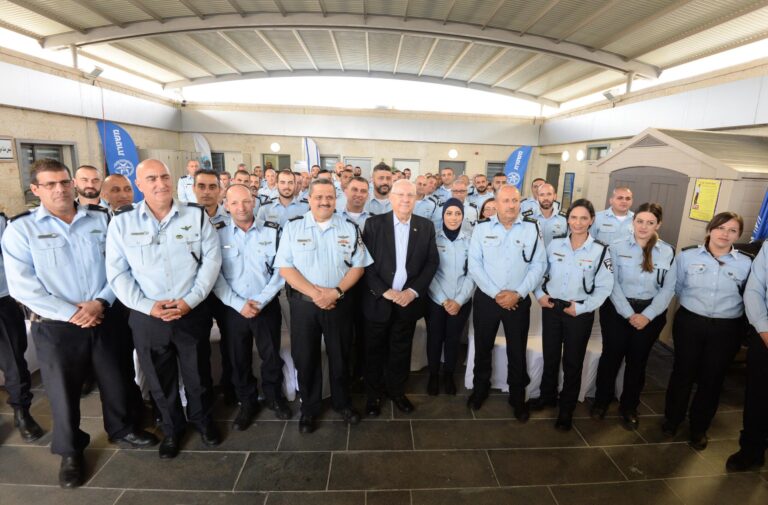
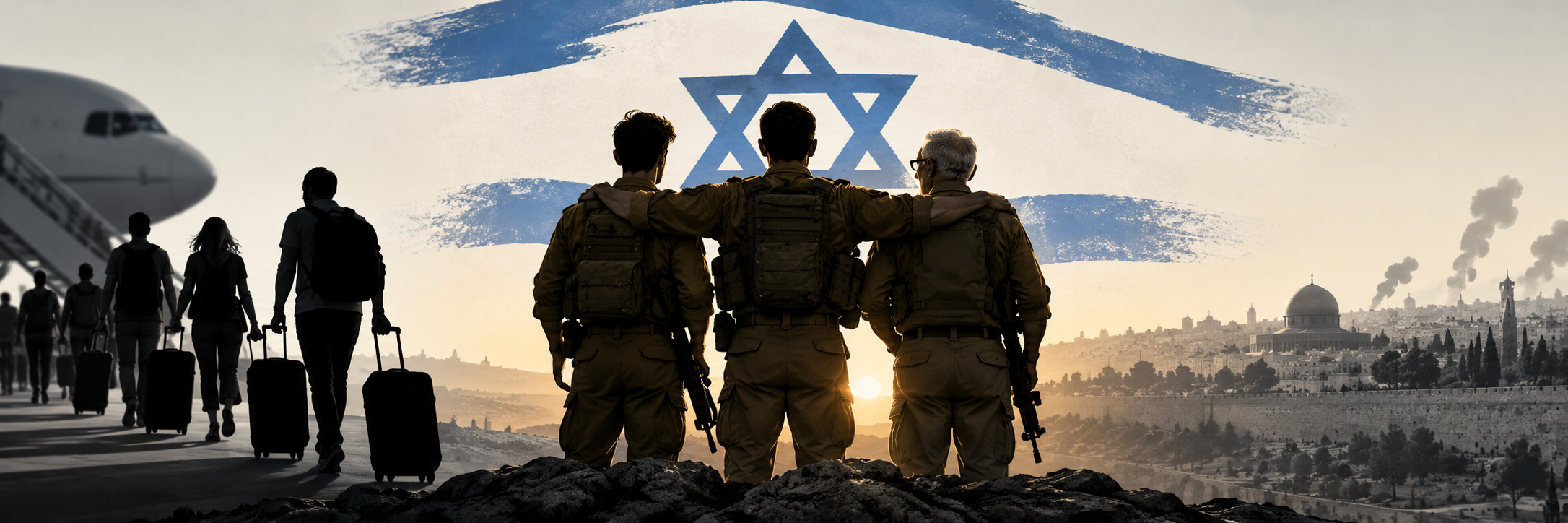
Because of the intergenerational effect of service, what you do find in Israel today is something that America has not known since World War II: three generations of soldiers, grandfather, father, and son, in uniform all at once. This is the nature of Israeli resilience. One cannot say what will be the long-term effect of those who have left, how many will remain abroad, and how many will eventually return. Some of them are undoubtedly draft-dodgers and will probably never return. If they have left for the West, it is likely that they will end up in some hotbed of antisemitism and may find it more unpleasant than what they have left behind. Only time will tell the long-term effect of this wave of departures. But whatever it may be, one would be foolish to doubt on the basis of it will be fatal to the Jewish state, which has one of the strongest economies in the world, or that Israeli society as a whole has lost its resilience. The facts suggest otherwise: that resilience remains very strong.
Read more Catholic Charities and the $62 Million Gospel of Somali Resettlement
What does not break you makes you stronger.
READ MORE from Max Dublin:
Alberta’s Revolt
The Inimitable Mr. Carney
After Iran, the Masks Come Off
About the Author