For reasons obvious to most readers of this column, I’m currently doing lots of podcast and radio interviews about Cuba. It’s been a timely subject for most of this year, though right at the moment there isn’t a lot happening which would augur a major transformation of that “imprisoned island,” as President Kennedy called it.
Read more Freedom’s Forge for the 21st Century: America’s Maritime Revival
It’s timely, because everybody understands that the status quo in Cuba can’t endure for much longer. The current regime in Cuba is running out of time.
No country which can only supply a few hours a day of electricity to its people can survive for long. No country where the average worker pulls down $16 per month can survive for long. No country where sewerage systems and trash pickup have collapsed can survive for long. (RELATED: Cuba Is Next)
[I]t’s been estimated that it will cost some $90 billion to stand Cuba back up as a functional country.
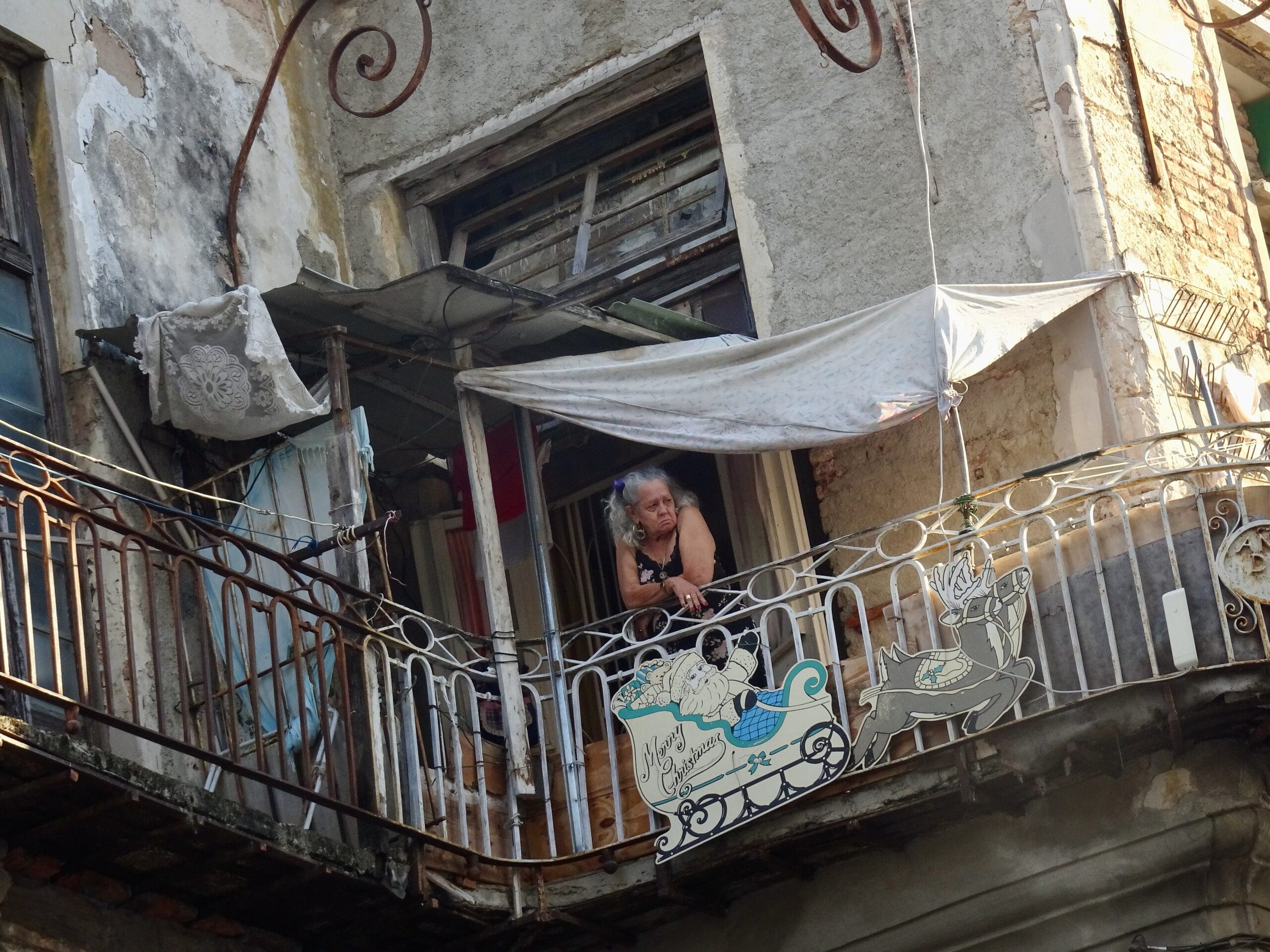
Cuba is in a state of slow-motion collapse. Its population has decreased from 11 million to less than 9 1/2 million in the space of five years as the young, mostly 20-somethings and 30-somethings, are departing for the chance of a better life elsewhere. With those people, who would be most likely to actively topple the current regime, leaving the country, it’s actually somewhat stabilizing for the government. Demographically, Cuba is now one of the oldest, if not the oldest, countries in the Western Hemisphere. Septuagenarians are unlikely to take up pitchforks and torches against soldiers with rifles, though they might take to banging pots and pans in frustration against bare sustenance and candle-lit houses.
Search the blogosphere for stories of daily life in Cuba, and you’ll find discussions of which books must be kept and which can be burned for kindling on charcoal stoves. You’ll find stories of dauntless entrepreneurs scratching out an existence as private trash haulers now that the government has largely given up on providing basic municipal services. Interestingly enough, American manufacturers of solar panels are beginning to find Cuba a growing market as those Cubans who do have the means are buying American-made systems to light and cool their houses; the state exclusively buys Chinese solar equipment as it seeks to supplement its moribund electric grid. (RELATED: DSA’s ‘Solidarity’ With Cuba Looks a Lot Like Solidarity With Castro)
And the country’s airports have mostly shut down. One by one, the airlines have stopped flights into Cuba, because there is no jet fuel available for return flights. (RELATED: The Castroist Playbook Comes to America)
Why has this lasted as long as it has, you may ask? One would think that when the Berlin Wall fell, and the Soviet Union disintegrated, Cuba should have turned over.
And it probably would have, but for the fact that from 1993-2001 Bill Clinton was president. And Clinton had no interest in taking on a Cuban transition as an American crusade outside of signing the Helms-Burton Act, which established current law on the embargo and expropriation debt. After Clinton, George W. Bush was more interested in the fool’s errand of attempting to make Afghanistan and Iraq into European-style pluralistic democracies than curing the cancer 90 miles from our shores.
And Barack Obama was sympathetic to Cuban communism, if not openly complicit in importing it here.
Opportunities were missed to transition Cuba away from communism. Because of that inaction, two awful things happened.
The first was that Cuban communism was perhaps even more aggressive in infecting foreign hosts around the Western Hemisphere post-Cold War than it had been during the Soviet era. In the 1990s, a time the Cuban regime refers to as “the special period,” they were without a patron or savior, but the Castros dug their way out of it by engineering what amounted to a communist revolution in Venezuela, at the time the richest country in Latin America. And while things never really got better for the people of Cuba, the regime was able to drain Venezuela like a vampire at her neck. (RELATED: The Panama Canal, Venezuela, Greenland: Is Cuba Next?)
But now Venezuelan communism is dead, or at best maintained in a zombie state while under the management of the Trump State Department, and the reckoning is here.
And that brings us to the second awful thing, which is that the world has passed Cuba by in brutal ways.
It isn’t just that the young people are gone. It’s that hope is gone, and the people of Cuba have become a nation of beggars.
Read more The Anti-Trump Russia Hoax
Watch video blogs of travelers to Cuba, and they will ubiquitously tell stories of being constantly accosted by grifters, scam artists, panhandlers, and thieves. Cubans with relatives in free countries have become notorious for begging them for hard currency simply to live; there are no jobs for them and what jobs there are pay next to nothing; the state shops carry little in the way of merchandise even when they do have money to spend. And the non-state shops, where they exist, charge real prices which are exorbitant for a population as poor as this one is.
And floating atop that ocean of misery is a corporation of armed oppressors.
Here I’m speaking of GAESA — Grupo de Administración Empresarial S.A. — which is owned by the Cuban military. GAESA owns the ports, the hotels, the gas stations, and most of the other large commercial entities in Cuba. GAESA controls about 40 percent of the Cuban economy, which ranges from $5-20 billion on the low end to $100-125 billion on the high end, depending on the exchange rate one applies to the Cuban peso. The higher number represents the official exchange rate of 24 Cuban pesos to the dollar; nobody believes that number; real market estimates are as ugly as 700 pesos to the dollar, and inflation is at disastrous levels. At that rate, the debt the Castros saddled their country with through stealing and wasting the property of others is likely greater than the size of the country’s economy.
Having the military control your economy is generally a sub-optimal model for economic growth, and it’s certainly been problematic for Cuba. The regime invested big in a tourist industry, and that has mostly collapsed; the European hotel industry, which built a number of five-star resorts in Cuba, has mostly pulled out because — surprise! — an impoverished communist country tends to be a terrible tourist destination unfit to compete with non-communist locales throughout the Caribbean. Tourism in Cuba simply followed other major industries — coffee, rum, cigars — in going by the boards.
Cuba remains an opportunity, and one which could be fantastically lucrative for investors whose interests can be defended against the criminal predations of the current regime or potential retrograde successors. But there is a chasm between where it is and where it could be, and that more than anything else explains why there is no discernible movement toward a Cuba Libre just now.
U.S. law dictates that the American trade embargo with the Republic of Cuba as currently constituted can’t be fully lifted until the country’s expropriation debt is settled. That debt, based on certified claims alone — there are some 6,000 of those, which are thought to be simply a drop in the bucket of the whole number — is some $9 billion counting accrued interest. It’s impossible for the regime to pay that off; for a successor regime to do so will likely involve liquidating GAESA and some of the other state-run enterprises the current regime has looted and ransacked.
But even if that could be done, the military — the guys with the guns in Cuba — will want their piece of the sale.
This and other thorny problems are why it’s been estimated that it will cost some $90 billion to stand Cuba back up as a functional country.
If you’ve read my latest novel The Necessary Men, which we serialized here at The American Spectator this summer but is available at Amazon (and also at MikeHolman.com; in fact, at the site you can order a signed copy), you’ll know that I resolved these issues in a way that novelists can. I have a character, Pierce Polk, who is a combination of Elon Musk/John McAfee/Erik Prince with the wherewithal to take on world-changing projects out of his own pocket, and he fronts the cash for the transition. That’s convenient, because it allows for a central clearinghouse of expropriation debt and an incubator of a private-sector economy.
The real world is far more complicated.
It isn’t implausible that some private-sector entity could stand up and embark on a mission to save Cuba. In fact, Cuban salvation at the local level — a humanitarian pilot project, or a series of them, which morphs into a series of burgeoning free and capitalist localities in a sea of communist misery — is the model discussed in The Necessary Men. And as the regime continues to molder, that’s likely the only way through Cuba’s current mess.
Because the alternatives — there are two which are most likely if an American/Western capital takeover can’t be had — are not good ones.
One, which is less and less likely as time goes along, is that Cuba ultimately becomes a Chinese colony. But given developments in Latin American elections of late and the effects thereof, Chinese influence in the Western Hemisphere, at least south of Canada, is waning. And China is not flush with capital at the moment. (RELATED: The Spy Island Next Door)
The other, and this is the truly dangerous one, is that Cuba becomes a narco-state. And a Cuba which is fully engaged in narco-trafficking as Colombia and Venezuela became until recently could be a very real, very serious problem.
That second possibility would be what makes necessary men out of the U.S. Marines.
It’s unlikely we will see developments toward a replacement of the Cuban regime before the midterms. But when those are over, don’t sleep on Cuba. It will come to a head, and soon.
Read more Campaign Door Knockers
READ MORE from Scott McKay:
About the Author