More than 200 years ago, the last king of France was murdered. At the age of only 38, King Louis XVI languished in prison while the legislative leaders of the French revolution deliberated over his fate. The overwhelming majority had voted — nearly unanimously — to convict the king of treason but the vote to immediately execute Louis was far narrower. In the end, the National Assembly agreed to execute Louis by a margin of one vote: Philippe Égalité, formerly the Duke of Orléans and Louis’s cousin, cast the deciding vote to kill the king. Égalité himself would later be guillotined upon the same scaffold.
Read more In Vino Veritas — and Civilization
Before his death, Louis, a faithful Catholic, told his friend and lawyer Guillaume-Chrétien de Lamoignon de Malesherbes that they would meet again in Heaven. The last king of France mounted the scaffold at the Place de la Révolution on January 21, 1793, and was beheaded.
The episode is a reminder of the truth which G.K. Chesterton put so eloquently: “Christianity has died many times and risen again; for it had a God who knew the way out of the grave.”
Over the course of the bloody French Revolution, countless Catholics would be slaughtered. Bishops, priests, religious brothers and sisters, seminarians — none were spared the brutality of the guillotine. The Revolution ushered in an era of rampant secularism, in which atheism reigned supreme and the Catholic Faith became a laughable superstition, a cult of treason against the cruel ideals of the Revolution, to be suppressed as swiftly — and sometimes just as violently — as Louis’s own life.
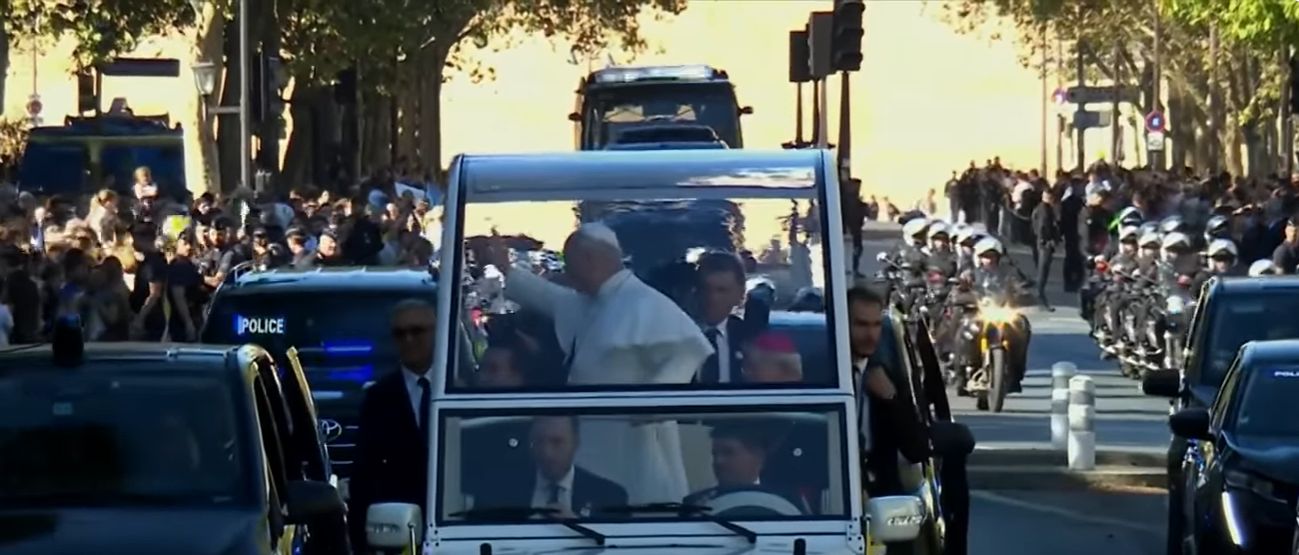
More than 233 years after the last king of France was sent to meet his Maker, Pope Leo XIV visited France. Once hailed as the eldest daughter of the Church, France has become a cesspool of secularism and, alongside Britain and Germany, one of the poster children for the Islamization of Europe. It was perhaps shocking to some, then, to see the streets of Paris flooded with Catholics, gathered en masse to greet the Holy Father.
When Pope Leo celebrated Mass on Saturday, an estimated 700,000 attended. How fitting that the Mass was celebrated at the very place where Louis was slain 233 years ago: the Place de la Révolution. What had surely seemed to the bloodthirsty Revolutionaries to be a grand coup, the death of both the monarchy and the monarch, has turned into a rout. Nearly one million Catholics, that contemptible sect that the Revolutionaries had so desperately tried to stamp out, gathered in the very place of the Revolution’s triumph to celebrate another King who was executed.
French historian Jules Milechet wrote that the execution of Louis was the first step in normalizing violence as an acceptable and effective political tool. “If we accept the proposition that one person can be sacrificed for the happiness of the many, it will soon be demonstrated that two or three or more could also be sacrificed for the happiness of the many,” he observed of the decision to kill the king. “Little by little, we will find reasons for sacrificing the many for the happiness of the many, and we will think it was a bargain.”
Read more Blessed Fulton Sheen: A Saint for America
Much the same reasoning was applied when the Jewish leaders of the first century decided to hand Christ over to the Romans to be crucified: The high priest Caiaphas told his fellow Pharisees, “You know nothing. Neither do you consider that it is expedient for you that one man should die for the people, and that the whole nation perish not” (John 11:50).
And Christ did die, hanging upon the cross. His Apostles fled in terror and lived in hiding. It must have seemed to them that their world was over — their King was dead. Like the French Revolutionaries and their Place de la Révolution, the Jewish leaders no doubt saw the tomb of Christ as their great triumph, a physical edifice to their success. It was not to be. That same tomb, about 2,000 years later, is a Catholic church, a holy site for the followers of the King Who rose from the dead.
Just so, the French Revolutionaries thought that the Place de la Révolution would live forever as a testament to their new order, a memorial to the failure of the Catholic Faith which their monarch had so loved. Like the Pharisees, they have been disappointed.
The episode is a reminder of the truth which G.K. Chesterton put so eloquently: “Christianity has died many times and risen again; for it had a God who knew the way out of the grave.”
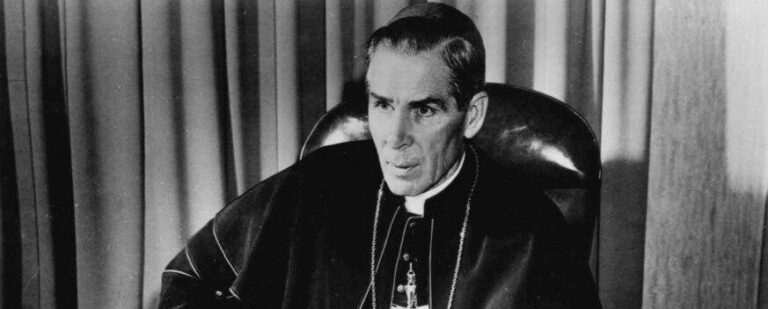
Whether the Jewish leaders of the first century or the French Revolutionaries of the 19th century, whether the atheistic forces of communism or the fanatical hordes of Islamic insurgents, there is no force on earth which will ever destroy the Catholic Church. Some 700,000 French Catholics gathered Saturday at the very place where the last Catholic king of France had been executed and they participated in the Holy Sacrifice of the Mass, where, as Blessed Fulton J. Sheen explained, the very veil of time is torn in two and we are present at the foot of the cross.
The Catholic Church will never die, for she has a King who knows His way out of the grave.
Read more Bibi’s Churchillian Speech at the UN
READ MORE from S.A. McCarthy:
Blessed Fulton Sheen: A Saint for America
Fulton Sheen and the Saints Who Still Walk Among Us
Charlie Kirk and the 9/11 Heroes Show that Life Is Worth Living Well
About the Author