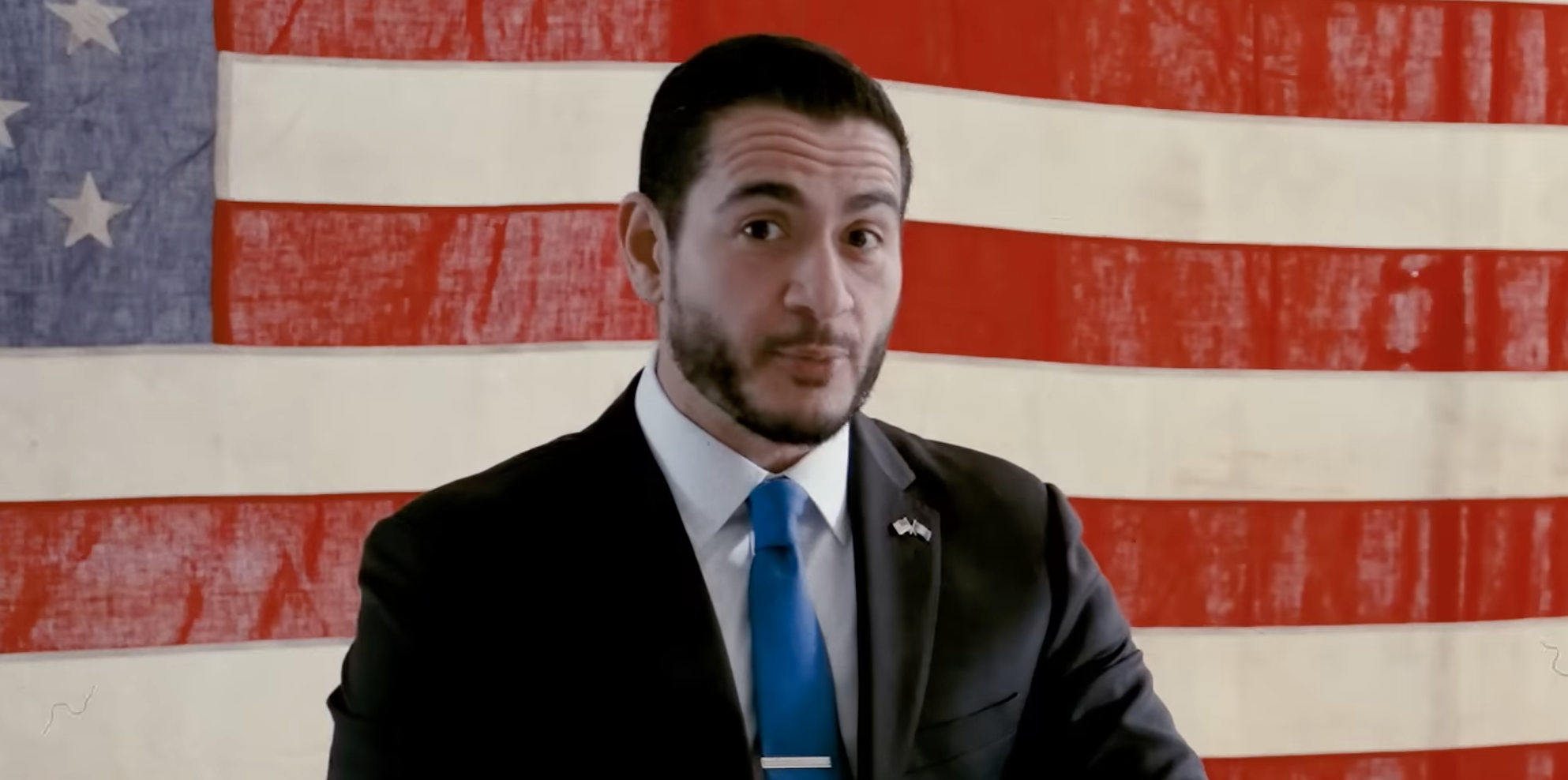
In 2013, Abdul El-Sayed was a young man with a fiery pen and a conviction that the recently reelected President Barack Obama was “not the right choice” for the country. “He just wasn’t the wrong one.”
Read more The Spectacle Ep. 477: DataRepublican Exposes Who Really Runs America
The problem? Young El-Sayed didn’t think Obama was progressive enough. “Take healthcare, his prized accomplishment, for example: it’s a watered-down reform that kowtows to the interests of healthcare lobbies before it provides meaningful, secure access to healthcare for our society’s most desperate,” he wrote at the Huffington Post.
To his credit, Obama, apparently, didn’t hold a 13-year grudge. Although he didn’t endorse El-Sayed in the primary, he has deigned to appear on the campaign trail next week to try to convince Michiganders to vote for his former detractor. Judging by Obama’s comments thus far, his pitch will be that El-Sayed is a true-blue Democrat cut from the old cloth rather than a champion of Woke 2.0.
In fact, when Politico asked Obama about his decision to endorse El-Sayed in the general Michigan Senate race, the former president pushed back on the claim that the Muslim doctor is radical at all: “I don’t know, he’s for a higher minimum wage and health care for all, and it doesn’t seem crazy to me. You know, FDR was for that too.”
There’s a lot of political craftiness in that sentence. Obviously, Obama is comparing El-Sayed to a generally well-regarded Democratic president and conveniently ignoring El-Sayed’s support for such policies as putting boys in girls’ locker rooms, defunding the police, and freeing Palestine. Simultaneously, he’s also harping on issues voters care about a great deal. Health care, especially, is a big issue — bigger, perhaps, than we’d like to admit.
According to recent numbers from KFF Polling, more than half the country says it is “very concerned” or “somewhat concerned” about its health care costs (insurance, prescription drugs, out-of-pocket costs, etc). Meanwhile, just under half of Republicans, Democrats, and Independents told the Commonwealth Fund that premiums were their top concern when it came to health care.
Unfortunately, those premiums are top of mind for most people right now. In just the past year, 59 percent of Americans saw premium costs rise, and 41 percent of Americans saw them rise by more than 10 percent.
So when El-Sayed and his strategists started looking around for a central plank for his senatorial campaign, Medicare for All (a plan Bernie Sanders hatched a long time ago and that currently has the support of 14 sitting senators) seemed like a good thing to focus on.
The problem is that Medicare for All is not universally popular. And El-Sayed knows it.
Read more What Ends the World Will Take Your Breath Away!
The Commonwealth Fund found that just a bare majority of Americans think the federal government should step in and fix the health care system. That’s a majority, yes, but a politician also has to contend with everyone else.
Perhaps those statistics (or statistics like them) were going through El-Sayed’s brain when he stood up on the NBC debate stage a few days ago and told voters that they could keep their private insurance under Medicare for All if they so desired. The trouble is, the actual bill itself doesn’t allow for that, and as Deroy Murdock pointed out at this outlet just a few days ago, his assurances to the contrary directly contradict earlier statements he’s made.
In fact, those 49 percent of Americans who are skeptical of the federal government’s ability to fix the health care problem are right to be so wary. The plan is prohibitively expensive. Because Sanders has been on the warpath for universal health care for quite a long time, plenty of experts have already crunched the numbers.
Back in 2019, the Heritage Foundation concluded that the government would have to impose serious tax hikes on the average American to fund Medicare for All. So much so that households that currently rely on employer-sponsored health insurance (most of them) would see a net $13,909 less in disposable income adjusted to reflect current dollar valuations (or $10,554 in 2019’s figures). That means less money for things like dinners out, concert tickets, or Christmas gifts — all the stuff that keeps the economy doing its thing.
More recently, the American Action Forum calculated the cost of a similar Medicare for All program proposed by Kamala Harris and found that it will cost the U.S. taxpayer $2.5 trillion in 2027 and up to $5.9 trillion in 2036. The two plans function on much the same premise: namely, that the government should offer health insurance to anyone who wants it.
To be fair to El-Sayed, he does sort of have a plan to make the whole thing less onerous for most of us: “Tax. Billionaire. Wealth.” But, as Byron York recently wrote at the Washington Examiner, you simply couldn’t tax the billionaires enough to pay for the system, so that solution is hardly feasible.
A KFF poll released earlier this month found that voters generally favor universal healthcare promises — until they hear about its downsides. They’d oppose it even more if they had to live those downsides.
H. L. Mencken once observed, “Democracy is the theory that the common people know what they want, and deserve to get it good and hard.” At this point, all we can do is hope that the allure of “free” health care doesn’t blind Michiganders to reality as they head to the ballot box.
About the Author