“It takes a village,” I was assured even before my daughter was born.
A village to provide for a child. A village to help with the child. A village to educate the child. A village to instill morals into the child. For a phrase popularized by Hillary Clinton, nominally hailing from some remote place in the massive continent of Africa (no one is quite sure where), “it takes a village” certainly gets a lot of traction. At this point, saying the words feels akin to invoking some great and intractable rule of the universe.
Read more Data Centers: Where Modern Life Lives
It wasn’t just the mom-themed social media posts my algorithm magically figured I needed to see — it was my mom, my sisters, the lovely women who came to my baby shower, and even the grandmas in the grocery-store checkout line.
Presumably, most of us say “village” and mean something along the lines of “a community — friends or family — I’ve chosen and would trust with my life.” Statistically speaking, that kind of community is more dream than reality for most young families today. So, because nature abhors a vacuum, something must step into that community’s place.
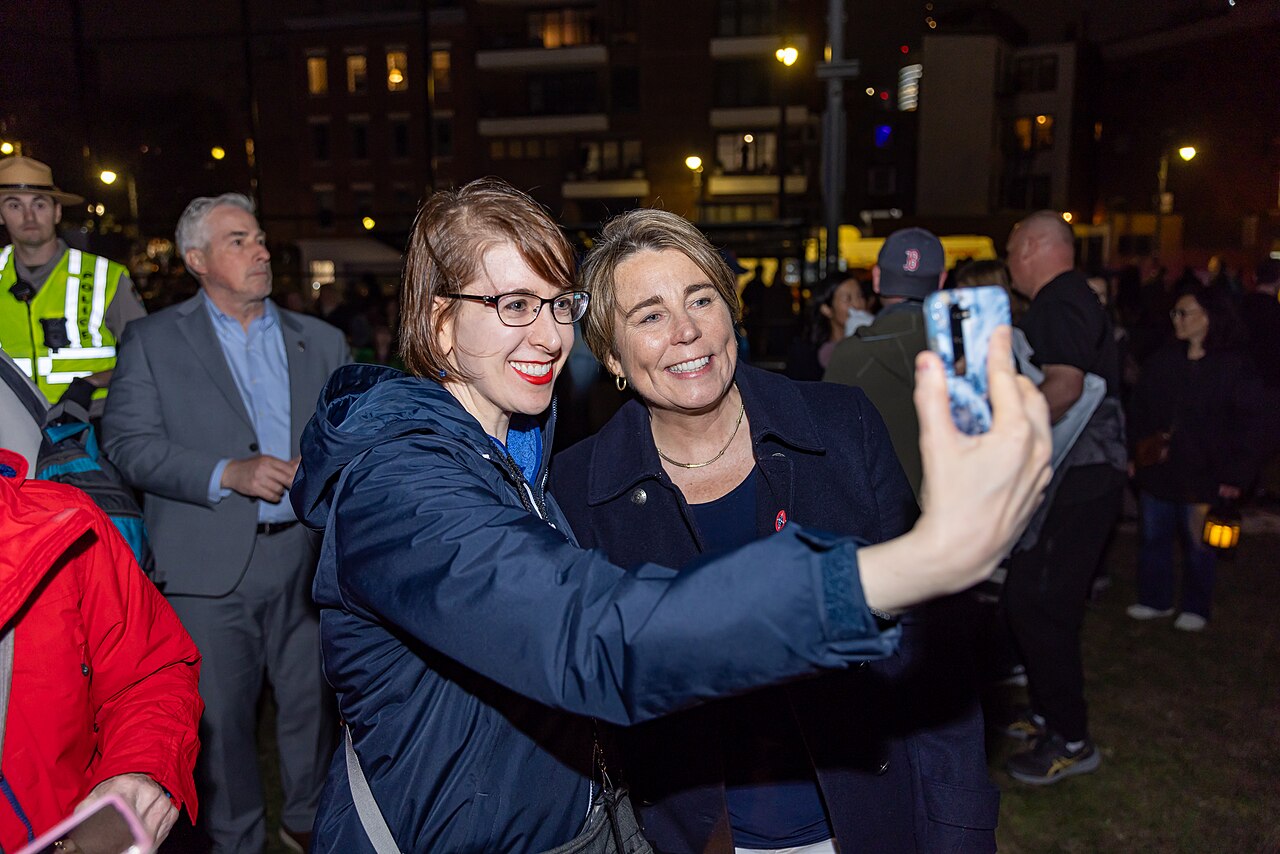
Enter Gov. Maura Healey of Massachusetts.
Last week, the governor’s office published a proposal to allocate an additional $2 million to an existing program that sends nurses to mothers’ homes during their postpartum period with the aim of making that program universally available.
Any time the government shows up to our door and offers to help, we should be suspicious.
The program wouldn’t be mandatory, by any means. Anyone who opted in would have a nurse stop by their home to answer questions about basic childcare, screen for postpartum depression and anxiety, and evaluate the home for risk factors like substance and physical abuse. The proposal also suggests allocating an additional $250,000 toward a program dedicated to addressing maternal mental health.
All of this, of course, comes in the wake of the Lindsay Clancy trial.
Whether Lindsay Clancy was suffering from postpartum psychosis when she killed her three children or not, the whole incident has led to a veritable storm of internet folk pontificating on the subject of postpartum mental health in the public sphere. Suddenly, we’ve decided postpartum anxiety, depression, and psychosis are national problems amounting to an epidemic caused by our society’s systemic failure to support mothers (a devastating side-effect of the patriarchy, the pink-clad hordes will tell you). (RELATED: Lindsay Clancy, Motherhood, and a Culture That Has Forgotten Sacrifice)
Surely, the only remedy is yet another government program; specifically, a program that has the government inviting itself into your living room.
It’s not that maternal postpartum depression isn’t an issue. Many mothers will tell you that those initial happy days after the birth of their bundle of joy were filled with inexplicable tears and the distinct feeling that the whole world was caving in on them — such is the effect of rapidly adjusting hormones. A much smaller number of mothers will tell you that those depressive feelings are severe and sometimes turn chronic. Undoubtedly, this condition is made much more difficult by the lack of a strong community — the much-desired village.
We live in a democratic republic with, in our modern age, an undue emphasis on the “democratic” element. Unfortunately, the result is that we sometimes believe that, because our elected officials were elected by the demos, any activity they undertake is the perfect expression of the will of the people. This, for many people, extends to social programs in the abstract (our opinion of a social worker who shows up unannounced at our front door is typically less than positive). After all, if the community is failing to take care of its own, it seems only right that The People would step in and offer help. How is this not akin to the wondrous “village” described by Clinton and every social media mom-influencer since?
The problem is that the government is simply no replacement for a village. It is, after all, a fundamentally different thing. Its job is to enact laws, enforce them, and keep its citizens safe, not to sit next to vulnerable mothers on the couch and listen to their woes. It’s hardly the right entity to hear a list of complaints ranging from “my baby hasn’t slept for more than 30 minutes at a time in two months,” to “it drives me nuts when my husband picks his nose, he won’t pick up his socks, and how dare he leave the house for 15 minutes while I’m trapped here!” (RELATED: The Spectator P.M. Ep. 236: The Overfunded and Understaffed NHS Is Neglecting Babies)
The very nature of government demands that it walk into a situation, identify a problem, and apply a solution via a slew of protocols and red tape. More likely than not, the government would feel the urge to drug the baby, chop off the husband’s fingers, take away his socks, and quite probably deprive him of his freedom.
Any time the government shows up to our door and offers to help, we should be suspicious. Especially when it comes masquerading as our community.
Read more Mr. President, Please Don’t Make the Diesel Price Problem Worse
READ MORE from Aubrey Harris:
First Toddler Euthanized in the Netherlands
St. Paul’s Cathedral and Fabric Bring Nightclub Culture to the Nave
Like It Or Not, Data Centers Are Part of the Midterms Now
About the Author