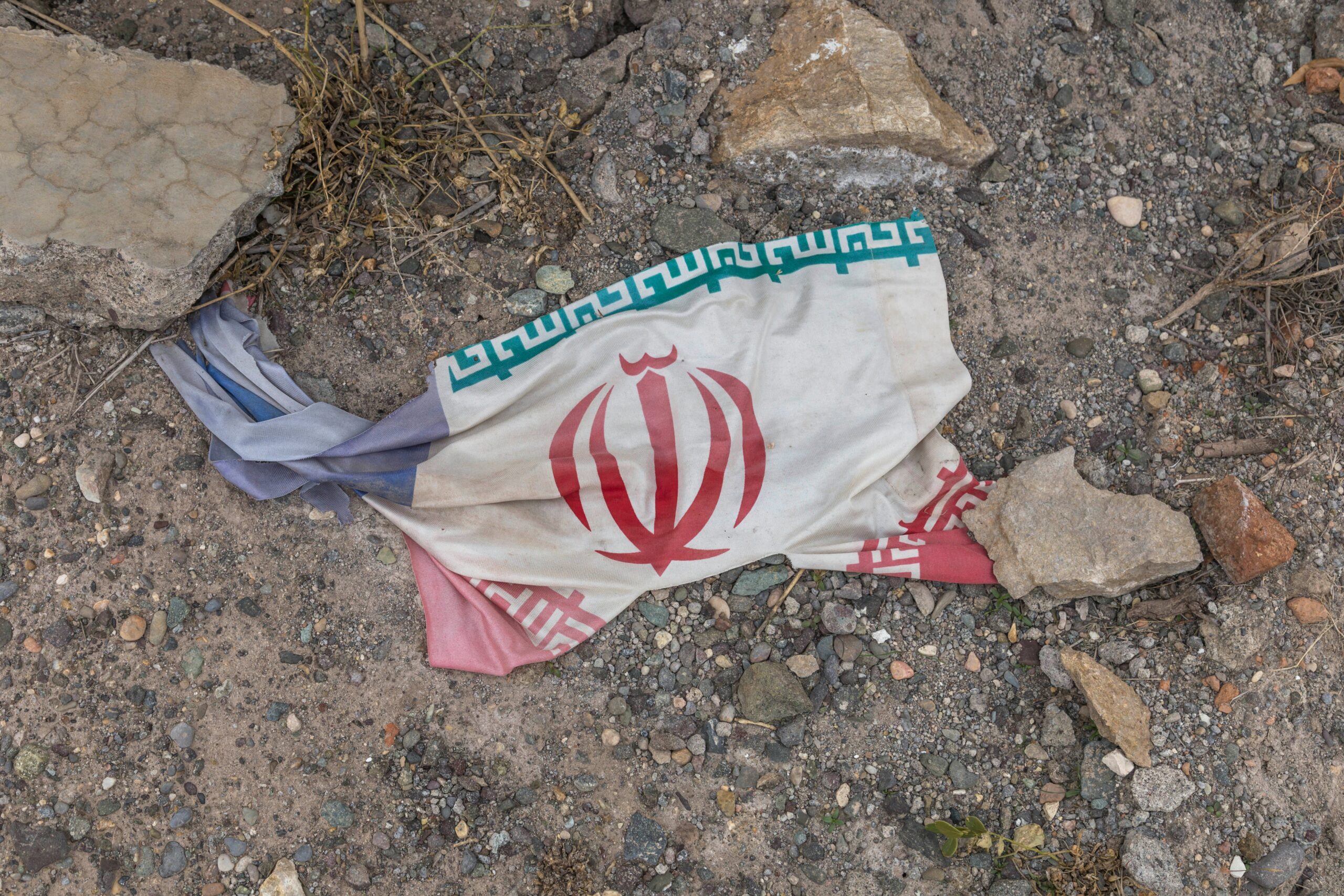
At this point in the Iran conflict, it seems nothing dramatic will transpire before the November midterm elections. While President Trump is well known for unpredictability, a major bombardment would shock the world’s energy system and further raise the price of gasoline and diesel, hurting consumers, farmers, and various sectors. It would also further deplete U.S. stocks of munitions such as offensive cruise missiles and the Patriot and THAAD systems needed to defend U.S. assets and Gulf allies against Iran’s retaliation. Iran’s hopeful calculation is a Democratic sweep of Congress eventually resulting in a better deal for itself, recognition by the U.S. that it must withdraw its vulnerable bases from the Gulf, and a ruined Trump presidency.
Read more Domains and Dossiers Are the New Weapons of Cancelation
While battlefield metrics and decapitation of its government’s leadership have been impressive, Iran is driven by vindictiveness and is cognizant that the U.S. has not achieved strategic objectives: complete destruction of nuclear infrastructure, seizure of fissile material, total degradation of Iran’s armed forces and military-industrial complex, and regime change. Escalation by Iran is certainly their option, and with the recent withdrawal of the U.S. military from Shiite Iraq, Iran may be tempted to widen the conflict through its militias there, creating yet another front.
Regardless of a Democratic sweep of at least the House of Representatives in November, and even a future Democratic administration in 2029, it is difficult to imagine a Biden-style full-scale, abrupt retreat from the Gulf, where nearly one-third of the world’s oil is produced. While Europe imported only 6 percent of its oil from the Middle East in 2025, it is nonetheless vulnerable to oil prices, as is India, which imported 3 million barrels per day from the Middle East in September. However, neither Europe nor India have the will or the military resources to secure the Strait of Hormuz and Red Sea, and only the U.S. can assure the world’s energy security.
While the Pentagon is now evaluating the need to rebuild or reposition its bases in the Middle East, until there is regime change causing Iran’s abandonment of nuclear aspirations and an end to attacks on and harassment of tankers in the Gulf, the U.S will still need the means to strike Iranian targets.
Regime change requires patience and a popular revolt because of a devastated economy. Vital for success are security forces that refuse orders to suppress a rebellion. The question is whether President Masoud Pezeshkian, Foreign Affairs Minister Abbas Araghchi, and Parliament Speaker Mohammad Ghalibaf can prevail upon the Islamic Revolutionary Guard Corps (IRGC) to cut a deal. All three served in the IRGC and may be considered, in the Iranian spectrum, as pragmatists. Indeed, there is pressure: Indications are that the blockade by the U.S. Navy is increasingly effective at strangling the Iranian economy. Inflation in August was running at almost 85 percent, and the Iranian rial, at nearly 2.7 million per U.S. dollar, has hit an historic low.
Without a deal among the civilian leadership and IRGC, it is important to consider the following with regard to regime change. First, confronting a possible Iranian uprising is the ideological and formidable IRGC, which has at least 190,000 troops. Yet the Iranian populace is unarmed. Whether the conventional army known as the Artesh, which has 350,000 personnel, could be induced to move against the IRGC is a vital question. The Artesh is known to resent the privileged IRGC, which is said to have better equipment, funding, and positioning — and it is known to enrich itself with extensive commercial and financial holdings.
Read more Eva Marie Saint, RIP
Second, not only must there be a successor head of state with broad appeal to install, but a new and loyal cabinet must be established, with operational depth and civil servants to run government-owned enterprises and apparatus. To be avoided is a dismissal similar to that of the estimated 400,000 government and security personnel who were let go in 2003 after the fall of Baghdad, which created chaos and gave rise to ISIS. The new leadership should be secular and be perceived as “home grown” — not imposed by the West.
Third, there will need to be seizure of Iranian mainstream and social media to mobilize the population and disseminate information that supports the narrative of regime change, a future of opportunity, and integration of Iran into the world economy through sanctions relief, trade and investment, and release of frozen financial assets. The current regime is skilled at blocking the internet, social media, and telecommunications platforms when it wants to.
Fourth, timely recognition of the new Iranian government will be necessary by the U.S., Europe, Japan, Turkey, and Gulf countries, plus Egypt, Pakistan, India, Brazil, and South Africa as leaders of the Global South. Such widespread recognition could leave Iran’s two major allies, China and Russia, on the sidelines, defining a new order in the Middle East. Massive aid commitments for reconstruction and economic integration will be necessary — $300 billion was the figure in the Memorandum of Understanding from the U.S. alone, signed in June.
For maximum psychological effect, the U.S. should lead the West in supporting Iran’s civil society. If there is a deal, we should also facilitate Iran’s access to media, encourage the release of political prisoners, and link some sanctions relief to economic reforms such as privatizing IRGC assets and selling dollars to stabilize the rial.
The U.S. needs stamina — to prepare for the long haul of regime change.
Frank Schell is a former senior vice president of the First National Bank of Chicago and later was a management consultant. He was a lecturer at the Harris School of Public Policy, University of Chicago on South Asia public policy and is a contributor of opinion pieces to various journals. He has travelled extensively throughout Iran.
About the Author