“Israel will exist and will continue to exist until Islam will obliterate it, just as it obliterated others before it.”
Read more Israelis Stopped a Terrorist Hijacking. Why Did the Media Call It an ‘Altercation’?
“It is the nature of Islam to dominate, not to be dominated, to impose its law on all nations and to extend its power to the entire planet.”
— Hassan al-Banna, founder of the Muslim Brotherhood
Western strategy in the Middle East has long suffered from a fatal conceptual flaw: treating Islamic fundamentalist movements as isolated, strictly sectarian entities. If the United States is to liberate Iran from the brutal oppression of the Islamic Revolutionary Guard Corps (IRGC), eliminate the existential threat to Israel, and structurally reduce terrorism across the region, it cannot afford to view the IRGC as “the enemy” — however much the U.S.-Israeli attack on Iran has cast it into the limelight. Instead, American foreign policy must simultaneously target the Muslim Brotherhood, recognizing that the IRGC and the Brotherhood are a long-standing symbiotic, cross-sectarian alliance.
Policymakers frequently seem to be lulled by the traditional Sunni-Shia divide, but the two organizations have spent decades cultivating partnership rooted in a shared ideology (fundamentalist Islam), mutual geopolitical ambitions (obliterating Israel), and a joint commitment to eradicating Western influence from the Levant. To dismantle the operational infrastructure of regional terror, the United States must target the ideological and logistical network of the Muslim Brotherhood alongside the military apparatus of the IRGC.
This historic cooperation highlights a dynamic that Western strategists consistently miscalculate: the unifying power of shared fundamentalist objectives that override ancient sectarian divides.
And yet, the United States, unlike Egypt, the birthplace of the Brotherhood, has not seen fit to declare it a terrorist organization
To grasp how these two entities converge, first look at the foundations of the Muslim Brotherhood. Founded in Egypt in 1928 by Hassan al-Banna, an admirer of the methods of both Hitler and Stalin, the Muslim Brotherhood emerged as a pan-Islamic religious and political organization intended to counter Western influence and restore the Islamic Caliphate. Al-Banna envisioned Islam not merely as a personal faith, but as a totalizing socio-political system governing every aspect of state and private life.
Following al-Banna’s era, the movement’s chief ideologue, Sayyid Qutb, radicalized the Brotherhood’s theology. Qutb introduced the concepts of jahiliyyah (the state of modern ignorance resulting from non-Islamic rule) and aggressive “jihad” against secular regimes and foreign powers. The Brotherhood’s stated goals centered on the gradual social and political Islamization of the state, which eventuated in violent operational “franchises” across the Middle East.
The single best analysis of the origin, mission and strategy, and current menu of Brotherhood holy war is The Secret Apparatus: The Muslim Brotherhood’s Industry of Death by Cynthia Farahat. She traces how, from the outset, the Brotherhood has built its public presence, the General Apparatus, for propaganda and politics, education and recruitment, fundraising, and elaborate cover for the “Secret Apparatus” with its agenda of violent jihad, political assassination, terrorist exploits, and the birthing of offshoots such as al-Qaeda, Hamas, the Taliban, and ISIS. There has been persistent speculation that the head of the Secret Apparatus is Turkish premier Recip Tayyip Erdogen under which Istanbul has become a crossroads and refuge of Islamist terrorists. The Middle East Forum reports that Hamas was very well-received in Turkey and Erdogen strongly backed the Brotherhood’s Mohamed Morsi as President of Egypt.)
Thus, the Muslim Brotherhood’s “secret” operations, begun in Egypt, included assassination of two prime ministers, in 1945 and 1948, and assassination in 1981 of President Anwar Sadat. An attempt at Gamal Abdel Nasser in 1954 narrowly missed. (Egypt, cradle of the Brotherhood, is one of the countries that has identified and labeled it as a terrorist organization — a step the United States has been unwilling to take.) Most prominent and destructive of the subversive enterprises of the Muslim Brotherhood was the chartering of Hamas in 1987 as the Palestinian branch of the Brotherhood — an entity explicitly dedicated to the total destruction of Israel through unyielding holy war.
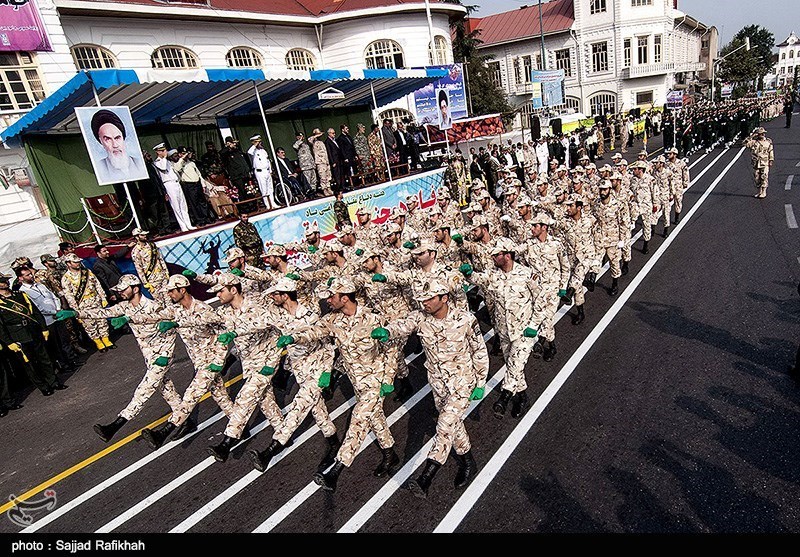
Fifty years after the Brotherhood’s inception, the 1979 Islamic Revolution in Iran spawned its Shia mirror image: the Islamic Revolutionary Guard Corps (IRGC). Established by Ayatollah Ruhollah Khomeini (who had met with Brotherhood leaders as early as 1938), the IRGC represents not a traditional defense force, but an elite ideological vanguard explicitly tasked with protecting the nascent theocracy internally and exporting the Islamic Revolution abroad.
Ideologically, Khomeini’s concept of Velayat-e Faqih (Guardianship of the Islamic Jurist) mandated that absolute political and spiritual authority rests with a supreme clerical figure. To advance its regional ambitions, the IRGC created the Quds Force, its overseas special forces, which weaponized non-state actors across the Middle East. Through the Quds Force, the IRGC fostered a network of lethal proxies, fueling international terrorism by funneling hundreds of millions of dollars, precision weaponry, and advanced tactical training to anti-Western militias.
In a recent Wall Street Journal article, Geoge J.Terwilliger III writes: “the terror challenges the U.S. and the civilized world face in Iran are far more difficult and no less urgent than those presented by al Qaeda after 9/11. After years of past administrations dodging the core issues … [President Trump] isn’t faced with a terrorist group merely finding haven in Iran, but rather a civilized nation subjugated to the will of fanatics led by the IRGC.” The fanatics single-minded fixation on obtaining nuclear weapons to use against Israel, is an aspiration shared by the Muslim Brotherhood.
Fundamentalist ‘Jihad’ Trumps Sectarian Differences
Despite historic and continuing theological fractures between Sunni and Shia Islam, the record demonstrates that the Brotherhood was pivotal in the intellectual creation and eventual advancement of revolutionary Iran and the IRGC. Long before 1979, Sayyid Qutb’s literature was translated into Farsi (Iranian) by figures like Navvab Safavi, the founder of the militant Shia group Fada’iyan-e Islam, and a young cleric named Ayatollah Ruhollah Khomeini who became the first Supreme Leader of Iran in 1979. Khomeini’s personal affinity for Qutb’s works laid an ideological bridge between the two movements. When Khomeini achieved power, the Muslim Brotherhood sent an official delegation to Tehran to congratulate the new regime, viewing the revolution as proof that a modern fundamentalist Islamic state could successfully overthrow a Western-backed monarchy.
Read more Chandler Simpson’s One-Man Rebellion Against Baseball Analytics
Brotherhood operatives like Ebrahim Yazdi, who served as Khomeini’s foreign minister, actively bridged the gap between transnational Sunni activists and the nascent Shia regime. During the devastating Iran-Iraq War, while most of the Sunni Arab world backed Baghdad, the Muslim Brotherhood actively assisted the Iranian regime in evading international sanctions, helping to secure critical imports of steel, grain, and military components.
This historic cooperation highlights a dynamic that Western strategists consistently miscalculate: the unifying power of shared fundamentalist objectives that override ancient sectarian divides. The Shia IRGC and the Sunni Brotherhood are entirely unified by four primary goals: the institutionalization of fundamentalist governance, the interpretation of “jihad” as a legitimate political tool, the total elimination of the State of Israel, and the absolute expulsion of American military and political power from the Middle East. In the crucible of geopolitical maneuvering, they view Western secular democracy and regional monarchy as common existential enemies.
This shared vision is sustained by the foremost figures within each organization. On the Iranian side, Supreme Leader Ali Khamenei (1989-2026) provides the overarching ideological validation, while commanders like the late Quds Force leader Qasem Soleimani constructed the operational networks that linked Shia assets with Sunni fundamentalists.
On the Brotherhood’s side, financiers and external leaders such as Youssef Nada, Ibrahim Munir, and Khairat el-Shater have historically managed the movement’s massive financial, political, and charity networks. And have regularly interacted with Iranian intelligence to find common operational ground, ensuring that even when official state relations between Egypt or the Gulf states and Iran fluctuated, the underground, transnational network remained perfectly intact.
A Bifurcated Strategy
None of this is unknown, of course, to intelligence services and foreign policy experts in the United States and Israel. An article in the Middle East Forum in 2019 reported: “Leaked Iranian intelligence documents revealed that the Muslim Brotherhood and Islamic Revolutionary Guard Corps of Iran sought to work together. Like an iron fist in a velvet glove, the IRGC would be the muscle and the Brotherhood could give it cover in the 85 countries it works in, members of the organizations discussed. They convened in Turkey in 2014 to discuss how they might work together and who to fight against. First target: Saudi Arabia. Other common enemies: Israel and the United States.”
Counterterrorism measures by America and its allies today — including all-out-war with Iran, sporadic clashes with the Houthis, and an uneasy truce with Hamas — are hampered by strategic confusion sewn by the IRGC-Brotherhood alliance. The United States has historically relied on a bifurcated strategy: sanctioning and confronting the IRGC as a state-sponsored military threat, while treating the Muslim Brotherhood as an opposition political or social movement. This approach fails because the Brotherhood serves as the indispensable “velvet glove” that conceals and facilitates the “iron fist” of the IRGC. Operating illegally or quasi-legally through charities, political parties, and civic organizations across some 85 countries, the Brotherhood provides a vast, resilient logistical cover for Islamist fundamentalism to which the heavily sanctioned IRGC cannot even aspire.
According to a report in 2025 by the , the anti-Israel protest movement that engulfed Western universities in 2024 was driven and funded by networks connected to Hamas and the Muslim Brotherhood. The research highlights the organizing groups and multi-billion-dollar foreign funding streams that have worked to normalize Islamist fundamentalist rhetoric within Western educational institutions.
When the United States attempts to choke off financial pipelines of the IRGC and its proxies, it frequently misses the decentralized, sophisticated banking networks managed by Brotherhood-linked financiers. Leaked intelligence documents reveal that high-ranking Quds Force officials and Brotherhood leaders have held secret summits to deliberately coordinate anti-Western initiatives, allocate revenue from shared oil-smuggling networks, and divide responsibilities in regional conflicts like the Yemeni civil war.
For instance, during the presidency of Mohammed Morsi in Egypt, the Brotherhood’s national “home,” Qasem Soleimani met secretly with the Brotherhood’s deputy leader, Khairat el-Shater, to discuss creating an Egyptian equivalent of the IRGC to protect the fundamentalist regime from the country’s secular military and police forces. In other words, the Brotherhood does not tolerate the IRGC; it idealizes and actively seeks to replicate its model of asymmetric warfare and deep-state control.
It is a symbiosis that complicates the defense of Israel.
Hamas, fundamentally a Sunni Muslim Brotherhood offshoot, receives its primary military funding, rocket technology, and intelligence support directly from the Shia IRGC. Western intelligence agencies often struggle to counter this because they treat such threats as localized insurgencies rather than a single, unified fundamentalist front. The Brotherhood employs its vast propaganda and political warfare machinery worldwide to legitimize and shield these militant operations under the guise of political resistance or human rights advocacy, effectively hamstringing Western diplomatic maneuvers and public relations efforts. While the United States exerts massive energy trying to isolate the IRGC, the Brotherhood acts as a regional equalizer, continually regenerating the political oxygen and financial capital necessary to keep the IRGC’s proxy networks alive.
Any foreign policy that focuses chiefly on the IRGC, Hamas, or the Houthis, while temporizing with the Muslim Brotherhood (including its extensive presence and influence in U.S. education, propaganda, and politics) risks treating the symptoms of a disease while ignoring the underlying contagion. The IRGC provides the heavy weaponry, state backing, and tactical training, but the Muslim Brotherhood provides the foundational ideology, the transnational network, and the global financial infrastructure that shields these operations from Western pressure.
If America seeks to dismantle state-sponsored terror, protect its regional democratic allies like Israel, and liberate the Iranian people from a brutal, tyrannical clerical regime that rules by violence and the threat of violence, its strategy must be holistic and unyielding against both pillars of modern Islamic fundamentalism. Only by cutting off the Muslim Brotherhood’s global operational capabilities can the United States permanently cripple the IRGC, thereby establishing a foundation for lasting stability and freedom in the Middle East.
Read more China’s Panda Diplomacy Can’t Hide a New Cold War
READ MORE from Walter Donway:
The New AI Job-Displacement Target: Surgeons?
Socializing and Longevity: Does Online Count?
Would the Whiff of AI Have Panicked Harold Ross?
About the Author