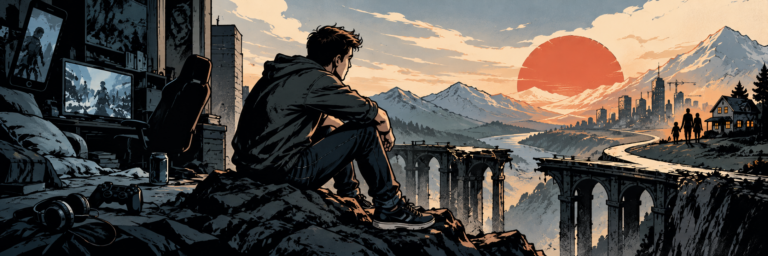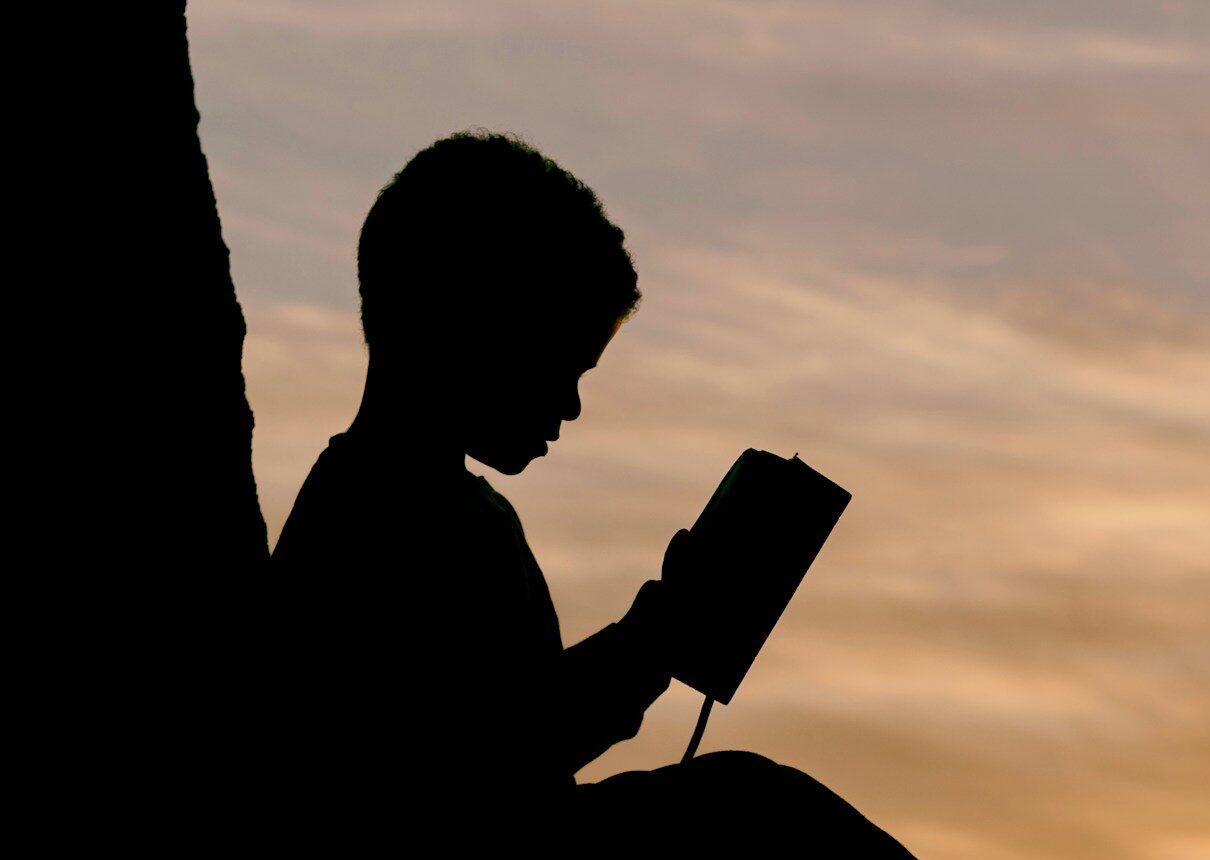
The crisis of manliness comes with many names. Just this past week my American Spectator colleagues have approached it from several angles. R.B.A. Di Muccio’s most recent essay aptly characterizes it as “Male Demoralization.” Scott McKay sees the unrelenting attack on traditional masculinity as a toxic pill. And this is just two articles from a single day’s edition of the magazine. This has been a recurring theme over the last several years and for good reason.
Read more How to Actually Save Local Newspapers
Di Muccio captures this very well, contending that “by pathologizing natural masculine traits while simultaneously closing the institutional pathways that allow them to be expressed constructively, we have left our sons stranded. We have denied them a true battle to fight, a real adventure to live, and a noble covenant to defend.” Just so, and one might add, with McKay, that we’ve utterly corrupted the proper relationship between men and women.
Di Muccio and McKay, from different perspectives, have diagnosed the problem well; I can only encourage any readers concerned about our cultural decline to read their articles. My purpose today is different, more limited in scope, but vital if we mean to chart a course to recovery. We need to give young men — and, yes, young women as well — stories worth reading, stories that speak to the kind of values formation our young people so desperately need in these troubled times.
By all accounts, we still do a passable job of teaching first and second grade reading skills. It all falls apart, however, as students move beyond the basics. Somewhere, usually around the third or fourth grades, reading either plateaus or pancakes. By the time students reach middle school, they’re often stuck years behind their age and grade level — and this is where they remain.
There are all sorts of theories that attempt to account for this, and I suspect that there are many Ed.D dissertations devoted to solving this problem, to little positive purpose. For every fad there is a season, and never more so than when it comes to promoting reading among young people. When it comes to the reading conundrum, there are no end of rabbit holes, most of which seem determined to ignore past wisdom.
I suggest that the best answer is also one of the simplest, namely, that much of what passes these days for children’s and young adult literature is mind-bendingly dull. This is particularly a problem for boys, whose predilections are particularly ill-served by the current crop of children’s literature, which has been emasculated just as surely as if it stepped upon the literary equivalent of the World War II “Bouncing Betty” land mine.
Learning to read, and, particularly, learning to read well, is largely a matter of wanting to do so. Getting started in reading is surely about patient teachers and parents who care — neither of which is assured anymore — but fostering the transition into self-sustaining interest is the true challenge, and that requires something that’s become increasingly difficult to accomplish.
I offer my own childhood experiences as illustrative. My parents never had much time for reading books, although they did read the newspaper regularly, along with the popular magazines of the day. Our household favorites, Life and Look, told their stories in pictures. For a while they subscribed to The Saturday Evening Post, but that ended early on in my childhood. We did get the Reader’s Digest and U.S. News and World Report, but I never saw my parents reading either of these consistently.
But books? I honestly don’t recall either of my parents sitting down to read a book for pleasure. The same was true of my grandparents. And we simply didn’t have many books around the house. The only work of adult fiction I recall was a copy of George Orwell’s 1984 that belonged to my maternal grandfather. My mother had a few girlhood holdovers. Something called Marjorie’s Busy Days comes to mind, and perhaps there were others. There were Bibles, of course, and church books of one sort or another, but very few.
Nor did our schools offer much more by way of compensation. I wasn’t one of those unusually gifted children, the ones who start reading at three years old. Our semi-rural school system lacked kindergarten classes, so our first formal instruction only came with Dick and Jane in the first grade, and the slightly more advanced Alice and Jerry in the second. Phonics came along, tediously, in second grade, but I don’t recall that it had much impact. Basic skills then, but nothing remarkable, nothing to make today’s educational theorists sit up and take notice.
And yet, I became a capable and enthusiastic reader at a very early age, and this I attribute almost wholly to my parents’ involvement. In one of my first essays here at The American Spectator, I described how, roughly age six, I persuaded my father to read to me from the World War II combat history of his infantry division. Instead of literary pablum, I was served a full portion of heroism and achievement.
Moreover, he was a patient reader, tracing each word with his fingertip as I looked over his shoulder, helping me to eventually absorb sentences and paragraphs that far surpassed “See Spot. See spot run.” And in a short time I wanted more. We had no bookstore in our little town, but one of the drugstores featured shelves of magazines and one of those revolving wire racks for paperback books. One day I saw a paperback whose cover showed a picture of a burning German tank surrounded by advancing British soldiers — I already had an eye for these things from the stacks of old Life magazines at my grandparents’ house. I persuaded my dad to let me use my comic book money to buy it, and, albeit somewhat dubiously, he consented.
Read more The Spectacle Ep. 472: The Age of Miracles: Elon Musk’s Starship Was Made to Fly
I still have this book, now much battered after nearly 70 years. It is Gordon Landsborough’s Tobruk Commando, the story of a failed attempt to destroy Rommel’s main logistical hub on the eve of the battle of El Alamein. The publication date suggests that I must have been 8 years old when I bought it. Was it over my head? Most assuredly. But it was also fascinating, a “Boys Own” adventure, even though it had been written for adults.
I’d been building toward this for a long time, not only through my father’s efforts, but also via the aforementioned “comic” books. For in addition to the usual fare, the Disney comics and the like, I’d also discovered something called “Classics Illustrated,” a series of over 100 abbreviated graphic renditions of some of the world’s great adventure stories. The vocabulary made few concessions to children, but the pictures carried the story so that one soon flew past any barriers to understanding.
So, by the time I read Tobruk Commando, I’d already encountered, via “Classics Illustrated” comic books, The Three Musketeers, The Count of Monte Cristo, Ivanhoe, and The Last of the Mohicans. Other discoveries followed, notably G. A. Henty, whose “books for boys” opened my eyes to all manner of historical events, inevitably told from the viewpoint of a young teen age adventurer, swept up in world-shaping battles alongside such notables as King Gustavus Adolphus of Sweden.
By this time, I was ready for more, and the publishing industry of that era was very much attuned to my desires. The Landmark series of histories, written for young readers by some very competent historians, whetted further my taste for history, as did the corresponding We Were There series of novels, whose formula placed a teenage boy and girl squarely in the midst of dramatic events. I treasured my copy of We Were There at the Battle of the Bulge because it resonated with stories my dad had told, but also because it was a rollicking good story.
From there it was but a short hop to John Toland’s masterpiece, Battle: The Story of the Bulge, or Cornelius Ryan’s The Longest Day. Tested for reading ability in 7th grade, I was found to be reading at a college freshman level. I don’t count this as reflecting any special gifts, but rather the interaction of some very fortunate influences, above all, an early encounter with books that were genuinely fun to read.
Along the way I read a goodly number of the “Great Books,” but not because some Miss Grundy type stood over me and told me to do so. I also stumbled into a few “age-inappropriate” novels as I expanded my explorations. I remember the raised eyebrows from my 8th grade English teacher when I submitted a book report on Joseph Heller’s Catch-22. But from Heller to Robert A. Heinlein to Hemingway and whomever, if it looked like fun, I read it.
Therein, I firmly believe, is the missing answer to the perennial “Why Johnny can’t read?” question. Johnny can’t read because he’s bombarded with dull stuff; all the award-winning children’s and young adult books offer denatured stories and thinly veiled politically correct indoctrination. One can theorize endlessly about the interactive lure of video games, but reading, properly enjoyed, is also interactive. Video game content creators understand something that the publishing industry has totally forgotten. Given a choice between the current crop of “teen literature” and “Call of Duty,” or, God forbid, “Grand Theft Auto,” the video games would always win.
This, frankly, is a cultural travesty. Worse, as our Lou Aguilar observed this week, it’s a travesty that extends far beyond children’s literature. Writing of the National Book Award for fiction selections, Lou notes that the whole process has become an exercise in self-congratulatory DEI boondoggling, trenchantly observing that while people “haven’t stopped reading good mass appeal books … mainstream publishers have stopped providing them.” It’s no wonder that it’s not just boys who’ve turned away from reading — it’s young men as well.
Even more, this is not merely a travesty, but also a cultural tragedy. If we want to nurture men prepared for the battles that will surely come, not just in conflicts on a heroic scale, but the day-to-day battles that must be fought and won to lead a decent and productive life, then we would make a good start by offering the kind of fare that will nurture the right kind of masculinity. Those of us who were blessed to come of age in a different and more encouraging time have a duty to our sons and grandsons, a duty to remind them of what men can be.
James H. McGee is a retired nuclear security and counter-terrorism professional. His most recent novel, The Zebras from Minsk, was featured among National Review’s favorite books in 2025. His next novel, The Cathedral of Sorrows, will directly focus on the plight of Africa’s Christians. You can find The Zebras from Minsk and his previous thriller, Letter of Reprisal in paperback and Kindle editions at Amazon. The Cathedral of Sorrows will appear this fall.
About the Author