American Intellectual Antisemitism: The Anti-Jewish Movement Tearing Through Our Universities
By: Shai Davidai
Post Hill Press, 352 pages, $30
Read more Trump Orders Agencies to Drop ‘AI’ for ‘Super Intelligence’
It was the philosopher George Santayana who told us that those who forget the mistakes of history will end up repeating them. This is an underlying theme of this timely, disturbing book, although the issue here is not so much failing to remember the past as it is the deliberate erasure of it. Davidai, a former assistant professor at Columbia University, has emerged as an energetic opponent to the antisemitism that has taken root in many universities, and he mixes his personal experiences with careful analysis of the larger picture. Interestingly, his academic field is not politics or sociology but business, especially the supervision of MBA candidates. Nevertheless, he believes that you fight the battles you have to fight, and antisemitism is one.
American Intellectual Antisemitism represents one part of the battle. It is an important book, although dense and sometimes distressing to read. But Davidai explains how we got to here, and where the path might take us.
Antisemitism has been around for millennia but for much of the past century it existed mainly at the margins of U.S. society, the province of cranks and conspiracy theorists. American support for the state of Israel has long been the subject of discussion, but Davidai had seen a marked rise in simmering anti-Zionism in the past decade. In many cases, criticism of support for Israel seemed much like a figleaf for old-fashioned Jew-hatred. Academics with clear records of antisemitism started to appear in teaching positions, and there were scattered anti-Israel protests from left-wing students. At first, Davidai saw this as part of the cut-and-thrust of college debate, but he began to see the tendency of the anti-Israel groups to shout down anyone on the other side, or simply deny them access to a lectern. The key organization was Students for Justice in Palestine, but other groups quickly joined in, giving the impression that antisemitism was becoming the majority view on university campuses.
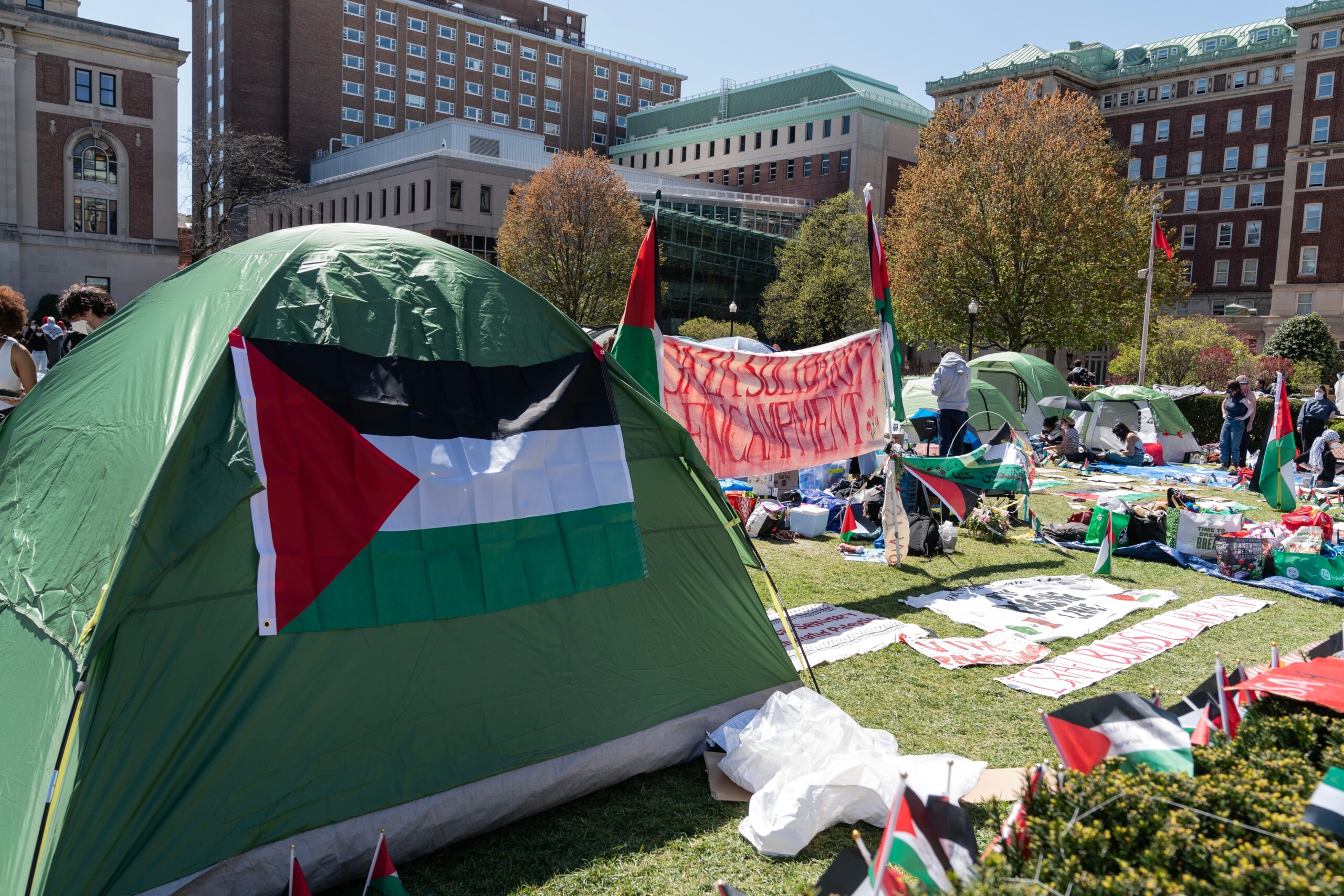
When Oct. 7, 2023, happened, Davidai was horrified by the intensity of the violence. But the silver lining in the very dark cloud would be, he assumed, that everyone would realize the true nature of Hamas and its terrorist allies and would see the sort of pressure that underpinned daily life in Israel. He was stunned when the reaction at Ivy League universities, as well as many others, was just the opposite. An army of students, academics, online influencers, and media people came out in support of Hamas, cheering and applauding. The fig leaf slipped away, revealing something very ugly. At Columbia, student encampments supporting Hamas mushroomed, and anyone who did not agree with their views was denied entry to the campus, often by force. The threat of “cancellation” hung over the heads of professors and administrators who did not toe the line.
The student unions quickly aligned themselves with Students for Justice in Palestine. Feminist groups, usually ready to make sweeping statements on nearly anything, had little to say, even when faced with graphic evidence of sexual violence perpetrated by Hamas (which had proudly circulated horrifying videos). Moderate Arab, Muslim, and even Palestinian voices were silenced. Hamas was seen as the only legitimate voice of the Palestinian cause. Fanaticism had taken over.
Davidai is not sure whether the impetus for these protests was the students, radical academics, or activists from off-campus. Something of each, he concludes. He points out that Columbia, like most colleges, had rules specifically designed to prevent the sort of protests now on display. But the college administrators did nothing, either because they shared the ideological views of the protestors or thought that trying to stop the harassment, threats, and takeovers of college space would only make matters worse. Davidia provides the names of the people responsible, and it is a very long list. He tracks the mental gymnastics employed by senior administrators to somehow define the protestors as exercising their right of free speech, or as passionate youngsters merely examining “both sides” of the issue. It would be funny if the outcome was not so awful.
Jew-hatred found its way into many of the courses offered by the college. Even a class on marine mapping managed to include a swipe at Israel, Zionism, and Jews in general. The tentacles spread. Hatred of Israel extended into hatred of America, as well as Western civilization as a means of social organization and progress. Israel was often folded into the category of “settler colonialism,” a leading example of everything that was wrong with the history of Western thinking.
Read more 10 Times Abdul El-Sayed Was Absolutely Wacked Out
Davidai tried to engage some of the student protesters in debate but was met by a wall of ignorance and hostility. He was amazed that the militants seemed to have very little knowledge of the ancient and modern history of Israel and the broader Middle East, and were even unaware of the basic geography of the region. Some had never heard of the Holocaust or did not believe it had happened. They opposed the possibility of a two-state solution, chanting the slogan “From the river to the sea, Palestine will be free” as if it was an answer. Of course, the only way that goal could be achieved was if the state of Israel, with all its people, was eliminated. Eliminated. Killed. All of them. Oct. 7 was the model for future action.
The protesters were mining a rich vein of ignorance. The Holocaust seemed to have dropped out of college courses on modern European history. Davidai says: “Many Americans do not know when the Holocaust occurred, how many Jews were murdered or what the term ‘final solution’ refers to. It is perhaps unsurprising that many Americans remain dangerously ill-prepared to confront contemporary Jew-hatred.”
Due to his attempts to debate the militants, Davidai found himself in a position of leadership, speaking to the media in defense not just of Israel but of the small community of Jewish students at Columbia. Defining himself as “a radical moderate,” he spoke at every forum and gathering he could find and was willing to enter any debate — even though he knew that many protesters endorsed the use of violence to silence their enemies. He also developed an important online presence with a podcast, Here I Am with Shai Davidai. Amazingly, the governing council of Columbia suspended him from teaching. (Because he held tenure, he could not be easily fired). The grounds were always rather vague but seemed to be connected to accusations of harassment of students. The Students for Justice in Palestine created a petition with over 13,000 signatures demanding his termination.
Saner minds on the college council realized that if the matter went to court, Davidai would probably prevail. His suspension was quietly lifted, although the whole incident made him realize how far the rot had traveled. The college council only began to take some action to wind back the worst excesses of the protests when the Trump administration threatened to withhold grants. That was 17 months after the beginning of the protests. But there was never any accountability for students or academics. The number of violent incidents mounted.
Davidai left Columbia in July 2025 to focus on speaking and writing. In the closing chapters of the book, he looks towards the future, and sees much to worry about. “A new generation of impressionable students has been indoctrinated into the ideological tenets of American Intellectual Antisemitism,” he says. He calls upon people who sat on the fence and hoped that the wave of Jew-hatred would eventually dissipate to enter the battle. Not with violence but with knowledge, historical awareness, and personal courage. It is not a struggle for Jews alone but for anyone who believes in the values of liberalism, free speech, and reasoned debate. Most importantly, students entering college should demand that their professors teach them to think rather than simply parrot indoctrination.
“Your job is not to change the world but to simply move the needle,” concludes Davidai. “Doing something may not always yield results but doing nothing guarantees that nothing will change. In the fight for truth, every voice matters.”
Read more A Conservative Answer to the ‘National Freakout’ Over AI
About the Author