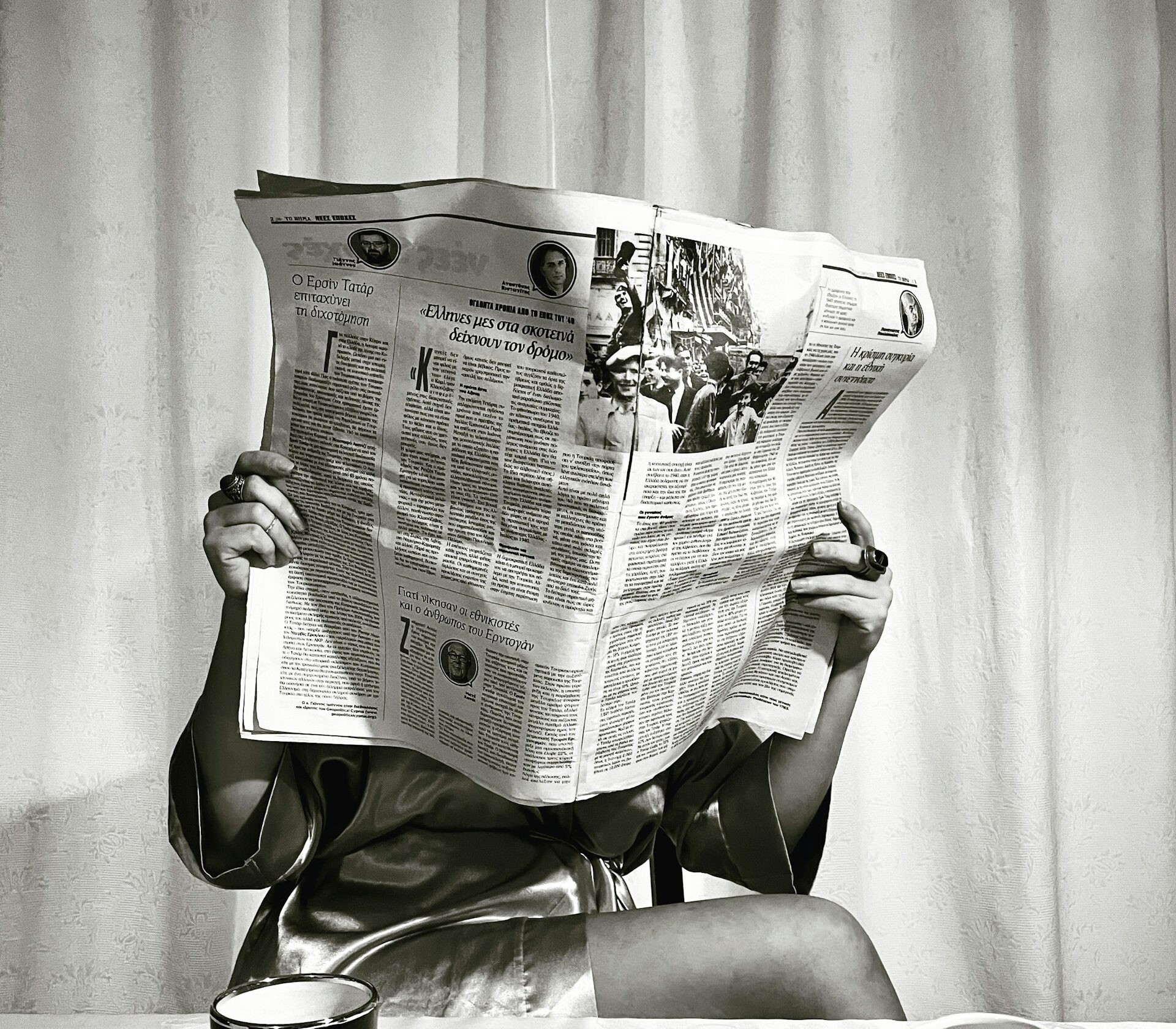
Local newspapers are hurting, and many communities have lost their local paper altogether. Newspapers lost the cash cow of classified advertising to online marketplaces. With national news available at any time now on any device, newspapers lost readers who used to get slightly stale national news from their daily newspaper. Local papers also alienated half of their potential audience by almost universally taking a hard left turn, infusing partisan politics into everything, including weather coverage and sports.
Read more The Spectacle Ep. 472: The Age of Miracles: Elon Musk’s Starship Was Made to Fly
Most newspapers have had round after round of job cuts, repeatedly slashing local news coverage, while remaining obsessively committed to covering national politics. I’ve observed newspaper reorganizations in major metro areas, as well as in the smaller cities I’ve lived. The writers and editors that don’t get let go have consistently been those involved in political and opinion writing.
There have been several more major newspaper reorganizations in recent weeks, but one is noteworthy for going in an entirely different direction. The money-losing Chattanooga Times Free Press was just bought by Craig Fuller. Fuller is the publisher of Freightwaves and several other successful publications that focus on business, transportation, and leisure activities. He quickly dismissed most of the rabidly left-wing editors at the Chattanooga Times Free Press, shrank the editorial page, fired the New York Times wire service, and committed to putting only local news on the front page. He also hired new writers to expand coverage of sports and local business. National news (from the AP only) is now relegated to an inside page.
Meanwhile, the McClatchy newspaper empire just announced another massive round of layoffs, including at the Miami Herald, its largest newspaper as measured by web traffic. McClatchy is following the historic media playbook of laying off journalists who cover local news, while continuing to rely heavily on national news from wire services, but continuing to still employ local opinion writers. As documented by Florida Politics in a story earlier this month, dozens of reporters and sportswriters were eliminated, including the beat writers covering Miami, Miami Beach, and City Hall.
Also let go was Michelle Kaufman, a sportswriter with a four-decade tenure, who is also known to many of us as the wife of humor writer Dave Barry. In his Substack, Barry wrote about his wife’s dismissal, describing how two corporate men with whom Kaufman was previously unfamiliar notified her of being dismissed via a brief video call. The same fate was met by dozens of her colleagues. He said:
That’s how it is in newspapers these days. Papers that were once thriving, vibrant civic institutions are now, in many markets, shriveled husks, shuffling zombies, if they still exist at all. There are a bunch of reasons for this, some of them the newspaper industry’s own fault. I’m not writing this to assign blame. I’m writing it to lament the fact that a lot of the newspaper people losing their jobs are, like Michelle, really good at what they do, and really care about how they do it, and now all the stories that they would have written will never get written. And Facebook and X and YouTube can’t begin to make up for that loss.
Barry is correct that it is deleterious for a community to be lacking a local media that covers the community’s news. Social media cannot replace the civic role that newspapers once held. Unlike Barry, I will assign blame — way too many journalists, editors, and publishers started treating “news” as a synonym for “politics,” with objectivity getting replaced by agenda-driven partisanship.
Read more The Intellectual Rot Behind Campus Antisemitism
But as Fuller revealed to readers in Chattanooga, by dismissing the partisan editors and by empowering his beat writers, he ended up with a higher-quality product. Challenged to write objective stories for page 1 with minimal editorial oversight, the writers are thriving. Fuller has referred to this as “addition by subtraction.”
Fuller also revealed some fascinating data about which online articles have drawn the most new subscribers versus which articles generate few clicks for subscriptions. Local sports and business coverage produce the most new subscribers, while national wire stories barely produce any subscribers at all. As Fuller documented in a recent X post, the Chattanooga Times Free Press paid $256,000 over the past 13 months for national wire service stories, from which it generated a paltry $6,684 in new subscription links. He wrote, “Might be the worst ROI I’ve ever seen in media. Our future is local only.”
He also provided a breakout of which sections of the paper generated the most links for new subscriptions. They are as follows:
- Sports: 29%
- Business: 27%
- Courts & Crime: 14%
- Family / Faith / Food: 11%
- City Government: 9%
- State & National: 5%
- Opinion: 5%
It is clear that local coverage is what the remaining pool of potential newspaper readers desire. In fact, more focus on local news might reveal a larger pool of potential readers than was thought to still exist. The Chattanooga Times Free Press could turn out to be the model for other newspaper turnarounds.
On the other hand, it is also clear that opinion and national politics is repellent to potential local subscribers, yet that is what McClatchey and the Miami Herald are hanging on to as they eliminate local news coverage.
Read more Trump Orders Agencies to Drop ‘AI’ for ‘Super Intelligence’
About the Author