Nowadays, young men are treated as either victims of intense sociological anxiety or the objects of thinly veiled ideological derision. To their critics on the progressive left, young men are creatures of “fragile masculinity,” clinging to (and failing to live up to) arbitrary, patriarchal norms that must be therapeutically deconstructed if we are to achieve a more equitable future. To secular cultural commentators, they are caricatures of apathy; stalled adolescents lingering in their childhood bedrooms, checked out of the labor force, alienated from civic life and hopelessly anesthetized by the digital world.
Read more Trump’s Greenland Agreement Is the ‘Art of the Deal’ in Action
The diagnosis from both camps is remarkably similar: the modern young man suffers from a fundamental failure of character. A refusal or inability to grow up is merely the predictable effect.
But this convenient consensus is not just lazy; it is willfully blind. A more honest assessment reveals that our sons are not suffering from a sudden, mysterious collapse of personal ambition. Rather, they are experiencing a profound, systemic misalignment between their hardwired aspirations and the woefully insufficient institutional pathways provided by our corrupt society. (RELATED: Saving Masculinity From the Left and the Manosphere)
The Prophetic Warning of the Untamed Soul
A quarter-century ago, before the smartphone started decimating the human consciousness and the phrase “toxic masculinity” became a staple of our culture’s feckless stewards, John Eldredge published a prophetic and counter-cultural book: Wild at Heart. Eldredge’s core thesis was both simple and explosive: God designed the masculine soul with deeply embedded biological and spiritual desires that cannot just be socialized or wished away. Every man, Eldredge argued, harbors a distinct triad of primal desires: a battle to fight, an adventure to live, and a beauty to pursue.
Eldredge issued a stark warning to a culture increasingly obsessed with safety, compliance, and gender-neutral socialization: if you try to “tame” a man into a nice, passive man-child, you do not cure him of his wildness; you merely drive it underground. Worse, you also produce resentment, despair, and paralysis.
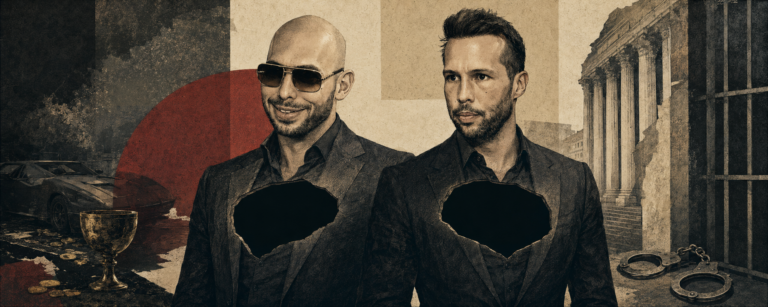
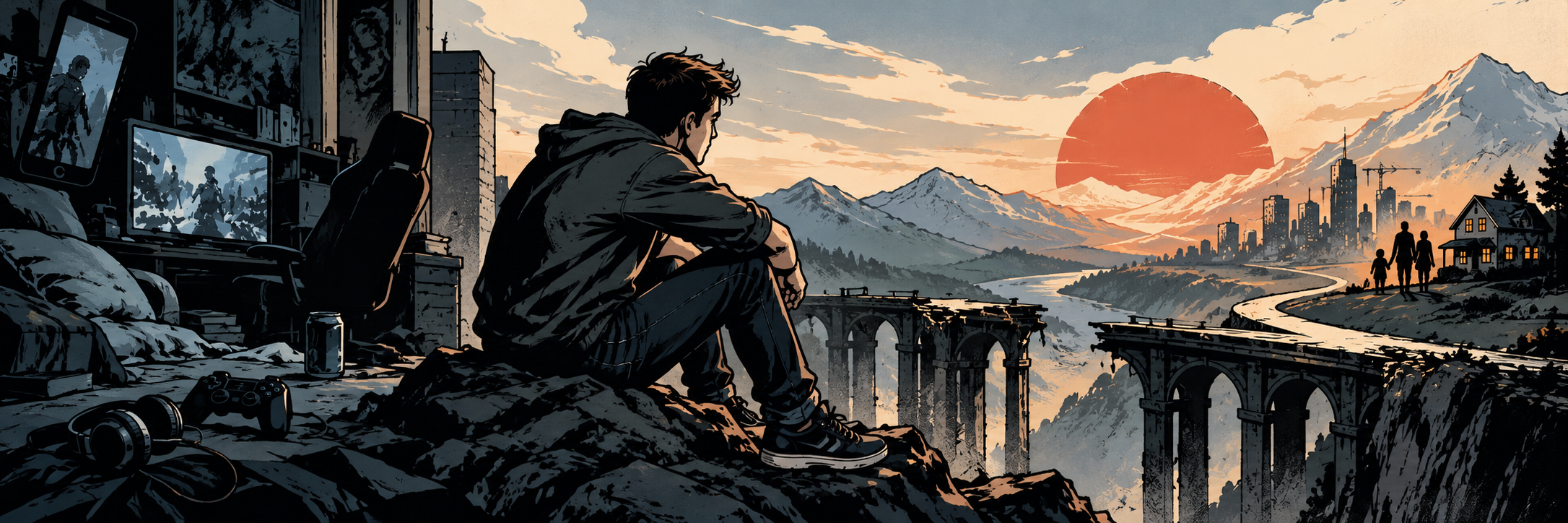
Today, we are living amidst the ruins of the very world Eldredge foresaw. Our boys and men haven’t lost these deep desires. Rather, we have marooned them in a simulated, screen-mediated wilderness, an artificial desert of gaming, pornography, and passive consumption. This digital wilderness is highly lucrative for its predatory builders, precisely because it exploits the natural male desires for battle, adventure, and conquest. It offers young men a frictionless, low-stakes simulation of some superficial aspects of manhood while requiring absolutely zero real-world responsibility, courage, or sacrifice. (RELATED: The Cult of Andrew Tate: Modernity’s ‘Men Without Chests’)
The modern young man is lost in this wilderness because our primary social and educational institutions have systematically dismantled the real-world bridges to the very adult milestones he still desperately wants to reach.
Aspirations Marooned by Institutional Betrayal
Consider the stark landscape documented by the Institute for Family Studies. When surveyed, the overwhelming majority of unmarried men between the ages of 18 and 29 express conventional, deeply traditional aspirations. Nearly 70 percent state a clear, unequivocal desire to marry and build a family. They do not want to remain permanent adolescents; they explicitly value financial stability, personal independence, and the opportunity to make a meaningful, localized contribution to their communities.
Yet, look at the reality. Only 14 percent of men in this demographic are currently married. A mere 9 percent are fathers. Nearly 60 percent are not currently involved in any romantic relationship, and many have never in their lives approached, in person, a girl or woman. What used to be a rite of passage — asking women out on a date — is essentially extinct.
None of this is surprising when you survey the institutional terrain young men are forced to traverse. For generations, the transition from boyhood to responsible adulthood was guided by a highly predictable, socially supported sequence of milestones: completing an education, securing stable employment, achieving financial independence, marrying, and starting a family. Today, almost every single one of these transitional bridges has been demonized, systematically dismantled, or priced out of reach.
The educational pipeline is just one example. The modern university has increasingly structured its environment around compliance, credentialism, and an ideological monoculture that views natural male learning styles, competitive drives, and physical assertiveness with deep suspicion and derision. The consequence is a massive gender gap: today, young men receive only 41 percent of all college degrees.
But the crisis runs far deeper than graduation rates. Young men have begun to recognize that the modern university guild has decoupled intellectual training from moral formation, transforming itself into a cesspool of partisan political agitation. Consequently, their trust in higher education as a viable path to adulthood has utterly collapsed. In 2002, 65 percent of young men viewed completing formal education as “extremely important” to becoming an adult; by 2025, that number had plummeted to just 31 percent. (RELATED: Disembodied Autonomy)
Read more The 5QT Presents: The Five Black Pills, Part 1 — Feminism
This educational displacement is compounded by an economic landscape characterized by unprecedented volatility. The decline of productive, working-class industries and the rise of unstable gig-work have made early career prospects highly precarious. When we combine this economic instability with the modern cultural expectation that complete financial independence and housing security must be achieved before starting a family, we create a recipe for widespread, existential stagnation. Young men are told they must clear an exceptionally high economic bar to be worthy of marriage. But the ladder to reach that bar has been kicked away.
The Real Meaning of Demoralization
When we systematically close the real-world pathways for a young man to realize his hardwired desires, his soul undergoes a profound transformation. To understand this, the classical, Aristotelian definition of demoralization is highly instructive.
In the modern vernacular, “demoralized” is often treated as a synonym for feeling sad, discouraged, or blue. But in the classical tradition, being demoralized carries a far more grave and precise meaning. It is the condition of being systematically stripped of a coherent, actionable path toward one’s telos, defined as the purposeful, virtuous end for which an individual was designed.
Healthy, centered, productive manhood is God-designed, but that doesn’t make it a self-generating state of being. It must be initiated, disciplined, and structured. Eldredge’s triad of desires is not an arbitrary list of social constructs. It represents the biblical raw material of the masculine soul.
But these desires are neither self-generating nor self-policing. Left uncultivated, “a battle to fight” degenerates into raw, unvarnished aggression; “an adventure to live” becomes reckless, hedonistic self-destruction; and the desire to “pursue a beauty” is corrupted into transactional, predatory dominance.
God’s design is clear; masculine strength is neither an inherent evil to be deconstructed nor a weapon for self-aggrandizement. It is a divinely ordained resource to be disciplined for the protection, provision, and flourishing of others. It is the force that secures the boundaries of the organic network of mutual obligations, stable families, and local associations upon which all human civilization depends.
By pathologizing natural masculine traits while simultaneously closing the institutional pathways that allow them to be expressed constructively (through physical craftsmanship, localized production, and family leadership), we have left our sons stranded. We have denied them a true battle to fight, a real adventure to live, and a noble covenant to defend.
A Sober Civilizational Stake
It’s critical to reject the lazy, bipartisan urge to treat this generational malaise as an individual moral failure. The progressive left will continue to pathologize young men, insisting that their struggles are merely the self-inflicted wounds of “toxic masculinity” largely produced by arbitrary, unattainable standards. The secular right will too often resort to a sterile, libertarian scolding, telling young men to simply pull themselves up by their bootstraps and work harder in an economy that has systematically obliterated their futures.
Both approaches are bankrupt and doomed to fail.
If we continue to ignore and dismiss the structural and institutional betrayals that have stalled an entire generation of our sons, the consequences will not, of course, be confined to them alone. A society that does not provide its young men with a clear, honorable, and demanding path to covenantal responsibility is a society that is actively writing its own obituary. When the protectors and builders of society are systematically demoralized, the entire civilizational structure will eventually collapse under its own weight. It’s a guaranteed outcome.
Helping our young men find a way out of the wilderness will require more than self-help seminars or therapeutic platitudes. It demands a courageous, structural counter-revolution: the rebuilding of local, tangible institutions, from vocational guilds that honor physical craftsmanship to stable families anchored by present fathers, that once again give young men a worthy hill to climb, a sacred duty to fulfill, and a clear path to walk.
It requires us to turn off the screens, step out of the simulated wilderness, and call our sons back to the hard, beautiful, and wild reality of authentic, biblical masculinity.
Read more The Spectacle Ep. 470: Don’t Be a Jerk: Bring Back Social Etiquette!
READ MORE from R.B.A. DiMuccio:
Saving Masculinity From the Left and the Manosphere
Is ‘Fragile Masculinity’ the Problem with Our Men?
About the Author