German economic history can be traced through its traditional family businesses. Many of them survived wars, crises, and technological revolutions. But many of them now have little left with which to resist the destructive force of environmentalism and degrowth ideology.
Read more 9/11 at 25: From ‘Where Were You?’ to ‘Where Are We?’
Anyone searching through German economic history will eventually come across the name .
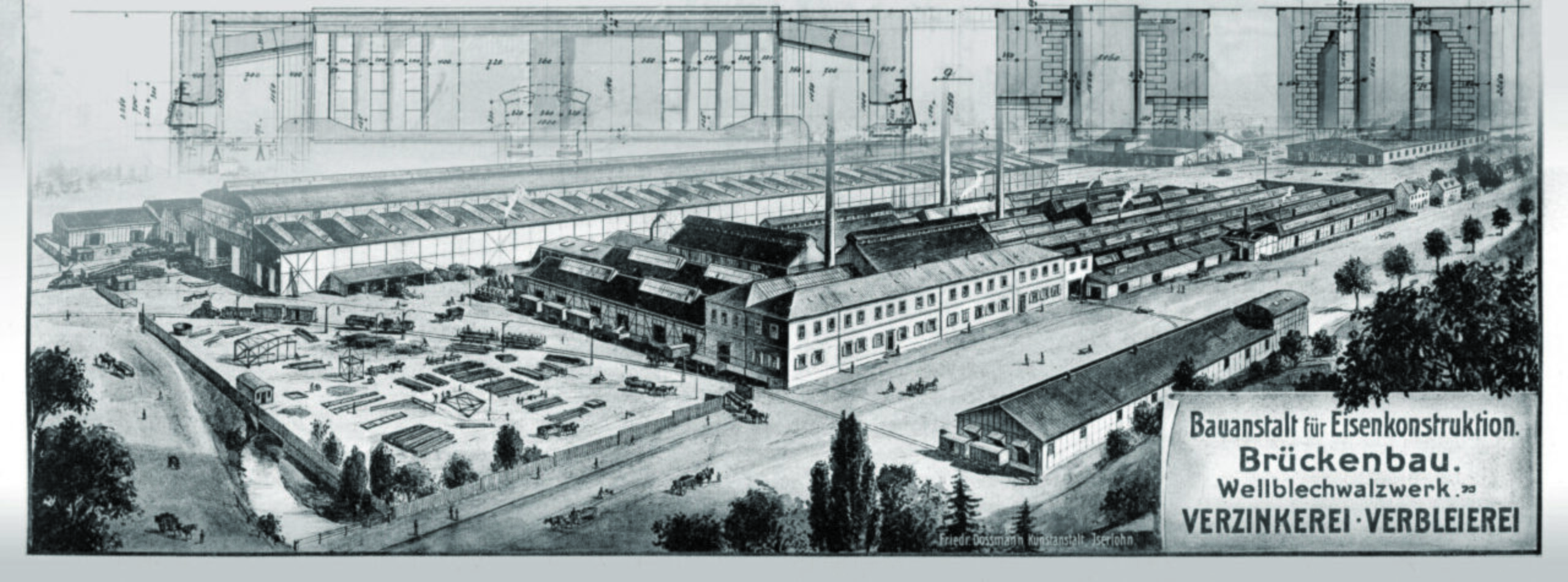
The company from Siegen is, as far as the surviving documents show, the oldest German family business still in existence. Originating in 1502 from an iron-processing operation, it developed over more than five centuries into an internationally established specialist in surface finishing and hot-dip galvanizing.
Company founder Heylmann Dresseler, a master blacksmith of his time, paid a “fire fee” to be allowed to use a forge in Siegerland. To this day, the family remains at the helm of the business: Paul Niederstein, born in 1974, is now its managing director and a 17th-generation direct descendant of the medieval blacksmith in question. The company only acquired its modern name 10 years ago, a tribute to Anglicized globalization.
Moving on to Upper Franconia, where glass and packaging specialist Wiegand-Glas has been based for more than 450 years. Originally emerging from a Thuringian-Franconian glassworks in 1570, the family business developed into one of Germany’s three largest container-glass manufacturers, today producing more than eight million glass containers every day at four locations for the beverage and food industries.
Flexibility is a hallmark of the German Mittelstand (small-medium business class), and so the company repeatedly adapted to changing circumstances: It expanded its product range to include PET packaging and recycling and also integrated renewable energy into its business model. After more than 450 years in family hands, the company is now run by the fourth generation, Nikolaus Wiegand, who acquired the shares of his cousin Oliver Wiegand in April 2025 and has been the sole shareholder ever since.
Traditional German companies such as Wiegand-Glas and Coatinc Company can still be found in abundance. Names such as Sonnen Bassermann, Faber-Castell, Villeroy & Boch, and Merck are familiar to everyone and also give the German economy an international face. The case of Merck is particularly interesting: Founded by Friedrich Jacob Merck in 1668 as a pharmacy, 358 years of corporate history ultimately led to the rise of a globally operating pharmaceutical group — economic history “made in Germany.”
Numerous niche champions and traditional companies survived wars, crises, and catastrophes. It is remarkable: The adaptability, the entrepreneurial gene cultivated and nurtured in these families, survived the Thirty Years’ War, the Napoleonic era and the catastrophes of the 20th century, from the First World War to the Holocaust.
In some cases, family resilience even defied the destructive East German socialist economy — a phenomenon that economists should really study intensively.
What are the factors behind the success of these companies, which successfully withstand the waves of time, the massive changes in global markets, and technological disruptions? Think of the introduction of the steam engine, new transportation technologies such as the railway, the introduction of assembly-line production, or, ultimately, high technology, all the way to computers and the internet, yet they are still here.
From a blacksmith’s forge to a business seamlessly integrated into the most modern sales and production technologies — an impressive story of evolution and proof of the ever-burning willingness to shed its skin, to discard what no longer works and adapt to what the market demands. Perhaps the secret of success is already hidden in the generic term for these businesses: family companies.
In multigenerational family businesses, a culture of responsibility usually emerges that can be summed up as follows: They think in years, if not decades, rather than in terms of the next quarterly earnings presentation or rapid, short-term optimization. These businesses generally remain loyal to their employees; owners are more likely to draw on private reserves before deciding on layoffs or taking on new debt.
Read more Dale Rex: The ‘Incredible’ Hero of Horseshoe Woods
Things tend to be conservative and guided by values — something the modern cultural establishment does not particularly like to hear.
The sociologist Max Weber, an antagonist of today’s eco-socialism, identified one of the most important ingredients of success: the Calvinist-Protestant ethic, which was so remarkably connected with a modern and successful economic way of life.
Weber made it clear: Success begins with an ethic of responsibility that is rooted more deeply than political fashion.
Translated into a modern formula for success, one might say: If everyone pulls together, contributes their skills and gives their best, it becomes possible to recognize at an early stage what needs to be done to adapt the entire operation to new requirements — for example, by introducing a new method of production.
Once you know the families, the owners, the older generation and the successors, customer relationships become more stable, trust grows, and, technically speaking, value chains emerge that are more resilient than political regulations and can apparently even survive wars.
“Commitment to the location” is a phenomenon that many modern businesses, politicians and the business press now know only by hearsay. It sounds sentimental, but it is actually the key to stable communities and local prosperity. Anyone who has put down roots in their community — think of companies such as Trigema, Würth or Kärcher — enjoys standing in the eyes of the public and, in a certain sense, even privileges when it comes to finding employees, for example. People develop trust in stability and continuity. They trust the representatives of familiar company names more than the political lightweight who promises them the earth. (RELATED: Germany’s Electricity Rationing Is No Longer Unthinkable)
But every era eventually comes to an end.
The end of the era of the German Mittelstand culture and family businesses appears to be approaching in view of the social climate and the success of an ideology whose roots lie in the Marxism of the Frankfurt School. Everything revolves around questions of moral business management. Politics has taken the helm and rules all the way into the highest levels of corporate decision-making: Too great a sacrifice is truly being made to the climate god. (RELATED: The Road to Serfdom Has an EU Exit Ramp)
And so the wave of corporate deaths in Germany has long since reached the supposedly crisis-proof zones of the German family-business community. Companies such as the Eichbaum brewery or the Thuringian machinery manufacturer Eliog are being forced to close their doors because of the catastrophic economic situation and high energy costs in the country, as is, for example, the Franconian guitar specialist Höfner, which had to file for insolvency after 138 years, although its operations have since been taken over and continued. (RELATED: Volkswagen’s Electric Suicide Pact)
Another example is Eterna, a shirt and blouse manufacturer that survived both world wars and has now filed for insolvency. The list could be continued indefinitely.
The children of the socialist revolution of 1968 have no mercy for values such as tradition, the ethic of hard work, patriotism, or family spirit — everything is deconstructed, nothing of their own, nothing new, nothing lasting is created. They live in the present, with a high time preference, as economists would say.
And many of them live securely and comfortably on the very fruits of the family businesses that they are erasing from the map in their ideological fervor.
READ MORE from Thomas Kolbe:
The Omnipresent State: From Free Citizen to Servant of Bureaucracy
Germany’s Electricity Rationing Is No Longer Unthinkable
The Road to Serfdom Has an EU Exit Ramp
Thomas Kolbe, born in 1978 in Neuss, Germany, is a graduate economist. For over 25 years, he has worked as a journalist and media producer for clients from various industries and business associations. As a publicist, he focuses on economic processes and observes geopolitical events from the perspective of the capital markets. His publications follow a philosophy that focuses on the individual and their right to self-determination.
Read more Michigan AG Dana Nessel to Jewish Democrats: Sacrifice Yourself for the Cause
About the Author