SACRAMENTO — As this year’s legislative session approached a conclusion on Monday, California’s GOP Senate leader handed out “easy buttons” similar to those used in one office-supply chain’s commercials with the word “NO” stamped on them. It represented some levity as Republicans, who find themselves in a super-minority in the Assembly and Senate, telegraphed their commitment to opposing the Democrats’ usual array of tax-and-spend bills. These Republicans posed for the cameras to apparently reinforce their party’s commitment to fiscal responsibility.
Read more Like It Or Not, Data Centers Are Part of the Midterms Now
I might have applauded their effort to put up a futile yet noble fight, except that even this act of lighthearted defiance was a farce. Republicans had the chance to vote “no” on two of the most outrageous, fiscally irresponsible bills that came before the Legislature in years — and most of them (only two “no” votes on each bill) voted “yes” or didn’t vote (profiles in courage!). In fact, multiple Republicans signed on as co-authors of the most noxious measure. No Democrat opposed either bill, but at least they avoided the fiscal-responsibility photo-op theatrics.
“It is difficult to get a man to understand something, when his salary depends on his not understanding it.”
The two measures are Assembly Bill 1383 and Assembly Bill 1054, both of which dramatically boost public-employee pensions. Ironically, AB 1054’s existence (more on this later) undermines the argument that supporters make for AB 1383, but we can’t expect any legislator to draw even the most obvious conclusions when their union allies are egging them on. It reminds me of the quotation from author and 1934 California gubernatorial candidate Upton Sinclair: “It is difficult to get a man to understand something, when his salary depends on his not understanding it.” Unions don’t fund lawmakers’ salaries, but they do back their campaigns.
AB 1383 guts a 2012 pension reform measure called the Public Employees’ Pension Reform Act (PEPRA). Spearheaded by Gov. Jerry Brown in the midst of a budget crisis, this modest law tried to get control of escalating pension costs. Unlike most private-sector workers, California government employees receive defined-benefit pensions that guarantee a payout based on a formula. At the time, most public-safety employees received a “3 percent at 50” plan that allowed them to retire at age 50 with 3 percent of their final salary multiplied by the number of years worked. (RELATED: Maybe the Pension Mess Can Go on Forever)
That meant these employees — police, firefighters, prison guards — retired with 90 percent of their pay payable to them and their spouses through their end of days. Other public employees received less-generous formulas (such as 2.7 percent at 55), but still retired with enviable amounts at relatively young ages. During that debate, critics pointed to California government workers who were members of the so-called $100,000 Pension Club. Now the average California Highway Patrol officer receives a $114,000 pension after 30 years, per recent reports. The Transparent California database shows scores of state workers receiving pensions far in excess of that number.
The pension problem affected the state budget, of course, as the general fund paid for state-worker pensions. But it was a rounding error in California’s enormous state budget. The real impact came at the local level, where pensions consumed larger shares of municipal budgets and led to service “crowd out” as pension costs forced cities to cut back on public services. At the time, the California Public Employees’ Retirement System (CalPERS) was funded below 70 percent — meaning it had only 70 cents on the dollar to make good on its pension promises. (RELATED: California’s Debt Crisis Is Brewing Again)
The latest numbers show CalPERS funding levels at 85 percent. Pension funds invest their money and do well in alignment with market gains — and the stock market has been doing pretty well. But PEPRA deserves credit for slightly boosting retirement ages and trimming benefits for new hires. It also eliminated outrageous pension-spiking gimmicks for every employee, thus dissipating some of the costs.
A series of court decisions known collectively as the California Rule forbade the state from reducing pension benefits for current employees even going forward. So Brown’s idea — and he used his political capital to achieve it — was to trim pensions for new hires only and stabilize the system in 15 years or so. The idea is working as planned given that everyone hired since then has operated under a slightly less — but still very generous — pension system. Now that it’s working, lawmakers are pushing us back toward the old, more-costly system.
Read more The Spectacle Ep. 461: Post-COVID Malone: Robert and Jill Malone Find Health in Homesteading
AB 1383 would “authorize” agencies to increase benefits by lowering pension ages and boosting pension percentages. Of course, authorizing is the same as mandating, given that once the state’s powerful safety unions secure a deal, everyone else (safety and otherwise) will follow. Unions always start by proposing boosts to police and firefighter compensation, given those groups’ popularity and political muscle — thus explaining Republicans’ instinctive willingness to support those unions’ priorities.
The Legislature’s bill analysis, to its credit, notes that a 1999 law (Senate Bill 400) triggered PEPRA, as SB 400 was
followed by those economic crises affecting pension fund investment returns, this resulted in increased unfunded or underfunded actuarial liabilities…. The public outcry against that public policy coupled with those economic crises … was then followed by regular and increased attention by the media and the public, as well as pension abuse schemes and manipulation by public employers and employees such as pension spiking and double-dipping.
And now here we are again. Note the latest news, which suggests widespread fears of a stock-market correction. By the way, AB 1054 sets up a Deferred Retirement Option Plan (DROP) that allows “retired” public employees to keep working for a few years and then actually retire with their huge formula and massive lump-sum payouts. Supporters of these bills say they are needed to deal with a so-called retention crisis, but there’s no crisis. People still line up for $ 250,000-a-year firefighting jobs.
Police turnover levels stable and lower than national levels, per Reason. But AB 1054 highlights that any recruiting problem is the result of a current retirement system that is so generous that it entices employees to retire earlier than they might otherwise choose. The only reason to have a DROP program is to enable current employees who want to keep working to do so. Why would someone keep working if they get paid virtually the same amount if they retire?
If Gov. Gavin Newsom signs these bills — and what are the chances he would stand up to any public-employee unions, let alone police and fire? — California will be setting itself up to repeat some troubling fiscal history. Most Republicans supported SB 400, but in 2012 they were at least vocal about the need for pension reform. Now they’re just going along with Democrats and government unions and don’t appear worried about the fiscal impact. That explains why some of us find their little “no” button stunt a bit much to take.
READ MORE from Steven Greenhut:
California Needs AI. So Why Is It Making Data Centers Harder to Build?
Circling Like Vultures: California Leads New Attack on Facebook
The Real Threat to California Election Integrity? Biased Ballot Titles
Steven Greenhut is Western region director for the R Street Institute. Write to him at [email protected].
Read more Scott McKay’s The Necessary Men — Episode 7: The Flip
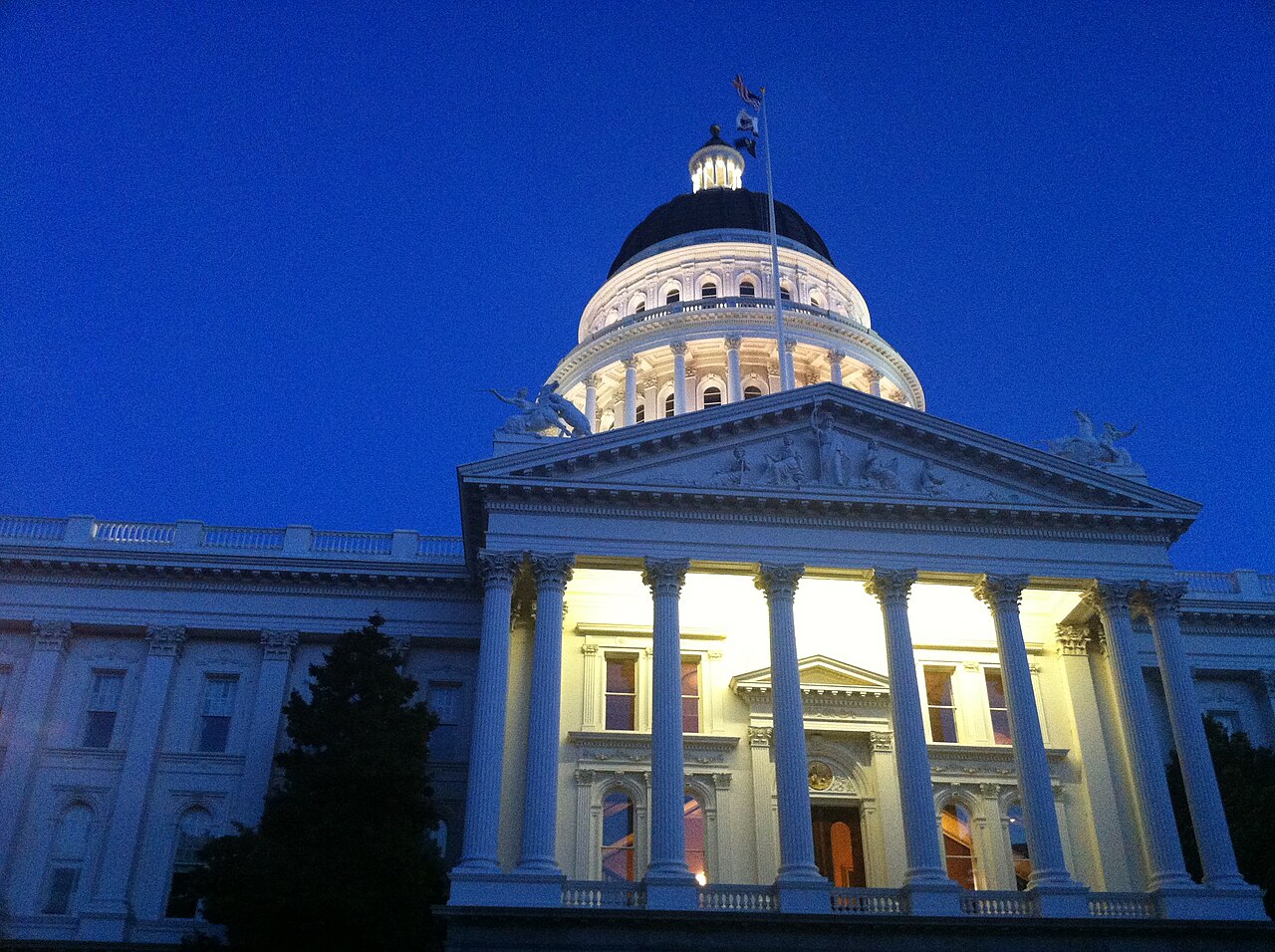
Image licensed under Attribution-ShareAlike 3.0 Unported.
About the Author