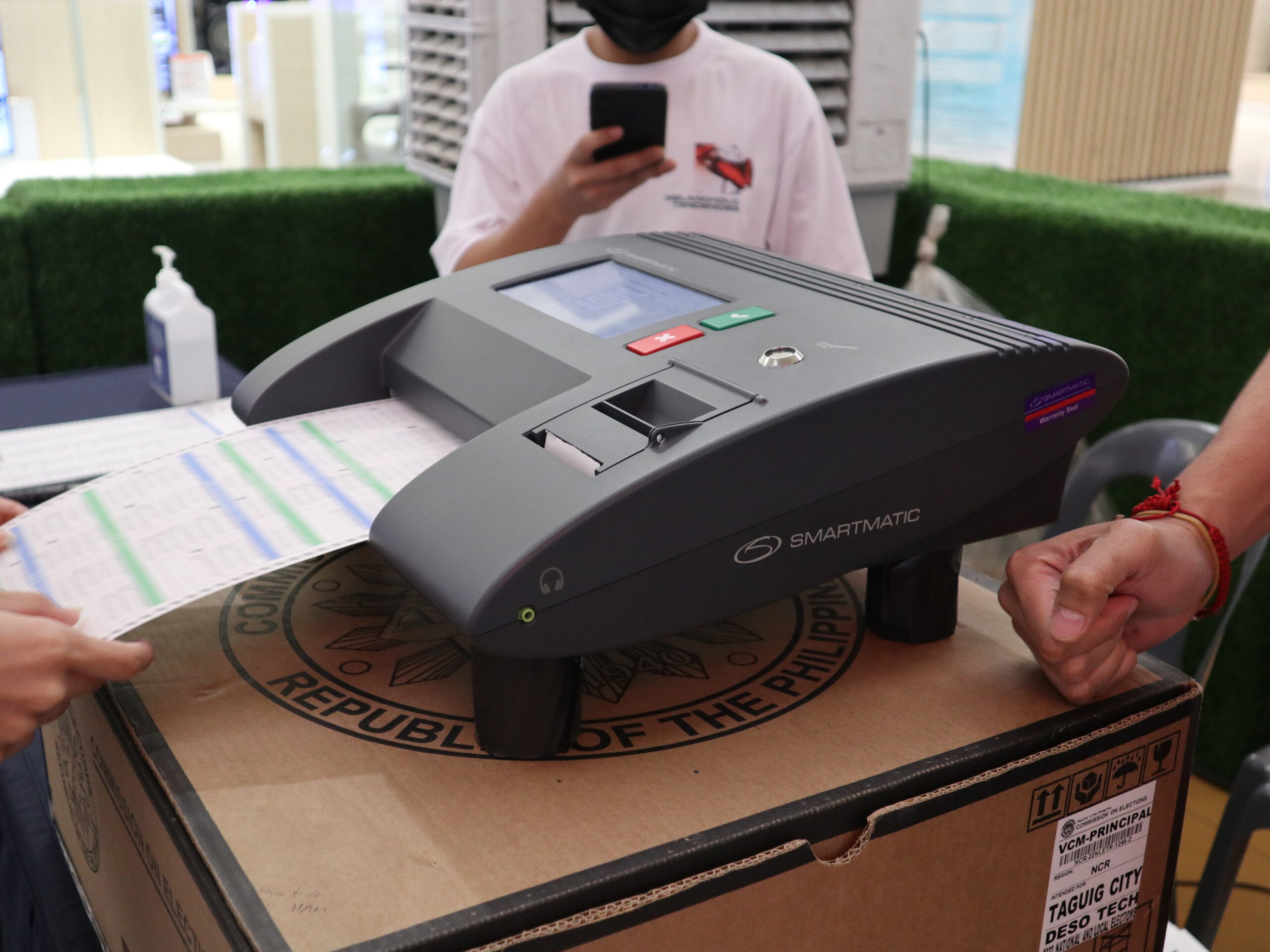
The CIA has declassified its files on the Venezuelan electronic voting machine company, Smartmatic, appearing to confirm widely held suspicions that the company used complex algorithms to fix election results that helped keep Venezuela’s leftist regime in power for two decades. The firm that’s been newly based in the UK now provides election machines for California’s populous Orange County.
Read more Why All Leftism Is Now Far Left
Intelligence reports on Smartmatic which had been gathering dust in the CIA’s back files have been brought to light, together with the massive trove of documents that President Trump recently ordered declassified on China’s massive hacking of U.S. voter registration data, to back claims of U.S. election interference by foreign governments.
If the U.S. government knew this, how was Smartmatic allowed to reenter the U.S. market with the voting machine contract for one of the nation’s largest electoral districts?
Smartmatic was repeatedly denounced by Trump’s chief aide at the time, Rudy Giuliani, who alleged that its machines were programmed to inflate Biden’s vote count. Smartmatic and Dominion systems, which supplied voting machines to dozens of states, sued Giuliani, as well as individual journalists and media organizations for defamation and other alleged damages.
Giuliani was practically bankrupted by forced settlements. Fox News settled out of court with Dominion Systems for $750 million. Smartmatic’s law suits issues to a long list of journalists and news organizations, mostly remain pending court decisions.
But the CIA says it knew back in 2006 that Smartmatic had received a $121 million contract from Venezuela leftist leader Hugo Chávez, “to develop plans to manipulate election results using pre-programmed voting machines.” ( is the declassified report.)
The CIA says it could not definitively prove that plans for electoral fraud were actually implemented but assessed that Smartmatic presented a “mild threat to National Security,” speculating that its penetration of the U.S. voting technology market could involve plans to manipulate future U.S. presidential elections as Chávez had expressed interest in doing.
Government investigations into Smartmatic were first triggered when the Venezuelan company acquired the California-based Sequoia Systems that provides voting machines to 17 states including California and Illinois, where long delays in vote counting during 2006 local elections resulted in calls for auditing the machines which Smartmatic sent back to Venezuela before they could be inspected.
When the Treasury Department opened an investigation into Smartmatic’s acquisition of Sequoia, requesting that both companies present documents of their transaction, Smartmatic pulled out of Sequoia, which was subsequently bought by Dominion Systems with embedded Smartmatic software.
Smartmatic has been repeatedly attacked by opponents of Chavez and Maduro for electronically rigging vote counts to secure a series of regime election victories. The most serious charges came following 2013 elections which elevated Maduro to the presidency following Chavez’s death from cancer in Cuba. Venezuela was starting to reel from runaway inflation, scarcity of consumer goods, and growing political repression.
“In the few districts which we managed to audit through unfettered access to the paper ballots we found that the opposition had won by huge margins even as election authorities reported that they had gone for Maduro,” says Adriana Vigilanza, a lawyer who ran one of Venezuela’s most reputable tax auditing firms and challenged the official results before the Inter American Court of Human Rights and Venezuela’s supreme court, which by then was loaded with regime appointed judges.
Read more Abdul El-Sayed Rewrites the Meaning of ‘Democrat’ in Michigan
The company had been under scrutiny since providing the voting machines for a 2004 recall referendum demanded by millions of Venezuelans in signed petitions, alarmed by the country’s drift towards Cuban-style socialism with a growing presence of Cuban advisors in the security services and the national identification system.
Chávez won by 58 percent, but his government’s refusal to allow an independent audit of the machines requested by opponents caused the vice president of Venezuela’s national electoral commission (CNE) to resign. A diplomatic official at the British embassy told this reporter that there had been “massive fraud.”
A confidential U.S. diplomatic cable obtained from Wikileaks reported that multiple servers attached to the central vote counting computer may have been used to alter the vote. The report filed by the political counselor at the U.S. embassy in Caracas on July 10, 2006 said that “the most suspicious data point in the Smartmatic system was that the machines contacted the server before printing their results, providing the opportunity to change the results and defeat the rudimentary defenses of the international observer teams.”
The CIA reported that “Chavez’s intelligence services including the General Directorate of Military Counterintellgence (DGCIM) and the Bolivarian Intelligence Service (SEBIN) worked with the National Electoral Commission (CNE) and Smartmatic on plans to deploy altered voting machines to approximately 300 voting centers in traditionally pro-Chavez areas to ensure victory by approximately 1.5 million votes.” Following the election, which Chávez won by approximately 1.6 million votes, sources reported that Chavez congratulated his team for successfully implementing the manipulation plan.
If the U.S. government knew this, how was Smartmatic allowed to reenter the U.S. market with the voting machine contract for one of the nation’s largest electoral districts?
Smartmatic had come under the protection of globalist interests after it turned whistleblower on Maduro, joining the U.S. State Department, the OAS, and the UN in denouncing fraud in the 2017 elections in which the vote went so lopsidedly against Maduro that no algorithm could alter it.
Smartmatic moved to London where former UN Undersecretary General, Lord Mark Malloch Brown, became its chairman under the new holding company, SGO Corporation Ltd. It opened the way to new contracts for the company reincarnated as a UK-based multinational. While he was chairman of Smartmatic, Lord Malloch Brown was appointed president of George Soros’ Open Society Foundation, which may have an interest in the company.
Several of its executives have recently been indicted on accusations of using dual access servers to alter vote counts in elections in the Philippines. The U.S. Department of Justice has just filed charges against its chief operating officer, Roger Pinate Martinez, accusing him and other company officers of using bribery to secure contracts financed through slush funds created by over-invoicing the cost of voting machines.
Smartmatic has denied the allegations, calling them “politically motivated.” It has also denied involvement with the Venezuelan government in numerous lawyers’ letters delivered to news companies.
Read more The Mike Holman Novels at The American Spectator
READ MORE from Martin Arostegui:
Spain: Pedro Sánchez Declares Border War on His Own Country
The Spy Island Next Door
Prepare for Trump’s Midterm Surprise
About the Author