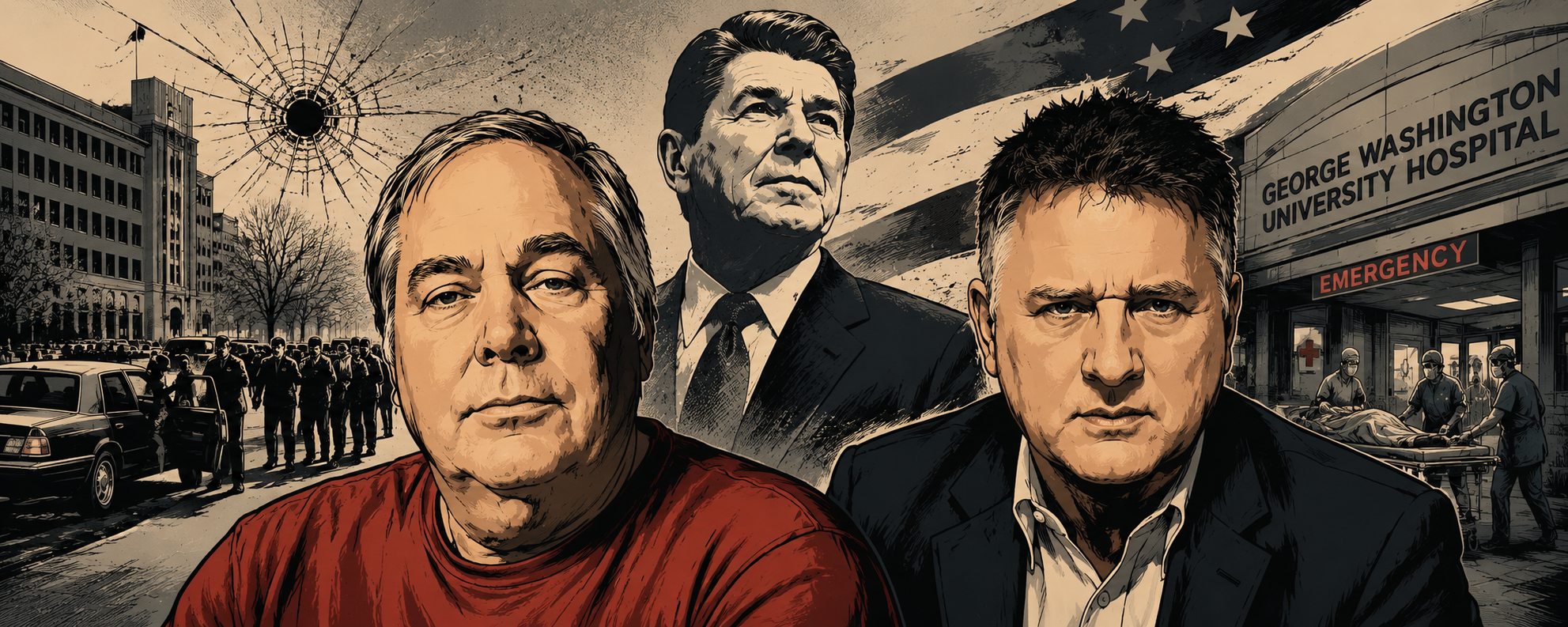
On March 30, 1981, Ronald Wilson Reagan, inaugurated president only two months earlier, spoke to the AFL-CIO at the Washington Hilton, a few blocks from the White House. The union audience appreciated that this conservative Republican president was himself a lifetime proud union member. He had run Hollywood’s Screen Actors Guild. As he left the stage, they applauded loudly.
Read more Remembering Dolly Parton: More Than a Country Music Legend
Reagan exited the back of the building at 2:25 p.m. Surrounded by staff, Secret Service, curious passersby, and media, Reagan smiled as he walked to his car. But not everyone was smiling. One unsmiling face in the crowd was a 25-year-old named John Hinckley, who Reagan would charitably refer to as “a confused young man.”
What was that young man thinking?
We now have answers we never had before, as the 71-year-old Hinckley just sat for a fascinating interview with Mark Joseph, producer of the 2024 Reagan movie starring Dennis Quaid, based on one of my books on Reagan. Joseph interviewed Hinckley ahead of the release of the extended, director’s cut version of the Reagan movie this September. (RELATED: Critics Be Damned: The Reagan Film Is Wonderful)
What Hinckley had to say is rather remarkable.
Interestingly, Hinckley told Mark Joseph that he had nothing against Ronald Reagan when he aimed to kill him in March 1981. In fact, he liked Reagan.
“I always had great respect for him,” said Hinckley. “Even when I did what I did, I liked him.”
Hinckley added that his parents liked Reagan. More than that, “they loved Reagan.” His father was thrilled the night Reagan was elected in November 1980. They voted for Reagan. Hinckley even told Joseph that he personally would have voted for Reagan in November 1984!
That is, if Hinckley wasn’t confined to a mental institution at that point.
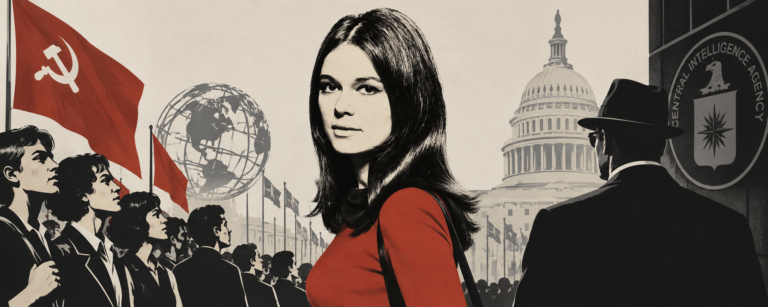
Hinckley wasn’t really after Ronald Reagan; he was after Jodie Foster. He had no hard feelings toward Reagan; he was obsessed with feelings for actress Jodie Foster. In March 1981, the confused young man had a singular personal goal: to gain the attention of Foster. Ever since he saw her in the 1976 Martin Scorsese film Taxi Driver, starring her and Robert De Niro, Hinckley was hooked.
And so, to get her attention, he would do something dramatic — like shoot the president of the United States, whoever he happened to be. Indeed, Hinckley had sought to gun down President Jimmy Carter earlier. He couldn’t get to Carter, but he got to Reagan.
Hinckley today seems to realize how warped that was. “I wanted to have a union with Jodie Foster and live the rest of my life with her and all these things that, of course, were delusional,” Hinckley told Mark Joseph. “But I was believing those things at the time.”
He couldn’t get her. So, he would get Reagan.
“As fate turns out, it was Reagan,” said Hinckley. He became the target of opportunity.
As Reagan left the Washington Hilton that afternoon, a reporter shouted out a question as the president approached the awaiting car door. Reagan raised his left arm as if to deflect the question. Just then, gunshots filled the air, followed by chaos, screaming, scurrying, and bodies hitting the ground. One of them was Press Secretary James Brady, who was shot directly in the head. He instantly fell face down on the pavement, not moving and bleeding from his skull.
The president was shoved into the back of the limousine by Secret Service agent Jerry Parr, who landed atop the 70-year-old president’s frame and barked directions to the driver to escape the scene. “Jerry, get off,” pleaded Reagan, “I think you’ve broken one of my ribs.”
Reagan did not yet know it, but he had been shot. Parr ordered the driver to head straight to George Washington University Hospital.
To Reagan’s great fortune, at that very moment the hospital’s best and brightest happened to be on hand for a meeting of department heads. That included the chief thoracic surgeon. The staff dashed to the ER and operating room. Reagan somehow found a way to put everyone at ease. Amidst his severe pain and anxiety, he managed to joke to the surgical team: “I hope you’re all Republicans.”
“But I realized I couldn’t ask for God’s help while at the same time I felt hatred for the mixed up young man who had shot me.”
But behind the laughter was fear. Reagan was scared “because no matter how hard I tried to breathe,” he later wrote in his diary, “it seemed I was getting less & less air.”
Reagan paused to pray — for the man who shot him, for John Hinckley. “I focused on that tiled ceiling and prayed,” Reagan later recorded. “But I realized I couldn’t ask for God’s help while at the same time I felt hatred for the mixed up young man who had shot me. Isn’t that the meaning of the lost sheep? We are all God’s children and therefore equally beloved by him. I began to pray for his soul and that he would find his way back into the fold.”
Reagan wrote that in his diary at the time. Biographers have shared those words.
But less known is that Ronald Reagan went even further spiritually, theologically. I learned just how deep from his pastor at the time, the Rev. Louis Evans, and I reported it in my 2006 book, The Crusader: Ronald Reagan and the Fall of Communism, which became the basis of the 2024 Reagan movie. Reagan told Evans that as he lay on that table bleeding, he had an intense internal conviction that he needed to forgive his shooter immediately, and that if he didn’t forgive, he wouldn’t be healed. His devout mother, Nelle, had long ago driven into him the paramount importance of forgiveness: “Ronnie, you always forgive.” Nelle’s boy had a strong sense that his recovery at that moment was contingent on his forgiveness. That God would take his life if he didn’t forgive his shooter.
Read more Saving Masculinity From the Left and the Manosphere
Remarkable, yes. When the Rev. Evans told me that, I said simply, “Wow.”
Had Hinckley ever heard that? Mark Joseph asked him. “No,” said Hinckley, “I had not heard that, but it sounds like something that Reagan would say or think because he was, in my opinion, a really gracious person.”
Of course, Ronald Reagan would forgive and survive, and for that, he credited God. He saw his survival as nothing short of divine intervention. He shared that conviction with sources as diverse as the Rev. Evans, Billy Graham, Mother Teresa, Cardinal Terence Cooke, and, of course, with Nancy and two of his children, Michael and Maureen.
When Reagan got back to 1600 Pennsylvania Avenue and began his recovery, he shared with his diary the conviction that he was spared for a special purpose: “Whatever happens now I owe my life to God and will try to serve Him in every way I can.”
For Reagan, that meant taking on an Evil Empire and launching an all-out, bold effort to (peacefully) win the Cold War. That was precisely what he went on to do. Numerous observers, from the left to the right, credit Reagan (among others, such as Mikhail Gorbachev, Pope John Paul II, Margaret Thatcher) with that historic accomplishment. (RELATED: Reagan, Gorbachev, and The Brink of War That Changed the World)
And you might be surprised to learn that John Hinckley does, too.
During their hourlong interview, Mark Joseph asked Hinckley: “Some people say that without him [Reagan] the Cold War would not have ended … the Soviet Union would still exist. Others say that he brought about its demise… Do you have an opinion on that?”
Hinckley’s reply was eye-opening: “I think yeah, the Cold War might still be going on if Reagan had not intervened, and you know, gotten this good thing going with Gorbachev, and tear down this wall, and all that stuff he did. I mean, who knows, the Cold War may still be going on.”
Hmm.
Mark Joseph then posed the follow-up question that begged to be asked: “Which means that your role in history is even more pivotal. Had you been successful, we would be in a different world. Is that how you see it?”
Hinckley: “I think so. Yeah.”
And thus, Hinckley conceded to Mark Joseph that, had he succeeded in killing Reagan that day, the Cold War would not have ended as it did.
Remarkable, for sure.
Speaking exclusively to The American Spectator, Mark Joseph talked about his interview with Hinckley. He admitted to being shocked at how much new information he learned. Few people know as much about Reagan as Mark and I. We both were astonished at what we didn’t know, including Hinckley stating that he never once talked to his parents about the shooting in all his four decades of confinement. Hinckley also talked to Joseph about how President Reagan had reached out to Hinckley’s psychiatric doctors to offer to meet him and forgive him in person, a meeting they advised against and thus never happened. Hinckley also candidly admitted that he had considered shooting President Jimmy Carter before Reagan. Rather chillingly, he said that he was so disturbed and “delusional” that he would have shot Jodie Foster.
“She definitely could have been a target,” said Hinckley, “but fate went the other way.”
Reagan became the target instead.
As for his feelings toward Jodie Foster today, Hinckley now “wishes her well.”
The entire interview is worth watching as a case study in, well, nothing that I can compare. Take a look yourself.
Mark Joseph and I have known each other for over 20 years, dating back to 2004 when he first called me about making a movie on Reagan after reading my book God and Ronald Reagan. Mark is a devout evangelical, and I’m Roman Catholic. We’ve both been most interested in Reagan’s religious convictions. What struck us about his Hinckley interview was the would-be assassin’s religious convictions, which Mark didn’t hesitate to ask about and which Hinckley didn’t hesitate to talk about.
“I’m a Christian,” Hinckley told Joseph. “I think the reason I have survived all of this was God…. I just don’t think I would’ve made it without God, or Jesus.” Hinckley said of this divine hand: “He [God] has seen me through a lot of ups and downs. He’s responsible for me surviving everything that I have survived.”
It’s interesting that Hinckley uses the word “survived,” given that Ronald Reagan felt that he survived Hinckley’s bullet likewise thanks to God. His sentiments will alarm and even offend and anger some people, including Reagan’s two surviving children, Patti and Ron, the latter being a well-known public atheist. Nonetheless, every Christian must believe in the ability and power of forgiveness and redemption. Ronald Reagan did; he believed it for himself and for Hinckley. He prayed for it. And Hinckley must have felt it, because he feels that way, too — to this day.
You can learn more about Hinckley and see that dramatic day — March 30, 1981 — reenacted vividly as Mark Joseph and crew release the extended, director’s cut version of the 2024 blockbuster Reagan. It will debut nationwide on September 25. Click here to find or request a screening at a theater near you.
Personally, as someone who regrettably watched some great scenes from the original version end up on the cutting room floor in 2024, I can tell you that you don’t want to miss the full version now available. John Hinckley and all.
Read more Maybe It’s Time We Girls Get Real About the 19th Amendment
READ MORE from Paul Kengor:
Whatever Happened to the Spare Tire?
Toy Story 5 and the Vanishing America of Toy Stores and Churches
How Anthony Fauci and the 1980s AIDS Scare Shaped Public Fear
About the Author