There has been much speculation about CIA Director John Ratcliffe’s surprise visit to Moscow last week as the war in Ukraine escalates to potentially apocalyptic levels. High-level diplomats from the Baltic states where Ratcliffe’s C-17 Globemaster stopped on the way to Russia say that it had more to do with warning the Kremlin about aiding Iran than the war in Ukraine. But the operation could be multifaceted and may have even involved a covert arms shipment to Ukraine.
Read more Trump Negotiates ‘Biggest Oil Deal in World History’
A former high-level U.S. intelligence officer tells The American Spectator that “Trump needs help in Iran and wants to end the war in Ukraine before Putin ends it on his terms.” The CIA has substantial and widely dispersed assets throughout Ukraine, growing vulnerable to Russian air strikes as ABM defenses are depleted. Whatever was secretly discussed between Ratcliffe and Russian intelligence chiefs during his 2-3 hours in Moscow, the timing and trajectory of the trip coincide with what appears to have been an emergency delivery of badly needed Patriot missiles to Kyiv routed through the Baltic states. (RELATED: The Chink in Ukraine’s Armor)
Within 24 hours of Ratcliffe’s stop in Latvia on the U.S. Air Force cargo jet, Ukrainian president Zelenskyy announced that he had received “some” Patriots.
Russia’s offensive operations are reaching levels sidelining the lawyerly negotiating track pursued by President Trump through Witcoff & Co. to virtual irrelevance.
“Some Patriot missiles have arrived. I cannot say how many, but some. We need more,” Zelenskyy said at a press conference with Estonian President Alar Karis in Kyiv on August 25. Ukraine’s president said he could not reveal who had delivered the precious PAC-2 or PAC-3 interceptors for which he had pleaded days earlier when there was nothing stopping Russian ballistic missiles pummeling Kyiv. (RELATED: Peace in Ukraine? What Nazi Germany Can Teach Us About Defeating Putin’s Russia)
Russia’s offensive operations are reaching levels sidelining the lawyerly negotiating track pursued by President Trump through Witcoff & Co. to virtual irrelevance. Kremlin spokesmen have described formal peace talks as “frozen.” Russian forces are closing in on Ukraine’s last strongholds in Donetsk, which Putin told Trump at last year’s summit in Alaska would be seized by force if they weren’t surrendered. Missile attacks on Kyiv and increasingly on the strategic port of Odesa, in retaliation for Ukrainian drone swarms against Crimea, have intensified.
Zelenskyy is preparing to strike further against Russia with SCALP cruise missiles that Ukraine will be producing domestically with transferred British technology. While American defense contractors will not grant licenses for the production of Patriots in Ukraine over security and business considerations, British Prime Minister Andy Burnham personally handed over “Storm Shadow” blueprints to Zelenskyy last week.
Damage inflicted on Russia’s vital oil industry and other key sectors of its economic and defense infrastructure by Ukrainian attack drones and domestically developed Flamingo cruise missiles is hurting Russia. Oil production has been reduced by half, forcing a ban on diesel exports to maintain domestic supplies, which are down by a third. Ukrainian drones have recently struck Russian satellite space launch sites and even a nuclear submarine base near the Arctic. (RELATED: Putin Wanted an Empire. Instead, He Got Dependence on China.)
SCALPs are armed with 1,000-pound warheads with an initial charge that punches through soil, rock, or heavy concrete for a heavier charge to enter a structure before detonating. Ukraine’s talented weapons engineers will try to enhance the missile’s 350-mile range for deeper strikes that could obliterate Russian logistic bases, command bunkers, and most importantly ballistic missile launchers, which Zelenskyy says his intelligence services are hunting down. He hopes to blunt Putin’s push on Donetsk’s remaining “fortress belt” cities of Kramatorsk and Sloviansk that are currently under heavy siege.
Putin has ordered his generals to take the strongholds reportedly garrisoned by 50,000 Ukrainian troops by Dec. 30, although intelligence sources suggest that Russian military planners realistically calculate that it would take at least until February or March. That could allow time for Ukraine to bring its SCALPs to bear with sufficient force to further prolong what could turn into the deadliest urban battle of the war. Astronomic Russian casualties already running at over 1,500 per day, according to Ukrainian estimates, could force Putin to compromise or even provoke a coup against him. But that’s a long shot, and Putin could strike at NATO countries providing key military aid to Ukraine if his power is threatened.
The Russians have raised the tone of retaliatory threats against the U.K., which the Kremlin accuses of “adding fuel to the fire.” Spokesmen warn of “catastrophic consequences” for “strikes on Russian territory carried out using British weapons,” threatening to strike back at the U.K. itself and British equipment and personnel in Ukraine where a vast British military mission operates out of the embassy in Kyiv.
The Wall Street Journal reports that concerns over possible strikes against NATO were among the main factors prompting Ratcliffe’s mission to Moscow.
Russian drones have been spotted over the Baltic states, Poland, the Netherlands and other NATO countries. In Germany, armed Russian UAVs seem to have been used in an attempt to strike a Ukrainian cargo plane at the international airport in Leipzig. Russian frigates regularly probing U.K. waters have been conducting live fire exercises along the English Channel.
Putin appears ready to go for broke, and a pattern clearly emerging from the war is that anything Ukraine does to the Russians, they do back twice as hard. While Ukraine lays out SCALP assembly lines, Russia is developing an enhanced Iskander — a 1,000-ballistic-missile system with greater speed and longer range than the current model M, which can be launched from beyond the range of cruise missiles and even Patriots may be unable to intercept.
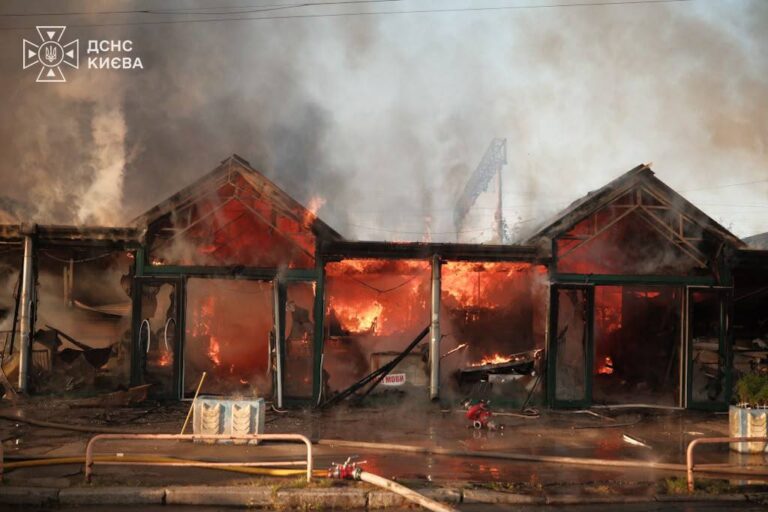
In last week’s column, I wrote that fighting had died down in the Black Sea following a devastating Ukrainian strike on the Russian naval base and oil terminal of Novorossiysk. I spoke too soon. Over the past few days, Russia has struck back at Odesa with an unprecedented missile barrage closing Ukraine’s only sea port.
A port manager reached by phone who asked not to be identified by name tells The American Spectator that he has spent 24 hours inside a bunker as “a hundred missiles” fell on the harbor area. Cargo ships were sunk, grain silos and food warehouses were destroyed, and road and bridge connections to the country’s interior and to neighboring Moldova and Romania, whose Danube river ports are used as alternate routes for Ukrainian grain exports, were hit and put out of use. “Ship traffic is zero,” he said.
A Russian naval drone was intercepted last week approaching an offshore drilling platform under construction in what is Europe’s largest deep-water natural gas project underway in Black Sea waters off Romania.
Preventing further escalation may require gaining leverage on both sides. As Patriots were delivered to Ukraine last week, Zelenskyy agreed to halt drone attacks on Moscow and St. Petersburg while Ratcliffe and his accompanying delegation tried to bend Putin to cooperate.
Read more Hamas’s Fire Kites Put the Gaza Cease-Fire to the Test
READ MORE from Martin Arostegui:
The Chink in Ukraine’s Armor
CIA Files Raise New Questions About Smartmatic and Venezuela’s Elections
Spain: Pedro Sánchez Declares Border War on His Own Country
About the Author