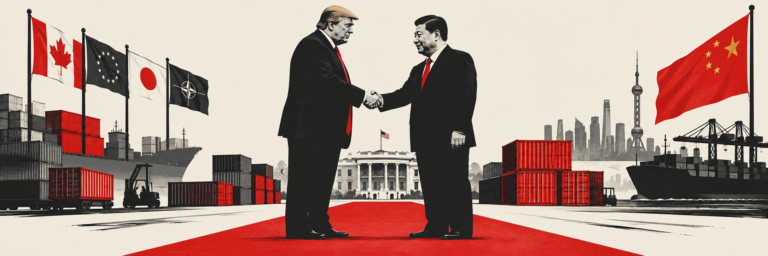
Donald Trump did not get Greenland.
That is not a semantic argument about what constitutes “control.” It is the most important fact about the agreement announced this week.
Read more Demolish the Kennedy Center (and All the Rest)
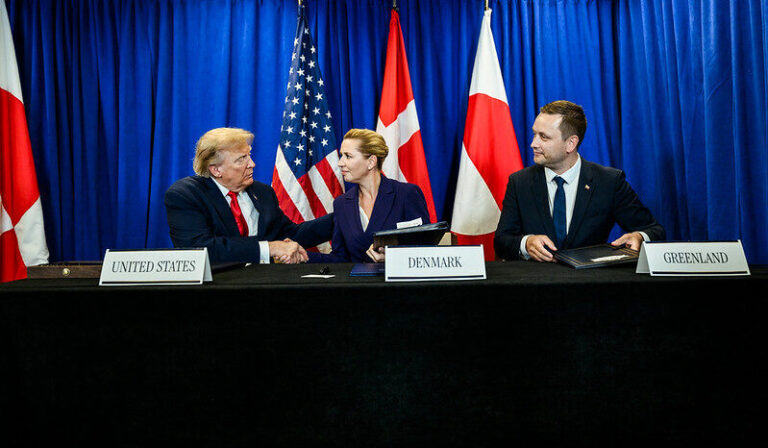
After months of threats, tariffs, talk of purchasing the island, and warnings that anything short of American control would be unacceptable, Greenland remains under Danish sovereignty. Yet Washington appears to have secured much of what it actually wanted: a significantly expanded and durable military role, stronger restrictions on adversarial bases and sensitive investments, and greater freedom to protect American interests in the Arctic.
Trump calls this “permanent control over security.” Denmark calls it an agreement that preserves sovereignty. Both descriptions reveal something important. America did not acquire Greenland. It acquired a more durable ability to secure American interests there.
That may be the more consequential achievement.
Months ago, amid the initial controversy over Trump’s demand for the island, critics on the Right argued that the United States did not need to own Greenland to obtain what it needed for national security. Washington already possessed substantial rights there, and additional requirements — from missile defense to expanded access — could be negotiated with Denmark. (READ MORE: Trump and Greenland: A NATO Test)
That is, in broad terms, where Washington has now arrived.
The significance goes beyond the Arctic.
Greenland offers a useful example of what happens when coercion is eventually converted into an agreement. It also arrives at an important political moment. With the 2026 midterms approaching, foreign policy is no longer an abstraction removed from domestic politics. The Iran war, energy prices, and the question of when an American military commitment actually ends have become part of the political environment.
The United States has already demonstrated that it can hurt Iran militarily and economically. The unresolved question is what Iran must do … for Washington to conclude that the leverage has accomplished its purpose.
For the administration, Greenland offers something Iran has not yet provided: a defined result.
Washington can identify what it obtained — greater access, greater military freedom of action, and restrictions on adversaries — without territorial annexation, occupation, or an endless dispute over who governs the island.
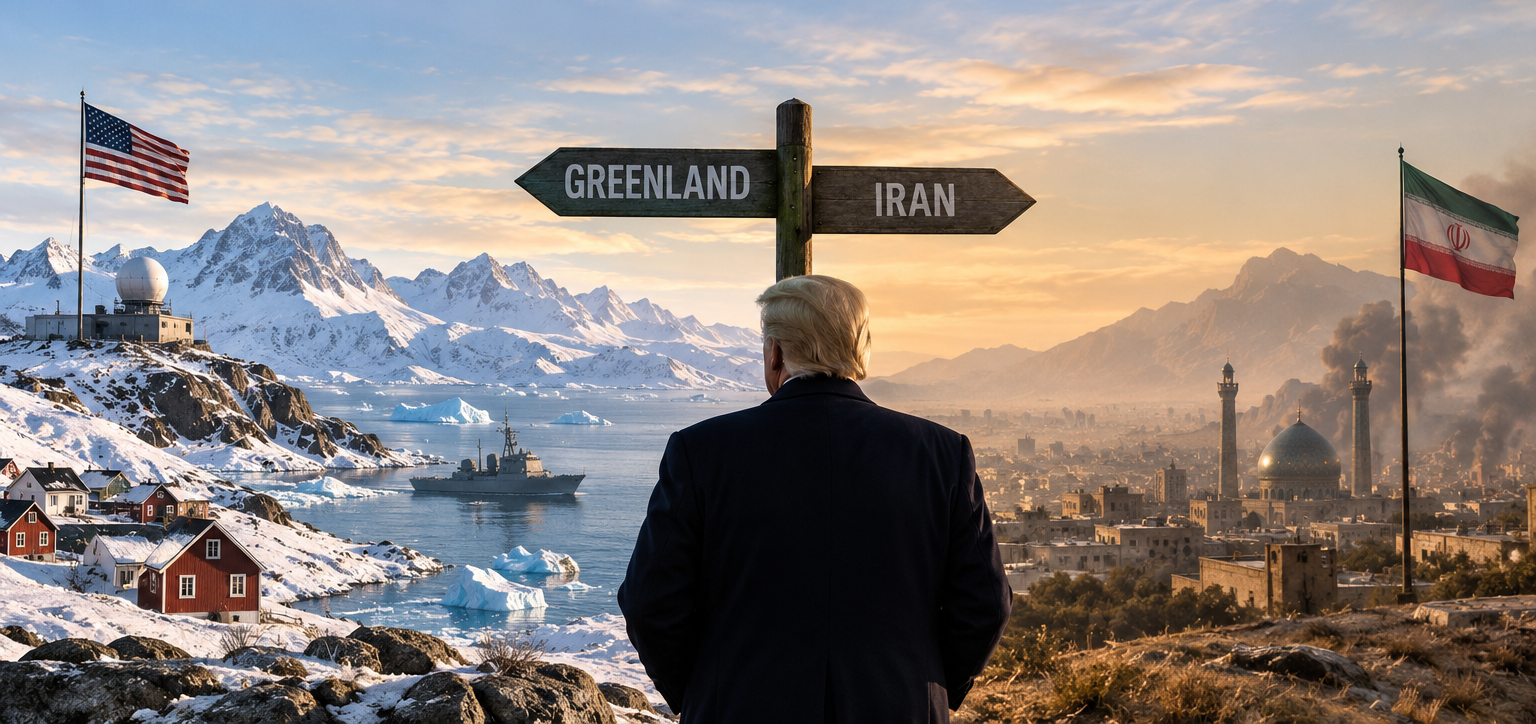
This is where the contrast with Iran becomes more important than the usual debate over whether one policy was a “success” and the other a “failure.”
The real distinction is the existence of an off-ramp.
An off-ramp in foreign policy is not simply a ceasefire or a declaration that the mission has been accomplished. It is the point at which pressure has produced a political condition concrete enough that continued escalation is no longer necessary to achieve the original objective.
Greenland now has something resembling that condition.
The United States wanted to prevent Russia or China from acquiring a strategic foothold in the Arctic. It wanted expanded military access and greater freedom to build the infrastructure necessary for continental defense. Whatever one thinks of Trump’s methods, those demands are now being translated into an institutional arrangement with Denmark and Greenland.
The pressure produced a destination.
Iran remains a different problem.
Nearly seven months after the U.S.-Israeli war began, Iran has been badly damaged and placed under extraordinary economic pressure. Its conventional military capabilities have been degraded and its oil trade targeted. Yet the government remains in power, disruption around the Strait of Hormuz continues, and military exchanges have not disappeared.
The question is no longer whether American military power can hurt Iran. It plainly can.
The harder question is what political condition that damage is supposed to produce.
That question is increasingly visible across the American Right. Some argue that Washington remains stuck because it has not been willing to fight decisively enough. Others warn that the conflict risks becoming a quagmire. Still others argue that declaring victory is impossible while Iran retains the ability to continue fighting.
Different conclusions follow from those arguments, but they share a problem that Greenland largely avoids: the endpoint is difficult to define. What would constitute enough?
The destruction of Iran’s nuclear infrastructure? Verifiable limits on enrichment? Permanent freedom of navigation through Hormuz? An end to attacks on American forces? Restrictions on ballistic missiles? The dismantling of Iran’s regional networks? Regime change?
Read more Paramount’s Hollywood Exit Could Trigger an Avalanche in Los Angeles
Those are radically different objectives. They require different levels of force, time, and political commitment. Unless Washington decides which condition actually ends the conflict, every military achievement creates the possibility of another objective appearing behind it.
That is how wars acquire lives of their own.
The 2026 election calendar makes this harder to ignore. A campaign-season declaration that the war is ending is not itself an off-ramp. An off-ramp has to describe the political arrangement that exists the day after the shooting stops.
This distinction also goes back to what Republicans promised before returning to power.
The 2024 Republican platform did not advocate isolationism. It called for the strongest military in the world and a foreign policy centered on essential American interests. But it also argued that military strength should be used sparingly and only where clear national interests are threatened. It promised to prevent World War III and restore peace through strength.
The phrase matters because it contains two separate ideas.
Strength is the instrument. Peace is supposed to be the political result. Greenland is revealing precisely because the original rhetoric was so maximalist. Trump began by talking about ownership. He ends, at least for now, with access.
He began with the proposition that America needed Greenland. The agreement suggests that what America actually needed was the ability to defend Greenland, operate from Greenland, and prevent adversaries from exploiting Greenland.
Those are not the same thing.
Recognizing that distinction did not require Washington to abandon its security objectives. It required separating the objective from the most expansive possible means of achieving it.
American power creates a recurring temptation to define success through control: control the territory, control the waterway, eliminate every hostile capability, prevent the next threat before it emerges.
But the more absolute the definition of security becomes, the harder it becomes to identify the moment when military action is no longer required.
Greenland avoided that trap because Washington ultimately accepted something less dramatic than ownership and more useful than symbolism.
Access can be measured. Basing rights can be exercised. Adversary investments can be blocked.
Those are political outcomes, not merely demonstrations of power.
Iran now presents the harder test.
The United States has already demonstrated that it can hurt Iran militarily and economically. The unresolved question is what Iran must do — or what regional condition must exist — for Washington to conclude that the leverage has accomplished its purpose.
Until that question has an answer, the difference between Greenland and Iran will remain stark.
As the 2026 midterms approach, that distinction may matter more than any declaration of victory.
READ MORE:
Will Saudi Arabia Fight the Houthis and Join the Abraham Accords?
9/11 at 25: From ‘Where Were You?’ to ‘Where Are We?’
Travis Lynch is an international relations graduate and independent journalist. His writing focuses on U.S. foreign policy and national security.
Read more On Cappuccino and Standards
About the Author