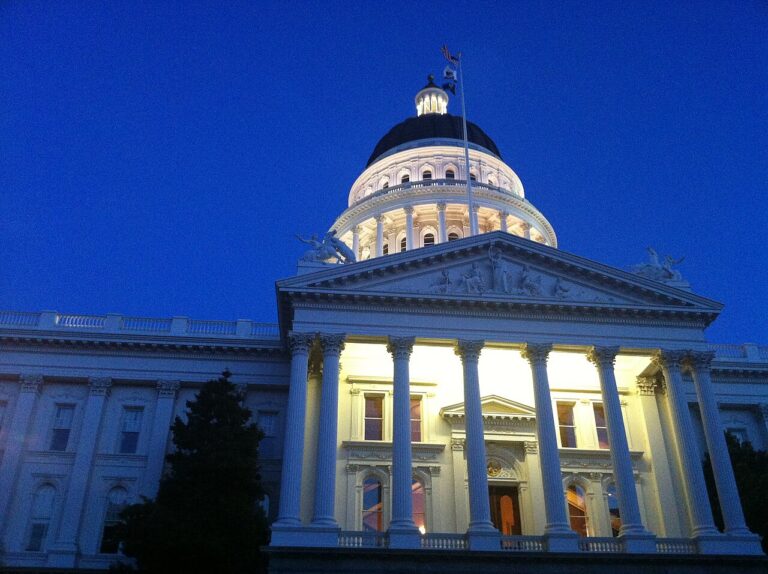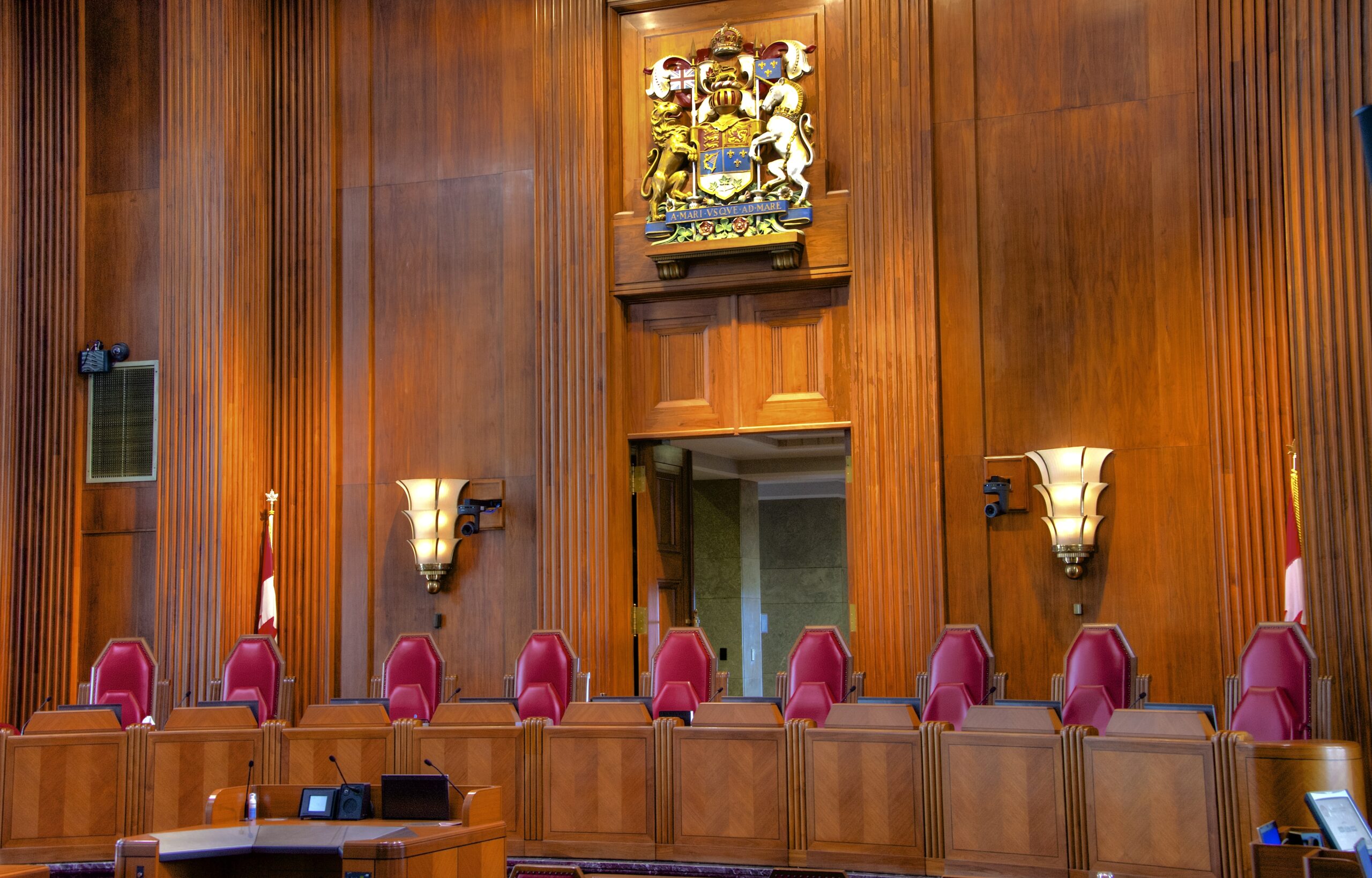
The highest court in the land. The Supreme Court of Canada. Captured during Open Doors Ottawa.
In the United States, the law is the same for everyone, regardless of race — at least theoretically. But in Canada, there is a parallel justice system for the favored race: indigenous people.
Read more The Spectator P.M. Ep. 253: Doug Emhoff Is Against Kamala Harris’s 2028 Bid
Since 1999, judges have been asked to give more lenient sentences to indigenous people out of ideological concern for “Indigenous overincarceration.” In addition, indigenous people are offered “sentencing circles” specific to “Aboriginal offenders.” These “sentencing circles” consist of members of the indigenous community, including “Elders”; they make recommendations to a judge about what sentence a person should receive.
These “sentencing circles” seemingly exist entirely for the purpose of getting indigenous people off easy. Canada’s Department of Justice explains: “Often the circle will suggest a restorative community sentence involving some form of restitution to the victim, community service, and treatment or counselling, and/or a period of custody.”
This model of “justice” recently became the subject of a case considered by the Supreme Court of Canada. The question raised there was: What happens when we have both an indigenous offender and an indigenous victim? Canada also gives harsher sentences when crimes are committed against indigenous people, so the court had to consider what to do when racial preference is awarded to both sides. They determined that it is more important to let indigenous perpetrators off easy than it is to give a harsher sentence for a crime committed against an indigenous woman.
The case, R. v. Cope, concerned an indigenous man, Harry Arthur Cope, who beat his indigenous common-law wife, Brittany Sack, to the ground on a sidewalk in Halifax. She suffered injuries so severe from his punches that her face was covered in blood.
When it came time for the judge to sentence the man, the “sentencing circle” came out and told the judge that the man should receive no time in prison — despite the fact that he had a lengthy criminal record. The judge considered that opinion, and then sentenced the man to five years in prison.
On appeal, that sentence was reduced to three years because the appeals court ruled that the judge should have more closely considered the indigenous sentencing circle’s recommendations and the perpetrator’s “Indigenous background.”
The Supreme Court’s consideration of the case was a big deal in Canada. A full 22 groups were given “intervenor status” in the case, including, per Canada’s National Post, “the attorneys general of three provinces, First Nations and Indigenous organizations, law groups, and numerous human rights, civil liberties and constitutional advocacy organizations.” The case was a closely decided 5-4.
In the end, the appeals court’s lighter sentence won the day. The Supreme Court ruled that the original judge “did not give enough weight to the sentencing circle and its recommendations.”
The Supreme Court opined (essentially) that judges must be absolutely subservient to indigenous sentencing circles — no matter how much they prioritize violent wife beaters over innocent victims.
“The lessons of the sentencing circle are more than just a source of factual information relevant to a fit sentence, but are key to understanding the Indigenous perspective on sentencing,” ruled the court. “What is required is that a sentencing judge reasonably engage with the perspectives expressed in the sentencing circle in crafting a fit and appropriate sentence.”
Read more What Socialism Has Wrought in Cuba Will Be a Nightmare to Unwind
The original judge failed, the court said, because she did not “meaningfully engage with the sentencing circle process,” despite the fact that she discussed the sentencing circle in her ruling.
The court put aside the fact that this case involves a Native man beating his significant other and pinned the blame for “Indigenous overincarceration” and violence against indigenous women on “colonization.”
“Both of these pressing issues,” the court said, “have been shaped by the experiences of colonization and addressing them together is central to the ongoing process of reconciliation.”
The court’s minority, meanwhile, prioritized Parliament’s directive to give harsher sentences to perpetrators against indigenous victims.
The minority said: “The majority’s proposed sentencing framework fails to reflect Parliament’s direction to sentencing judges… to prioritize denunciation and deterrence, and to generally impose harsher sentences for the abuse of vulnerable victims, including Indigenous women and girls.”
Many indigenous activists in Canada celebrated the decision.
Anne Crawford, an Iqaluit lawyer, told Nunatsiaq News that the judgment “uplifts the role that Indigenous victims, their families and their community should play in criminal sentencing.”
Crawford was joined by an activist group, the Women’s Legal Education and Action Fund, which argued that putting perpetrators of violence against indigenous women in prison counterintuitively harms indigenous women.
It in its intervention before the court: “Research and case law show that prison does not reduce recidivism, thus undermining the safety of Indigenous women. [The Women’s Legal Education and Action Fund] submits that Indigenous-led justice initiatives and sentencing recommendations are more likely to meet the goal of safety for Indigenous women in the long term than approaches to sentencing based in Euro-western tradition.”
This legal system is a joke, and these activist groups have their priorities entirely out of order. Too bad for this innocent victim.
Read more Freedom’s Forge for the 21st Century: America’s Maritime Revival
READ MORE from Ellie Gardey Holmes:
What an Awful Woman
The Decline of Bisexuality
10 Times Abdul El-Sayed Was Absolutely Wacked Out
Image licensed under CC BY 2.0.
About the Author