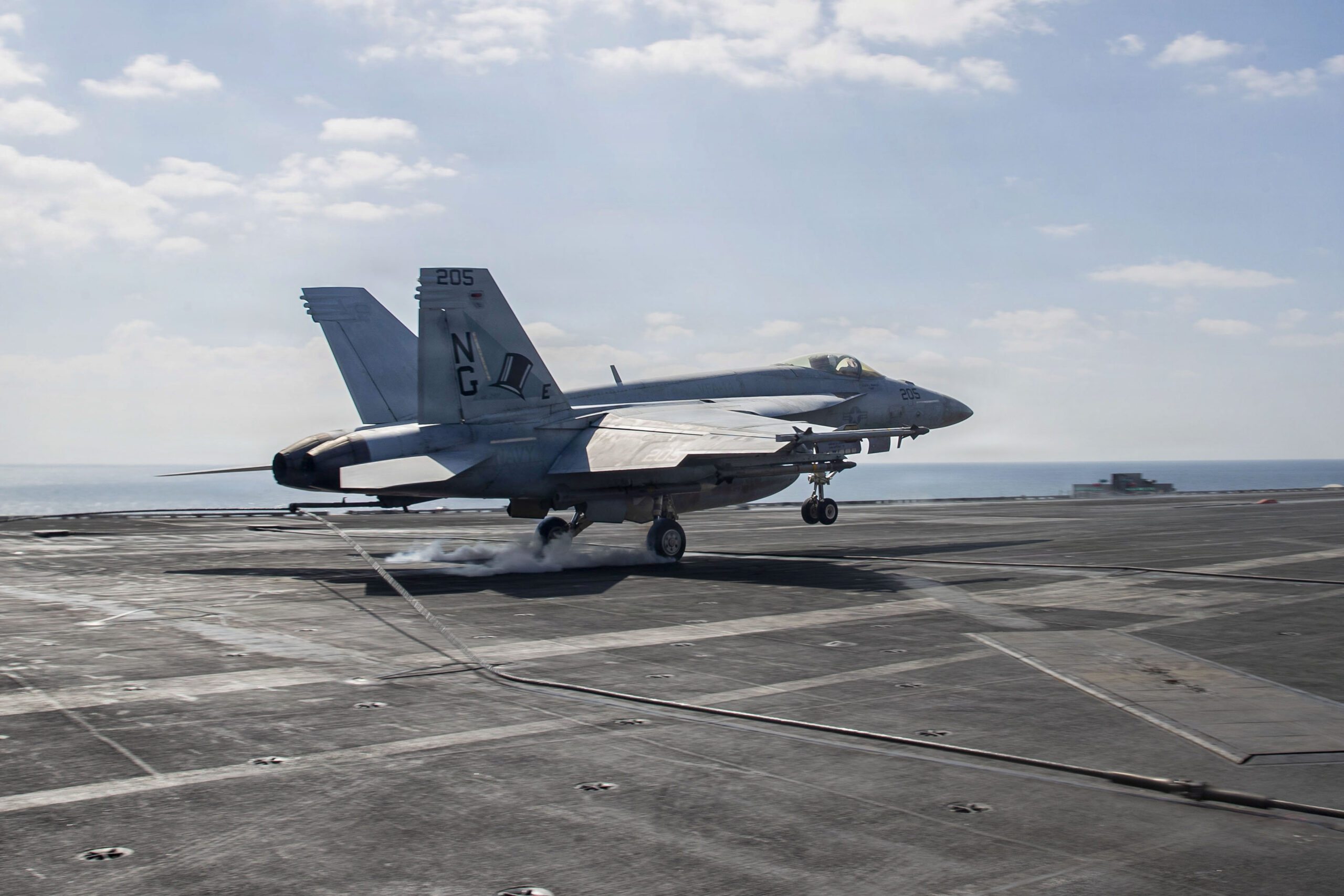
An F/A-18E Super Hornet, attached to Strike Fighter Squadron (VFA) 14, makes an arrested landing on the flight deck of Nimitz-class aircraft carrier USS Abraham Lincoln (CVN 72) in support of Operation Epic Fury, March 3, 2026. (U.S. Navy photo)
President Trump was not fear-mongering when he said that Iran could “take out Los Angeles or San Diego,” but he badly needed to explain himself. He did, a day later, when he said that if Iran had nuclear weapons they could do so but that, “We’re not going to let that happen. We protect our cities. We protect our country. We’re not letting that happen.”
Read more The Green Party’s Anti-Zionism and the Politics of Antisemitism
Mr. Trump — and several of our faux-allies in the Middle East (Israel is the only real one) — are still looking for a way out of the Iran war but there isn’t one handy. The biggest problem this week was for Saudi Arabia.
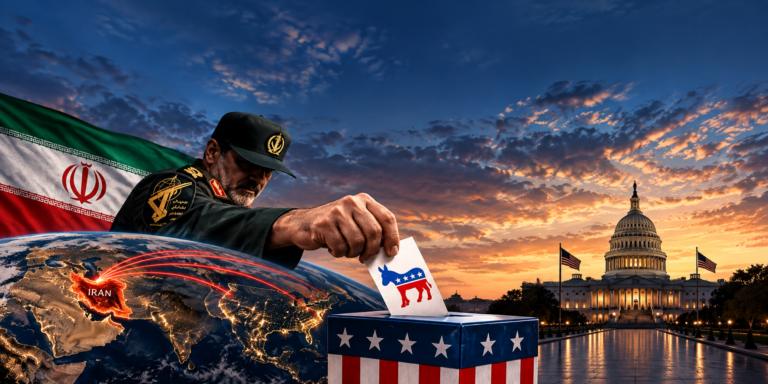
With most of its leadership dead, the IRGC is the only thing holding Iran together.
Before we get to the Houthis’ attacks on the Saudis, let’s examine who else is sticking his nose where it shouldn’t be. Russian President Putin said he’d help bring the Iran war to an end. His “help” will only make matters worse. Mr. Trump should ignore the offer.
There are other things going on we should take interest in. While the United States has demanded that Iran stop its nuclear enrichment processing, Mohammad Eslami, the head of the Atomic Energy Organization of Iran declared that enrichment is an inseparable and integral part of the country’s nuclear process. In other words, they refuse to stop.
As this column has said, ad nauseam, we cannot stop Iran’s march to nuclear weapons unless we topple the Tehran regime.
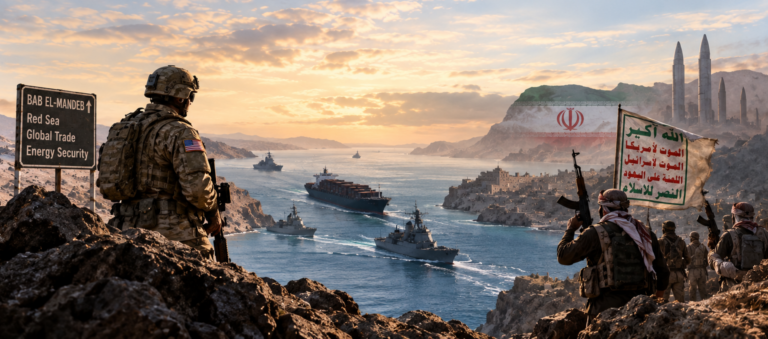
And so back to the Saudis’ problem with the Houthis. The Houthis have, for over two weeks, been launching missile and drone attacks at the Saudis’ airports — King Saud airport near the Saudi capital city of Riyadh and 400 miles away at Abah — including fueling facilities for those airports and ships sailing through the Red Sea. Several people have been killed in those attacks.
At least 12 were killed and hundreds wounded in an attack on King Saud airport on Saturday. Will the Saudis respond?
The Saudis always prefer us to fight their battles for them. In this case, Mr. Trump has wisely decided not to. So far the Saudis have reluctantly and in a desultory manner, responded to these attacks on their own.
These attacks came at roughly the same time as Iran’s apparent attacks on ships moving through the Strait of Hormuz. According to the International Maritime Organization, at least 11 tankers have been hit in the month of October. At least one tanker was hit by several projectiles probably emanating from Iran. Many injuries have been suffered by the tankers’ crews.
Read more Hollywood’s Liberal Movies Are Flopping, but the Message Isn’t Getting Through
According to Euronews.com, the Iranian Revolutionary Guard Corps blames this escalation on U.S. interference in their maritime traffic, meaning our blockade is working. The Iranian rial is trading at about 2.7 million to the U.S. dollar and, as I said last week, inflation is over 100 percent.
The question that remains is how long can the Tehran regime manage to hold their country together.
Regional warfare is reported by several sources. Fighting in northern Iran has taken the lives of hundreds of civilians who have been slaughtered by IRGC forces, though the civilians have continued to fight back in places such as Kouhdasht in the north as well as Zahedan and Manzelab in the south. We should be arming and helping the rebels communicate, which we are probably doing. If we are not, we obviously should be.
With most of its leadership dead, the IRGC is the only thing holding Iran together. Its arms include drones and missiles and they are still a formidable force. If we, and the Israelis, can manage to kill most of the IRGC’s leaders, we may be able to force a peace.
But that will require us to assassinate many or most of them. Executive Order 12333, which goes back to the Reagan era, prohibits us from doing so. It explicitly bans government personnel from engaging in or conspiring to commit assassination, and forbids undisclosed influence in domestic organizations. (Whether the IRGC, a military wing of the government, qualifies as a “domestic organization” would make for a good debate.)
There’s a simple way out of that problem. The president could sign, in secret, a modification to EO 12333 to provide an exception for Iran.
If he did, he would have to notify the “Big Eight,” the speaker of the House and the minority leader, the president of the Senate and the minority leader and the chairs and vice chairs of the Senate Select Committee on Intelligence and the House Select Committee on Intelligence. We can expect leaks from Democrats on both sides.
Will Mr. Trump do so? It seems unlikely. These are tough choices for the president to make. But he needs to make them before it is too late to topple the Tehran regime. It may already be so.
Read more Anti-Italian Discrimination: The Bigotry Behind the Columbus Cancellers
READ MORE from Jed Babbin:
The IRGC’s Midterm Endorsement Creates a Problem for Democrats
Trump Faces a Choice on Iran: Make a Deal or Escalate the War
The Iran War, the Houthis, and America’s Problem With Winning Wars
About the Author