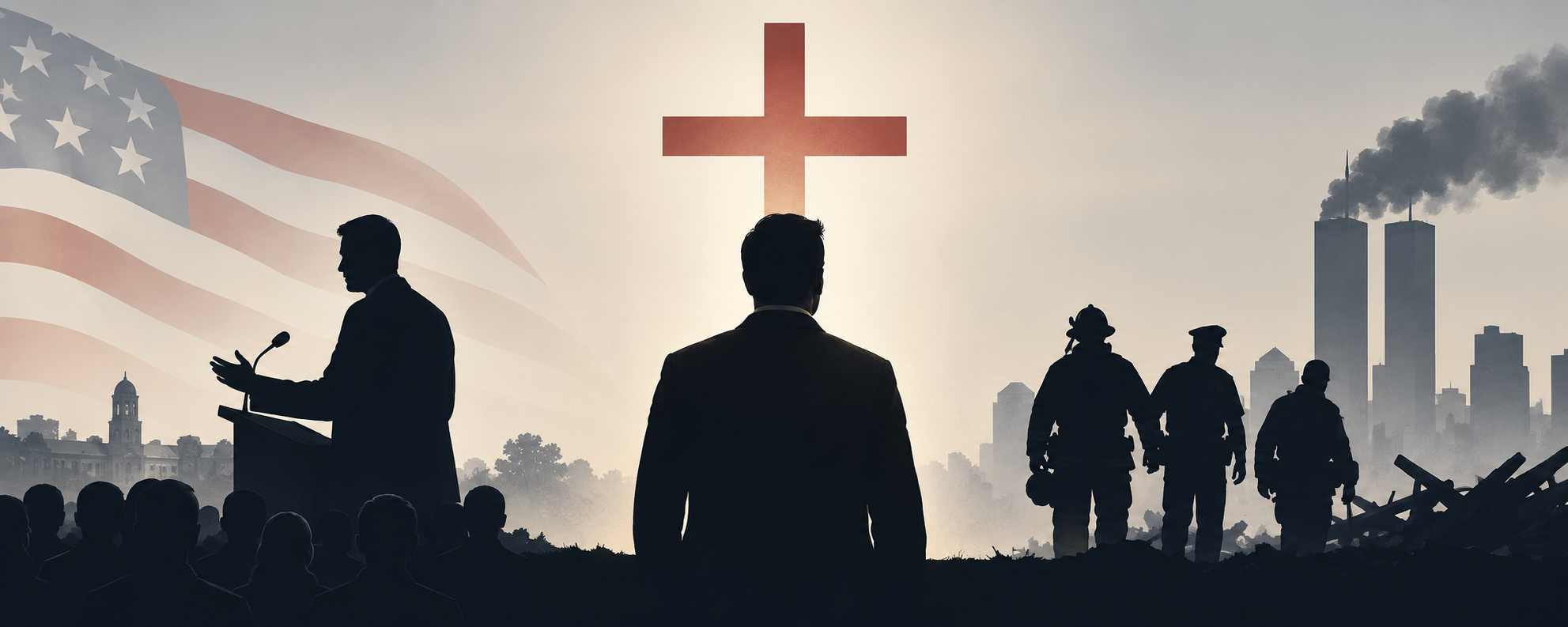
Last week, America commemorated the one-year anniversary of the assassination of Charlie Kirk and, the following day, the 25-year anniversary of the Sept. 11 terrorist attacks on the World Trade Center.
Read more The Towers Seemed Eternal. So Did My Mother.
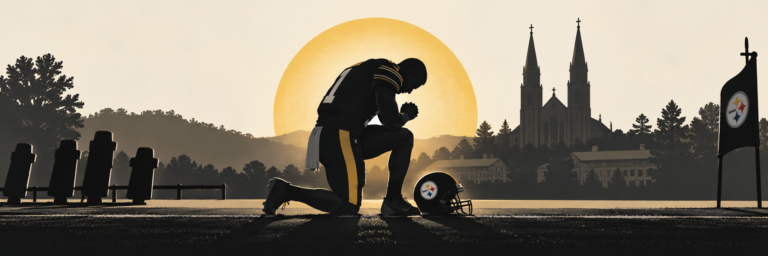
While Charlie Kirk was widely recognized as a political activist, a critical ally to President Donald Trump, and the founder of Turning Point USA, he was first a husband, a father, and a devout Christian. Kirk lived a life of devotion — devotion first to God and His commandments, then devotion to his wife and children, and, finally, devotion to his nation.
The name “Charlie Kirk” will no doubt go down in the annals of history alongside the names of great patriots like Joseph Warren, who gave his life fighting the British at the Battle of Bunker Hill, and Nathan Hale, who famously declared, “My only regret is that I have but one life to give for my country,” before being hanged by the British for aiding General George Washington in the Revolutionary War.
There is much to learn from the all-too-short life of Charlie Kirk, but one of the most crucial lessons is the way in which he lived his very life. Kirk was a man of discipline, of virtue, and of hope. He devoted his life to living in a manner pleasing to God and following the example of Christ as both a leader and a servant. He lived as he died: serving his countrymen, loving his neighbor. (RELATED: America Has Not Learned the Right Lessons From Charlie Kirk’s Murder)
The same leftists who grotesquely, callously celebrated Kirk’s murder and mocked his life and death love berating conservative Christians for not “loving your neighbor.” Of course, by “neighbor,” they very often mean those at the fringes of society: illegal aliens, criminals, drug addicts, sexual deviants, and the like. Some of these are people who have no right to be present in American society, while others have intentionally chosen to cut themselves off from that society.
Charlie Kirk recognized who his neighbor is — his fellow Americans, the people who live and work and vote by his side — and, in imitation of Christ, gave his life loving his neighbor. He did not shy away from uncomfortable topics or compromise his moral principles for the sake of popularity. He spent his entire adult life ministering to young adults on college campuses, sharing truth with those trained in lies. He lovingly gave his life doing this every day, which is what prepared him to give his life, to face death, doing the same. (RELATED: Who Gets Canonized — And Who Gets Condemned?)
This same devotion and courage was evinced a quarter of a century ago by the brave men and women who gave their lives loving their neighbors when Islamic, anti-Christian terrorists attacked New York City. (RELATED: The Day the Light of the World Went Out)
Welles Crowther, a 24-year-old equities trader and former volunteer firefighter, went up and down the stairwells repeatedly to lead others out to safety, even carrying an unconscious woman down flights of stairs so that she might live. Nicknamed the “man in the red bandana” for the red handkerchief he wore around his face to keep out smoke, Crowther died the way that he lived, going into the stairwells one more time to save just a few more lives.
Read more The New AI Job-Displacement Target: Surgeons?
Morgan Stanley’s security chief Rick Rescorla similarly gave his life loving his neighbor. The Vietnam War veteran led thousands of employees down the stairs as the building collapsed, singing marching songs to comfort and calm others. Nearly all of Morgan Stanley’s 2,700 employees in the building survived, thanks to Rescorla, who did not make it out alive.
New York Police Department officer Moira Smith directed evacuees to safety and carried the injured out of the destruction. She stayed at the site until the buildings collapsed entirely, killing her. The first fatality on that awful day was Fr. Mychal Judge, the New York City Fire Department chaplain, who was killed while administering last rites.
These heroes, and countless others that day, laid down their lives in service to their countrymen. They did this not for glory or honor, not in the hopes of racking up brownie points, but because they lived their lives in such a way that laying them down in love and service came naturally.
A classic sermon illustrates the principle nicely: Two gentlemen are out horseback riding one day when their horses stumble and fling the men to their deaths. One of the men is a drunkard and a cad, in the habit of swearing profanely and profusely. When his horse tosses him in the air, he calls out, “Well I’ll be damned!” The other man is pious and prayerful, careful to live according to God’s commandments. Moments before his death, he cries out, “Lord, have mercy on me!”
The habits each man formed and practiced throughout his life dictated his actions at the moment of his death. It is not surprising that the man who spent his life giving no thought to God or virtue likewise gave no thought to God or virtue when faced with death. Nor is it surprising that the man who practiced discipline and prayer had the discipline to pray in his final moments.
Charlie Kirk lived his life in imitation of Christ, as, no doubt, did so many of the heroes of Sept. 11. It is this cultivation of habit, this repeated discipline of soul, which made every one of these patriots heroes, so that even in the midst of tragedy and horror, they could carry the light of Christ and truth into the darkness.
Read more Schools Should Teach, Not Screen Every Child for Mental Illness
READ MORE from S.A. McCarthy:
Surrogacy Is the New Slavery
Catholic Bishops Fight Trump’s Stricter Vetting of Migrant Child Sponsors
Lindsay Clancy, Motherhood, and a Culture That Has Forgotten Sacrifice
About the Author