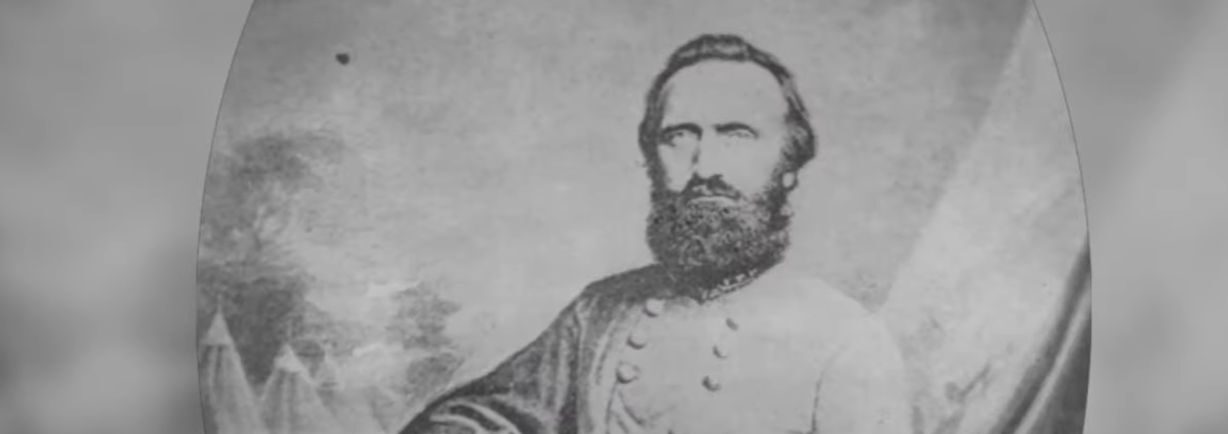
At the Battle of First Manassas (or Bull Run, if “Manassas” has been canceled because that is what the Confederates called the battle) on July 21, 1861, Union forces had rallied, driving the Southerners from Matthews Hill and were moving towards Henry House Hill, where a Confederate brigade led by Gen. Thomas J. Jackson formed a line of battle. A fierce artillery battle ensued. Union forces under the command of Gen. Irwin McDowell ascend the slope of Henry House Hill. Jackson, seated on his horse, who had ordered his brigade to lie in wait until Union infantry moved within range, suddenly told his men to rise up and fire into the approaching Union force. Jackson’s brigade held the hill, and at one point in the struggle, Confederate Gen. Bernard Bee, who suffered mortal wounds in the battle, yelled to his men: “There is Jackson standing like a stone wall. Let us determine to die here and we will conquer.” The tide of battle soon turned in the Confederates favor after Jackson ordered his men to “Yell like furies” and advance down the hill. A military legend was born.
Read more Joe Lonsdale Has a Different Answer to America’s Homelessness Crisis
All exhibited worthy character traits alongside their human flaws. All deserve to be remembered, if not honored.
“Stonewall Jackson,” as he was known thereafter, eventually became one of the Army of Northern Virginia’s most effective generals, forming a partnership with Gen. Robert E. Lee that prevented Union forces from taking Richmond early in the war during the Seven Days Battle, and more memorably led Confederate troops to victory at the Battle of Chancellorsville, despite being hugely outnumbered by Union forces. Author and historian Shelby Foote captured the essence of Jackson’s character and leadership qualities: “He read the New Testament in his off-hours, but did his military thinking in accordance with the Old.” There is a revealing scene in the movie Gods and Generals, where Jackson exits a field hospital almost in tears after praying for wounded soldiers and decrying the slaughter of the war. One of his aides says: But we have been invaded by Federal troops, what are we supposed to do? Jackson replies sternly: “Kill em. Kill every last one of them.”
Jackson’s courage was legendary. He feared nothing. He was deeply religious, submitting himself to “God’s will” while looking to gain the favor of “Providence” by his actions. Prior to the Battle of Sharpsburg (or Antietam, if “Sharpsburg” has been canceled due to woke semantics), Jackson achieved a dramatic victory at Harper’s Ferry, capturing large quantities of Union weapons and supplies and forcing the surrender of nearly 13,000 Union troops — the largest surrender of U.S. military forces until the surrender in the Philippines in World War II. Ironically, Jackson was killed after receiving wounds from friendly fire in the evening after the Battle of Chancellorsville and contracting pneumonia while recovering from those wounds.
For more than 100 years, Jackson’s statue was displayed in Capitol Square in Richmond. That ended on August 28, 2026, when Jackson’s statue was hauled down in accordance with a cowardly vote of the Democratic-controlled Virginia’s state legislature. The statues of two other Confederates — William “Extra Billy” Smith and Hunter Holmes McGuire (a confederate physician) were also removed. This desecration of history follows similar measures by the Virginia Military Institute (VMI), where Jackson had been a professor, Charlottsville’s Council, which also voted to remove Robert E. Lee’s statue, and the City of Richmond, which decided to remove Jackson’s statue from Monument Avenue. Jackson’s statue from Capitol Square will be returned to the Shenandoah Valley Battlefields Foundation.
Read more Andrew Klavan’s Find Me Nowhere Is the Cameron Winter Mystery at Its Best
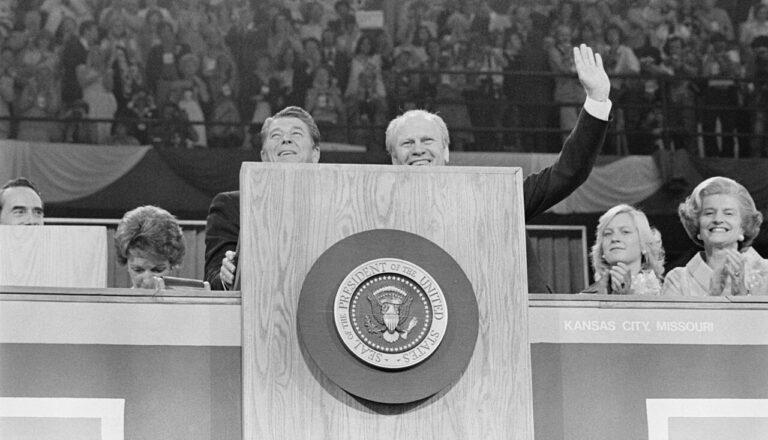
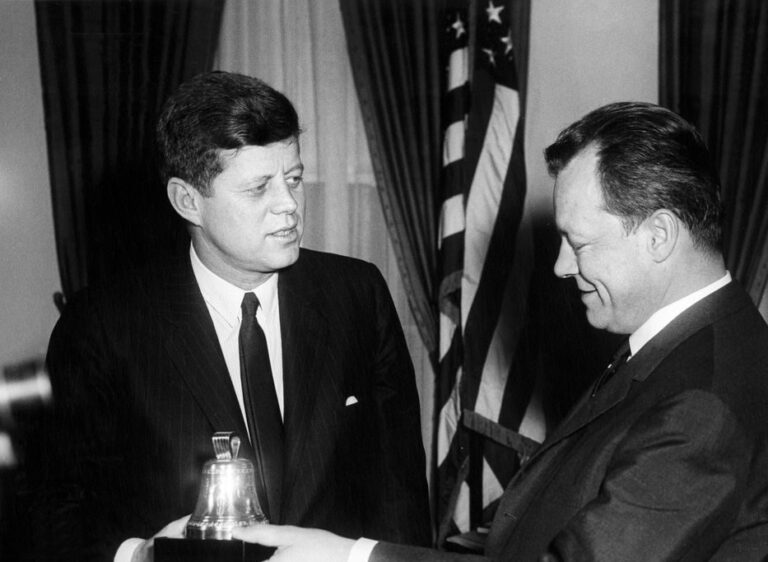
If human imperfection is a good reason to remove statues of historical figures then no such statues should stand — not George Washington, not Thomas Jefferson, not Benjamin Franklin, not Abraham Lincoln, not Ulysses S. Grant, not Martin Luther King, Jr., not Douglas MacArthur, not George Patton, not Lyndon Johnson, not Franklin Roosevelt, not Thurgood Marshall, not Alexander Hamilton, not John F. Kennedy, and the list could go on and on.
Tear down Mount Rushmore along with Georgia’s Stone Mountain (whose memorial carving depicts Generals Jackson and Lee and Confederate President Jefferson Davis). Remove Franklin Roosevelt’s statue from the National Mall. Tear down the Lincoln and Jefferson Memorials in Washington, D.C. Some of these men, like Stonewall Jackson, held unacceptable views (by today’s standards) on race. Some were slaveholders. Some had deep character flaws that no one should admire. Yet all were historically consequential. All exhibited worthy character traits alongside their human flaws. All deserve to be remembered, if not honored.
Removing statues and memorials to historical figures is a woke, DEI effort to erase history. (The woke-DEI crazed Biden administration even renamed the guided missile cruiser USS Chancellorsville after a former slave). Virginia’s history includes being the capital of the Confederacy, whose military leaders demonstrated courage and skill in battle defending their state and people, even though their cause was unjust and even though they sought to preserve a terrible, inhuman practice. The Civil War cost the lives of more than 700,000 soldiers and was a defining moment in U.S. history. Its heroes and villains — on both sides — should be remembered.
Read more It’s Time to Go Back to School (Hopefully)
READ MORE from Francis P. Sempa:
Trump’s Nixon Playbook: Squeeze Iran, Dare China to Blink
Trump is Combining Geoeconomic and Kinetic Warfare Against Iran
Communism, McCarthyism, and the New Red Scare
About the Author