I was born in Jamaica and lived there for most of my adult life, and if there is one thing that never stopped grating on me, it was the parlous state of the streets. The country is, in places, quite dirty, and the beggars are everywhere as a fixed feature of daily life. Homeless people sleep in doorways and on the steps of banks, and nobody who owns those buildings seems to particularly care. You step around them on your way to the ATM the way you’d step around a puddle. And if you complained about any of it, you were quickly labelled anti-poor, for preferring a pristine environment.
Read more Andrew Klavan’s Find Me Nowhere Is the Cameron Winter Mystery at Its Best
Some years ago, a telecommunications company aggravated the problem by sponsoring vendors with stalls in Half Way Tree, even though the space was never meant to be a vending facility. But such is the course of things in a Third World country, where hooliganism is venerated as resistance and suicidal empathy prevents people from correcting the poor. Half Way Tree, once seen as upscale Jamaica, became a dump. Go to Half Way Tree Square on any given afternoon and you’ll see the whole ecosystem laid out at once: vendors hawking phone cards and fried food, beggars working the crowd, and vagrants simply parked on the pavement, indifferent to the traffic of commerce moving around them.
The U.S. is still a first world country. But it is one that a significant number of its own citizens desperately want to drag down to Third World conditions.
Then there are the self-styled “loadermen,” who insert themselves as your escort into a taxi whether you asked for the service or not, then turn around and demand a fee from the driver for the privilege. This behavior is tolerated all in the name of the offenders being poor, as though poverty were a license rather than a circumstance. Squatting, meanwhile, isn’t a fringe problem. It’s a national crisis, one that successive governments have never had the stomach to confront honestly, and more than one politician has found it politically convenient to side with squatters rather than enforce property rights. I don’t live in Jamaica anymore, and I can’t say I miss that particular texture of life.
What I didn’t expect was to be reminded of it in London. I was walking around the city recently with a friend who lived there in his youth, and he was genuinely dismayed by the public camping he saw. He said it, only half-joking, as evidence that the country was slipping into disarray. I told him, honestly, that whatever London’s problems, Jamaica was worse. He didn’t quite believe me, but it’s true. What he was reacting to as a novelty, I’d lived with as wallpaper. That conversation is what got me thinking about how differently societies choose to respond to the same underlying phenomenon, and it’s why the current fight over American homelessness policy has caught my attention.
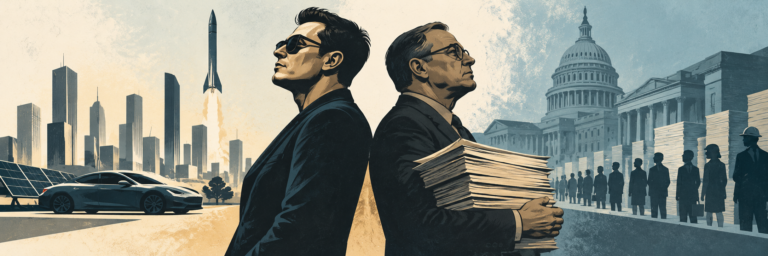
The billionaire Joe Lonsdale, the Palantir co-founder, has become the most consequential, and most criticized, figure in that fight. His think tank, the Cicero Institute, has spent less than $15 million a year pushing a very different theory of homelessness: that public camping and sleeping on the streets should be discouraged rather than accommodated, and that cities and states which tolerate it are choosing decline. Twenty-one states have pondered outlawing public camping and other anti-homelessness measures touted by the institute, and Cicero-modeled legislation has already been signed into law in a number of them.
Read more It’s Time to Go Back to School (Hopefully)
The institute has also come under fire for its closeness to the Trump administration, which has leaned on Cicero’s research in redirecting federal homelessness funding away from housing subsidies and toward mandated treatment programs. When critics raise this, the more useful question isn’t whether Lonsdale is unpopular in certain circles. It’s whether what the Cicero Institute is actually pushing for will make our streets, and the people on them, safer. That’s the question that should settle the argument, not the fact that a wealthy man is behind it.
The real fight, though, is philosophical. Cicero is explicitly opposed to “Housing First,” the dominant policy paradigm of the last two decades, which holds that people should be moved into stable housing before, not after, their addiction or mental health issues are addressed. The logic is that housing is the precondition for stability, not the reward for it.
I find this idealism hard to take seriously as policy. Addiction and untreated mental illness are among the primary drivers of chronic homelessness, and a program that hands over a lease while treating everything else as optional is, in practice, subsidizing the behavior that put someone on the street in the first place. Housing First sounds compassionate in a seminar room; it’s much harder to defend once you’ve watched it fail to change outcomes at scale. The government has no obligation to underwrite dysfunction indefinitely, and pretending otherwise is exactly the kind of idealism that has let American cities rot from the inside.
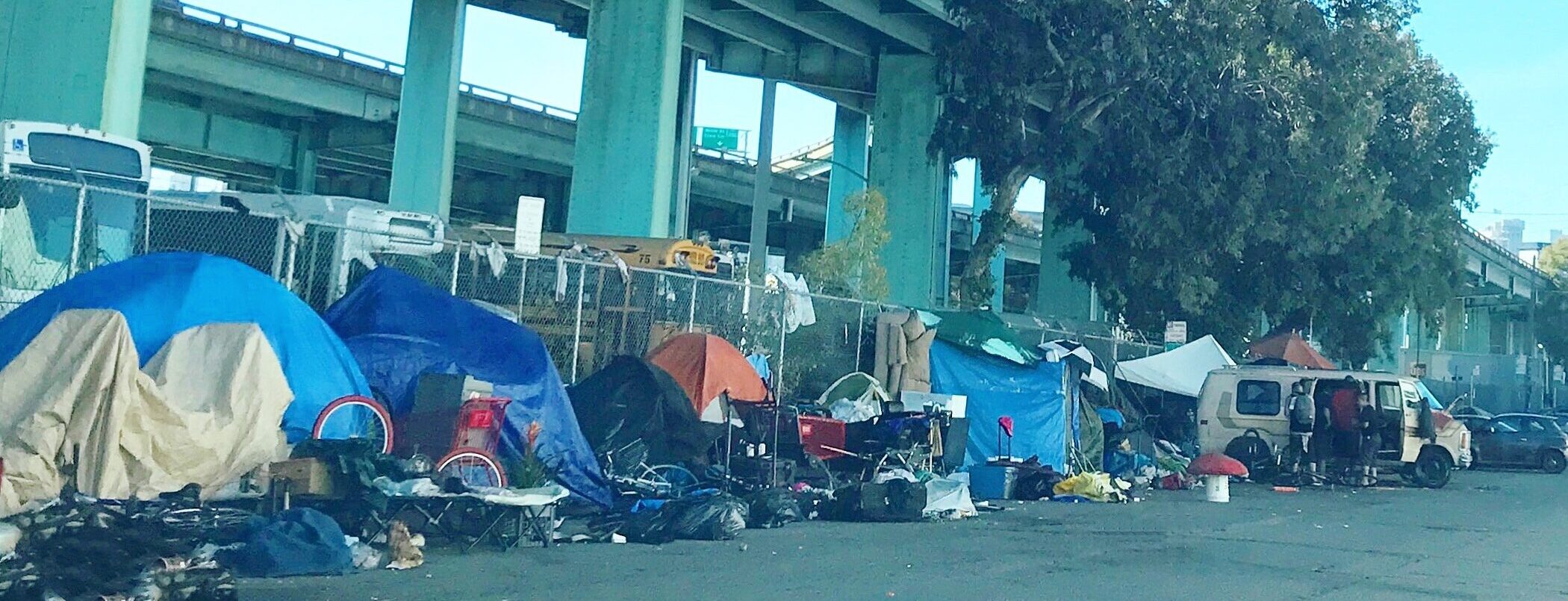
San Francisco is the clearest evidence of that rot. Whole blocks have become genuinely unlivable, not because housing is scarce in some abstract sense, but because unmanaged homelessness cultivates the antisocial behavior that comes with it: open drug markets, theft, public disorder, precisely because so much of the affected population is dealing with active addiction. A policy framework unwilling to say that plainly, and hesitating to compel treatment as a condition of help, is not a serious framework.
Whatever one thinks of Lonsdale personally, Americans should be glad that someone with his resources is willing to say the unfashionable thing and back it with money and legislation, rather than mouthing the same idealistic banter that has governed, and failed, this issue for 20 years. This is, in fact, the qualitative difference between Jamaica and the United States: the existence of people like Lonsdale who are willing to spend their capital, political and financial, actually fixing a problem rather than performing sympathy for it. The U.S. is still a first world country. But it is one that a significant number of its own citizens desperately want to drag down to Third World conditions, not out of ignorance of what that looks like, but in service of an ideal of anti-bourgeois revolution, in which squalor is treated as evidence of moral seriousness and order is treated as evidence of complicity.
Read more Iceland Rushes Aboard the EU Sinking Ship
READ MORE from Lipton Matthews:
Was Britain Really the Most Evil Empire in History?
The Biology Feminism Can’t Explain
The Courage to Question
About the Author