As the seemingly heroic state attorneys general bring the putatively villainous Meta to trial in federal court in Oakland, California, our credulous media, to no one’s surprise, ask no probing questions about the allegations’ merit. So, we ask them here.
Read more Green Energy Is Destroying the Best Landscapes
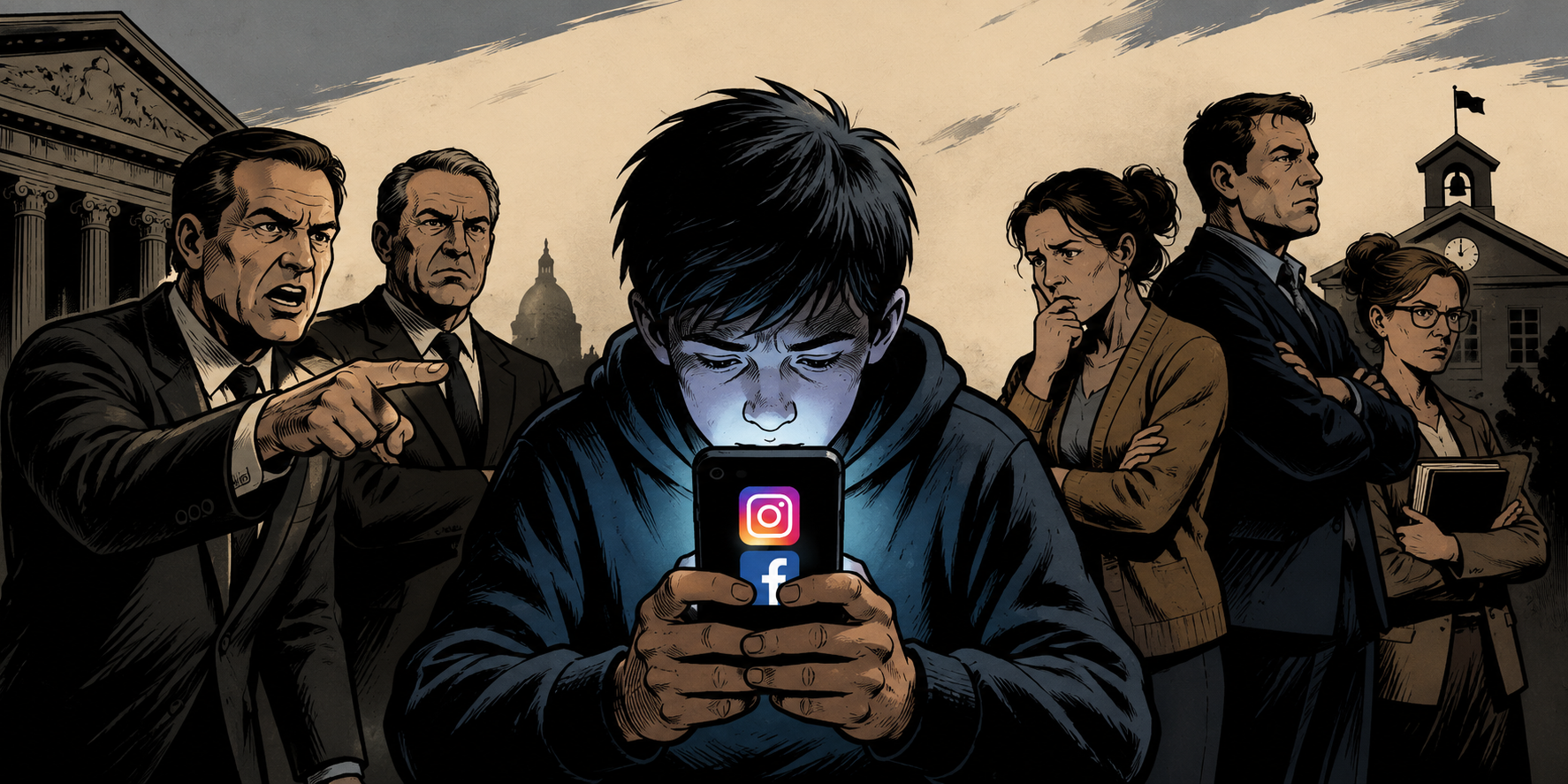
To be sure, many young people so overuse Meta’s social media platforms — Facebook and Instagram — that such excess can contribute to mental health problems or worsen existing ones. But isn’t this just another way of saying Meta has produced great products that people might enjoy compulsively? (RELATED: Circling Like Vultures: California Leads New Attack on Facebook)
Let’s look at the logic of sensible product liability enforcement. Should McDonald’s be held liable if someone eats too many Big Macs, causing weight gain and diabetes? Are licensed dispensaries responsible when consumers obtain and overuse marijuana?
What is the legal theory allowing, it seems, a potentially company-destroying jury verdict or Court Order? In the past few years, Meta officials have denied their social media platforms are addictive, mainly in response to government inquiry. This appears to be the main basis for the government’s claims. (RELATED: Don’t Sue the Mirror)
To be sure, there is no medically recognized condition known as “social media disorder.” But the Court notes that even if extended social media use is not an addiction, at least it is compulsive use, which it deems an unimportant distinction. Meta would contend that there is a clear distinction between compulsive use and medically recognized addiction, and therefore has responded truthfully to government investigation. (RELATED: Suing Social Media Won’t Save the Children — But It Could Silence Everyone)
More to the point, assuming arguendo that Meta dishonestly denied causing addiction, did these purported lies cause young people to stay on their devices for hours at a time? It does not seem so; but, that said, no such proof appears to be required under consumer protection statutes, so long as Meta can be found to have lied to the “public.”
For these so-called lies, the attorneys general are seeking “disgorgement” of all related profits or, alternatively, damages for the ad revenue gained, likely totaling hundreds of billions of dollars, up to a possible maximum of 1.4 trillion dollars, the entire worth of the company.
So, what is wrong with these claims? If Meta knowingly drives increased usage by youth, as it seems to, isn’t it responsible when many young people use it excessively? Such a conclusion raises several troubling issues.
Read more The Spectacle Ep. 458: It’s the Democrat’s Economy, Stupid!
Isn’t the more proximate cause the parents, guardians, schoolteachers, and administrators who condone the overuse by the youth they supervise?
If no young person has ever heard Meta deny that its platforms are addictive, how could those alleged denials have caused the widespread social media overuse? More importantly, in many, if not most, cases, wouldn’t a parent or guardian have been aware of the compulsive use but failed to intervene? Why should a company with no authority over the affected users bear responsibility for their mental health, when the people closest to them — such as parents with legal responsibility for their welfare—appear to have permitted the behavior? (RELATED: Parents Have Everything They Need to Keep Their Children Safe Online)
Isn’t the more proximate cause the parents, guardians, schoolteachers, and administrators who condone the overuse by the youth they supervise? And if this compulsive use was known to be harmful, what did public health officials do about it? Aren’t state and public health officials subject to oversight by the same attorneys general bringing this case? And therefore aren’t these same attorneys general responsible for this widespread mental disorder, when they are doing nothing about ordering their own houses?
Additionally, there is the issue of Dr. Anthony Fauci’s shutting of schools during COVID, even though students were not in any mortal danger from the virus. Wasn’t Dr. Fauci, far more than Meta, responsible for an epidemic of adolescent social media addiction which arose when these young people were imprisoned in their own dwellings, with no personal contact with friends? (RELATED: How COVID Created the 15 Second Generation)
And how are the states going to spend the windfall gained from this trial? Will they use it to solve the social media disorder problem, or install EV battery charging stations? Moreover, won’t any adverse judgment have the perverse result of taking pressure off the neglectful, irresponsible parents, guardians, and educators who should be disciplining youth to stay off their devices? It seems so.
Certainly, the litigation could be beneficial if the Court were to order practical safeguards to discourage underage overuse of social media platforms. Even at that, no such order will be effective without vigilance by parents and guardians. But let’s be real: a judgment of billions of dollars will not help anyone other than grandstanding attorneys general.
READ MORE:
Circling Like Vultures: California Leads New Attack on Facebook
No Social Media Without Papers?
Socializing and Longevity: Does Online Count?
John D. O’Connor is a former federal prosecutor and the San Francisco attorney who represented W. Mark Felt during his 2005 revelation as Deep Throat. O’Connor is the author of the books Postgate: How the Washington Post Betrayed Deep Throat, Covered Up Watergate and Began Today’s Partisan Advocacy Journalism and The Mysteries of Watergate: What Really Happened. O’Connor and Mark Felt also collaborated on the 2006 book, A G-Man’s Life.
Read more Dolly Parton, RIP
About the Author