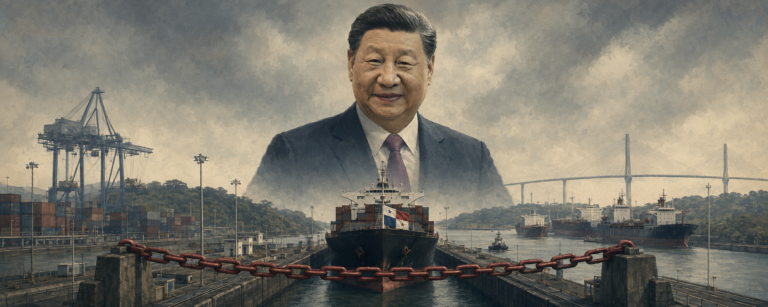
In last Sunday’s edition of American Spectator, our Francis P. Sempa delivers an important reminder — the Chinese threat remains strong, and we ignore it at our peril. I won’t repeat all of his arguments, but I hope that our readers will give due attention to the compelling case he constructs. His bottom line, based on a close reading of the influential Chinese strategy tome, Unrestricted Warfare, encourages us to understand that the threat from China extends far beyond a potential naval battle in the Taiwan Strait, but instead should be viewed as an all-out challenge to our position in the world, a challenge exerted across the full range of military, economic, and cultural influence capabilities.
Read more When AI Wants More Than Your Job
My former colleagues in the nuclear security community have contended for years that , a concept known as “compellence,” in the words of one leading analyst, Mr. Rick Fisher, “the ability to coerce adversary decision making … allowing China to deter U.S. intervention in regional conflicts (notably Taiwan), reinforce internal regime legitimacy, and assert leadership over aligned and dependent states.”
We need to be paying close attention, before it’s too late.
This takes a leaf from Vladimir Putin’s well-practiced playbook, demonstrated repeatedly over the course of the Ukraine war. Putin’s nuclear saber rattling, backed by a massive Russian nuclear arsenal, might have seemed incredible, but the implied threat could never be ignored. At critical junctures, this exerted a paralytic effect on the Biden administration and our NATO partners, and it continues to this day, even as, however gradually, the Trump administration and a newly energized NATO explores, very tentatively, lifting restrictions on how Ukraine uses the weapons supplied.
It’s not for nothing that the recently displayed Ukrainian ability to strike targets deep inside Russia has been exercised through long-range drones developed independently by Ukraine itself, not by NATO or American weapons that might have tested the escalation threshhold. Chairman Xi has most certainly taken this lesson to heart. But “compellence” goes far beyond such challenges.
As China’s nuclear arsenal grows — and it is growing by leaps and bounds — then the ultimate goal is creating a worldwide Chinese nuclear “umbrella” that protects Chinese client states and inhibits American actions across every theater where China wishes to assert itself — which means, if one reads what Chinese strategists themselves continue to say, across the entire world.
But the most chilling aspect of Sempa’s analysis goes far beyond the nuclear threat. Instead. he catalogs a whole range of Chinese measures, measures outlined in 1999’s Unrestricted Warfare, that have long since ceased to be simply the province of strategic projection. Instead, they are an everyday reality. Sempa speaks of “an unlimited zone of conflict that can reach each one of us in every aspect of our lives and work.” Cyber-attacks, economic pressure, space warfare, guerilla warfare, terrorist warfare, and ideological warfare are all part and parcel of this omni-dimensional strategy.
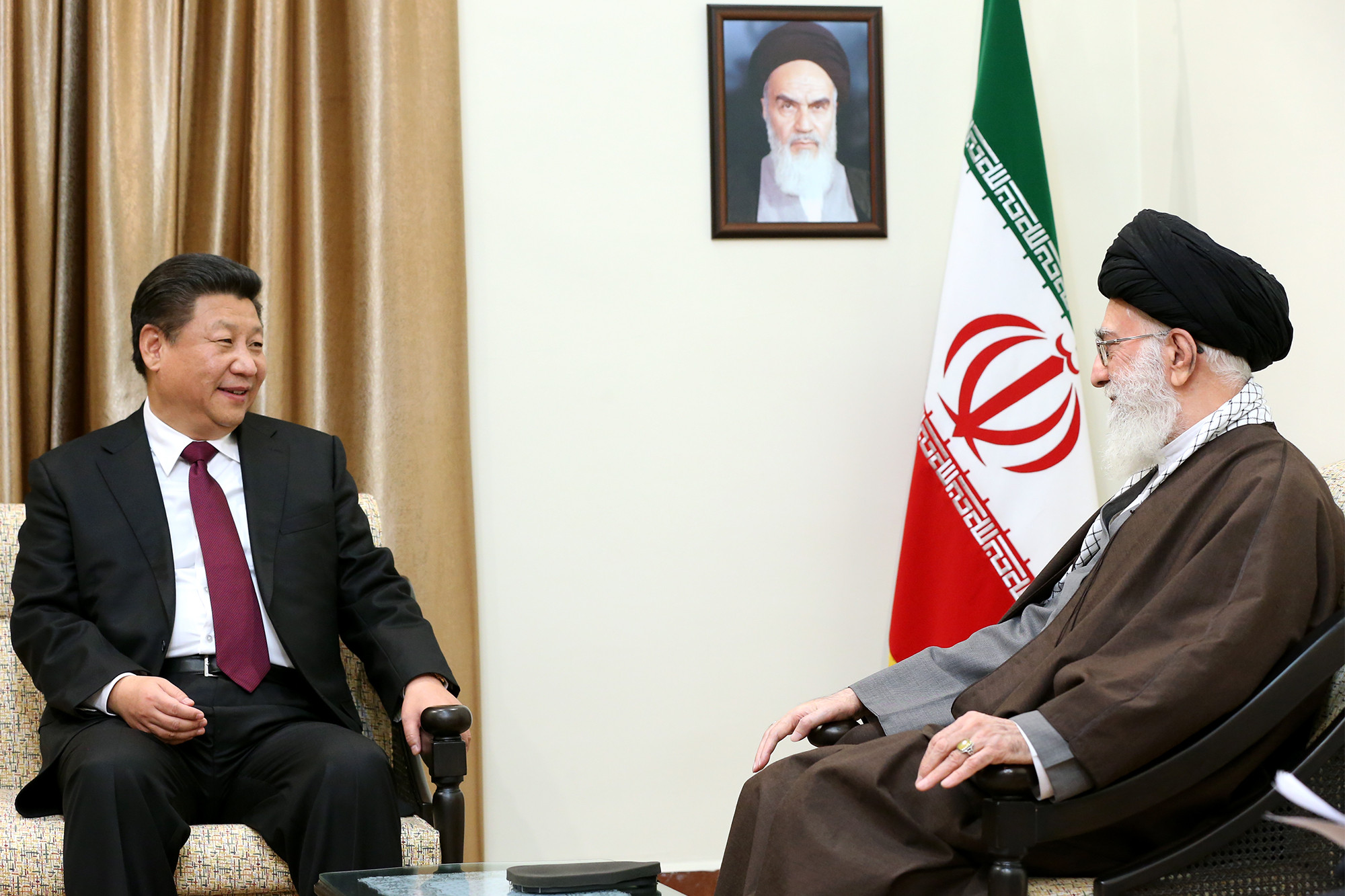
We’ve seen this played out in multiple zones of competition and outright conflict, from the baleful influence of the Confucious Centers on our college campuses, to the purchase of wide swathes of U.S. property, often located close to our most vital military and critical infrastructure locations. We’ve seen it in China’s support for Iran, often denied, but too obvious to ignore. We’ve seen it in the cooperation between Chinese suppliers of fentanyl precursors and the operations of the Mexican drug cartels. We saw it in Maduro’s Venezuela, and we see it still in an ever-expanding Chinese intelligence operation based in Communist Cuba.
One of the threats Sempa lists is biological warfare, something I’ve written about previously. In that 2024 American Spectator essay, I discussed the potential employment by China of its burgeoning biological warfare capabilities, a concern that I also dramatized in my 2022 thriller, Letter of Reprisal. In my novel, written in the wake of the Covid pandemic, I posited a deliberate Chinese threat to unleash a devastating biological weapon on the world as a means of kneecapping the U.S. and our allies.
Read more Nara Smith Shows Why the Tradwife Trend Is Changing
In the wake of the recent hearings concerning the Fauci diaries, we’ve been given fresh reason to reflect upon the “lab-leak” theory as a likely source of the Covid virus. While I find the “lab-leak” the most compelling origin scenario, the worldwide chaos the pandemic occasioned certainly underscores the point Sempa makes about how a biological agent, particularly a deniable one, could cripple our ability to counter other Chinese threats, for example, an invasion of Taiwan. One of our most important naval assets, the aircraft carrier Theodore Roosevelt, was sidelined for two months by a massive Covid outbreak affecting over 1,200 crew members.
I’ve also previously explored other aspects of the multi-dimensional threat Sempa examines. Several months ago, again here at American Spectator, I offered some thoughts about the “May Day Protests and Chinese Attack Strategies.” There, I focused upon how Chinese influence operations, notably those attributable to the lately notorious Neville Roy Singham, were being deployed to promote disruption and division throughout the U.S.
In this essay I also cast light on how recent setbacks to China’s global strategy, notably with the ouster of Maduro in Venezuela and the humiliation of China’s IRGC clientele, might make China more dangerous rather than less. Wounded ambition, particularly coming after a long string of unparalleled global success, makes for a very dangerous geopolitical player indeed.
Here again, I also dramatized disruptive Chinese influence operation and outright violent subversion in my most recent novel, The Zebras from Minsk. Without giving away the plot, in Zebras a traffic accident on a lonely Virginia road leads to the unravelling of a Chinese (and Russian) plot to sow division across the U.S. on the eve of the 2024 elections. Sadly, given how deeply divided our country has already become, the idea of such exploitation scarcely seemed farfetched — and it fit very precisely in the threat model Sempa develops in this morning’s essay.
One tries very hard to sound the alarm, and sometimes fiction reaches more people than a political essay — and it’s a message that needs to reach as many people as possible. The threat is both very real and very urgent. We know that Chairman Xi remains committed to a Taiwan “solution” no later than 2027, for reasons of both internal Chinese politics and China’s increasingly challenged international position. The form that this takes is yet to be determined, but the tenets of Unrestricted Warfare, so ably outlined in Francis P. Sempa’s article, will surely form the basis for the larger Chinese strategy.
We need to be paying close attention, before it’s too late.
READ MORE from James H. McGee:
Fauci, Mamdani, and the New Totalitarians
When Islamists Joined the Nazis
Peace Process, Meet Reality
James H. McGee is a retired nuclear security and counter-terrorism professional. His most recent novel, The Zebras from Minsk, was featured among National Review’s favorite books in 2025. His next novel, The Cathedral of Sorrows, will directly focus on the plight of Africa’s Christians. You can find The Zebras from Minsk and his previous thriller, Letter of Reprisal in paperback and Kindle editions at Amazon. The Cathedral
Read more Tillis and Cornyn Kill the ‘Justice Fund.’ Long Live the Judgment Fund!
About the Author