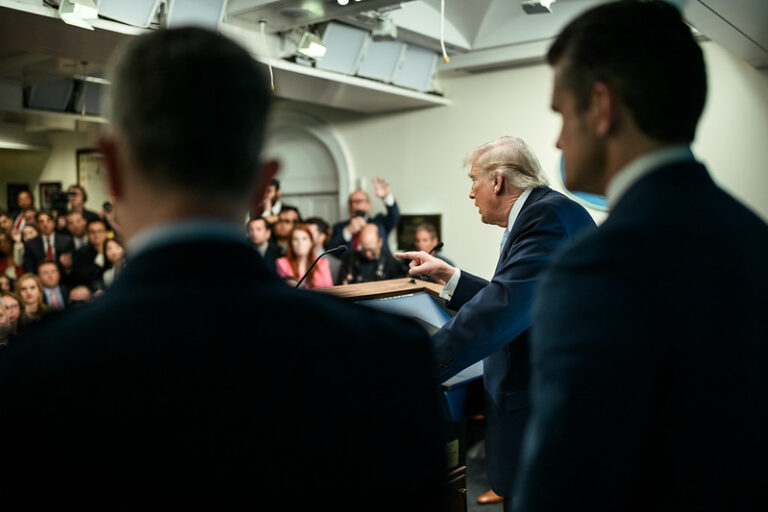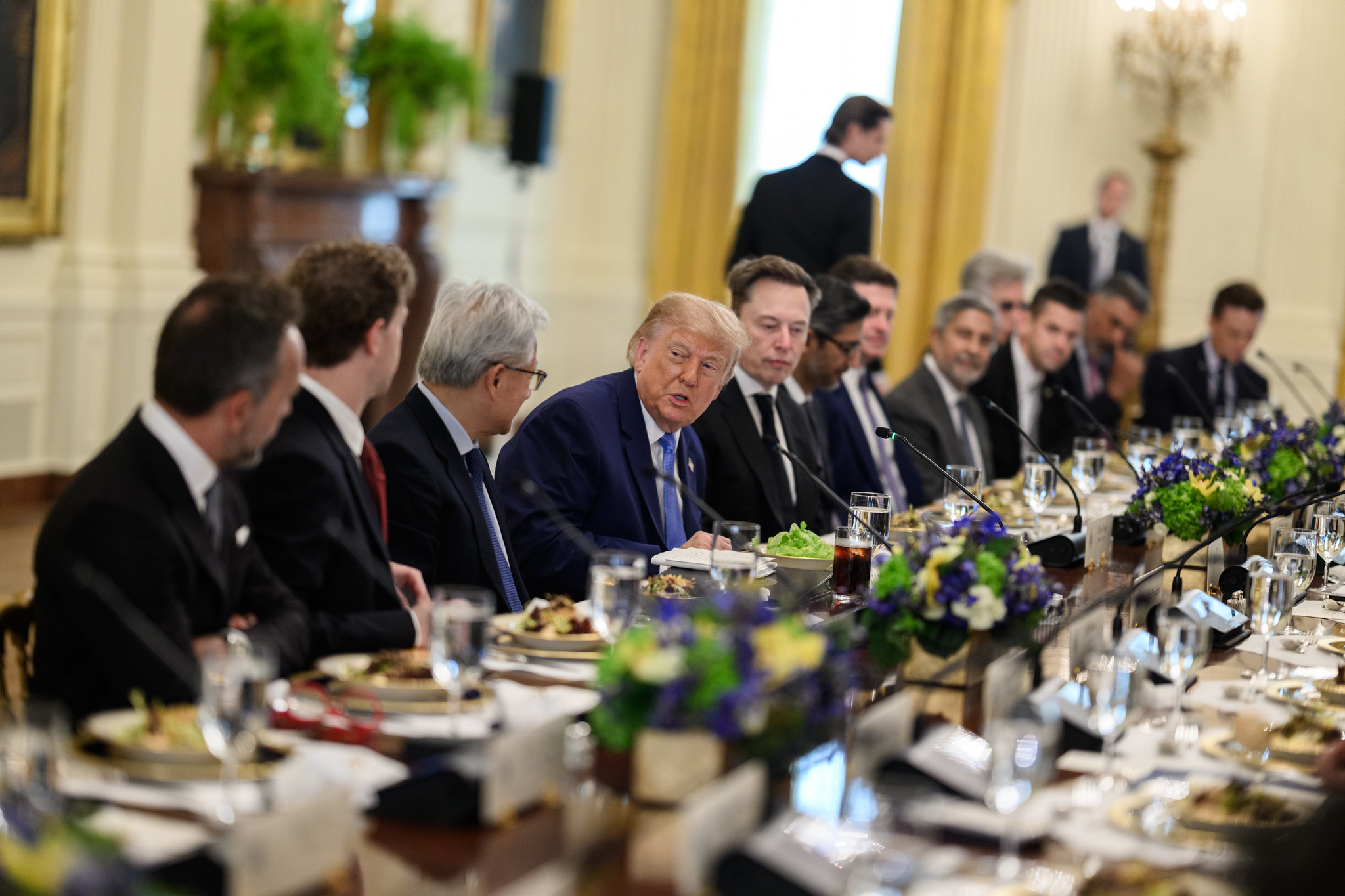
The president of the United States changed a word heard hundreds of times a day on cable news and with increasing frequency in private conversations.
Read more New York’s Murderous Jihad Against Red-State Infidels Must Have Consequences
Artificial intelligence, which comes under fire from the left and the right but mostly by the wrong who watch too much science fiction but not enough to see themselves when they watch “The Monsters Are Due on Maple Street,” now goes by, at least for those employed in the executive branch, “super intelligence.” (RELATED: Trump Orders Agencies to Drop ‘AI’ for ‘Super Intelligence’)
This does not seem, well, super intelligent.
The executive order reads that, in contrast to artificial intelligence,
the term ‘Super Intelligence’ more appropriately captures the promise, potential, and rapidly advancing capabilities of these technologies. It is therefore the policy of my Administration that, to the maximum extent permitted by law, the executive branch shall use the terms ‘Super Intelligence’ and ‘SI’ in place of ‘Artificial Intelligence’ and ‘AI’ and will not acknowledge the usage of ‘Artificial Intelligence’ and ‘AI’ in any applicable setting.
What Altria is to Phillip Morris, “super intelligence” is to “artificial intelligence.” It’s a rebrand for a damaged label. From a Luddite fear of machines stealing jobs from humans to futuristic paranoia over a Skynet-like genocide of the human race, hysteria fuels large swaths of the public who hate AI. Those YouTube videos of small dogs fending off large tigers do not help, either.
So, the president’s sense that this amounts to a marketing problem — the instinctive response of one so long in the hype business — on one level finds a solid basis. His understanding of AI as a game-changer beyond the scale of maybe even the “industrial revolution” similarly comes closer to the mark than do AI’s many critics.
Read more ‘When Will Markets React to Debt?’ Is the Wrong Question
Some legitimate grievances, such as the drain on public utilities by data centers and the displacement of workers — the actors nudged out of commercials as a result of eerie AI thespians and pitchmen come to mind — exist. But market disrupters — think the automobile putting horse-and-buggy industry employees out of work — advance society in the long run, and it does not seem so complicated to compel data centers to produce their own energy or pay up for the energy taken from the public grid. (RELATED: Like It Or Not, Data Centers Are Part of the Midterms Now)
Whether the public likes it or not, we cannot squish the AI toothpaste back into the tube. Or, as the president puts it, “we can’t stifle it.” President Trump, in other words, takes the correct and not the populist position on AI. Foreign competitors, particularly China, root for the populist position. They win without competition. So, much hinges on resisting the demagoguery, on some level probably marionetted from abroad, on AI. (RELATED: Five Quick Things: Citizens Against Virtually Everything)
Still, an executive order changing the name of artificial intelligence likely engenders greater suspicions. It immediately evokes the euphemism treadmill, the practice of bestowing a more pleasant name upon something unpleasant out of the mistaken belief that what we call something rather than the thing itself amounts to the issue. A common illustration of the euphemism treadmill involves the jettisoning of the likes of “mongoloid” and “moron” for “mentally retarded,” which itself became “intellectually disabled,” which inevitably yields to some gentler terminology that eventually strikes ears as harshly and also doubles as an insult. To the extent that super intelligence catches on, one imagines that it does so as a sort of joke, particularly among the skeptics of artificial intelligence. And at that point super intelligence becomes super-duper intelligence, and so on.
President Trump holds a long-sighted view on artificial intelligence. But his attempts to rewrite history and reorient speech through the stroke of a pen look small. Though a map may mark “Lake America,” a sign may read “Donald J. Trump and John F. Kennedy Memorial Center for the Performing Arts,” and government documents may refer to “super intelligence,” ordinary people continue to say “Lake Ontario,” “Kennedy Center,” and “artificial intelligence.
Read more Learning to Read and the Crisis of Male Demoralization
Caesar is not above the grammarians. He’s not above the lexicographers, either.
READ MORE from Daniel J. Flynn:
The State’s Assault on Press Freedom the Fourth Estate Ignored
Six Degrees of Hasan Piker Not a Winning Strategy
A Massachusetts Jury Legalized 4th Trimester Abortions
About the Author