In 1967, the 25th Amendment was ratified, rectifying the Constitution’s imperfect provisions concerning presidential succession. The amendment outlined the steps to address a vacancy in either the presidency or the vice presidency. The newly enacted Section 2 empowered the president to nominate a vice president in the event of a vacancy, who would then be confirmed by a majority vote in both chambers of Congress. The first application occurred in dramatic fashion six years later.
Read more The No-Contact Epidemic Sweeping America
Following the resignation of Vice President Spiro Agnew, President Richard Nixon nominated House Minority Leader Gerald Ford to be vice president. The next year, President Nixon’s resignation elevated Ford to the presidency, whereupon he nominated former New York Governor Nelson Rockefeller. Both Ford and Rockefeller were nationally respected figures and altogether considered qualified. Congress — a lopsidedly Democratic Congress — confirmed both men by overwhelming majorities.
The Democratic Congress had been opposing President Nixon at nearly every turn, but the leadership unhesitatingly subordinated partisanship to the national interest.
Fifty years later, the Democratic Party is poised to take control of both houses, and it is threatening an unprecedented third impeachment. More ominously, violence has begun poisoning American politics, punctuated by the third attempt on President Trump’s life six months ago. (RELATED: Bullet Points and Blind Spots)
If the Democratic Party wins Congress and removal — or tragedy — elevates Vice President JD Vance to the presidency, the dignified precedent set by Ford and Rockefeller would be in jeopardy. Worse, the executive branch could be held hostage by a radical leftist Democratic Congress.
In 1973, congressional leadership decided two committees — Senate Rules and Administration and House Judiciary — would lead the confirmation process in each chamber.
Both committees agreed to undertake an extensive two-part investigation of Ford. First, a comprehensive examination of his philosophy and voting record, and second, an exhaustive inspection of his personal affairs.
Accordingly, the committees collected voluminous amounts of material encompassing tax returns, medical records, campaign finance filings, congressional votes, agency memoranda, state and local law enforcement records, contract filings, news coverage, as well as law practice and bar association records.
The FBI deployed 350 agents (of which 72 were full-time) across 33 field offices to conduct over 1,000 interviews. The findings were documented in a “raw file” comprised of thousands of pages of sensitive information.
Furthermore, each committee received testimony from Ford over the course of several days on a wide range of subjects.
On Nov. 27, 1973, the Senate voted 92 to 3 to confirm; the House followed suit on Dec. 6, voting 387 to 35 in favor. Gerald Ford was sworn into office the same day.
Eight months later it was Rockefeller’s turn.
Congress subjected Rockefeller to the same process and, in the end, the result was the same. On Dec. 10, 1974, the Senate voted 90 to 7 in favor, and on Dec. 19, 1974, the House voted in favor 287 to 128. As with Ford, Rockefeller was sworn into office the same day.
Political calculations were present but not overriding.
Nixon’s first choice was not Ford, but John Connally, the former Democratic governor of Texas, who became a Republican and his Treasury Secretary, followed by Rockefeller, Ronald Reagan, and then Ford.
Ford, however, was uninterested in the vice presidency, and when Nixon asked for his recommendations, he named Connally, Secretary of Defense Melvin Laird, Rockefeller, and Reagan. Ford preferred the House and actually promised his wife he would retire in 1976 if he didn’t become speaker after the 1974 midterm elections.
Rockefeller had run for president three times — in 1960, 1964, and 1968 — and turned down the vice presidential slot in 1960 and 1968. Rockefeller, nonetheless, made himself available when Agnew resigned.
Nixon, however, consulted Speaker Carl Albert and Senate Majority Leader Michael Mansfield and determined Ford was the only feasible choice. According to Albert, it was not a consultation — he asserted the two men gave Nixon no choice but Ford.
In the end, the elevation of two individuals to the presidency and vice presidency outside a national election was unprecedented, but the newly established constitutional provisos ensured its legitimacy.
Read more Abdul El-Sayed: A Muslim Brotherhood Puppet and a Grave National Security Threat
In the present day, the Democrats would prolong the process to keep the vice presidential office vacant.
Ford’s confirmation took two months — Rockefeller’s took four. And it was more adversarial.
If Trump were removed — or worse — every aspect of the bipartisan process established in 1973 would be weaponized.
The FBI raw files collected on Ford and Rockefeller were only made available to the Senate and House leadership and the committee chairs and ranking members. (Ford wasn’t even allowed access to his.) Democrats would demand the widest distribution possible for a present-day nominee’s raw file. If denied, they would simply leak it.
Separate confirmation hearings provided witnesses, no matter how tangential they were, with the opportunity to voice their support or opposition. Lyndon LaRouche appeared as a witness against Ford; Angela Davis testified against Rockefeller. The Democrats would marshal a brigade of partisans to swamp the hearings.
Subsequent to an IRS audit of his tax returns for the period from 1969 to 1973, Rockefeller announced he would pay an additional $900,000 in federal taxes. The discovery would have rightfully been disqualifying today, but the Democrats would scrutinize every single transaction going back decades to find even the smallest infraction.
Lastly, the confirmation committees had subpoena power; the fight over the scope alone would substantially lengthen the process
After all, Vance would be a marked man, and if tragedy befell him, vacancies in both offices would mean a Democratic Speaker would ascend to the presidency.
While speculative, the above is not fantastical.
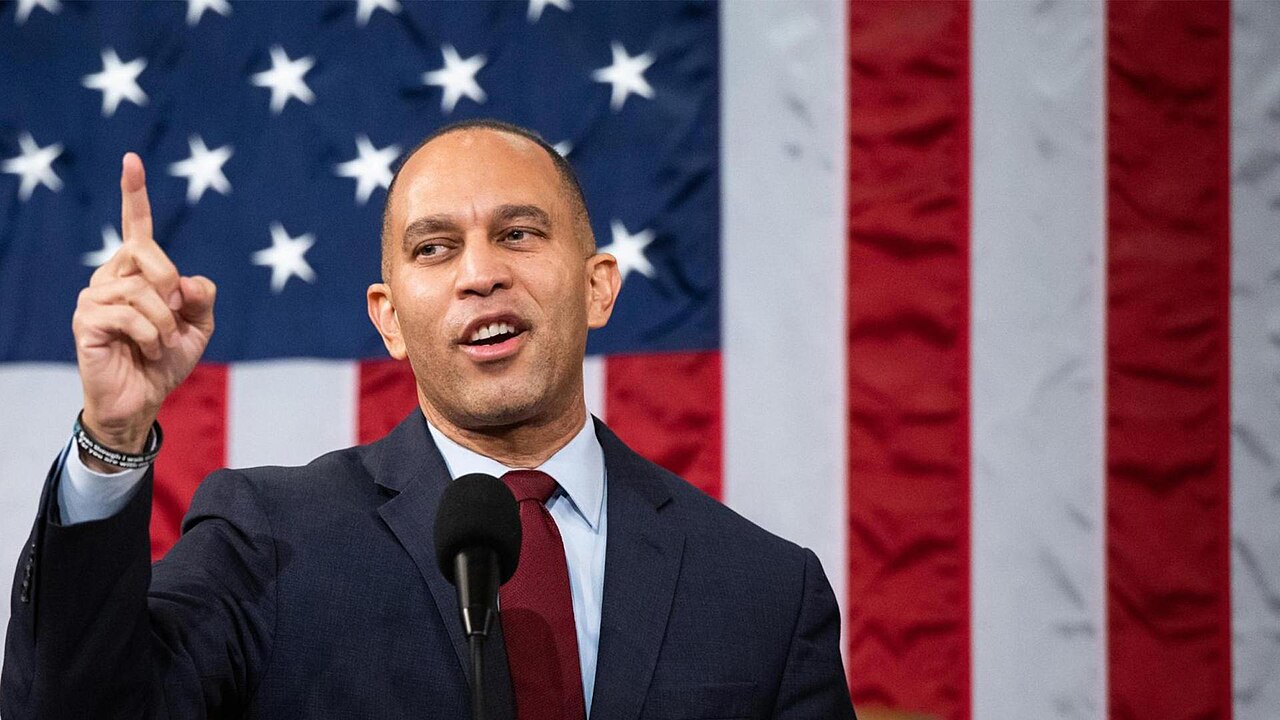
Numerous leading Democrats such as Alexandria Ocasio-Cortez, Ro Khanna of California, and Jamie Raskin of Maryland, the Judiciary Committee’s top Democrat, have all voiced support for a third impeachment. Minority Leader Hakeem Jeffries has been noncommittal, but he would be hard-pressed to deny his more partisan members.
If the Republicans lose the Senate, the subsequent minority would still be large enough to prevent removal, but the GOP conference has yielded in the impeachment breach more than the Democrats. Zero Democratic senators voted to convict Clinton in 1999, and one Republican senator (Mitt Romney) voted to convict Trump in 2020, but then seven GOP senators voted against Trump in 2021. Who knows how many Cassidys and Cornyns are biding their time.
Lastly, Democrats have a hard time condemning violence that aligns with their worldview; see Luigi Mangione and Tyler James Robinson. (RELATED: Why So Many Political Pyromaniacs, Assassins, and Other Scary Types?)
Two random acts of political violence would be tragedies that only denoted shortcomings in presidential protection.
Indeed, Democrats would not be usurping power or risking civil war — they would be performing constitutional due diligence.
***
After Nixon’s resignation, Ford famously captured the collective sentiment when he declared, “Our long national nightmare is over.”
If the Democrats win Congress and Trump is removed or tragedy befalls him, the long national nightmare would only begin.
READ MORE:
Now We Know What ‘Maximum Warfare, Everywhere, All the Time’ Means
Democrats Lust for Violence
About the Author