Writing in 1978, Hugh Sidey, Time magazine’s legendary observer of U.S. presidents, described Richard Nixon as “a man who understood the men, the ingredients, the glory, the brutality, the action and reaction of power as well as anyone else of our time.” Nixon manifested those qualities as president and later in his post-presidential books, especially Real Peace (1984).
Read more The Spectacle Ep. 487: Lou Aguilar’s Story That Publishers Won’t Dare to Publish
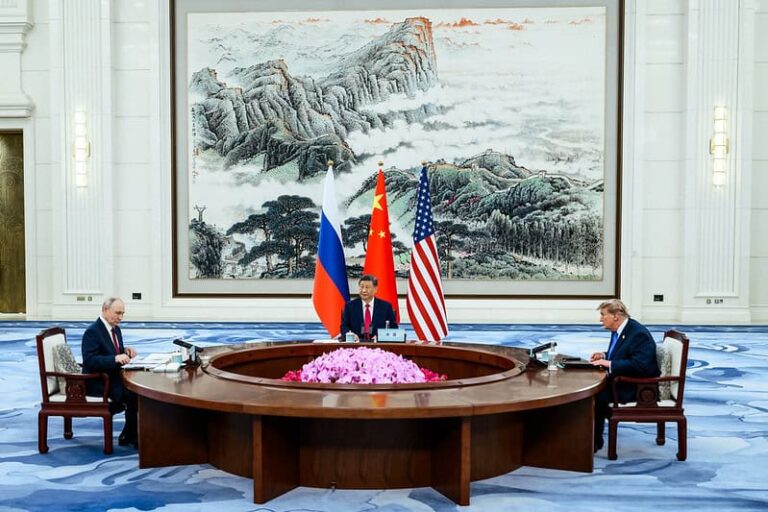
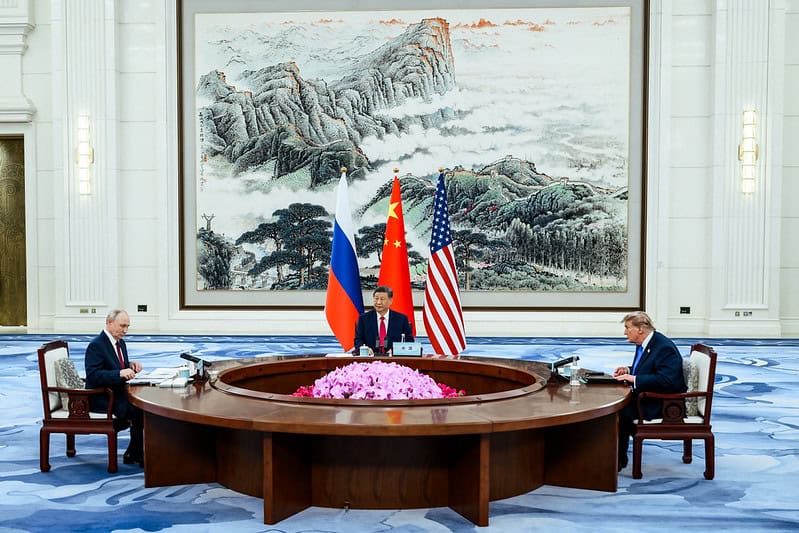
Nixon’s observations in that book take on renewed relevance today as President Donald Trump completed a brief summit meeting with China’s Xi Jinping and Russia’s Vladimir Putin. Nixon’s understanding of “real peace” is a realist geopolitical guide for pursuing U.S. global interests while avoiding kinetic conflict with the world’s two other great powers. (READ NEXT: Trump’s Summit With Xi and Putin: A New Global Balance of Power?)
“Real peace,” Nixon explained, “is a process — a continuing process for managing and containing conflict between competing nations, competing systems, and competing international ambitions.” President Trump and his foreign policy team are engaged in that process. The recent summit with the leaders of China and Russia is part of that process. Nixon counseled that “Peace is not an end to conflict but rather a means of living with conflict” and the process “requires constant attention or it will not survive.”
“When … leaders sit down to talk, they do not turn into philanthropists.”
Trump’s brief summit with Xi and Putin produced no substantive agreements or results — those things take time and advance preparation. But having a meeting of the world’s “Big Three” leaders is an important step in the process. Nixon, who engaged in his share of summitry, understood that summits between world leaders do not produce real peace. “When … leaders sit down to talk,” he wrote, “they do not turn into philanthropists.” Nixon described international relations as a “snake pit where good intentions and good manners, adhered to slavishly in the face of your enemy’s malevolence, are bound to be distinct hindrances.” Trump may publicly describe Xi and Putin as “friends,” but he knows, as Nixon did, that “friendship” among world leaders does “not change national ambitions or interests.”
“[C]onflict,” Nixon wrote, “is a natural state of affairs in the world.” Perfect peace and permanent peace are illusions. Real peace, he explained, “must exist along with men’s ambitions, their pride, and their hatreds.” Human nature doesn’t change, which is why “perfect peace,” Nixon continued, “has no historical antecedents and therefore no practical meaning in a world in which conflict among men is persistent and pervasive.” It is imperative, Nixon wrote, that the United States “not court confrontation or flirt with war,” especially great power confrontation and war. The consequences of great power war in the nuclear age would be catastrophic. President Trump and his top national security advisers understand that, which is why Trump is doing his version of Nixon’s triangular diplomacy.
Read more Alaska’s Ranked-Choice Voting Experiment Takes a Sinister Turn
Of course, the circumstances today are different from the late 1960s and early 1970s when Nixon staged the opening to China and pursued what he called in Real Peace “hard-headed détente” with Soviet Russia. In Real Peace, Nixon characterized the Sino-Soviet split in the 1960s and the U.S. opening to China in the 1970s as “the most significant geopolitical events of the post-World War II era.” Nixon’s triangular diplomacy exploited the Sino-Soviet split to the benefit of American national security by maintaining the geopolitical pluralism of Eurasia.
China is the main adversary today, and there is no open Sino-Russian split as had occurred in the late 1960s, though there are differences between China and Russia that can be exploited. Trump’s triangular diplomacy, therefore, will be more difficult to accomplish than was Nixon’s. Trump is conducting his diplomacy in the midst of an unpopular war with Iran, while Nixon’s China-Russia policies played out during the last years of the unpopular Vietnam War. Nixon understood that in the realm of global geopolitics, Vietnam was a sideshow. Similarly, in the realm of global geopolitics today, Iran is a sideshow except for the nuclear weapons aspect. (READ NEXT: The Trump-Putin-Xi Summit Won’t Solve the Iran Crisis)
And it was no accident that Trump preceded the summit with a widely publicized meeting with the regional leaders of the Quad, the president of the Philippines, which highlighted the U.S.-Filipino defense alliance, and his tariff achievement with Thailand, another U.S. ally in the region. Trump has replaced the rhetorical pivot to Asia with a real pivot to the region.
Nixon’s first sentence in Real Peace stated: “There can be no real peace in the world unless a new relationship is established between the United States and the Soviet Union.” Today, there can be no real peace in the world unless new relationships are established between the United States and China and the United States and Russia. That is what President Trump is trying to do.
Read more Tennessee Gives CVS a Taste of Its Own Medicine
READ MORE from Francis P. Sempa:
Rediscovering James Burnham and the Best of ‘National Review’
Trump’s Summit With Xi and Putin: A New Global Balance of Power?
The Fighting Didn’t Stop Everywhere on November 11, 1918
About the Author