In my current crusade to reverse the depressive decline in fiction reading, this year I’m replacing my annual Halloween film recommendations with haunting book suggestions. Of course, this could mean fewer people will read this article, and the irony hasn’t escaped me. And since it takes longer to read a book than watch a movie, I’m posting this more than a week before Halloween, also allowing time to order any of the titles.
Read more Gavin Newsom’s Awkward Marriage to Kimberly Guilfoyle
Everyone knows which novel they should read for Christmas: Charles Dickens’s wonderful A Christmas Carol. Of course there’s no Halloween comparison to it. Because Christmas is a godly celebration, while Halloween is rooted in pagan superstition, the Gaelic Feast of Samhain, when the barrier between the mortal world and the spiritual realm of demons and ghosts is supposedly at its weakest. Modern folk no longer dread such a fantasy. Or don’t we? Great horror fiction makes the human boundary-line seem crossable. (RELATED: Bloody Zombies No Longer Shock Our Streets)
It’s Good versus Evil, not Evil versus Non-Evil.
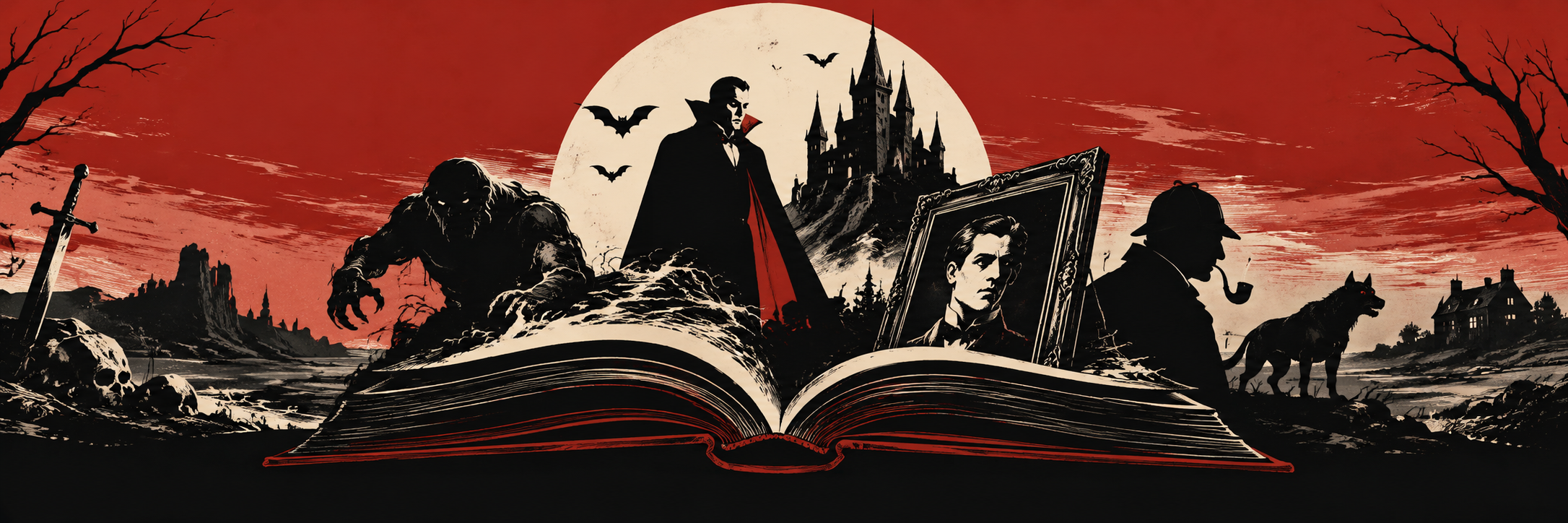
What elevates it above all the 21st-century hackwork is that its authors presented something their successors do not, and cannot, because they have no faith. For all their power of darkness, the villains have a stalwart hero to confront them — a Beowulf, Van Helsing, Sherlock Holmes, or even a young boy. It’s Good versus Evil, not Evil versus Non-Evil. And it will ever separate a Bram Stoker from an Anne Rice. My book recommendations for this Halloween:
Beowulf (author Anonymous, circa 1000 A.D.). This book may be best known as the first medieval epic, but it’s literally dripping with horror blood. Geat (pre-Germanic Swedish) warrior chieftain Beowulf sails with his band to Denmark to the aid of King Hrothgar, whose dining hall had been attacked for 12 years by the monster Grendel, scion of the biblical fratricidal Cain. Their action requires sleeping in the abandoned hall and waiting for the creature to strike. No horror writer since has surpassed the Beowulf author’s chilling poetic description of Grendel’s nature and approach: In off the moors, down through the mist bands/God-cursed Grendel came greedily loping … Beowulf unarmedly battles Grendel, ripping his arm off and mortally wounding him before he flees into the mere (lake). All seems triumphant until — in the first example of a shock twist — Grendel’s even fouler hag mother rises from the depths.
Dracula (Bram Stoker, 1897). Stoker’s archetypal vampire novel is still the best, for one reason his contemporaries typically miss, now deliberately. The ultimate horror of Dracula is not just that he’s an undead corpse forced to feed off human blood yet thinks, talks, and remembers like a human; nor his ability to transform into a bat or rat and command the animal species. As imaginatively chilling as these concepts were, it’s his power to corrupt and convert loving, prim wives and girlfriends into his seductive vampire sex slaves. Which is a dynamic modern feminist authors, male and female, can’t tolerate, let alone write. So they convert that aspect into homoeroticism (Interview with the Vampire) or teen romance (Twilight). But the original tale about the vampire count threatening Victorian society and its women, and the five brave men who band to foil him, will be read long after those others are forgotten.
The Picture of Dorian Gray (Oscar Wilde, 1891). Something prompted flamboyant young wit Wilde to deviate from plays lampooning British high society (The Importance of Being Earnest) and write his only novel, a haunting Faustian tale which has outlasted all his other work. A hedonistic pretty boy makes a deal with the devil that all his aging, immoralities, and perversions will be reflected in a portrait not himself. Over the decades, the very existence of the painting and the dark secrets it both occludes and reveals alternately drive him to either more evil or an attempt at redemption. The conflict proves too much for Dorian Gray but engrossing for the reader, and Halloween week is the perfect time to enjoy it.
The Hound of the Baskervilles (Sir Arthur Conan Doyle, 1902). “Mr. Holmes, they were the footprints of a gigantic hound!” “He was running, Watson — running desperately, running for his life, running until he burst his heart and fell dead upon his face.” Once you read lines like that, you never forget them. And you never quit reading, hoping you can forever discover stories as engrossing as this magnificent Sherlock Holmes horror adventure. Holmes and Watson travel to the Yorkshire Moors to safeguard a young aristocrat from the family curse in the form of a demonic hound. The irony is that Holmes was officially dead when Conan Doyle wrote the novel. He had killed him off, intending to write “higher” literature. A golf friend telling him the tale of a spectral hound on the moor inspired him to revive his legendary detective for a one-off book. So, Sherlock Holmes returned, never to die again.
Read more Paris Is Burning. Is Washington Next?
Salem’s Lot (Stephen King, 1975). Stephen King lost his writing artistry long before he lost his mind to TDS, but his first three novels — Carrie, Salem’s Lot, The Shining — are among the best horror books of all time. In Salem’s Lot, he actually plays by the Stoker-established rules of vampire lore — repulsion by cross, inability to enter a home unless invited in, coffin sleep in daytime, destruction by stake or sunlight — yet delivers a relentless creeper (King himself said he was intrigued by what would happen if Dracula arrived in a small American town). Best of all, King emphasizes the vampire’s power of erotic corruption. “Her lips on me… biting me… And when she was doing it, I liked it, Ben,” says one character. “That’s the hellish part… Can you believe it?”
That dynamic may be anathema to modern horror storytellers, but it doesn’t have to be this Halloween.
***
“What’s the difference between your Knights of Excalibur and Nietzsche’s Supermen—who inspired a similar movement under a certain German leader?”
Tristan had to hand it to Nina. She’d subtly called Ousby a Nazi on national television. Could he escape the trap?
“God, Miss Holt,” said Ousby. “Nietzsche declared God dead. Excalibur proclaims Christ King. It is He we follow through the darkness such as you described, into the light.”
— From The Camelot Trail, coming out Nov. 17 in print and e-book, available at Amazon, Barnes & Noble, and other booksellers.
Read more What Happened to John Cleese Isn’t Funny
READ MORE from Lou Aguilar:
Real Men Don’t Vote Democrat
Hollywood’s Liberal Movies Are Flopping, but the Message Isn’t Getting Through
Hollywood Didn’t Learn Its Lesson. Then Came Digger
About the Author