Referring to my title for this essay, I think of a cartoon by my favorite cartoonist, a self-caricature where he is crazy-frustrated with an assignment to think up “something new” for a Thanksgiving drawing. It was drawn in 1881, so I am somewhat dating myself, but the point is there — what commentary can be new under the sun?
Read more This Is the Final Stage of the War With Iran
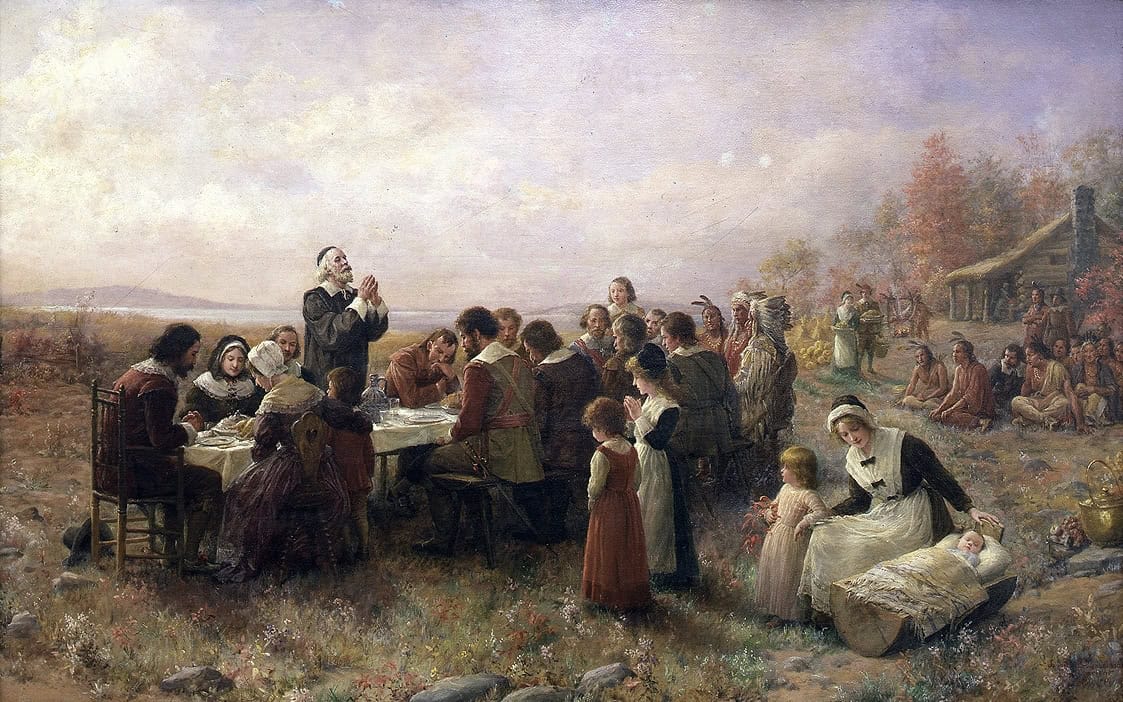
But I think, rather, that we all tend not to think enough about Thanksgiving. After President Lincoln issued the very first National Day of Thanksgiving Proclamation, it became less of a novelty, no longer something to attract as much attention.
The very words “Thank you,” and their natural response “You’re Welcome,” have even been neutered. When people these days even deign to say “Thank you” or some perfunctory equivalent, the answer is seldom “You’re Welcome,” but words like “Sure thing,” “You bet,” No prob,” and other insincerities. To me, at its best, it is a reflection of society’s general slide toward laziness, as from gymnastics to video games. (READ NEXT: Thanksgiving — Beyond the First Feast)
Of course, the observation about “Thanks” invites deconstruction of meanings, not only word origins, but we can take a shot at both. The religious, expressive, and social impulses of this impulse can have us think of “giving,” “thanksgiving,” and “forgiving.” Related? They were and are, or should be. To be of a “giving nature” is to be unselfish, by common consent a worthy attitude. Thanksgiving — no matter to whom we address the thanks — is to acknowledge reliance on others rather than ourselves; celestial or carnal sources are gratefully to be recognized. Forgiving: this can be a bit more difficult for most of us to exercise. There are no Hallmark cards to register forgiveness; and, maybe most challenging, Scripture wraps its warning in a message of love, that we are forgiven to the extent that we forgive.
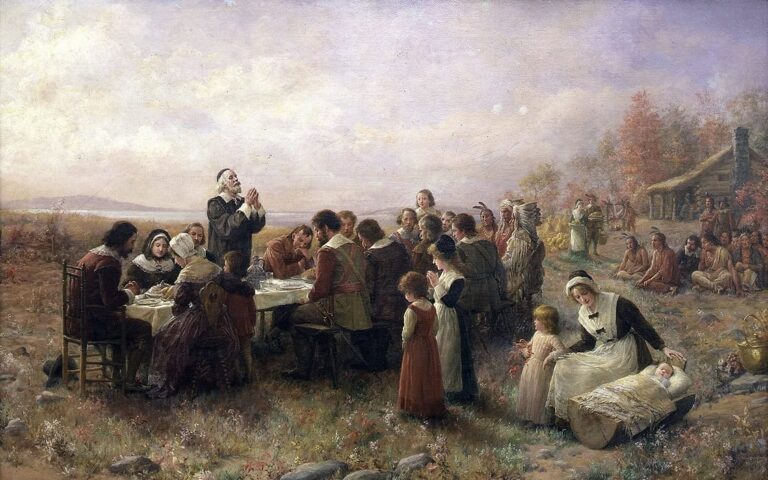
Shifting focus slightly (you’re welcome!) I sometimes wonder whether the seed of our traditional, seasonal Thanksgiving as we relate to the Pilgrims and to Lincoln’s Proclamation, might itself be slightly skewed from its spiritual moorings. “We gather together to count the Lord’s blessings,” the tautological hymn begins, and its origin was in 1626. Pilgrims, petitioners, worshipers, workers, even martyrs have lifted praises to God for varieties of favors: bountiful harvests, safety, health, protection, all sorts of blessings — even modest achievements like another season secured with family and neighbors. (READ NEXT: Thanksgiving Isn’t for Atheists)
But is it possible that a Day (and why just “one day”?) set aside for thanking God might also be constructed as a day to commemorate God thanking us?
Why would the Creator of the Universe, our Lord and Savior, thank US? It is not unbiblical to see things in this fashion. If we have indeed been faithful, He promises to bless us; and He does. If we have been flawed, and that refers to, um, most of us over the past year, He still thanks us in myriad ways. The Bible makes clear that “while we were yet sinners,” God sent His Son to die for believers (Romans 5:8) — in holiday contexts, an early Christmas present and a very real Thanksgiving gesture.
Read more The Backlash of the Ruling Class
Speaking of Abraham Lincoln, as I was, I have recalled some of his own “Thanks-giving” thoughts, more eloquent than mine or anyone’s beyond Scripture itself. He declared the nation’s first National Day of Thanksgiving, 1863, and wrote:
It is the duty of nations as well as of men to own their dependence upon the overruling power of God; to confess their sins and transgressions in humble sorrow, yet with assured hope that genuine repentance will lead to mercy and pardon; and to recognize the sublime truth, announced in the Holy Scriptures and proven by all history, that those nations are blessed whose God is the Lord. …
But we have forgotten God. We have forgotten the gracious Hand which preserved us in peace and multiplied and enriched and strengthened us, and we have vainly imagined, in the deceitfulness of our hearts, that all these blessings were produced by some superior wisdom and virtue of our own. Intoxicated with unbroken success, we have become too self-sufficient to feel the necessity of redeeming and preserving grace, too proud to pray to the God that made us.
During the war, Lincoln responded to someone’s wish that “the Lord was on the Union’s side.” Lincoln responded: “I am not at all concerned about that, for I know that the Lord is always on the side of the right. But it is my constant anxiety and prayer that I and this nation should be on the Lord’s side.”
Is this a better illustration of the synergy that is fit and proper, at this time of year and every moment of our lives, between God and His people? Between the proper relationship, also synergistic, between thanks and gratitude… between Giving and Thanksgiving? And a spirit of forgiveness, and recognition of our need as a nation for the forgiveness we need for our transgressions?
Read more Nixon’s Real Peace in 2026
READ MORE from Rick Marschall:
Trump Derangement Syndrome Has Been Replaced by Trump Fatigue Syndrome
Nobody Prayed
Gerrymandering: Political Border Wars
About the Author