“The primary object of every elite, or ruling class, is to maintain its own power and privilege,” wrote James Burnham in his socio-political masterpiece The Machiavellians (1943). This is true, Burnham believed, in every political system, including democracies. Burnham’s book synthesized the political observations of Machiavelli, Gaetano Mosca, Robert Michels, Vilfredo Pareto, and Georges Sorel. Burnham believed that these writers were the best political scientists because they “are the only ones who have told us the full truth about power.” When the new Congress convenes in January 2027, we will get another glimpse of the struggle for power that is the basis of all politics.
Read more Nixon’s Real Peace in 2026
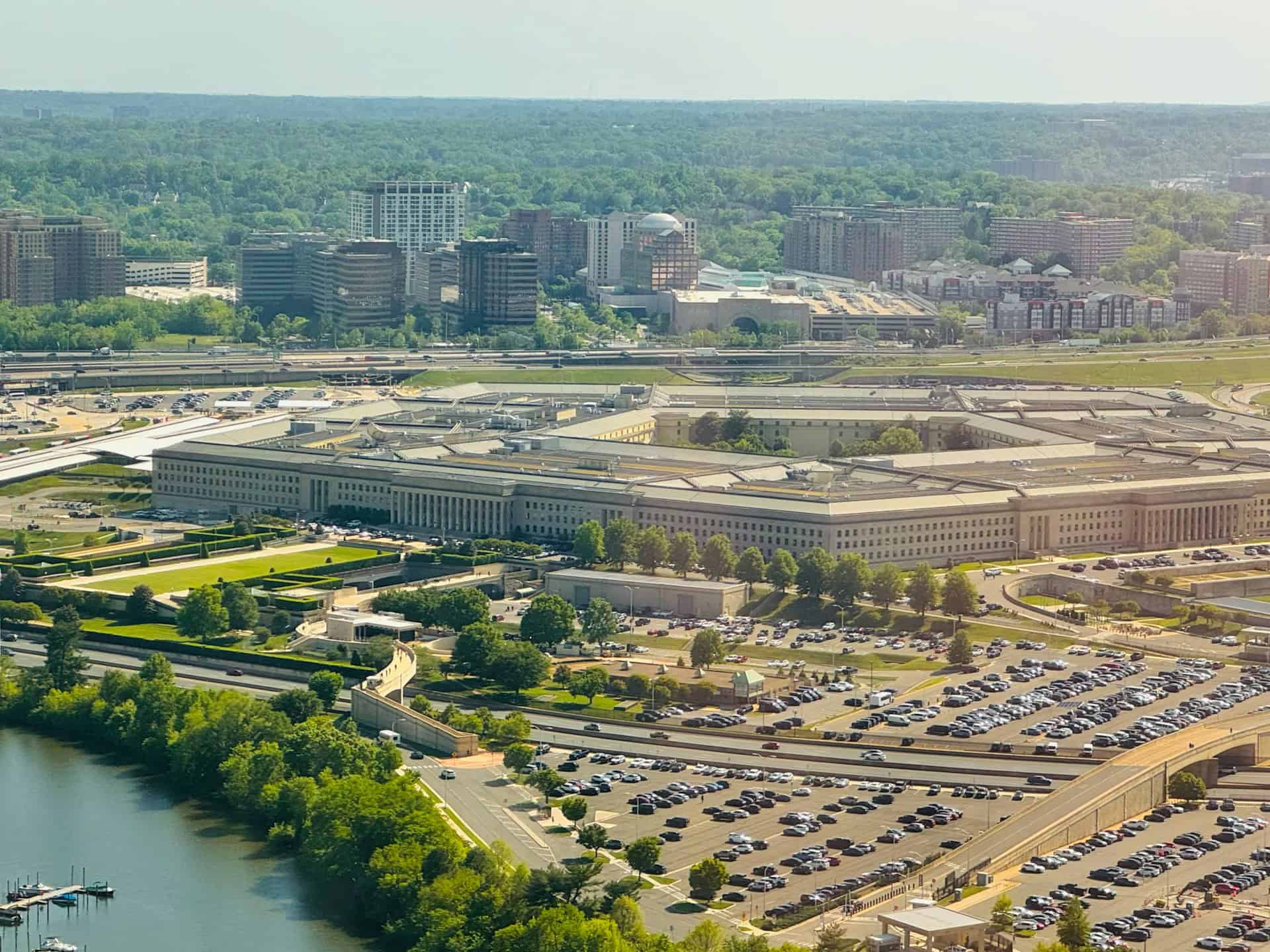
Ten years ago, Donald Trump disrupted the “ruling class” that had held power in this country since at least the administration of Woodrow Wilson. The Wilson administration and the First World War inaugurated the establishment of a ruling class in Washington, D.C., that grew in size and power as America rose to great power status. FDR’s New Deal, the Second World War, the Cold War, and LBJ’s Great Society created a mammoth bureaucracy, a national security state, and a military-industrial complex that became impervious to schemes to scale them back. Even the Reagan Revolution failed to trim the size and power of the country’s ruling class. In fact, Reagan could not have won the Cold War without the national security state and the military-industrial complex. War, even a Cold one, promotes the health of the state.
Burnham noted that the 20th century’s new political ruling class superseded in influence and power the capitalist elite of the mid-to-late 19th century — Vanderbilt, Rockefeller, Carnegie, Morgan, and others. Pareto called this the circulation of elites, which only confirmed Michels’ concept of the “iron law of oligarchy” and Mosca’s claim that all states — whatever their governmental system — have a ruling class. Burnham called this development the “managerial revolution” in his book by that name.
In truth, the members of the new ruling class were less managers than internationalists and imperialists. The whole world became their playground. Robert Nisbet wrote insightfully about this in his book The Present Age. The internationalists established well-funded foundations, built respected think tanks, and groomed future political leaders. They infiltrated U.S. and Western media. They staffed the growing bureaucracies in Washington, including the federal judiciary. They became teachers at elite colleges and universities. Eventually, they became what Trump calls the “deep state.” Their hold on power is so great that in six years as president, Trump has not been able to dislodge them.
Washington’s ruling class abhors Trump’s America First program. It is too narrow, too parochial for them. Many of the members of this ruling class think of themselves as citizens of the world. President Obama, for example, exhibited all the qualities of this internationalist ruling class. He apologized to the world for America’s past sins. He derided the notion that America was an exceptional nation. Members of his national security team promoted the notion of America’s “responsibility to protect” other peoples.
Read more The Spectacle Ep. 487: Lou Aguilar’s Story That Publishers Won’t Dare to Publish
But the ruling class is bipartisan. The Republican establishment — call it the Bush wing of the GOP — is internationalist and imperialistic to its core. President George W. Bush waged a “global war on terror” and launched a crusade to bring democracy to the rest of the world. His speeches after the 9/11 attacks would make Woodrow Wilson blush. And it was this same bipartisan ruling class that added 16 new countries to NATO after the Cold War ended in a fit of hubris that George Kennan called the most fateful error of the post–Cold War world. The current war between Russia and Ukraine, and the Sino-Russian strategic partnership, stem, in part, from that fateful error.
It was members of the ruling class who used the Russia hoax in an effort to unseat President Trump during his first term, and who sought to politically destroy and imprison him during his wilderness years between his first and second terms. Once before, the ruling class succeeded in destroying a president who pursued policies that were anathema to the ruling class. Watergate, as Jim Hougan, Len Colodney, Robert Gettlin, and Geoff Shepard have detailed, was the ruling class’s response to détente, arms control, ending U.S. involvement in the Vietnam War, and an electoral landslide by the hated figure of Richard Nixon. What else explains the fact that the Joint Chiefs of staff planted a spy in Nixon’s White House? What else explains the fact that the Watergate special prosecutors held ex parte meetings with federal judges overseeing their cases against Nixon’s aides? What else explains the fact that it was a disgruntled Deputy Director of the FBI who became the “deep throat” of Bob Woodward’s anti-Nixon articles in the Washington Post?
The gains made by socialists in the recent midterm elections would make Burnham shudder. The socialist influence in Congress has grown. It already dominates mainstream media. The national security state and the military-industrial complex are necessary to enable the United States to conduct effective foreign and defense policies, but we still must guard against what President Eisenhower characterized as their “unwarranted influence” in the councils of government. That part of the deep state is necessary in this anarchic world. But the socialist agenda is to concentrate all social forces in the state, which Burnham wrote “would in fact destroy all possibility of freedom.”
Prepare yourselves for the next two years in Washington by reading The Machiavellians.
Read more Alaska’s Ranked-Choice Voting Experiment Takes a Sinister Turn
READ MORE by Francis Sempa:
Nixon’s Real Peace in 2026
Rediscovering James Burnham and the Best of ‘National Review’
Trump’s Summit With Xi and Putin: A New Global Balance of Power?
About the Author