“You know what it is? I’ll tell you what it is. It’s anti-Italian discrimination. Columbus Day is a day of Italian pride. It’s our holiday and they want to take it away.”
Read more Why the Left Hates Zionism: The History Behind Today’s War on Israel
So declares Silvio, one of the characters in The Sopranos, in a gloomy but very funny and politically incorrect scene at their regular meeting spot at Satriale’s market. The gang is upset by news of a local anti-Columbus Day protest. The organizers are planning a “death watch” over a statue of Columbus — that is, Cristoforo Colombo, the famous explorer from Genoa.
The woke liberal will be puzzled by this perspective from Italian Americans. It doesn’t fit with the left’s selective view of bigotry, restricted to “people of color” and other preferred leftist victim groups. The modern wokester is often confused by other ethnicities and nationalities and creeds that have experienced prejudice, particularly Christians whose liberties leftists are eager to limit when they clash with their purposes.
Alas, in seeking to cancel Columbus and his day, they do so at the expense of Italian Americans, who see it as anti-Italian discrimination.
As for Italians and Columbus Day, that’s an area where progressives in public schools and universities have conveniently failed to educate. They either don’t know or simply don’t teach the reality that Columbus Day has origins in a noble action taken by President Benjamin Harrison in 1892 to combat anti-Italian discrimination.
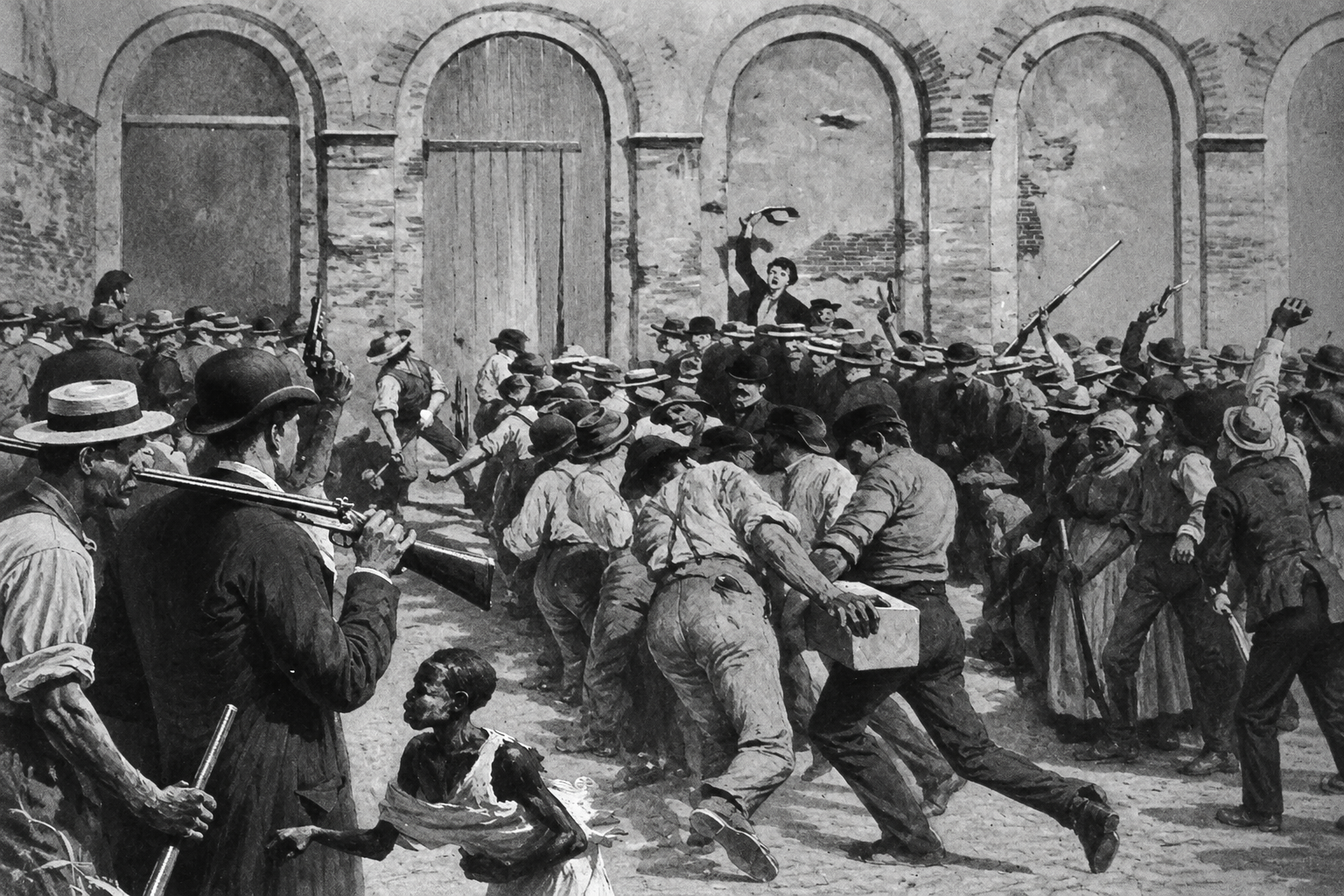
The day of remembrance was prompted by an infamous lynching of Italian immigrants in New Orleans on March 14, 1891. The city’s chief of police had been shot dead, and the mayor was quick to blame “Sicilian gangsters.” Over 100 Italians were rounded up and 19 put on trial — and found not guilty. Nonetheless, the locals wanted blood. They didn’t like these “white n-ggers.” A massive mob of 10,000 formed outside the prison. The mob stormed inside and dragged 11 Italian immigrants from their cells. It was the largest single mass lynching in America’s history.
The incident was widely seen as a gross injustice. There was national and international outrage. Word quickly reached Rome, including the Vatican. Italy severed diplomatic relations with the United States.
To try to calm things, President Harrison took several actions, including declaring a national celebration of Columbus Day the next year, in 1892, to honor the 400th anniversary of the explorer’s epic voyage.
Anti-Italian Violence in America
This brutal crime against Italian Americans wasn’t just some remnant of the South. Discrimination against Italians was pervasive in the late 19th and early 20th centuries at the height of their immigration. It’s one of the reasons that Pope Leo XIII sent Mother Cabrini (a future saint) to the United States. It’s also one of the reasons that Italians formed safe havens in their ethnic neighborhoods, and why some even turned to the Mafia for assistance on occasion.
Indeed, it’s no coincidence that the opening scene of The Godfather features precisely such a case. The undertaker seeking Don Corleone’s help believes he has no other recourse because the American justice system let him down — and let down his violated daughter. It’s so fitting that the undertaker’s and film’s first words are “I believe in America.” The undertaker’s name is Amerigo Bonasera, borrowed from the Columbus contemporary and fellow Italian explorer who America is named after, Amerigo Vespucci.
Bonasera’s daughter was raped and beaten by two thugs who humiliated and maimed and disfigured her. “I went to the police like a good American,” he tells the Godfather. But alas, the judge let these beasts go free. They then laughed at Amerigo in the courtroom. “These two bastards just smiled at me,” he continued. “I said to my wife, ‘for justice we must go to Don Corleone.’”
That scene took place not in New Orleans in 1891, but in New York, where Italians felt safer because of their numbers. Still, throughout much of America, they felt mistreated and threatened.
The KKK Targeted Italians
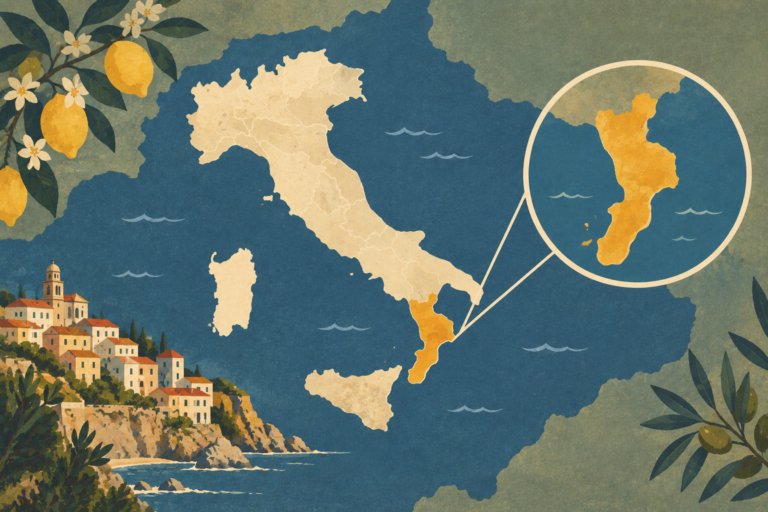
My family can relate to this. They were first-generation immigrants from Calabria who faced mistreatment in Pennsylvania.
My great-grandfather on my mother’s side was Pietro Giovinazzo, who escaped to America as a stowaway from Reggio Calabria in October 1906. The illegal immigrant jumped into the Hudson River and swam ashore, presumably somewhere to Little Italy, where he either had help or figured out what to do, even with little money or English. He eventually made his way to Latrobe, Pennsylvania, and then Emporium, Pennsylvania, changing his name along the way. (READ: “Italian Without the Name.”)
One day at the family farm, aside his wife Rose Maria and many little children, Pete got a visit from the local branch of the Ku Klux Klan. The group was led by a local Protestant pastor who told the family: “We’re going to burn you out.” My great-grandfather brandished a pistol in each hand and barked in broken English: “No touch! No touch! I shoot! I shoot!”
As my Uncle Bruno frequently related the story, Pete “wasn’t afraid of the Devil himself.” And he knew how to use guns, particularly to protect his family, which he did on another occasion that I need not visit here.
Read more James Talarico’s 12-Day Campaign Absence Deserves Scrutiny in Texas
But the point: the local KKK didn’t like old “Dago” Pete and his brood of “garlic eaters” and “Mary worshippers.”
And Pete is just one such example.
Pennsylvania was founded on religious freedom by William Penn. It’s where the Declaration of Independence was signed. It was home to the Battle of Gettysburg and a crucial state in the fight against the South in the Civil War. And yet, it was a hotbed of KKK activity. And that activity was not just against black Americans but Catholics.
Even in today’s race-obsessed environment, most modern Americans don’t realize just how prevalent the Klan was. Its membership nationwide in 1925 approached six million, out of a total U.S. population of 115 million. You need not search far to find a Klansman.
Historian Philip Jenkins says that the Klan had a quarter-million members in the Keystone state. It “achieved enormous successes” in my native western Pennsylvania, with key centers in the coalmining and steel areas where my larger family was located. Pittsburgh’s Allegheny County had 33 so-called klaverns, and the nearby city of Altoona might have had the most Klansmen per capita of any city in America.
Jenkins confirms that many Klan leaders were Protestant pastors with a special hatred for Catholics. Jenkins wrote: “Of the traditional targets of the Klan — Blacks, Catholics, and Jews — it was the Catholics who were perceived as the greatest enemy.”
According to another historian of the KKK in this area, “two-thirds of the national Klan lecturers were ministers, and the rolls of the order by 1924 included 30,000 Protestant clergy.”
That’s enormous and shocking. Though it isn’t surprising to my Italian Catholic family who saw it in their face on their front lawn.
Christopher Columbus’ Descendants
For these Italian Americans, the creation of Columbus Day was a blessed sign of hope that their new country welcomed them after all. It acknowledged that one of their own — a native son — had discovered their adopted land of the free. Cristoforo Colombo was their boy.
A friend at my parish, Patricia, is a direct descendant of Columbus. Her father’s family is from Genoa. When they arrived in America with the actual name Colombo, the folks at Ellis Island thought it would be cute if they Anglicized it as Columbus. She had an uncle who served in World War II whose actual name was Christopher Columbus.
Like many Italian Americans, Patricia is proud of that lineage. Her car in the church parking lot boasts a personalized plate that says simply “1492.” In fact, practically every Catholic parish boasts Columbus’ name. Nearly every single one of them still has a Knights of Columbus chapter. There remain thousands of chapters with over a million men as members. It’s the one Catholic organization in each parish that has endured, a source of unity for the men, whether Italians or not. There are probably just as many members of Polish and Irish ancestry in the Knights of Columbus.
Columbus Day is meaningful to them. They have been hurt and appalled by the move to banish it or replace it with Indigenous Peoples’ Day. (READ MORE: “Happy Indigenous Peoples’ Day! Remembering how the Iroquois treated missionary Isaac Jogues and his companions” and “Indigenous Slavers: American Indians Who Whipped and Owned Blacks.”)
The irony of course is that leftists do this in the name of fighting bigotry against native Americans. They can’t conceive of such a thing as prejudice against a group of white Europeans. A dreaded Dead White European Male (DWEM) such as Columbus is not only not to be defended but treated with contempt, blamed for a litany of untold evils and ills. They scoff at the thought that there could be discrimination against anyone but their preferred people of color. They don’t give a damn about discrimination against Italians at the start of the 20th century.
Of course, there’s also a much deeper project behind this. It’s not just anti-Columbus Day but anti-Western Civ.
Alas, in seeking to cancel Columbus and his day, they do so at the expense of Italian Americans, who see it as anti-Italian discrimination. To them, this is indeed their holiday that others are trying to take away.
Read more Italian Without the Name
READ MORE from Paul Kengor:
The Stupidity of Baseball’s ‘Artificial Runner’
In Vino Veritas — and Civilization
About the Author