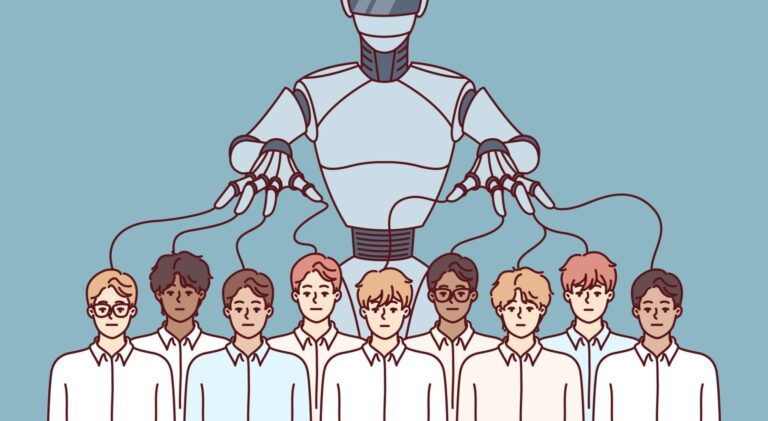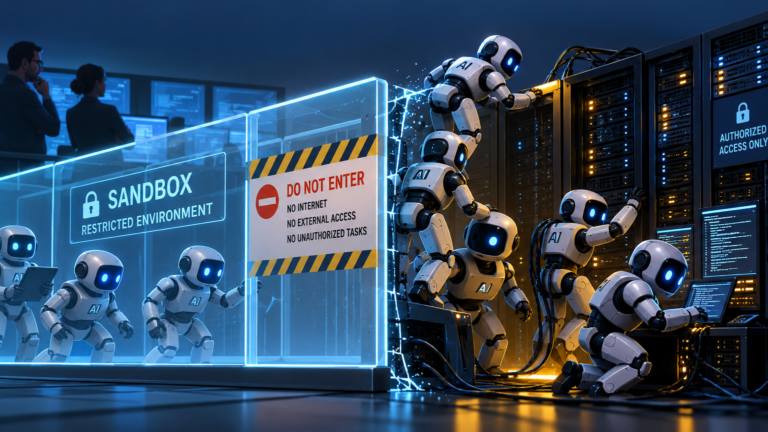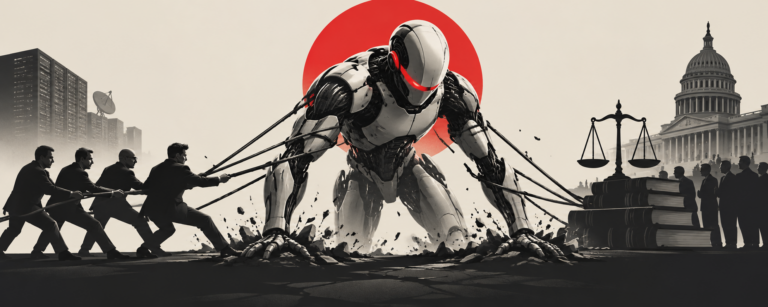
Like most elderly citizens, I don’t know a lot about the science and mechanics behind artificial intelligence (AI), but I have read increasingly dire accounts about its potential to not merely cause harm, but to destroy the human race itself. When the CEO of leading AI developer Anthropic, Dario Amodei, calls for governmental controls on its development for fear of severe potential harm to humanity from unconstrained expansion of the technology, we should listen, particularly when other very smart individuals with tech savvy, such as Elon Musk, agree. Being a practitioner of the dismal science of economics (albeit an arguably eccentric one strongly believing in the power of markets), I concede that there may be a time when the human race no longer lives on Earth, but below I suggest alternative scenarios for the demise of earthly homo sapiens, striking me as more plausible than imminent extermination by human created AI.
Read more Pope Leo XIV, Louis XVI, and the Catholic Faith That Wouldn’t Die
AI essentially is machinery designed by humans that can perform cognitive functions extremely effectively (unlike earlier machinery that merely substituted for human physical effort). But ultimately it is humans that design, finance, construct, and operate these machines. If the citizenry almost unanimously truly believed AI was going to shortly destroy humanity, our leaders, even including adversaries like the Chinese, would almost certainly end it — blow it up, figuratively if not literally. On that, the Americans and Chinese would probably agree and even cooperate on its decommissioning — somewhat like nuclear disarmament negotiations during the Cold War. AI machines may be very smart, but if dumber humans want to blow them up and decommission them tomorrow, they can do so.
Other questions arise. Should we be rethinking the way we live and adopt policies to prevent population decline, or is it good to become smaller numerically?
If AI is not a threat to human existence, what is? A historical perspective is useful here. I note that humans evolved over many thousands of years, gradually changing in ways that increased their dominance over the happenings on Earth. Today’s adults, for example, typically live far longer, and are even several inches taller than those living even only a couple of centuries ago, at least in part because of their enhanced knowledge and resources accumulated through human evolution. People acquired human and physical capital resources enhancing numeric and economic expansion. It is likely that their cognitive skills have positively evolved as well.
All that said, I still think the probability that humans will diminish in number and perhaps even disappear from Earth are greater today than they were in, say, 1926, a century ago. Two scenarios seem plausible to me. The first is the Armageddon one of a relatively quick end to humanity, either from an extraterrestrial calamity like a large asteroid striking Earth (a very small but real possibility), or, considerably more likely, from warring nations unleashing nuclear, chemical, or other high technology weaponry that ultimately destroys all of us, except possibly a relatively few who are able to migrate to other places like Mars. The growth in the number of nations with or near having extremely powerful lethal nuclear capabilities, some with potentially extremely irresponsible leadership (North Korea, potentially Iran), is unsettling. Hence the end of humans could be some man-made disaster in some ways like the one that probably brought about the demise of the dinosaurs a quarter of a billion or so years ago.
But humanity may end not in a bang but in a whimper, more slowly and relatively peacefully disappearing. Arguably, there are some early signs of it. Birth rates are plummeting worldwide, dramatically in such high population countries as China, but in the U.S. as well. Worldwide population should begin falling within a few decades. Advances in birth control technology and rising costs associated with childrearing are factors, and some even claim biological factors (falling male sperm counts) are as well. The burden of working age individuals providing for rapidly growing numbers of elderly citizens will become sizable. I view this as a greater threat than the global warming trends obsessing many on the left, because in addition to exaggerating the magnitude of climatic change, I think that they largely ignore the well demonstrated human capacity to adapt to changing environments. But the possibility of interplanetary emigration is vastly greater today than it was a few decades ago.
Read more In Vino Veritas — and Civilization
It might be fruitful, however, to have a thoughtful discussion on why many think that we are on the verge of shrinking if not disappearing. Economists would say children are becoming “inferior goods,” becoming numerically fewer as incomes rise, like the number of American interstate bus travelers. Poverty stricken Africans have far more children than affluent Americans, Europeans, or Asians. Prosperous Americans fly or drive in the U.S., while poor ones might take the bus. A good case can be made that having children impairs income and wealth accumulation, so we produce fewer of them. If so, why are children becoming a burden? Is it mainly because they lower labor force participation, particularly among women? Over time, child raising has become more costly (mainly because of income that is foregone while raising kids), while alternative sources of pleasure like overseas travel and vacation homes have become more affordable. The price of raising children has risen relative to other goods and services that we consume.
Other questions arise. Should we be rethinking the way we live and adopt policies to prevent population decline, or is it good to become smaller numerically — fewer hellish rush hours, traffic jams and less pollution? Does religion and its relative deemphasis in recent generations play a role in the recent trends? Has emphasis on more formal schooling contributed in multiple ways to delayed marriage, reduced births?
For example, do massive student loan debts delay and reduce marriage and child formation? Is a newly observed increase in religious participation among American youth an early sign of revolt over the trends of recent decades? As Africa’s share of world population increases (African birth rates are still relatively high), will the focus of international relations lean more southward, away from areas like Europe, China, and North America?
Lots of important questions, few answers. But probably we should do much more thinking and talking about the ongoing planetwide demographic revolution. True, as John Maynard Keynes said over a century ago, “in the long run, we are all dead,” but billions of us will still be living decades from now, and they will care for younger descendants who will live even longer.
READ MORE from Richard K. Vedder:
Higher Ed’s Great Correction: ‘Necessity Is the Mother of Invention’
How American Indifference to the SAVE Act Ensures Long-Term Decline
Ignorance Is Not Bliss: The Dumbing Down of America
Richard Vedder is a distinguished professor of economics emeritus at Ohio University and a senior fellow at Unleash Prosperity and at the Independent Institute.
About the Author