Time has moved on.
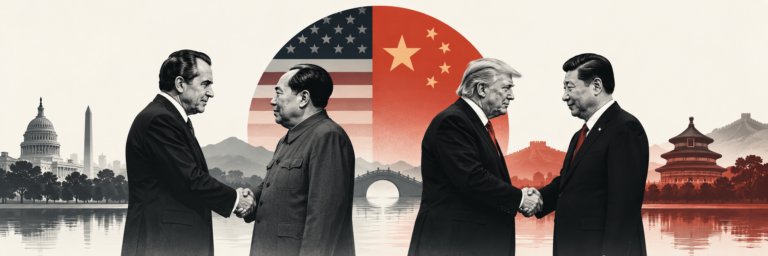
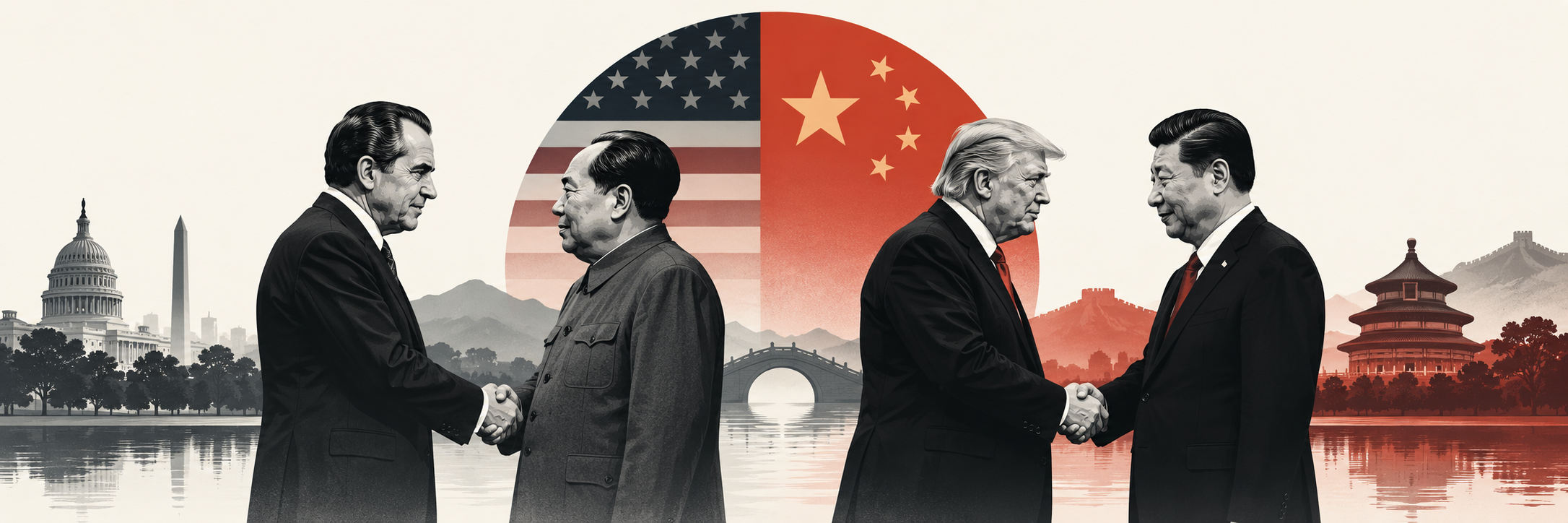
But once upon a time it was January 1969. Richard Nixon had been sworn in as America’s 37th President. Twenty years earlier, the Communist People’s Republic of China had been created. And for those following 20 years, diplomatic relations between the U.S. and China had been frozen in diplomatic ice. They had no relations. They simply did not speak. In fact, at that moment the United States was in a full-fledged war with Communist North Vietnam, which was, in fact, a China ally in China’s backyard.
Read more Gavin Newsom’s Pandemic Regrets Tour
Also, in fact, 15 years earlier, as the Korean War raged, there was a conference in Geneva to try and settle the conflict. And, legendarily, when President Eisenhower’s Secretary of State John Foster Dulles met with Chinese leader Zhou Enlai to negotiate the terms of a peace, Dulles refused to shake Zhou’s hand.
Nixon, legendarily a foreign policy leader, was determined to change the Cold War with China upon taking office as president. And he did. Nixon saw that thawing out relations with China would both bring China into what had been called the “society of nations” and, as the war in Vietnam raged, give America leverage in negotiating with both the North Vietnamese and their ally, the Communist Soviet Union.
Nixon, ever the notetaker, wrote up his outreach to China in his memoirs, suitably titled RN: The Memoirs of Richard Nixon.
Deploying his then-National Security Advisor (and later Secretary of State) Henry Kissinger for a secret trip to China, Nixon set about changing the U.S.-China relationship. Among other things, Kissinger wrote this in his post-trip memo to the president:
We have laid the groundwork for you and (China’s leader) Mao to turn a page in history. But we should have no illusions about the future. Profound differences and years of isolation yawn between us and the Chinese…..My assessment of these people is that they are deeply ideological, close to fanatic in the intensity of their beliefs. At the same time they display an inward security that allows them, within the framework of their principles, to be meticulous and reliable with others….
Our dealings, both with the Chinese and others, will require reliability, precision, finesse. If we can master this process, we will have made a revolution.”
Read more Lost in the Wilderness: The True Roots of Male Demoralization
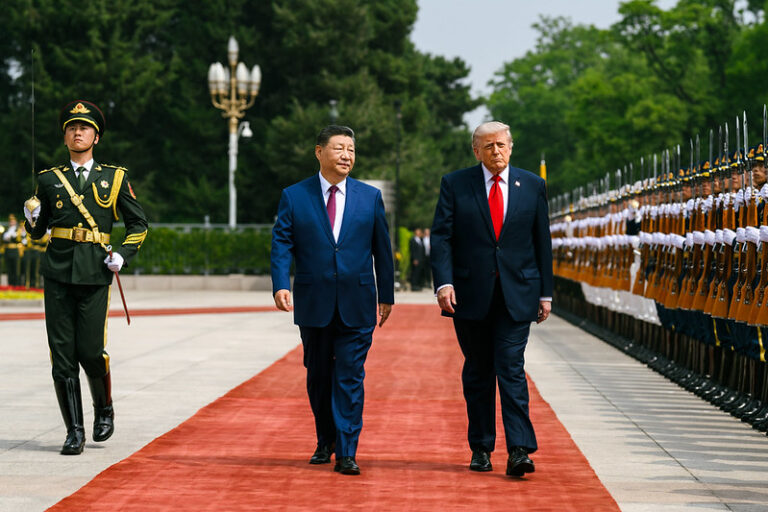
And today? Literally, with an update of Trump policy-making, this is the Nixon formula followed by President Donald Trump as he hosts China’s President Xi Jinping. Watching the television coverage of Xi’s arrival for his first White House visit in over 10 years, one learns of the Trump-Xi turn to what is being called a US-China policy of “constructive strategic stability.”
In short, the groundbreaking Trump-sponsored opening of a halt to America’s Cold War with China — a Cold War with hot war flare-ups in places like Korea and Vietnam — is making a serious contribution to world peace. (RELATED: China: The Limits of Transactional Diplomacy)
A contribution begun with President Nixon and expanded by President Trump.
In American history, presidents who make these contributions can win a serious peace. It has been so with presidents with names like Abraham Lincoln (the Civil War), William McKinley (the Spanish-American War), World War I (Woodrow Wilson), World War II (FDR), the Vietnam War (Nixon), and the Cold War (Ronald Reagan). All are presidents who have won a lasting historical record as having brought peace in their time.
It is, sadly, also a fact that presidential peace accords don’t last forever as time and circumstances move on.
But having a presidential peace at all is, in fact, a tribute to the president who negotiates one. In this current case, that would be a tribute to President Trump.
Read more Trump’s Greenland Agreement Is the ‘Art of the Deal’ in Action
So.
On goes the turning globe and history.
With, doubtless, more history to come.
READ MORE from Jeffrey Lord:
The President Gets It
Democrats and Antisemitism in the Midterms
The AI Revolution Arrives
About the Author