Processed By eBay with ImageMagick, R1.1.1.||B2||T0JKX0lEPTVjYTFhYjFlYTQ1YTAyMzQwNTA0YTkxNmE3MDVkMjA1MDdjODYzYmM3ZmI4fHxTRUxMRVJfTkFNRT18fE9SSUdJTkFMX0VCQVlfUVVBTElUWV9TQ09SRT00fHxDUkVBVElPTl9EQVRFPTEwLzMxLzEyIDE6MjMgUE0=
Saturday was the feast of St. Januarius, a fourth century martyr whose blood is now housed in the cathedral in Naples, Italy. According to legend, St. Januarius and his companions were executed by the Roman Emperor Diocletian. The early Christians were first thrown to bears to be eaten, but when the beasts refused to harm them, Diocletian had Januarius and his companions beheaded.
Read more Will Saudi Arabia Fight the Houthis and Join the Abraham Accords?
Very often, the lives of the saints seem distant, far off, and incredible, in the true sense of the word — so full of miracles and majesty and martyrdom that they simply cannot be true. But they are. On his feast day Saturday, the centuries-old dried blood of St. Januarius turned to liquid again. This phenomenon happens thrice annually: on his feast day, when his blood was spilled by the Roman pagans, on the December 16 feast of his patronage of Naples, and on the Saturday before the first Sunday in May, when his relics were reunited.
Sheen and his life are evidence that the lives of the saints need not be filled with miracles of mythological proportion.
The lives of the saints may very well seem like fables or episodes from mythology. God’s protection and his own holiness kept St. Januarius from being devoured by bears. St. Joseph of Cupertino was known to levitate and fly, earning the nickname of “the flying friar.” St. Francis of Assisi would preach to animals. St. Corbinian, while traveling to Rome, was accosted by a bear, which killed his donkey. The bishop then commanded the bear to carry his pack to Rome in the donkey’s stead — and the bear did.
So often it seems necessary to add lines like “according to legend,” or, “some stories say,” when addressing the more fantastic elements of the lives of the saints, but what reason is there to doubt that these amazing episodes happened in reality? Why should a bear not listen to a bishop? Why should a friar not float through the air? Why should St. Januarius not be devoured by beasts? After all, his dried blood still turns to liquid some 1,700 years after his death — and not at random, but on specific feast days.
The saints truly did walk this earth. The likes of St. Padre Pio of Pietrilcina and St. John Vianney, the Curé of Ars, really did wrestle with Satan. St. Benedict of Nursia really did raise the dead. St. Anthony of Padua really did hold the Christ Child. If fewer saints walk the earth today than in ages past, perhaps it is because the lives of the saints have been relegated to the realm of fancy and fable, myth and legend, and fewer folk today believe that they themselves can meet and share their lives with saints, much less become saints.
But not all saints lived such fantastical lives. The biographies of two of the greatest of the Doctors of the Church, for example, evinced precious few episodes of mythological nature. St. Augustine of Hippo was a spiritual drifter for years, flitting from one set of religious and philosophical beliefs to another before finally finding the truth that he so craved in Christianity. From then on, he was a bishop, an author, a philosopher and theologian, and at times a pseudo-political figure. His life features no apparitions of the Blessed Virgin, no miraculous taming of wild animals, no raising of the dead, yet he is quoted more than the vast majority of his fellow saints and his thinking and writing are not only among the revered clarifications of Catholic teaching but a key part of the foundation of the Western world.
Read more When the Lights Go Out, AM Radio Still Speaks
Likewise, St. Thomas Aquinas is considered one of the greatest thinkers to have ever lived. A theologian, philosopher, and Dominican friar, his life was not devoid of adventure, but it was devoid of levitation, bilocation, and physical fights against Satan. Instead, he lived much of his life teaching at the University of Paris and writing theological and philosophical tracts, Eucharistic hymns, and a series of pamphlets on issues from education and academics to faith and civic life.
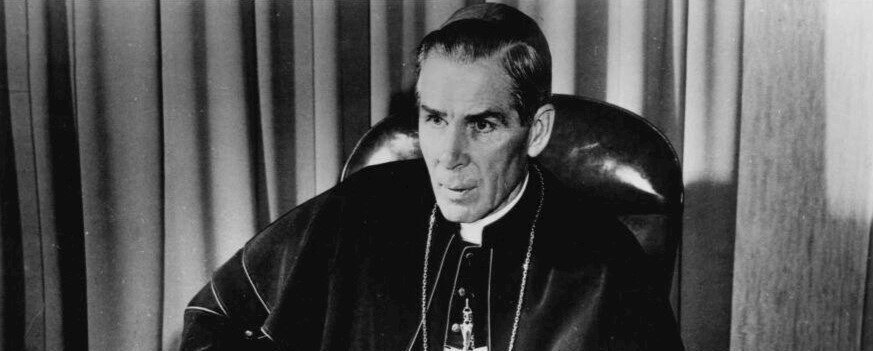
This week, the Catholic Church will celebrate the beatification of the American Archbishop Fulton Sheen. Like Saints Augustine and Aquinas, Sheen was not known for talking to animals, surviving death, or walking on water. Unlike the two Doctors of the Church, Sheen’s own work is actually within the living memory of some alive today.
A vocal anti-communist, Sheen was known throughout the country as a radio and television show host. Clad in his ferraiolo cape and armed with a piece of chalk and a blackboard, Sheen brought the truth and beauty of the Catholic faith into hundreds of thousands of homes and hearts across America.
Like Saints Augustine and Aquinas, Sheen and his life are evidence that the lives of the saints need not be filled with miracles of mythological proportion, but that even the lives of everyday folk are very often filled with miracles, for those with eyes to see them.
The magic of television and radio is just as much a miracle when in the service of God as St. Januarius’ experience with Diocletian’s bears. The clarity and courage of St. Augustine’s writing is surely just as miraculous as St. Francis of Assisi’s sermons for woodland critters. The prescience and brilliance of St. Thomas Aquinas’s Summa Theologica is truly a miracle, parsing out, explaining in detail, and firmly defending the truths of the Catholic faith. Those same truths would be made accessible and understandable to many Americans gathering around the family radio or the television set centuries later, thanks to Sheen.
Saints may still walk among us, but the whole world could be half populated by saints if more Catholics had the humility and childlike sense of wonder necessary to see miracles wherever we go.
Read more The Stakes Are Too High to Sit Out the Midterms in Virginia (and Elsewhere)
READ MORE from S.A. McCarthy:
Charlie Kirk and the 9/11 Heroes Show that Life Is Worth Living Well
Surrogacy Is the New Slavery
Catholic Bishops Fight Trump’s Stricter Vetting of Migrant Child Sponsors
About the Author