Thirty-four network shows premiered in the fall of 1966. Three became iconic — The Monkees, Mission: Impossible, and a science-fiction series unlike anything previously seen, and it wasn’t The Time Tunnel. The premise of the show was repeated every week in the opening narration by its lead character, Captain James T. Kirk, specifically his portrayer, the brilliant actor William Shatner.
Read more Spain’s Sánchez Compiles Blacklists of Journalists and Tries to Tamper With the Electoral Roll
“These are the voyages of the Starship Enterprise. Its five-year mission: to explore strange new worlds, to seek out new life and new civilizations, to boldly go where no Man has gone before.” No series ever better delivered on its concept than Star Trek.
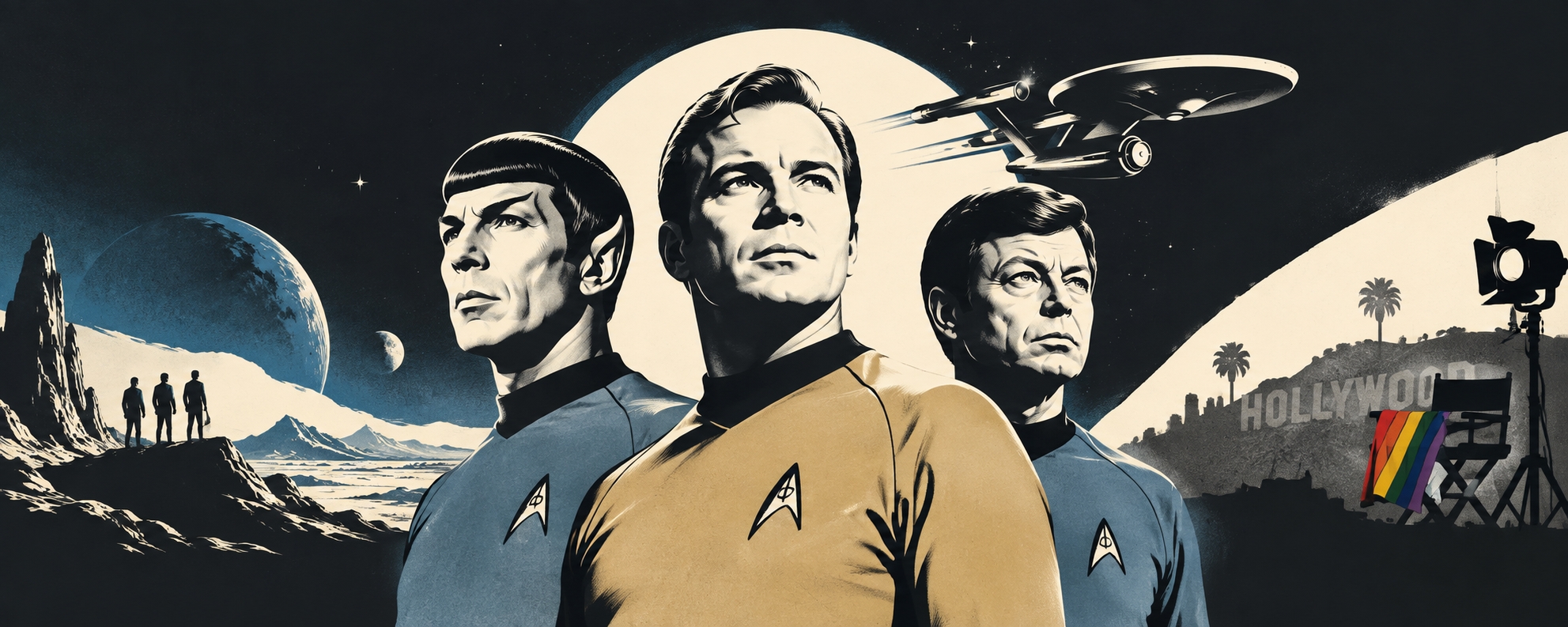
These three didn’t just give Star Trek appealing leads; they gave it its heart — brotherhood, male camaraderie, respectful disagreement.
For a boy sitting in front of a black-and-white television, it was a window to an exciting universe he could hardly imagine. Yet this magnificent spaceship and its hardy crew of stalwart men and stunningly beautiful women made it seem real. In a way that the silly competition, Lost in Space and Voyage to the Bottom of the Sea, never did.
The differences began with its vision, that of World War II combat pilot turned L.A. cop turned Hollywood TV writer-producer, Gene Roddenberry. Like many of his peers in the 50s-60s, Roddenberry had lived a life unfathomable to the weenie men and fantasist women later hired to provide entertainment by ruining, er, adapting previously created and far superior intellectual properties such as Green Lantern, Lord of the Rings, Star Wars, and, ironically, the worst case, Star Trek. Unlike them, Roddenberry had taken and saved lives, seen good and evil in effect, and had the intellectual talent to depict all of it as adult-oriented entertainment. (RELATED: Starfleet Academy: To Boldly Go Nowhere)
He honed his television writing skills on the manliest of genres, the Western, scripting 24 episodes of the classic Have Gun, Will Travel. The genre remained with him when he set his sights on a different wilderness — Space, the final frontier. He conceived a series that would carry the Western spirit from the past into the future, which he pitched to unimaginative network executives as “Wagon Train to the stars.”
The suits understood the hit show Wagon Train. It was the “to the stars” part they had trouble grasping. But after several rejections, one studio agreed to make the pilot, Desilu, formed by Desi Arnaz and Lucille Ball. Its biggest previous credit — besides their post-divorce Lucy vehicle The Lucy Show — had been The Untouchables. Roddenberry presold the pilot treatment to Desilu, which presold it to NBC. What NBC execs screened in February 1965 literally blew their minds, and not in a good way.
The Cage introduced the Starship Enterprise and its Captain, Christopher Pike, played by second-tier movie star Jeffrey Hunter (The Searchers). Pike is tired of making life-or-death command decisions and dreams about either settling on Earth as a rancher or becoming a trader of seductive green-skinned Orion slave girls. But first he must contend with a planet of beings that can make illusions seem indistinguishably real, who seek to force the Enterprise crew to provide actual necessary labor. They hope to entice Pike into agreeing to breed an actual labor race by indulging his fantasies of hot Orion slave girls while punishing his rebelliousness.
Read more Amy Acton’s Story Reeks of Lies and Alcohol, But Mostly of Lies
NBC rejected the pilot with the phrase “too cerebral.” They were impressed by the realistic-seeming universe Roddenberry had created — the “spaceship” Enterprise, time-warp speed, a molecule-disassembling and reassembling transporter. But they disliked the far-fetched illusion concept and three more aspects — the dour captain, the mannish female second-in-command — they were right about her (and endless future iterations of her) — and that satanic-looking crewman with the pointed ears played by character actor Leonard Nimoy.
Yet then they made a rare decision. They ordered a second pilot. And what they eventually got was classic Star Trek, perhaps the greatest blend of concept, writing, production, and acting ever put on screen.
The universe was there — Starfleet, the United Federation of Planets, the brutal Klingon Empire, the Romulans, and more. The technology was there — the Starship Enterprise, warp speed, transporter beaming, phasers, and photon torpedoes. The cavalry spirit was there — men and supportive women, exploring the unknown, expanding the territory, and fending off hostile, often more advanced, aliens. And the crew was there — primarily the swashbuckling, not morose Captain Kirk, the logical science officer Mr. Spock (Nimoy with his ears), and the humanitarian Dr. McCoy (DeForest Kelley).
These three didn’t just give Star Trek appealing leads; they gave it its heart — brotherhood, male camaraderie, respectful disagreement. That’s what made the show beloved by millions from a little kid’s living room through the jungles of Vietnam to palatial movie theaters showing the original crew and triumvirate. And that’s what the endless purveyors of the franchise, from the anemic Star Trek: The Next Generation to the laughable Starfleet Academy — and including NBC at the time — never understood: just how special, and masculine, the series was. But it scared the Next Generation team enough to kill off Captain Kirk in the most ignominious way possible (Star Trek Generations) and pay the price for it in four bad films.
But the writers knew. Because Star Trek didn’t use hack TV scribes like most other shows did, including all the Trek offshoots. It employed the finest science-fiction and horror authors in literature, like Hugo or Nebula Award winners Harlan Ellison, Theodore Sturgeon, Richard Matheson (I Am Legend), and Robert Bloch (Psycho).
Today, there are many great and eager writers who could recapture the essence of Star Trek as an exciting male-driven space odyssey. But they won’t get the chance. Because Hollywoke will never go where real men have gone before.
Today (Tuesday) was publication day for my rebooted political thriller The Washington Trail, about two young D.C. private eyes racing to foil a Deep State/radical left/foreign power conspiracy against America. If you buy it, you’ll not only support non-woke art and boost the sequel in November, but you’ll have a good time reading it.
Read more Welcome to the Far Right
READ MORE from Lou Aguilar:
David Ellison Sees the Writing on the Wall for Hollywood
Cuba Is Next
Andrew Klavan’s Find Me Nowhere Is the Cameron Winter Mystery at Its Best
About the Author