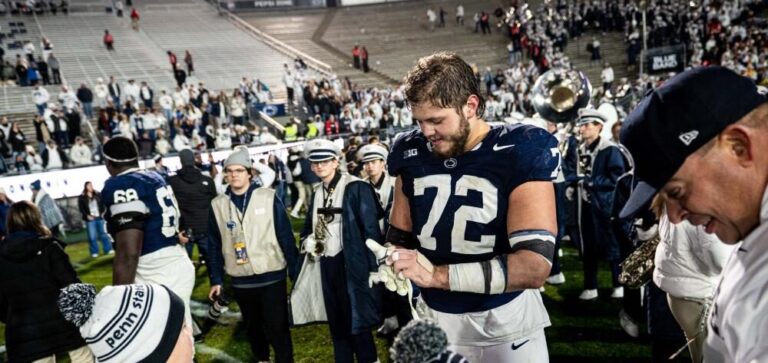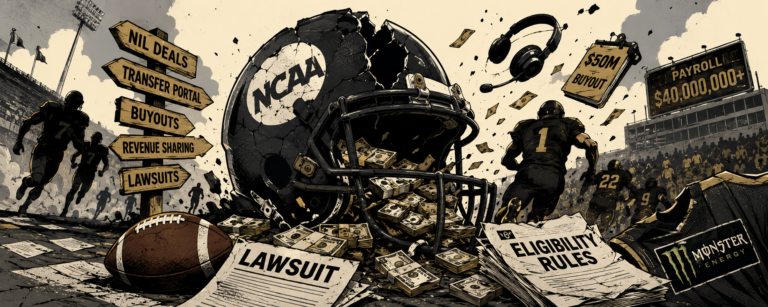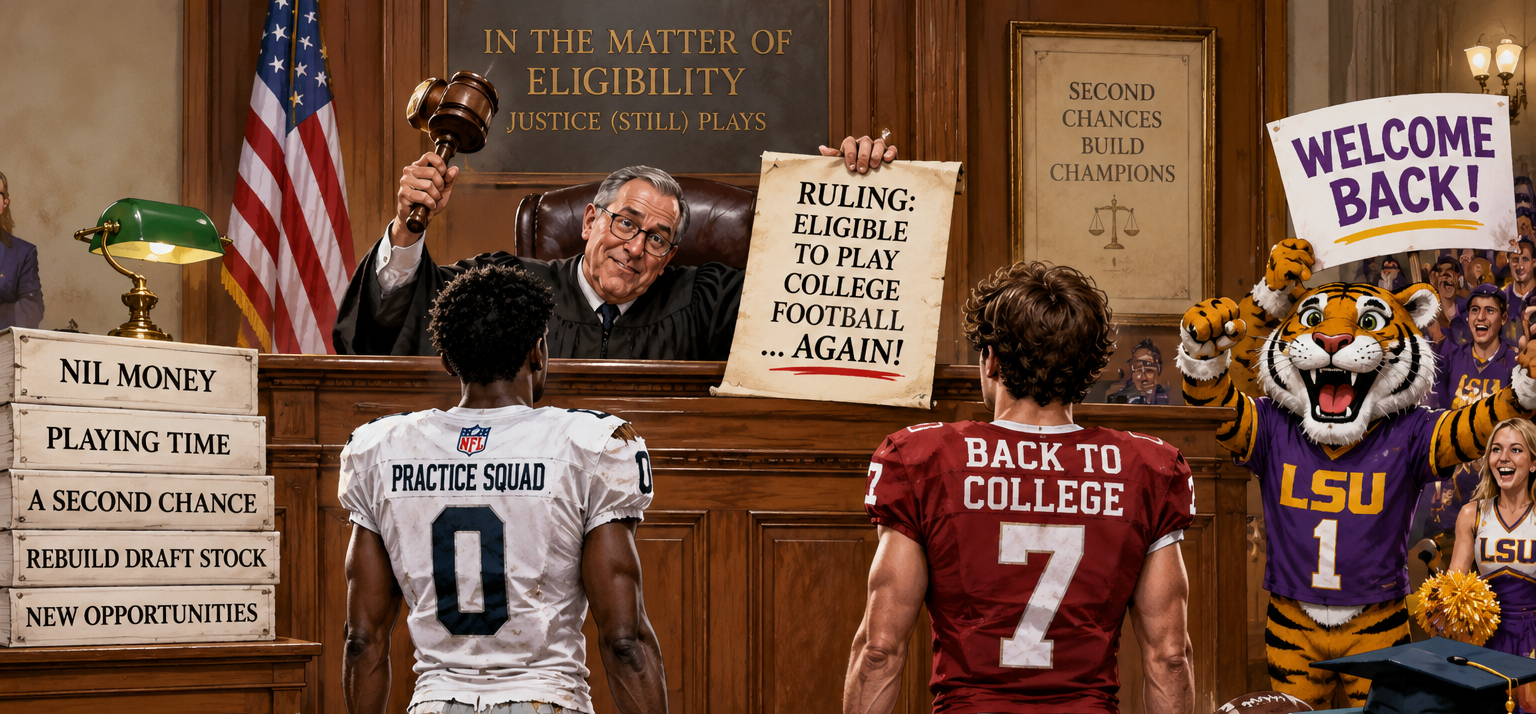
College football has seen some recent bizarre plot twists that include the explosion of NIL monies, conference realignments, mega coaching buyouts and now a judge ruling that allows NFL players a path to return to college.
Read more America Is at War With Iran, Whether We Call It a War or Not
Why would a player even want to return to college? Simple: NIL money, playing time, and a second chance. Some players make more through NIL deals than they would on an NFL practice squad. Others want to rebuild their draft stock after injuries, bad evaluations, or getting buried on a depth chart. And for undrafted players, college can be the only place left to prove they belong.
Conferences might sue schools. Schools might sue conferences. Everyone is watching LSU and the SEC like it is the season finale of a trashy reality show.
Pro players with agents, contracts, and preseason snaps can return to the collegiate ranks. The ruling cracked open a door nobody even knew existed, much less thought could be kicked off its hinges.
Two of the plaintiffs, Dae’Quan Wright and Zxavian Harris, wasted no time sprinting back to LSU like it was a Black Friday sale. Another plaintiff, Jack Pyburn, is still clinging to a roster spot with the Tampa Bay Buccaneers, but if he gets cut, he’s expected to boomerang back to Baton Rouge too. Nothing says “college spirit” like returning only after your NFL dreams evaporate.
Other NFL hopefuls saw this circus tent go up and wondered if they could squeeze inside. Lawsuits started flying like penalty flags. Conferences panicked and began slapping together emergency policies to stop the incoming stampede of pros trying to re-enroll. The SEC even tried to slam the door shut — only for players to immediately sue them too. LSU is expected to cheer them on from the sidelines, popcorn in hand.
This all commenced when a group of college players wanted a fifth year of eligibility. In June, the NCAA rolled out an “age-based” eligibility rule: five years to play five seasons, starting at either your 19th birthday or your first day of college. Forgotten were the players who started in 2022 and had already run through four seasons. They sued and started winning.
The Louisiana case was one of those lawsuits. It just happened to include a few guys who had dipped their toes into the NFL. Their argument? They never would’ve gone pro if they’d known the NCAA was going to change the rules. The judge agreed, adding the delightful caveat that they had to terminate their NFL contracts and return any money they earned. Nothing says “welcome back to college” like refunding your paycheck.
Read more David Ellison Sees the Writing on the Wall for Hollywood
Why does the draft matter here? Because the NFL Draft gives players guaranteed rights and structured contracts. If you’re drafted, a team owns your rights for four years. If you return to college after being cut, you lose draft eligibility forever — meaning you can only enter the NFL as a free agent, which is far riskier. Free agents get smaller contracts, fewer guarantees, and shorter leashes. So returning to college is a gamble: you might rebuild your value, or you might never get drafted again.
The ruling only applies to the plaintiffs. Anyone else must file their own lawsuit and hope for a whimsical judge. Neither of the players in the recent cases played in a regular-season NFL game. Both were undrafted; Harris didn’t even make it to preseason due to injury. Wright got a preseason cameo with the Browns before being waived. Pyburn is still fighting for a roster spot but has no issue with trading Tampa’s humidity for LSU’s humidity.
The Big Ten announced that anyone who signed an NFL contract, went through the draft process or appeared on a roster can’t return. The SEC, Big 12, and ACC followed with their own versions with penalties ranging from coaching suspensions to fines big enough to make boosters sweat. Under these rules, Wright, Harris, and Pyburn are all ineligible.
Can conferences enforce these policies? That is the multi-million-dollar question. Judges can override conference rules, but conferences can still write and enforce their own eligibility standards at least until a court tells them otherwise. The NCAA sets the broad framework, conferences set their own policies, and judges step in when someone claims those policies violate federal law. Right now, everyone is stepping on everyone else’s toes.
LSU seems ready to test the SEC’s patience, especially after Louisiana’s governor chimed in with the extremely helpful advice: “Don’t hate the player, hate the game.” The judge even expanded the restraining order to include the SEC, which is the legal equivalent of a stiff-arm.
For its part, the NFL just shrugged. The NFL will not allow players to return midseason and any player who re-enrolls will no longer be eligible to go back into the draft; instead, they will be free agents.
Up next is more hearings, more rulings, more chaos.
Conferences might sue schools. Schools might sue conferences. Everyone is watching LSU and the SEC like it is the season finale of a trashy reality show.
Read more The Day I Met Elvis Presley at the White House
If anyone sees the adults, tell them kickoff was twenty minutes ago.
READ MORE from Greg Maresca:
All-American Mayhem — College Football Is Back
America’s Population Crisis and the National Debt Time Bomb
When Baseball Cards Were Currency
About the Author