Welcome back to the world of Mike Holman.
If this is your first stop, here’s what you need to know: Mike Holman is the independent journalist, podcaster, and inveterate maker-of-enemies at the center of Scott McKay’s bitingly satirical thriller series — four novels (so far) chronicling one man’s habit of ending up in the middle of the very stories the rest of the media is too scared, too compromised, or too incurious to tell. Catch up on the whole series, read past episodes, and find links to every book at “The Mike Holman Novels at The American Spectator” and soon, see the video-novel version of this and the previous books at MikeHolman.com.
Read more Trump is Combining Geoeconomic and Kinetic Warfare Against Iran
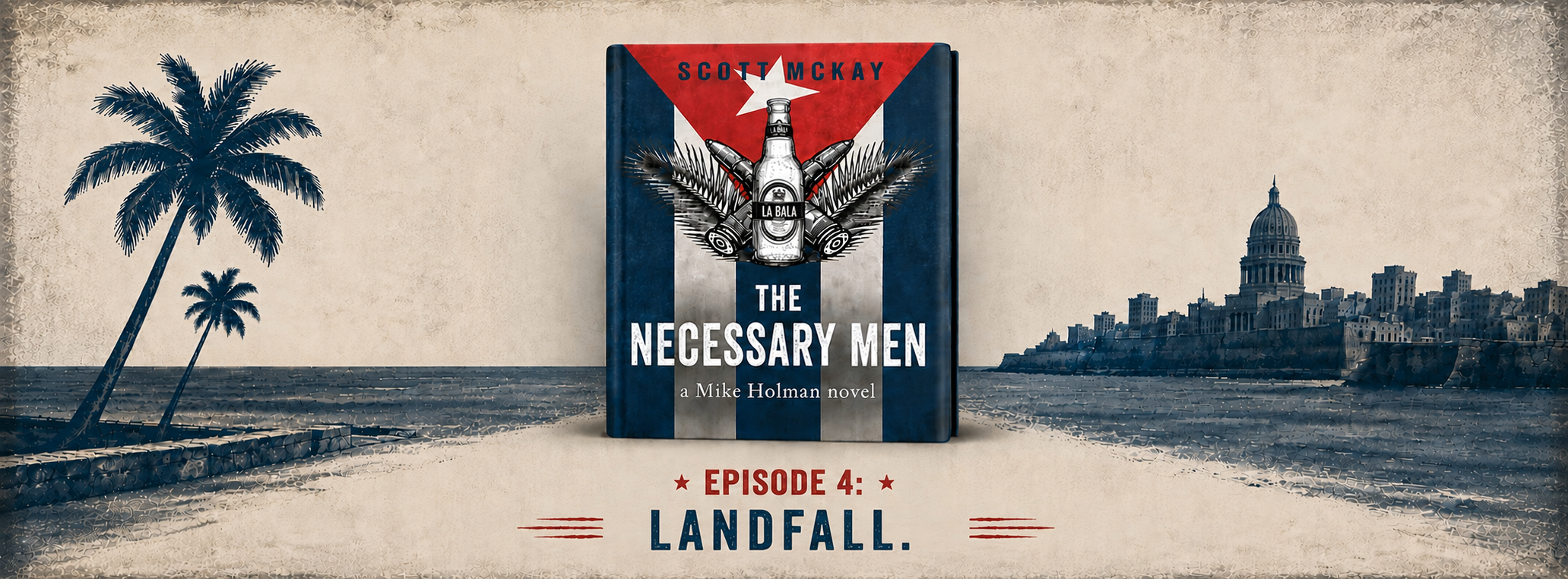
We’re now serializing the fourth Mike Holman novel, The Necessary Men, right here at The American Spectator — new episodes dropping every Wednesday and Saturday. The full book goes on sale September 26th at Amazon and the new MikeHolman.com site, and you can pre-order a signed copy right now.
Where we left off: The plot to free Cuba is taking shape and looks promising with a major backer with a surprising background, but problems on the home front have developed. Mike prepares to take a silent lead on the ground in Cuba, starting with a very key piece to the puzzle.
Here are Chapters Seven and Eight of The Necessary Men.
Chapter Seven
Vancouver, British Columbia, Canada — March 23, 2026
“Now,” said Rick Graves, the Sentinel Security operator who was conducting most of the briefing for Douglas and Selena at the little office of Sino Solutions in a nondescript office park outside the Vancouver city center. “Let’s get into Conduit, because once you’re in country it’s the only comms app you’re going to use. And after that I’m kicking you guys out of here. Your flight leaves at eight tomorrow morning.”
We’d spent a whole day getting car-washed by the Sentinel Security folks, and my head had begun to spin a couple of hours before.
I looked over at Marisol/Selena, because after all, I’d been told, the key to a good cover is that you stick to it 24/7, even when you don’t have to – to see how she was holding up. It didn’t surprise me that she was as bushy-tailed as she’d been when we’d gotten off the plane in Vancouver the day before.
Marisol/Selena was having the adventure of her life and getting paid more than she’d ever made before. She told me, essentially, that she came from a family which had busted their asses to rise from dirt-poor to working class, and I got a very good sense that this opportunity might have been the best thing anybody among the de la Villas – Jimenezes – had been given in any of her people’s lifetimes.
One thing I caught, and I reminded myself to ask her about when I thought about it, was that she kept humming that song I’d noticed her humming at the elevator. Boom-badaba boom-badaba. What I heard of that song, from listening to her hum it, sounded catchy.
I’ll admit that I envied her for keeping herself entertained. What we’d been through, with four different briefers, Graves being the main one, was an entire three-ring binder full of tradecraft.
And not particularly exciting tradecraft, at that.
Graves had said that Cuban intelligence, the Dirección de Seguridad del Estado, was real, active, and specifically trained to watch for foreign operatives. DSE’s main tell-spotting techniques were financial anomalies, like foreigners spending above their apparent means, and that was why we were going into Gibara with an unreasonable amount of gear packed in expensive luggage.
“You’ll need all this stuff,” he said, “but more than that, they need to clock you as somebody who works for a very, very well-financed company, so anything you bring in afterward, like creature comforts, electronics, whatever, doesn’t attract attention.”
He insisted that I study the 250-page dossier covering the basic principles of logistics that was in the three-ring binder.
“That’s your required reading on the plane,” he said, “but it does not come with you when you get on that boat in Duncan Town.”
“I got it,” I said.
Graves collected our wallets, phones, my wedding ring. Those all went into a Faraday case he said would get FedExed to PGFI’s offices. Our stuff was replaced with different wallets, ID’s, credit cards, health insurance cards.
“You’re going through security as Douglas Thibaud of Winnipeg,” he said. “That’s your footprint from here on into the flip.”
“I got it,” I said.
And Enrique Conti, another of Sentinel Security’s guys, took us through behavior. He spent a lot of time impressing on Marisol that she had to be Puerto Rican, not Cuban, because if she was too fluent in the local idioms, slang, and so forth, they’d clock that.
“Remember,” he said, “everybody there, especially at the beginning when they don’t know you and don’t trust you, is a potential informant. Life is a funhouse mirror for these people. Which you already know. But be mindful of that.”
“I got it,” said Marisol/Selena.
“But don’t be so mindful that you come off as local. You aren’t.”
“Just be boring,” said Graves. “You’re Canadians. They’re expecting you to be boring.”
Graves told us we’d get local SIM cards when we got to Gibara, but that was OK because Conduit would work with those and it would still encrypt. They’d tested that completely, he said.
“Only use Conduit,” he said. “No calls home. Use Conduit. Emails? Only send work stuff. Don’t put anything on paper or digitally which suggests you’re anything other than a boring Canadian project manager from Winnipeg.”
“I’m writing a book about this operation,” I said.
“You mean Mike is, Douglas. You aren’t writing shit.”
“Guess Douglas is keeping very, very detailed notes about his project, then,” I said.
“And Selena keeps a diary,” said Enrique. “We’ll get you a diary book and you can keep some notes in that. But what you keep is personal experiences. Not anything that would clock as intel.”
“Be boring,” said Graves. “Boring is safe. Boring is where you live.”
“I got it,” I said.
At dinner, which was at a Denny’s a few blocks from the company apartment where we were staying, Marisol grilled me about my life.
Not my life. Douglas’s life.
All my answers were boring. And when I did the same to her, all of her answers were boring. We were just two boring Canadians, though one of us was originally Puerto Rican, sawing away at our hamburger steaks.
And then it was an early turn-in, and an early trip to the airport with a mountain of luggage to carry to the Uber.
Check the bags, get on the plane, four and a half hours to Toronto reading about logistics. Late boring lunch – I was back on Eastern time at the Toronto airport – of chicken and pasta, washed down with a Crown and Sprite.
On the TV at the airport lounge? CNN. Boring.
Until I saw something that made me chuckle. Here was Peter Chang, and he was passionately demanding that Donny Trumbull keep his “Hands off Cuba!”
“What’s so funny?” asked Marisol.
I pointed at the TV. “Our boss,” I said.
She smiled and went back to her raspberry salad.
Then the flight from Toronto to Nassau, boring airplane meal, more boring logistics reading, arriving just after 10 p.m. Lugged the bags to the Uber to the airport hotel, slept, lugged the bags from the Uber through the charter gate at the airport in time for the 9 a.m. flight on a little Cessna to Duncan Town, and found out it wasn’t ready to leave.
And it wasn’t ready to leave at 10 a.m., either.
“Watch the bags, will you?” I asked Marisol/Selena.
“Sure,” she said.
I found the pilot and asked him what the problem was.
“The mechanic was late this morning,” he said, “and we have to exchange a part. Should be back soon.”
“How soon is soon?”
“It be eye-ree,” he said. Which didn’t make me happy. But I was Douglas Thibaud of Winnipeg, and I was a boring schmoe there to do a job, so I sat back down on the floor of the charter gate amid a mountain of our bags, in my brand-new J. Crew cargo pants somebody bought for me in Vancouver.
Then I heard the song. Boom-badaba, boom-badaba. A reggaeton tune. Marisol/Selena lit up, got up, and ran over to the gang of Dominicans who had it playing on an old-school boombox one of them was carrying. She was dancing; they were dancing.
That was not boring. A little stressful, actually. That was something the DI thugs, the Cuban intelligence agency people who were extremely good, I’d been told, might note down.
If any of them were around. Which Graves said I should assume was the case.
I looked around the charter gate area and didn’t see anybody who’d register as Cuban intelligence. But what did I know?
I thought about yelling at her. But that would be even more notable. Whatever damage she was doing, she’d already done.
The song was in Spanish. I couldn’t make out any of the lyrics. But it was fast and a little angry.
She hung out with the Dominicans for a little while, and then their plane was ready to take off, so they were leaving. They all hugged her, and she came back and sat down.
“That song,” I said. “I noticed you humming it a couple of times. What is it?”
“Oh, that,” she said. “That’s Manolo Pendejo.”
“Manolo. Like Manolo Candela?”
“Oh, yeah.”
“So it’s a protest song?”
“Pretty much. No, very much. It’s brutal.”
“It’s catchy.”
“They tell me people get arrested for listening to it down there,” she said. “But that doesn’t stop anybody.”
“It’s a big hit? I know nothing about reggaeton other than that Bad Bunny dude wears a dress and it doesn’t make sense.”
She laughed.
“It’s like a garage hit. There’s a guy in Miami named Omar Duran. He has a band called Con Fuego and they released this song as an indie thing and it’s totally viral.”
“In Miami.”
“Everywhere. Like all over the Caribbean they’re listening to it. It’s blowing up.”
“This is a big deal for you,” I said, about to launch into a low-key reprimand for drawing attention. “I understand why, obviously…”
“No, it’s more than that. I went to high school with Omar. We’re old friends.”

Finally, the pilot showed up and proclaimed his plane airworthy. I paid a couple of the guys standing around at the charter gate to help us load our bags on the little plane. They fit… barely.
And then we were off.
Duncan Town isn’t a city. It’s not even a town. The best I can do is call it a settlement; what’s more accurate is to call it a fishing camp at the bottom tip of Ragged Island, a sliver of land which looks out of place at the bottom of the Bahamas just 78 miles from Gibara, Cuba.
The population of Duncan Town was 70.
Note that I said, “was.” When the Cessna landed on the turned-over anthill that Duncan Town had become, that number had increased by probably 30-fold.
Sentinel Ports Management and Sentinel Construction had rolled in with barges and trailers and built a man-camp big enough for three or four thousand people, though Gus Minor, a fellow “Canadian” Sino Solutions employee who’d served with Hal Gibson in Iraq and Afghanistan – he’d actually been Major Minor when he got out, getting cashiered for the same refusal to take the jab that had gotten Hal – told us they were only housing half that many.
“I’m sorry we held you up,” I said, as I shook his hand. Gus had met us as the plane taxied to a stop in front of the little airstrip control shack. They were building a bigger one next to it. And behind the new shack I could see a couple of road graders and a paver and two asphalt trucks; this little grass airstrip was about to graduate to a bigger league.
“It’s fine,” he said, “but let me talk to this guy real quick.”
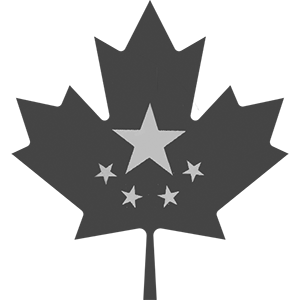
I looked past the construction equipment, and I could see a concrete pier that looked like it was functional but half-finished. A mobile crane on treads was coming back down the pier, directed by a guy waving flags to keep it straight as it navigated the narrow roadway. At the water end of the pier was a small freighter I gathered was our transportation into Cuba. On the land end was a small forest of shipping containers. I saw a few guys spray-painting containers with a large stencil, and when they pulled it back, a Canadian maple leaf logo was visible. On other containers they were applying a different paint-and-stencil treatment, and that yielded a big gold star and four little gold stars below it inside the maple leaf.
Sino Solutions’ logo. A little extra detail to feed the Cubans, I guessed.
“Hey!” I heard Gus bark, “Lemme talk to you a second.”
I turned to see Gus, towering over our pilot. “This shit?” he was saying. “This isn’t what we’re paying you for. You’re two hours late. And because you’re two hours late, that boat is two hours late. You get me?”
“It was a mechanical…”
“No, asshole. You fix your mechanical on your time. Not mine. You’re gettin’ paid a lot of money to make that run from Nassau, and it’s not too much to ask that you do it on time and on schedule. You understand? This happens again, and you’re fired.”
“OK,” said the pilot, though he hesitated, like he had more to say. “I understand.”
“Don’t be late again. All right? Here endeth the lesson. You hungry? I got some really good jerk chicken in the cantina tent down that way.”
The pilot smiled and headed in the direction Gus had pointed. Gus came walking back over to us. A couple of SPM guys were loading our bags onto a flatbed golf cart.
“Jerk chicken, huh?” I said. “Sounds pretty good. We got time to…”
“Sorry,” he said. “That boat shoves off as soon as we can get you on it, which is now. We’re already late to Gibara before sundown, which means offloading is dangerous. But I did set you up with some grub to go. They’ll get you taken care of in the galley.”
“Cool!” said Marisol. Er, Selena.
“It’s a solid operation you’ve got here,” I said.
“Wait until you see it in a week,” said Gus. “All right, I hate to be rude, but I’m kicking you off my FOB. Boat’s leavin’.”
The crew of the Sunset Harvest, a ship name I thought was a bit on the nose but perfectly in line with Pierce’s sense of humor, was irritated at us when we boarded.
Or irritated about us, I guess, would be a better way to put it.
Nominally, as the project manager in Gibara, I was the boss of these guys. Or at least of the dozen or so of the port workers who were catching a ride and then having to unload the ship.
“It’s not really you,” said one young guy who was scarfing down jerk chicken from a Styrofoam to-go box in the galley like Selena and I were. “The thing is, we’re not getting the big solar-powered portable lights for the pier for a couple more days, and so because they don’t have any power there, we’re going to have to unpack our mobile crane, offload it, then offload the containers onto the port, all in the dark. That’s not how you do it. I guess it’s a good thing this isn’t a union shop – the union would lose it over something like this.”
“Well, you’ve got some lighting, right?” I asked him.
“We’ll make do, but it’s… not the usual way to go.”
“Why not dock and then unload in the morning?” Selena asked him.
“And waste six hours? Nope. Not on this project. As soon as everything is on the pier, we untie, and it’s back to Ragged Island. Everything you saw? Those containers? All of that has to go to Gibara, plus there’s a lot more coming.”
“It’s a distribution hub?” I asked. I hadn’t read that in the operations plan.
“What, Gibara? Nah. But they say Gibara is the headquarters, so we’re loading Gibara up first. It’s getting the full dose of everything so we turn it into a showplace and everybody else gets to see what it looks like.”
“Very cool,” said Selena. And the young guy gave her a smile.
“Anyway, a little freighter like this, you generally don’t want to go all out in the open ocean, so there’s only so much time we can make up with speed. Everybody’s antsy about beating the sunset.”
“Again,” I said, “I’m sorry about holding you guys up.”
“Like I said, it’s not really you. But the crew’s gonna be up all night making the return trip back to Duncan Town, and our guys are probably gonna end up racking out on the pier.”
“Why?”
“Because we’re gonna have to guard the cargo. People in Gibara are probably desperate. They’ll loot the containers. If we’d come in in the daylight we’d be able to break the containers down and start distributing and warehousing the supplies and equipment. Won’t be time for that tonight. Not in the dark. So we stand watch, and then we break it down in the morning, and hopefully we’ll have it done by the time the boat comes back with a fresh load of stuff. Or else we get backed up again, and the whole schedule starts falling apart, and then Gus comes down here and blows a gasket. Or worse, Mr. Gibson gets here and sees a shitshow, and then all hell breaks loose.”
“Hal’s not in Gibara?” I asked.
“Not for a couple more days. He’s in Cayo Cruz. There’s an operation getting stood up there, too.”
It struck me that this kid knew more about the operation than I did, but on the other hand he’d been in it. I hadn’t.
“I thought we were doing an air component to this,” I said.
“We are. But the little airstrip west of Gibara is just a grass nothing, and it’s derelict. We can’t land shit there. So part of what’s in our cargo is materials and equipment to grade it and pave it quick. Then we’ll be able to airlift out of Santo Domingo and Nassau, and that’ll take some of the pressure off.”
“How long does it take to do a runway?” asked Selena.
“Oh, with this? Maybe four or five days, depending. We’ll hire a bunch of locals to help us; if they’ll actually work, it’s possible we could get it moving faster.”
I finished my chicken and went up to the deck of the ship, which was loaded with containers. There was a disassembled mobile crane tied down at the bow that I could see. We were steaming pretty much due south; the mid-afternoon sun was gradually beginning to decline toward the horizon on the starboard side.
The sea was calm, and we made good time.
But the Sunset Harvest didn’t dock until the sun was completing its dive below the horizon.
And when it did, the crew chief for Sentinel Port Management – a guy named Jason Belcher, who, like most of the rest of the fake Canadians on this trip, was ex-U.S. military, and I got the impression Belcher had been a special operator of one stripe or another – pigeonholed me.
“Hey, umm, Mr. Thibaud,” he said.
“Call me Douglas!” I blurted out, recognizing how awkward that came out.
“Yeah, right… Douglas. Anyway, look – I’m sure you’ve got a lot of, y’know, paperwork that you need to get started on, so why don’t you guys get your stuff and go check in at the hotel? We’ll take care of all this in here.”
“In other words, you don’t want the project manager to see all the dangerous shit you boys are gonna do to get that boat unloaded, so you’re getting me out of your hair. Right?”
“A hunnert percent.”
“That’s fine. You sure you don’t need anything?”
He shrugged.
And a couple of his guys helped us get our bags off the boat, depositing us on the pier. I watched a crew team with a forklift driver assemble the mobile crane, while a few others were on ladders stringing a bank of what looked like oversized Christmas lights from one light pole to another. Two other guys were pulling a portable generator off the boat with an ATV, and I was tempted to ask the ATV driver if he could hook us up with a ride to the hotel.
And realized that was not a good idea.
“How are we going to get this stuff to the hotel?” Selena asked.
“I’d rather make one trip than two,” I said.
“Do we know where it is?”
“Yeah. It’s not hard. We get off this pier to the street up there…”
“There’s a street?”
“You’ll have to take it on faith since you can’t see it in this dark, but yeah.”
“Ay, dios mio,” she said.
“Anyway, we go to the street, take a right, and then a left at the corner, and it’s one block away. The Ordoño is a landmark, apparently. We’ll spot it pretty far off.”
“Okay,” said Selena. “So you want me to take…”
We sorted out our stuff, and using some of the bungee cables they’d packed in my gear, I was able to construct a rolling contraption to manage the heavier suitcases. But both of us were laden with luggage, and Selena pulling and Douglas pushing, both of us wearing spandex Sharper Image headbands with battery-operated headlamps – I gave thanks that I was now Douglas Thibaud, because Mike Holman would have found the wearing of such a contraption far too dorky for toleration – we set off.
And I was right about the hotel. No trouble finding it at all.
The suspicious looks from the locals peering at us from various stoops and balconies were only a little unnerving.
Selena thought so, too. I calmed her down by noting that there wasn’t a single item in our possession which was actually ours, so if somebody wanted to rob us, we didn’t have to feel a thing about it.
I expected to get robbed. I wasn’t. I also expected to get accosted by beggars and scam artists, because that had been part of the brief. But in the dark, that didn’t happen either. We made it to the hotel, huffing and puffing and sweating like pigs, without major incident.
And a little guy behind the concierge desk greeted us as we struggled through the open doors of the hotel. Which was really a charming Art Deco palace, or at least it had been not so long ago.
“Hola, señor y señorita!” he said. “Yo…”
“You wouldn’t happen to speak English, would you?” I interrupted him, and then realized I had a translator right next to me. Selena’s look of frustration told me she realized it too.
“I do,” he said. “My name is Claudio, and welcome to the Hotel Ordoño. Checking in?”
I wanted to give him a snarky response like “what gave it away?” seeing as though we were carrying half a ton of luggage. But I didn’t. “Douglas Thibaud and Selena Jimenez, Sino Solutions,” I said. “I believe you have two rooms.”
“We have more than two,” he chuckled.
“Oh, you’re not busy?”
“We have no power, señor. Is not good for tourism.”
Just then, one of the three candles on the concierge desk flickered and died.
“Es mierda,” Claudio muttered, tilting another candle and spilling the wax all over the concierge desk as he tried to relight the dead luminary.
“Look, I don’t know where you have us, but with all this gear what I’d maybe rather do is get a room on the lowest floor you have.”
“I’m sorry, señor,” said Claudio, giving up on his dead candle and attempting – and failing – to peel the wax off the desk. “The third floor is the only open floor tonight. Hotel policy.”
“I’ll give you a hundred dollars Canadian to change the policy,” I said.
I could see Claudio actually turn up his nose at the idea he’d be catching a tip in loonies.
“I’m sorry, señor,” he said.
“Then that hundred dollars covers you helping me lug all this stuff up to the room, right?”
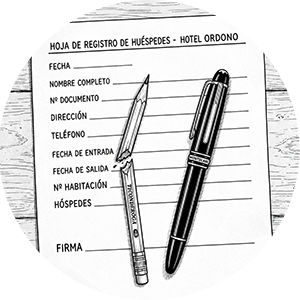
He knew he couldn’t turn that down, so he nodded and smiled – it was an awfully plastic smile, I thought – and produced a paper form.
“If you will just fill this out,” he said.
“It’s in Spanish,” I said. “Uh, Selena?”
“I’ll do it,” she said, stepping forward. And Claudio gave her an ancient Ticonderoga pencil that looked like it saw its best days when old Fulgencio was still the jefe on the island.
And when she started pressing down on the form to produce something out of the dull graphite point of that pencil, it snapped in half on her.
I started laughing. Claudio looked like he was about to have a panic attack for about two-thirds of a second, and then I could see his indifference wash back over him.
“Lo siento,” said Selena.
“You got another pencil?” I asked him.
“No, señor,” he said.
One of the items they’d provided me with in Vancouver was a Mont Blanc pen. I actually had three of them, two stuffed in my luggage somewhere.
“Here you go,” I said, handing it to Selena. She filled out the check-in forms for both of us while I dragged the bags to the foot of the stairs, realizing what a bitch of a project it would be to get all that stuff to the third floor.
“Elevator isn’t working, I take it,” I joked to Claudio.
“No, señor,” he said.
Not much for a sense of humor, that Claudio.
Selena tried to give me back the pen. I nodded to Claudio, so she gave it to him.
“Gracias!” he said. And hustled to help me carry all our stuff up the stairs to our third-floor rooms.
And forty minutes later, and a bottle of allegedly purified water that was hotter than I was having been guzzled from the minibar, I briefly considered unpacking the pile of luggage strewn on the floor. Given that the only light in the room was coming from my headlamp, I quickly gave up on that idea.
I opened the window, not so much in the expectation it would do anything about the stifling heat of the room but in hopes that it would do something about the mildewy smell of the place.
And it did. The smell was suddenly worse.
I guess I didn’t notice the pungent odor on the streets as I was hauling our rolling train of luggage up the road from the pier, but it was hitting my nostrils like an invading Mongol horde.
Trash. And shit. And more trash. Even in the pitch dark, I could see that the source of the odor was literally everywhere on the streets. There was a decent ocean breeze filtering through the window, but it seemed to be pushing the stench into the room rather than carrying it out.
I looked at my phone, and it was 9:30. I figured maybe the thing to do was to soak in the tub, as the water would be tepid and that’s how I could cool off. And then maybe find my way to sleep at some point.
So I peeled off my utility shirt, my work boots and my cargo pants, and turned the tub faucet dials, and…
…nothing.
Nothing from the sink, either.
And when I looked at the toilet, it was dry as a bone.
“Oh, shit,” I said.
And got dressed again, and I went down to the concierge desk. Claudio wasn’t there.
“Hello?” I called out. The only light in the lobby was from a garbage-can fire across the street. Three gangster-looking kids in bandannas were standing over it, passing a joint between them.
Then a little old guy popped up out of nowhere, scaring the shit out of me.
“Qué?” he said.
“Hi. Do you speak English?”
“No habla inglés,” he said.
“Oh. Well, there’s no water,” I said. “No agua?”
“Agua? No agua,” said the old man.
“Why is there no agua?” I asked. “Por qué no agua?”
What came in response I didn’t understand a word of. So I stopped him with a finger pointed upward.
“Stay here,” I said, and I ran back up the stairs.
I knocked on Selena’s door.
“Sí,” I could hear her saying.
“Hey Selena? It’s Douglas. Any chance you could come downstairs?”
“There’s no water,” she said.
“I know. Claudio’s not at the desk. The guy who’s there now doesn’t speak English. I’m trying to ask him why there’s no water, and I can’t understand what he’s telling me.”
Read more Five Quick Things: Is the Lindsay Clancy Case a Windfall for the GOP?
The door opened, and Selena was wearing a tight tank top, a pair of gym shorts, and a pair of flip-flops. She had a little better idea how to dress for a hot hotel room than I did.
“Come on,” she said. And we went downstairs.
The old guy told us that the town’s water main broke four days earlier. And then the public works director quit. They didn’t have anybody around who knew how to fix the main, the old man said, so people were going up to the reservoir with donkey carts and gallon jugs. And he said the hotel staff would have water in the toilets by morning because Claudio was going up there that night and getting enough water to fill the hotel’s cistern.
I just laughed.
“I’m gonna go back to the ship,” I told Selena.
She shrugged. “You OK if I head back up?”
“Sure.”
At the pier, I saw that the boat was gone. In fact, I could still see its lights as it was making the turn out of the bay.
“Can I help you, Mr. Thibaud?” said Belcher. He was supervising his guys doing… something with one of the shipping containers, pulling some large boxes on rollers out of it.
“Not really,” I said. “This place is in worse shape than we thought.”
“It’s pretty bad. This pier is… we’re not using it anymore. Tomorrow we lay down a new pier.”
“You know they haven’t had running water in four days, right?” I asked him.
“No shit. What happened?”
“Water main broke. They don’t have the tools or equipment to fix it.”
“Really? We have some repair clamps in one of these containers… hey Snake!”
“Yeah, boss?” said a very large, very bald dude with a snake tattoo making its way up his neck.
“You got the waterworks container open yet?”
“Nah. Why?”
“Because they ain’t got no water here. Main broke. They can’t fix it.”
“Shit,” Snake laughed. “All right. Find out where the break is and we’ll go out with the ATVs and get on that.”
“I’m going with,” I said. “I’m not sittin’ in that fuckin’ hotel room with no air and no water and nothing to do.”
“Suit yourself. They tell you where the break was?”
“Not a clue. Maybe we’ll go find the local jefe and ask him.”
“Or maybe we’ll ask this guy,” said Belcher, pointing to a dumpy little fellow in a white seersucker suit and greasy blue t-shirt who looked like he was dressed up as Sonny Crockett from Miami Vice for Halloween. Right down to Don Johnson’s fruity espadrilles.
Gibara Sonny had parked his ride, and he was walking toward us through the boatyard, gawking at the shipping containers Belcher’s guys had managed to stack up into a little hotel space, setting up tenting and cots to sleep on that night.
“Oh, Jesus,” I said. “Get a load of this cat.”
Belcher chuckled and then waved at him. “Hola,” he said.
“Hola!” said the man, as he pushed a few wavy hairs across his bald scalp and then addressed us in not-half-bad English. “I am Aldo Pupo, Party Secretary for the town of Gibara. You are with LCTC, yes?”
“That’s right,” I said, taking over and shaking his hand. “Douglas Thibaud, Sino Solutions. How are you this evening, sir?”
“I am very fine. I see that you have filled our boatyard with containers. These will need to be moved…”
“Oh, we’ll move ‘em,” I said. “We’re waiting for daylight so we can do a more efficient job of unloading ‘em, and it’s a little safer. You’ll see a lot of activity, plus our supply ship is going to be back here mid-day tomorrow. Hey, listen, I understand you’ve had a water main break. If you’ll tell us where that is, we can get a crew over there and we’ll get that repaired for you.”
“For this, you would have to talk to Luis Contreras, our director of public works. But he hasn’t been seen in two days.”
“It’s not a big deal,” I said. “Just tell us where the break is. We need the water turned back on as much as anybody else does. I’m sure when Mr. Contreras gets back, he’ll be very happy that he’s got a working water system.”
“Señor, I am not sure…”
“Or maybe there’s somebody else we can call up who can point my guys to the water main,” I said, pulling my money clip out of my pocket. It was loaded with loonies – Canadian dollars.
I could see Pupo’s eyes light up.
“No. You’re right,” he said. “I’m the boss here. I take care of this. You ride with me, yes?”
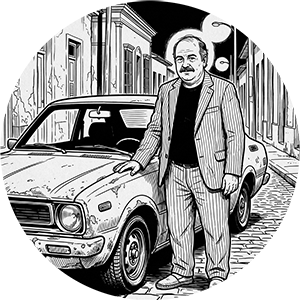
And he turned toward his white – well, it wasn’t very white anymore – Toyota Corolla that looked like somebody had rescued it from a Mississippi junkyard. “Come,” he said.
“Hang on,” I said. “Hey Jason, you got your guys…”
“Yeah, just a sec,” said Belcher, and then Snake and another guy showed up in a couple of ATV’s pulling flatbed trailers with large metal chests strapped down.
“Lead the way,” said Snake. “Let’s get this done.”
Pupo gave me a big smile. “Come,” he said. “This way.”
Chapter Eight
Gibara, Holguin Province, Cuba — April 10, 2026
Jack Gray was ex-CIA, and he’d done things all over the world he couldn’t talk about. But Jack had gotten out in the early days of the Joe Deadhorse administration – he said he had a very bad feeling about what the Agency was becoming and he wanted to preserve something of a moral compass – and had gone to work for Sentinel Security.
Jack had been one of the crew in Liberty Point when Pierce first built the place. He was an electronics expert, among other things, and he’d set up the whole counter-surveillance protocols for the city. That was a big deal, because the Venezuelans had been very blind to exactly what kind of assets Pierce had amassed in Liberty Point – and they’d been even more surprised when they invaded and found out they were badly outgunned.
I’d met him when I was down there. Liked him. Good guy. He knew everything there was to know about tequila; one night at the bar at the Grand Waica Hotel in Liberty Point, he told me he was eventually going to start an agave farm in South Texas.
Since then, Jack had moved up a good bit in the company, and he’d gotten an executive job in Sentinel Security’s Houston office. But he took a leave of absence to become a fake Canadian working for Sino Solutions down in Cuba when our project got going.
So the morning after we fixed the water main, Jack knocked on my door.
“Hey, Jack…” I started to say, as I opened the door.
“Mr. Thibaud,” he said in a friendly voice which didn’t match the look on his face, “I’m Gray Jackson, Sino Solutions. This is Bart Stepman, my assistant. You got a few minutes for us?”
“Certainly, Gray,” I said, opening the door and letting Jack in.
He put his finger to his lips, telling me to shut up. And he pointed to the balcony, telling me to go out to it.
So I did.
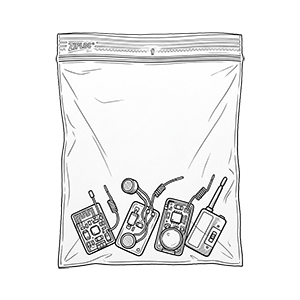
And a few minutes later, Jack joined me. He held up a Ziploc bag with four rather scary-looking small devices in it.
“I didn’t even think about the bugs,” I said. “Hope I didn’t talk in my sleep, not that I got much of that.”
“That room is a freakin’ sauna,” he said. “Why didn’t you sleep at the FOB?”
“What, the tents you guys set up by the pier? I could have. The party boss insisted on dropping me off at the hotel after we fixed the water main, a little after midnight. He kept going on and on about how nice this place is, and I didn’t have the heart to tell him I was gonna sleep on a cot in a tent in a boatyard instead.”
“Huh,” said Jack.
“And I definitely didn’t have enough energy to walk anywhere else,” I said.
“So you slept on that bed? In this heat?”
I laughed.
“Actually, when the water came back on, I filled up the tub and soaked in there. Conked right out.”
“Not a terrible idea. So anyway, these are the bugs the DSE planted in your room, and they go back to the FOB where we’re going to spoof them with room traffic that we’ll generate with AI. That little travel clock on your nightstand? When the digital readout of the time is green, that means the system is running, and you can speak freely. When it’s red, just don’t say anything they might mark as unusual or noteworthy, just in case they plant more bugs. Be boring. You’re Canadian, after all.”
“So I’ve been told.”
“It’s not really a big deal. You’re basically just gonna be in the room to sleep, right?”
“Until the power comes back on, maybe not even that.”
“Yeah, exactly. I’ll be honest, racking out on that cot, with the breeze on the pier, was… what the fuck is that smell?”
“That’s Gibara.”
“Oh my God. This is a big job,” he laughed.
Jack, er, Gray, and his guy left. I unpacked some of my bags, getting a bunch of gear I figured I’d need, and then I made my way down to the lobby with my backpack in tow.
The staff – at least the three of them who were working – all greeted me with genuine warmth. I could hear a small generator humming from somewhere nearby, and I could see an extension cord running along the floor of the lobby. There were a bunch of box fans whirring away, circulating the warm morning air throughout the ground floor.
“Mr. Douglas,” said a woman who told me her name was Tina, in an English that was intelligible but heavily accented, “we heard you got the water back on. Your first night here!”
“Oh, that’s no big thing,” I said. “We brought the parts you needed for fixing the water main, so, y’know.”
“No, is a very big deal,” she said. “We have no water for…”
“Cinco,” said another of the hotel staffers, an older woman whose name tag, in blue Marks-A-Lot, said Antonia.
“Five days, sí,” said Tina.
Just then, Marisol, er, Selena, came down, dressed like she was going on a safari. Tan utility shirt, tan shorts, work boots, red bandanna.
No pith helmet, thank God.
Tina invited us to get some coffee. They’d laid out some muffins and fruit; that would do for breakfast.
I’d read that the Hotel Ordoño had the best food in Gibara. One bite of that muffin and I instantly hoped that wasn’t true.
“You can’t judge it with no electricity,” said Selena.
“That’s fair,” I said.
“So what are we doing today?”
“We’re going to walk down to the FOB and check in,” I said, “and see if they need any help. They’ve been breaking down those shipping containers since dawn. The boat will be back around two this afternoon, so the big thing will be to clear the pier for the next round of stuff. That’s going to be mostly trucks and heavy equipment, and then they’ll put the empty containers from the pier back on the boat.”
“Serious operation,” she said.
“Speaking of that, did you get your travel clock?”
She smiled.
“Uh huh,” she said, stabbing a chunk of melon with her fork and eating it.
By the time Selena and I had walked down to Belcher’s FOB, the pier was gone. Belcher and his guys had gone at it with jackhammers and dropped it into the drink; edges and corners of it were somewhat visible at the waterline. And as we approached the boatyard, they were pulling the beat-up, corrugated roof off the port office building facing the street. A little crowd of Cubans had shown up to gawk from the street at the LCTC guys as they worked.
“Hey, Doug,” said Belcher. He was walking back from a little forest of shipping containers toward the port office, carrying a large toolbox.
“Howdy, Jason,” I said. “What are we doing now?”
“Well, we’re going to rebuild this roof, because what’s going in under it is going to be a little more valuable than to go into hurricane season with that protecting it. Got some steel roofing panels going in, and then we’ll install the solar array and the satellite downlink hub. If these knuckleheads do their job, we’ll have it done in time for the boat coming back.”
“Yeah? How are you gonna unload the boat with no pier?”
“The boat’s bringing the pier. Got eighteen sections of pontoon decking coming in, and we’re going to fit ‘em together and bolt ‘em to the shore, and then we’ll have a pier that can hold the heavy equipment that’s coming in. But honestly, this setup isn’t gonna make it. We’ll use this for a week or so, and then you’re gonna have to get us a whole new situation. Here…”
And he brought me inside the port office, a beehive of guys with drills and claw-hammers working away at ripping out all the walls.
“Little redecoration?” I asked.
“Jack pulled eight bugs out of these walls,” said Belcher. “I have no idea what these people think they were recording. This might be the least busy port in the Western Hemisphere. Anyway, we’re tearing it down to the studs and we’ll re-hang the sheetrock and make this a proper base building. Now…”
And he showed me a large printed satellite map they’d stretched out on a card table, pointing to a spot a few blocks to our south.
“OK, do you see this spot here? It sort of juts out into the bay a little? There’s a bunch of open space along it here. And across the street there’s this thing here.”
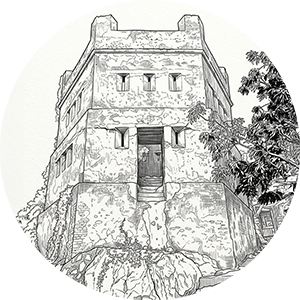
“What, where it says Torreón de la Avanzada de la Tenería?” I asked.
“That means Tanner’s Outpost Tower,” said Selena. When I looked at her, she shrugged and smiled.
“Earnin’ that big money already, huh?” I said, and fist-bumped her.
“We went and got a good look at it, and that’s an old fortress which is mostly ruined, but I want to get Sentinel Construction – I mean Sino Solutions – in there and rebuild it with the big 3D construction printers in a few days. We can set up our broadcast tower on top of that thing and do a proper corporate office, and we can turn that shore into a wharf and set up the cranes…”
Belcher launched into a detailed explanation of what he wanted to do not just with the tower but more specifically with the 80-meter-wide waterfront that stretched some 360 meters from the gas station on one end to the bend in the road on the other.
“I’ll go see Sonny Crockett,” I said. “His office is just up the street.”
“Oh – if you’re gonna go see him,” said Belcher, “bring him this.”
And it was a little ice cooler with a six-pack of iced-down bottles of La Bala beer.
“How about that?” I said. “Who can turn down a care package like that?”
“Oh, and I’ve got a golf cart coming for you this afternoon,” Jason said. “Selena can be your chauffeur and you can go around like a big shot.”
“All right, then,” I said, smiling at Selena. She smiled back.
So I brought Pupo, the Communist Party secretary, the capitalist Cuban beer as a peace offering. He’d just come into his office, and instead of his Miami Vice suit he had a guayabera and a pair of tan linen slacks on.
And while everywhere else in Gibara was already sweating in the morning heat, Pupo’s office was cold enough to give a body hypothermia. I brought him the La Bala, shook his hand, introduced him to Selena – and watched him turn very friendly as he shook her hand.
“What can I do for you, Mr. Douglas?” he asked, as we sat down.
“You have a generator around here, I guess,” I said, turning to see his 70-inch TV on the wall opposite his desk and noticing that Peter Chang was on MS NOW. “Hands off Cuba!” Peter was bleating, and the chyron was scrolling, “BURRO, TRUMBULL CONTINUE TO DENY IMPENDING CUBA INVASION.”
“It’s in the courtyard. Propane! I have a supply in Exuma. The Party’s offices must have power. To serve the people. You understand.”
“Oh, certainly,” I said. “Listen, our operation is going to be a little bigger than what your main pier can handle. That’s really for fishing boats; it’s not a commercial port pier.”
He tilted his head as though what I’d said to him was an insult.
“We’re replacing the pier with a larger and safer structure,” I said. “It’s a pontoon pier in sections, and it’ll accommodate a lot more material coming in.”
“Material?”
“Building materials, construction equipment, supplies, foodstuffs, power transformers. We’re going to install new street lights equipped with solar panels and batteries on your light poles so that you’ll have working street lights that don’t depend on your power grid. We’re going to build out that old crop-dusting airfield southwest of here into a working airhead. But there’s something I need from you.”
“Which is?”
“Whose property is the Tanner’s Outpost Tower?”
“The which?”
“Torreón de la Avanzada de la Tenería,” said Selena. “La ruina.”
“Oh, the Tower,” said Pupo. “It belongs to La Dirección Provincial de Patrimonio Cultural de Holguín.”
I looked at Selena.
“The historical society,” she said.
“Can we get a meeting with them? We’d like to restore it – repoint the mortar, clear the vegetation, install proper drainage, document and preserve the gun slits, restore the roof, the whole bit. And then attach a modern building to it. Or am I talking to the right guy now?”
“The right guy? I’m the right guy.”
“What I’m asking is whether you’ve got the power to call the historical society guy in and tell him this is happening and not to interfere with it. Because we want to fast-build a harbor and port facility away from the downtown area here so we’re not clogging the streets with heavy machinery, and we’ve identified this area, the tower and the waterfront across the roadway from it, as the best place to set up shop. If I have to talk to somebody else, I will, but I’d really rather just go through you.”
“I see,” he said.
“I mean, honestly, back home in Canada the way we’d do something like this is I’d hire you as a governmental relations consultant…”
Pupo didn’t understand what I was saying, so I looked at Selena.
“Consultor de relaciones gubernamentales,” she said to Pupo.
“Ahhhhh,” he said. “Yes, yes. I’m your man.”
“Like I said, what we want to do is put that building back in commerce. Eventually it can be a welcome center or some other kind of tourist facility, but while we’re here we’re going to rebuild it and use it for LCTC’s port operations. I just can’t get bogged down in red tape. If I need to do some extra convincing of, y’know, whoever, then I can. But the way this is gonna work is we go fast, fast.”
Peter was still on the TV talking about Trumbull and his bloodthirsty imperialism toward Cuba, and touting the partnership between China and the Cuban government to “put right what 60 years of an American embargo has destroyed.”
Pupo was glancing past me to the TV.
“Your boss,” he said.
“That’s right. And he’s right. We’re going to have to pull together and show the American administration that we can make this situation work, because their argument is that socialism has failed in Cuba.”
“It has not failed!” said Pupo.
I looked at Selena. She looked back at me. I looked back at Pupo.
“We need to build out that port facility,” I said. “And we need to have assurances that nobody is gonna show up with the police shutting us down. You’re the guy who can make sure that’s not gonna happen, right?”
Pupo gave an enthusiastic nod.
“Good man,” I said, putting out my hand for a handshake. He took it.
“What else can I help with?” he asked.
“Ohh, there’s gonna be plenty,” I said. “The port is just the first piece. Tomorrow or the next day we’ll start on the street lights, so if you can make sure nobody gets in our way when we start doing that, it’ll be great. We’re going to be hiring some of your local folks to help with that, and they’re gonna start at 400 dollars Canadian per month. I take it that’s OK…”
“Yes, yes,” he said, nodding his head like a donkey.
“Right. Well, I’m gonna be in and out of here bothering you.”
“Okay,” he said, “but I was under the impression Señor Cabrillo would be my main contact with LCTC.”
“The thing is,” I said, “he’s got two dozen other towns that he’s working with. I’m Gibara. So if you need anything that I can’t deliver, then we can take it to Mr. Cabrillo. But I’m pretty sure I can get you taken care of, whatever you need.”
There was a pause. I got the impression Pupo had an ask that he wanted to make, but he didn’t want to make it of me. So I let it drop.
“OK, then,” I said. “I’m going to get back to our boatyard. But either I or Selena here will periodically check back in with you. Listen, anything you need from us, you just ask, and we’ll see what we can do, all right?”
“Sí,” said Pupo, his face registering that stupid grin of his again.
“All right,” I said, standing up. “Enjoy that beer. I had some. It’s not Molson’s, but it’s pretty good!”
He shook hands with us again – Pupo really liked shaking hands – and as we left, Peter was still on Pupo’s big TV, continuing to harangue the MS NOW host, a very attractive black lady I’d never heard of, about the impending American invasion of Cuba.
Things started happening quickly after that.
The water was flowing again, but by First World standards its quality would have been a scandal. One of the people I had in my “Sino Solutions Resource Directory” was a lady named Bernadetta Moreno. She was Venezuelan; she’d been one of the leaders of the opposition movement there before the Madeira government fell, but instead of going into politics – the thing about that government falling was that politicians were getting assassinated left and right, and Bernadetta’s husband, who’d been released from prison when the government collapsed and de la Vega took over — forbade her from running for office.
And that was fine, because Pierce had snapped her up and set her up as the CEO of a consulting/engineering firm specializing in restoring and upgrading water systems. She’d worked on the water system in Georgetown, Guyana, came up with some improvements in Liberty Point and set up the systems in the little towns around it, and in Venezuela they were working on a whole bunch of projects around the country.
And Pierce had basically demanded that Bernadetta get on board the Cuba project. It didn’t take much convincing; Bernadetta loved the irony of it given what the Cubans had done to her country as Madeira’s enforcers.
So when we turned the water back on in Gibara, I filled a bottle of it from a faucet at the FOB – that was before Belcher installed Brita filters in all the sinks in the building – and emailed a picture of it to her, with a message: “Can you help?”
She was on the boat into town from Ragged Island two days later.
“That’s some operation you have there,” she said, in her thick Caracas accent.
“Wait until you see the one we’re gonna build here,” I said.
And then we were on my new gas-powered golf cart up the hill to the water treatment facility. Bernadetta got the full tour from the little guy who ran the place, which was about the size of a two-car garage, and she had a long discussion with him in Spanish that Selena didn’t do a great job of translating because she had no idea what they were talking about.
Which was OK, because I didn’t understand it either.
But what I did understand was the little guy’s reaction, because the things Bernadetta was telling him first made him smile, and then he started getting emotional. He was nodding like a schoolkid, and she was gently explaining… something. Selena gave up trying to translate it.
“She’s telling him it’s going to be all right,” she said.
“He seems to believe her.”
Finally, Bernadetta walked over to the case she’d brought with her up the hill and opened it. I walked over and looked in. And I watched her pull out a section of pool noodle.
“That’s a pool noodle,” I said.
“It’s not a pool noodle.”
“It’s absolutely a pool noodle.”
“It isn’t, Mike.”
“Douglas!” said Selena.
“Sorry. Douglas. This is a pig. The problem with the water system is that the pipes are old and made of iron and there is rust in them. We first scour the pipes with high-pressure behind these pigs, and they flush the system, and then we introduce phosphate and chlorine, and in a week, two weeks, the water will be first class. The system itself is sound. We add proper equipment and supplies for maintenance and Gibara will have water to rival Tampa or Orlando.”
“Well, that’s good news.”
And after convincing everybody in Gibara not to touch their faucets for a day when the system was being purged with Bernadetta’s pool noodles, she was quickly proven correct when the water got better and better. A week later she emailed me and told me Gibara’s water was first-world quality based on the testing her new friend at the Gibara Water Garage had been sending her.
The word got out about that, and the suspicious stares I was getting as Selena and I were tooling around in the golf cart started to turn.
And I noticed the humming. First, the hotel staff, then Belcher’s local port workers, then the Cubans Hal Gibson hired to clear, grade, and pave the old crop-dusting airstrip to turn it into a working airhead just to the southwest of town, then just about everybody was doing it. A bunch of teenagers in the park next to the Catholic church a couple of blocks from the hotel were dancing to a bucket-drum rendition of it when I walked by.
“Mr. Douglas!” they called out to me. I waved. And I went into the church to pray for the first time in a while. That Sunday I went to mass, and all the people I met wanted to shake my hand.
Nobody spoke English. My Spanish was mostly hopeless. It didn’t matter all that much. I knew what they were saying.
The hotel staff was ecstatic when I managed to install one of those home-sized generators in the courtyard to replace the ancient one they’d been making do with. It was enough to get the kitchen fully running again, and to fire up the AC and water heaters. I had a cold bed and a hot shower for the first time after a week in country; that was a nice win.
Gibson, who had moved into the room next door, managed to trump me on generators. He brought a bigger one, and now the hotel had full power for everything. That was when the Sino Solutions guys came in and filled up the place, which was when I set up my office in the little ballroom on the ground floor.
And I donated my generator to the church.
I was holding office hours in the afternoons at the hotel, and the word got out about that. Soon there was a line out the door of the place, and I felt like a king holding court. People came from all over town asking for help with various miseries, and of course there was a continuous demand for juice.
“When is the power coming back on?” they kept asking.
And I had an answer, but it was one they didn’t like all that much.
Cuba’s distribution network — the pole lines, the step-down transformers on the poles, the wiring connections throughout town — was like something out of The Walking Dead. Not to mention that when you coupled the power transmission system’s collapse with the country’s political collapse, what you got was something a lot less technical in its explanation.
People had been cutting sections of conductor off the lines and selling them for scrap metal. So there were literal gaps in the transmission lines.
Right around the time Belcher brought a half-dozen big Caterpillar diesel generators off the boat into that boatyard next to downtown and trucked them to the power substation, he had his electrical guy walk the entire grid in Gibara, and the guy came back with the diagnosis.
“If you throw the switch right now,” the guy told us, “the power finds every fault and ground failure in the system simultaneously. You’ll pour two megawatts into the dirt. Possibly – no, not possibly, almost certainly – start fires. Definitely blow up whatever appliances people still have. And potentially damage the generators themselves.”
So we held a job fair.
Because before we threw the switch and lit Gibara back up, we had to go pole by pole through the entire town. We had to replace the blown step-down transformers – half of them were dead. We had to splice the sections where the conductor had been cut. We had to fix the grounding on the north end of town, which was completely gone. Then we had to check all the connections for corrosion.
None of it was skilled work. It was just physical, methodical work under the supervision of Belcher’s electrical guy and the three or four Cubans he’d picked up who understood power systems.
And four hundred people showed up at the job fair. Belcher put all of them to work, and Cubans in Sino Solutions hard hats were circulating all over town, happy as clams with their 400 loonies a month in salary.

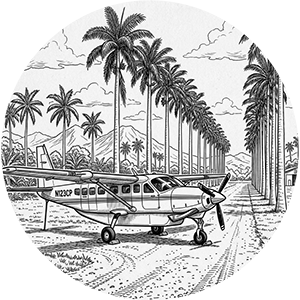
It took about two weeks, but Belcher had his new pier on the south end of town. The local folks threw a fit over the idea that he would chop down the giant palm trees that were sitting on the waterside where his distribution yard was, so he dug them out of the ground and trucked them to the airfield, where they were replanted along the access road they’d just built, and now the airfield started looking like an airport.
Not exactly LaGuardia, but when Cessna Caravans and King Air 350s started landing a couple of times a day bringing people and stuff in from Nassau and Ragged Island and Santo Domingo and Montego Bay, that airfield started looking like something. Vladimir Soto, who got the job as the manager of the airfield – he’d been one of the assistant guys at the main airport in Holguin but left to come and run our shop when he realized it would give him a 2,000 percent raise – told me a week after the thing was built that it was already busier than Holguin’s airport was. Holguin had 350,000 people; the whole area around Gibara had about a fifth that many.
Our joke was that we were going to call it Peter Chang International Airport. One of Belcher’s guys got Grok Imagine to make a funny logo for it with Peter’s giant caricature head making a big carnival-barker smile as it stuck out of the window of a plane with a caption under it that said, “Hands Off Cuba!”
Coming Wednesday, August 26: Episode 5 of Scott McKay’s The Necessary Men.
Catch up and follow along at “The Mike Holman Novels at The American Spectator.” Signed copies are available for pre-order at MikeHolman.com!
Read more The ‘Black Insurgent’ and Americanization of Polish Society
About the Author