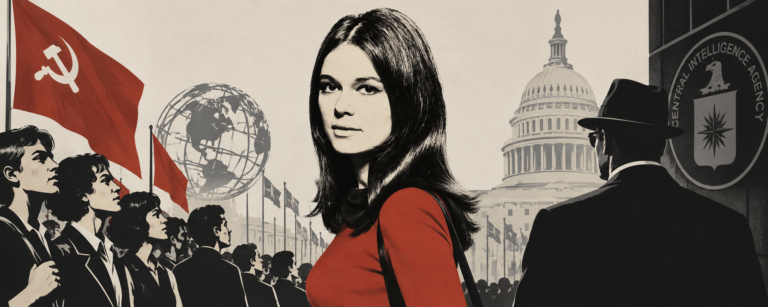
The world knows all about Iran’s proxies; Hezbollah, Houthis, Hamas, and other groups which conduct terrorism and other military operations throughout the Middle East for the IRGC. But there is less awareness of an even more vast and sophisticated proxy network managed by Iran’s ally and possible mentor which lies far closer to U.S. shores.
Read more How Aegon II Became House of the Dragon ’s Most Compelling Character
Cuba has operated terrorist groups, guerrilla armies, as well as radical socialist movements, labor unions, political parties, drug-running operations, high level moles embedded in Western governments and other subversive instruments since before Iran’s Islamic revolution, on a scale that defies the imagination.
The U.S. State Department recently released the book sized report, “Cuba: Capital of 21st Century Communism,” which gives a deeply comprehensive and long overdue assessment of the subversive threat posed by the regime in Havana, which, the report says is “distinctive” from that presented by other U.S. rivals.
Cuba’s axis is preparing to resist a current political tide favoring conservative candidates aligned with Trump and his “Donroe doctrine.”
Geopolitical control of the “near abroad” in eastern Europe and Asia are the paramount concern of Russia and China. Iran wants to subjugate the world under its extreme Islamic cult, incinerate Israel, and become the dominant Middle East power, with the destruction and marginalization of the U.S. as a necessary but secondary objective.
Cuba has one main objective according to the State Department: the destruction of American democracy and erosion of its social fiber so that it never recovers and permanently loses control of the Western Hemisphere. China has recently expanded and upgraded a network of electronic intelligence bases in Cuba while Russia is negotiating military technology transfers with Brazil.
The State Department’s report focuses on Cuba’s penetration of the United States which may be reaching new levels with the increasingly well-oiled activism of communist networks, whose main components, such as Democratic Socialists of America, seem on track to gain seats in Congress. The formation of a Bolshevik type core inside the Democratic party influenced by Cuba that could exercise degrees of political control on the government and try to impeach Trump, is no longer some farfetched nightmare but an approaching reality.
The report goes to great lengths to explain how Cuba penetrated the United States through multiple channels. These ranged from the long-term cultivation and indoctrination of American far-leftists to terrorist training. Cuba also pursued elite capture through formal exchange programs with Harvard and other major U.S. universities. There, defending Cuba’s bankrupt totalitarian regime has become ingrained in the curriculum.
It delves into Cuba’s carefully studied exploitation of America’s racial divisions and leadership role in creating the Black Panther movement of the 1960s, recently morphing into the BLM to foment violence and destabilization. There are signs of growing Cuban interest in LGBTQ activism indicated in recent visits to Havana by leaders of Code Pink.
Cuba’s subversive network is multilayered and structured, combining terrorist and paramilitary operations with well-disguised propaganda disseminated through long-running establishment media connections and influencers and spies planted at high levels in the U.S. governments and corporations. The report states that Cuban agents remain inside the U.S. foreign policy and security apparatus, following arrests of senior moles in the State Department, the Pentagon, and the National Security Council whose cases are described in vivid detail.
The 1980s civil war in El Salvador provides a past example of how Cuba’s multilayered subversive strategy is orchestrated. I briefly worked at the time with a special office created at the State Department to counter pernicious and virulent Cuban propaganda and disinformation aimed at undermining U.S. efforts to block a hostile takeover of Central America by Fidel Castro.
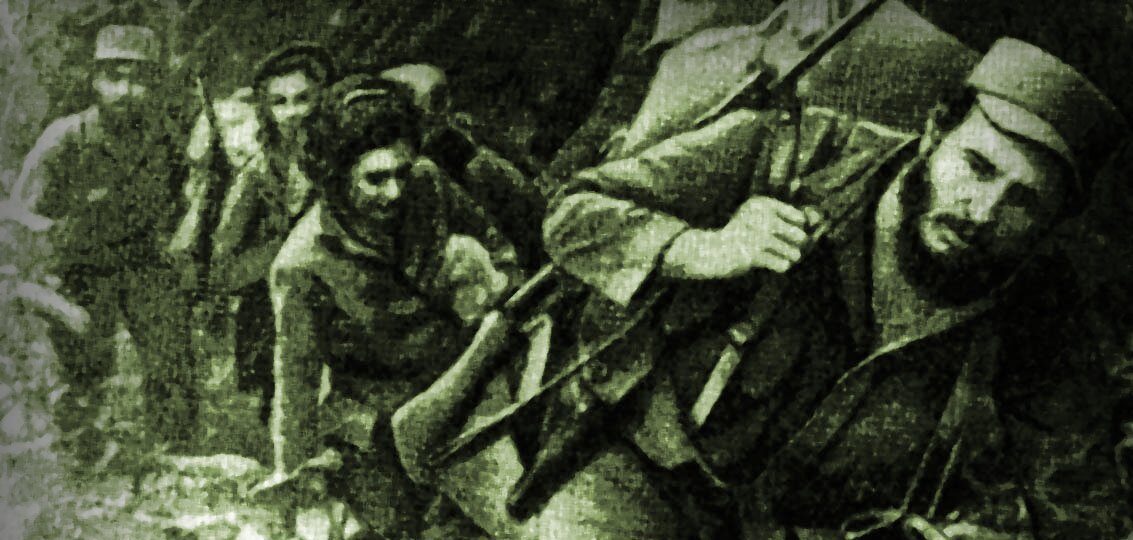
Following the successful 1979 Cuban-backed Sandinista insurgency in Nicaragua which toppled the pro-U.S. government of Anastasio Somoza, Cuba brokered what may be the largest covert arms transfer in history to expand proxy operations throughout the Western Hemisphere.
The Soviet KGB bought up tons of U.S. weaponry abandoned in South Vietnam that fell into the hands of the NVA, shipping it all to Cuba along with North Vietnamese instructors for Castro’s guerrilla camps. Tens of thousands of M-16 rifles, M-60 machine guns, M-79 grenade launchers, TOW anti-tank rockets, 60 mm mortars and other light infantry weapons were distributed to insurgent forces and terrorist groups being trained to lead insurrections.
The U.S. origin of the arms allowed Cuba “plausible deniability” when Puerto Rican Macheteros sprayed a busload of U.S. sailors with M-16 automatic fire or when the Chilean Revolutionary Left Movement (MIR) tried to assassinate president Augusto Pinochet. The operation to decapitate Chile’s ruling right-wing junta at the time failed, one of the bodyguards wounded in the savage ambush tells The American Spectator, because the Cubans had trained MIR with Russian anti-tank RPG-7s whose range finders differed from American TOWs and M-79s smuggled into Chile for the attack, which overshot Pinochet’s limousine.
The bulk of Cuba’s trove of American weapons went to arm the 5,000 strong Farabundo Marti National Liberation Front (FMLN) in El Salvador that was poised to take power when President Reagan rushed critically needed military aid to the country’s beleaguered armed forces upon taking office. Outgoing president Jimmy Carter had held it back.
Democrats in Congress still managed to place strict conditions on the aid, limiting the U.S. military mission to 55 “trainers” mostly composed of Green Berets from the army’s 7th Special Forces Group commanded by Col. Kevin Higgins whose eleventh-hour success in turning the tide of battle in El Salvador under the heavy restrictions imposed on the operation by his own government, is an unsung chapter in U.S. military history.
FMLN front groups which seemed to spring up overnight across the U.S. staged violent protests, sit ins, teach ins, and a variety of lobbying tactics modeled on the anti-Vietnam war movement of the ’60s and ’70s to pressure members of Congress to cut aid to El Salvador. They highlighted human rights abuses, many fabricated, in a savage struggle with Cuba’s proxy army.
Read more From Washington to Montreal, Toronto, and Cincinnati: Tennis in an Age of Chaos
The media did its usual number of romanticizing El Salvador’s communist guerrillas with the “Robin Hood of the Caribbean” tone set by the New York Times when Herbert Matthews interviewed Castro rolling his own cigars in the Sierra Maestra. I recall reading some biblical sounding account in either the NYT or Washington Post about the birth of a Salvadoran “New Man” to a pregnant FMLN woman trudging through the jungle with her rifle-carrying mates.
Cuban supply lines from Nicaragua bases were rarely if ever mentioned or debunked for lack of “proof.” It was the reason why the Reagan administration had to create a special office to push the evidence before the public, involving the declassification of intelligence reports, which encountered resistance within the U.S. bureaucracy.
The May 19 Communist Organization, a Cuban-trained terrorist group composed of a cell of radicalized American lesbians who went to Cuba with the Venceremos Brigade during the 1970s, set off a series of bombs in Washington, D.C. in “solidarity” with the FMLN. One was planted in the Senate ante chamber at the Capitol. The M19CO went on to organize the prison break of a Black Liberation Army leader accused of murdering a New Jersey state trooper, who was smuggled to safety in Cuba.
As Cuban-managed FMLN front groups shook the earth in Washington, the Green Berets on the ground in El Salvador felt the aftershocks. They were restricted from participating in combat operations or even carry rifles while assisting the Salvadoran brigades they were training to operate from forward fortified bases to take the fight into FMLN territory.
The base of El Paraiso located in a well-camouflaged section of a mountain range was intercepting critical guerrilla supply channels from Nicaragua. Green Berets needed to operate there, managing command and control and ground to air communications with U.S.-supplied Vietnam vintage Huey helicopters and some armed rotary aircraft donated to El Salvador.
The FMLN needed exact coordinates and a close inside reconnaissance of the base to mount a successful surprise attack. They lacked the necessary support from the local peasantry to reliably spy on the installation. So Cuba’s General Directorate of Intelligence (DGI) turned to their chief analyst for Latin America at the U.S. Defense Intelligence Agency, Ana Belen Montes, who had been their trusted spy for years out of a secret love for Castro’s “Revolution.” She visited the base.
Her information enabled the FMLN to launch a major assault with hundreds of guerrillas covered by precise mortar fire on the main barracks, breaking through the most vulnerable access points, and heading straight for the command bunker where they killed U.S. Special Forces Sergeant Gregory Fronius. He was eventually awarded a posthumous Silver Star for his valor, which was denied initially because he was officially not allowed to engage in combat.
It took 16 years to uncover Montes as she was an ideologically motivated unpaid agent with no money trail, recruited by the DGI out of college before she went into the DIA. She was finally caught red handed days after 9/11 while calling her DGI handlers at Cuba’s UN mission in New York from a public phone to pass information about planned U.S. operations in Afghanistan which Cuba could transmit to the Taliban, according to the State Department.
The Cubans operated on three levels to counter the U.S. intervention in El Salvador. (1) Covertly armed proxies fighting in El Salvador; (2) Fifth columnists in the U.S. running interference against efforts to counter the threat; (3) Deep cover agents facilitating strategic intelligence for surgical attacks.
Despite intensifying U.S. economic pressures on Havana resulting in chronic fuel shortages and paralysis of its tourist industry, Cuban subversive, paramilitary, and spy networks remain operational if partially reconfigured. Although the economy is bankrupt, the DGI and other intelligence entities have their own dark money channels, including drug traffic through long-standing connections with Colombian guerrilla groups which remain highly active, currently threatening an “offensive” against recently elected pro-U.S. president Abelardo de la Espriella.
According to a recent book by Colombian drug lord Carlos Lehder Rivas, Cuba has been receiving money from drug cartels since the 1980s when Rivas personally met with Raul Castro who was then defense minister. The Castro family has amassed a private fortune of $15 billion through their Panama-registered company GAESA that virtually owns the Cuban economy. Much of the money is secretly managed from bank accounts in Qatar, according to State Department sources.
Although U.S. special forces extracted Venezuela’s Cuban installed president, Cartel boss Nicolás Maduro, the regime retains powerful allies throughout the hemisphere. Brazil’s socialist president Lula da Silva has been close to Havana, since he personally met with Fidel Castro in Nicaragua in 1979, as a young labor activist joining the celebrations of the Sandinista takeover.
According to Peter Schweizer’s recent book, The Invisible Coup, Castro laid out plans to destabilize the United States through mass migration and drug trafficking. He did so at meetings in Managua with his Nicaraguan protégé, dictator Daniel Ortega, Lula, and other leftist leaders from across Latin America. Many of those leaders later formed the pro-Havana Foro de São Paulo. The group operates as a transnational support network for leftist regimes and is allegedly funded with laundered drug money.
Lula may rely on electronic vote manipulation to secure a second term in elections scheduled for October. This would mirror methods allegedly used by Maduro’s regime in Venezuela. According to the CIA, a team of engineers trained at Cuba’s University of Informatic Sciences operated voting machines programmed to alter vote counts. The university is located near a Chinese spy base in Lourdes. Lula’s government has also refused visas to U.S. State Department officials, accusing them of seeking to “interfere” in the election process. Ortega has banned elections altogether in Nicaragua.
Cuba’s axis is preparing to resist a current political tide favoring conservative candidates aligned with Trump and his “Donroe doctrine” policies to reassert U.S. dominance in Latin America. Conservatives have recently won presidential elections in Colombia, Chile, Peru, Ecuador, Honduras, Paraguay, and other countries. Javier Millei remains in power in Argentina and Nayib Bukele has transformed El Salvador from a war-torn country infested with FMLN-linked criminal gangs into a law-abiding economic powerhouse.
But conservative majorities remain thin in many of the countries. Colombia’s de la Espriella and Peru’s Keiko Fujimori won by decimal points and are vulnerable to destabilization by Cuba’s proxy network that remains highly active. Some of the M-16 rifles brought from Vietnam decades ago were recently found in southern Chile, where the communist party has been backing an insurrection by indigenous Mapuche separatists.
Read more Catholic Bishops and the LGBT Agenda: The Church Is Not a Social Club
READ MORE from Martin Arostegui:
CIA Files Raise New Questions About Smartmatic and Venezuela’s Elections
Spain: Pedro Sánchez Declares Border War on His Own Country
The Spy Island Next Door
About the Author