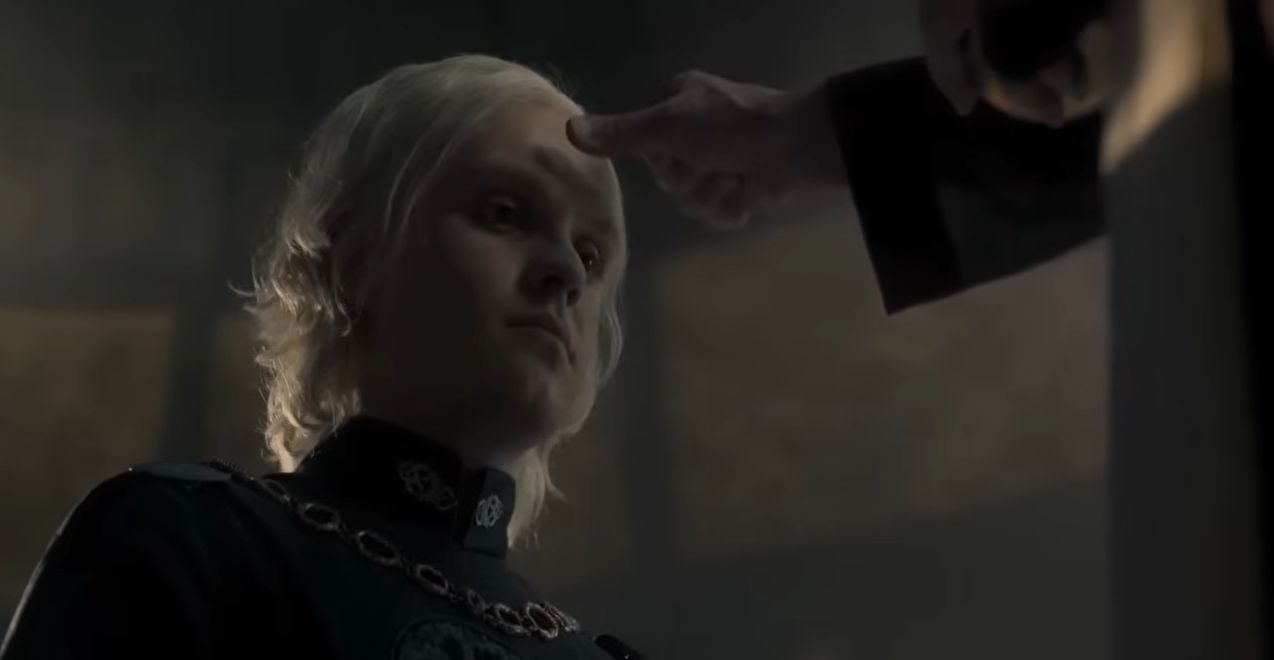
Few people would have called Aegon II Targaryen their favorite character after the generally-well-received first season of House of the Dragon. And yet as Season 3 comes to a close, he’s developed a significant fanbase, and for good reason: Aegon is the best character left on the show.
Read more From Washington to Montreal, Toronto, and Cincinnati: Tennis in an Age of Chaos
It’s something that would have seemed absurd after the first season. While portrayed by adult actor Tom Glynn Carney, in just two of the 10 episodes, what little we saw of Aegon was quite disturbing. Namely, that he rapes one of his sister-wife’s maidservants and is revealed to be a frequent spectator at depraved child-fighting pits, which include his own bastard children. In short, he was the next monster-de-jour, like Joffrey Baratheon or Ramsay Bolton from the main Game of Thrones.
And, not to spoil things, but if you think this story has a happy ending, you haven’t been paying attention.
Joffrey, who was infamously hated so much that the actor was subject to constant death threats, is an especially apt comparison. Many of the characters from House of the Dragon are meant to be parallels or twists on characters from the main series. Aegon was clearly intended as a funhouse mirror version of Joffrey. Like Joffrey, Aegon was a terrible person who had no business being king even absent the issues around the succession, and was put forward by his mother anyway.
So why, after the significantly weaker second and third seasons, has Aegon’s stock risen? I don’t think that this is simply a case of people rooting for the villain out of spite. Aegon’s character is treated with too much care and deliberateness to have been a mistake. Indeed, in a recent behind-the-scenes clip, showrunner Ryan Condal said: “People will be surprised at how much they are rooting for Aegon.” So what gives? Why has this character, out of all of them, stood out in this feminist show?
Firstly, Aegon benefits from his story being disconnected from the main plot. He’s insulated from the stupidity, poor writing, and inconsistent characterization that warps the rest of the show. Because it’s so focused on giving unnecessary and annoying scenes to characters such as Rhaenyra, Alicent, Rhaena, and others, Aegon has only been allowed a minimal amount of screentime. In turn, this has forced his story to be relatively simple and provides less time to introduce stupid things. This benign neglect has meant that what scenes he does have are very focused and productive.
I don’t know what the showrunners were thinking when they characterized Aegon early on. It might be that they had a darker vision of the character in Season 1 and then changed their minds. It might be, as showrunner Sara Hess said in an interview with The Hollywood Reporter, “It’s simplistic to say: ‘He raped someone, he’s horrible and evil and we can never find anything likable or interesting in him’… Nobody’s ever taught Aegon about consent or what a relationship is supposed to look like and his mother married his father when she was 16. So this is a very long way of saying: It’s more complicated than, ‘You raped somebody, this is the end of your story.’”
Read more Catholic Bishops and the LGBT Agenda: The Church Is Not a Social Club
While this explanation might seem nuanced, arguing that Aegon’s upbringing meant that he didn’t understand rape to be bad is not a very compelling explanation. It reads like the soft bigotry of low expectations, but directed by feminists towards men: yeah, Aegon didn’t grow up under ideal circumstances so of course he turned out this way.
A positive side effect of that, though, is that once the story gets underway, the writers refuse to coddle him. In that regard, he’s a satisfying character in a meta sort of way. When he makes a terrible or wrong decision, it’s clear to the audience that’s what he’s done; characters in the story will say that what he’s done is bad, and there will often be dire consequences that he will have to deal with as a result. This stands in contrast to other characters whom the show nevertheless portrays as upstanding, despite their doing everything from massacring peasants for no reason to attempting to kill their own children.
This leads into another Game of Thrones archetype: the character that’s punished so harshly you’ve got to give them a mulligan. The two obvious comparisons that come to mind from the main series are Jaime Lannister and Theon Greyjoy. Both of them have done terrible things, and it would be fully justified in a moral sense for them to have died for it. But both of them have suffered so much and changed as a result that you want to see where they go. After his toddler son is murdered, Aegon is betrayed by his brother, who burns him and forces Aegon to flee before being killed by some combination of his immediate family members.
By being brought so low, Aegon becomes an underdog. Neglected by his father, betrayed by his mother, burned by his brother, and hunted by his sister, he’s forced to claw his way back from nothing because of a war that he wasn’t especially culpable for starting.
So when Aegon finally stands up for himself, asserts who he is, and is rewarded by getting his dragon Sunfyre back, it’s hard not to cheer. You really feel happy for him and that he’s earned the win. It’s a remarkable turnaround for the character, and stands in contrast to so much else in the season that didn’t work.
Sadly, all good things must come to an end. The plot of House of the Dragon necessitates that Aegon will return to the main storyline in Season 4, and he will almost certainly suffer the same sort of collateral damage that’s hurt the until-now fascinating characters of Daemon and Aemond. And, not to spoil things, but if you think this story has a happy ending, you haven’t been paying attention. But in the meantime, Aegon II’s arc is one of the rare bright spots in House of the Dragon.
Read more Toy Story 5 and the Vanishing America of Toy Stores and Churches
READ MORE from Stephan Kapustka:
Stories Staring Into the American Abyss
One and a Half Cheers for the Empire State Building Daredevils
Why Go to Mars? Let’s Count the Reasons.
About the Author