Last weekend I sat in a theater with my youngest son to see the latest offering in the Toy Story “franchise.” That would be Toy Story 5. I’m not big on sequels. Obviously, the filmmakers cash in on the name and success of the first movie in the series, and few to none that follow are better or comparable. Nonetheless, they insist on producing one after another as film becomes farce.
Read more The Problem of Gratuitous Beauty, in The Story of Everything
Anyway, my son wanted to see the movie, and I read reviews suggesting it was actually pretty good and not loaded with Hollywood’s normal boatload of degeneracy to indoctrinate your child.
Indeed, the movie carries an impressive and rather remarkable message — about screens. More so, about our fixation, obsession, addiction to screens, whether our laptop, phone, or “pad” of some sort. And ironically, if not audaciously, the Toy Story 5 filmmakers had the courage to deliver that message to us — kids and adults alike — on a big screen. And with toys no less!
How symptomatic of modern America. Once upon a time, the first public thing the community built was a church.
The movie begins with a nine-year-old girl named “Bonnie” who loves to play with toys. In that sense, the cute little thing is kind of a modern dinosaur. In fact, she’s treated like an ogre by neighborhood kids who snicker when she shyly tries to get them to play by waving with her toy, Jesse the Cowgirl. The boy and girl next door chuckle at the pathetic little fool and retreat into their house with their coveted devices. We’re soon treated to a nighttime view of the whole neighborhood, where we see kids in every home glued to their gizmos like zombies.
Worse, Bonnie’s parents, saddened by their child’s inability to make friends, make a desperate decision. Mom and dad go native. They put their fingers to the wind and blow with the zeitgeist. They join the masses. They sell out. They go online and order Bonnie a “Lilypad.” Soon enough, Bonnie is sucked into her device and — bam, presto — that girl is gone, as are her toys. She doesn’t play with them anymore.
There’s much I could say about this in an extended cultural-social analysis, which I’m doing in a review for another publication, but something else struck me that I think is worth sharing with readers here.
Ironically, after we left the theater, my son and I drove by a plaza that once had a Toys R Us store, which sold toys like Jesse the Cowgirl. I told my son about the store, which shut down about a decade ago. My older son in the back seat chimed in, reminiscing about what a cool store that was. We would stroll in for an hour or so, as he and his siblings lost themselves in play amid the shelves and aisles.
Well, that store is gone. Toys R Us filed for bankruptcy and closed its doors in June 2018. There were many reasons for that (it was pre-COVID), some of which the store acknowledged and others it didn’t. I would point to a culprit underscored in Toy Story 5: kids have shifted from playing with toys to thumbing electronics. Indeed, just two stores away, the local Best Buy is thriving, packed with youngsters buying devices.
I must also add that Toys R Us faced a major demographic hurdle. Americans are finally catching up with secular Europeans in that they’re not getting married or getting married too late to procreate. If they do have children, it’s one or two. A three-child family is considered a big family nowadays.
We in academia have been watching and waiting for this bubble to burst. It’s popping right now, the mid-2020s. It has meant a massive decline in college students, which has been catastrophic for enrollments. Many colleges are shutting down. Over the past decade, 500-plus U.S. private colleges have closed, three times the rate of the previous decade.
Current college-age students were kids in the 2010s, when Toys R Us was losing clients.
And it isn’t just Toys R Us, of course. Think about it: Whatever happened to your small-town toy store? In Butler, we had Aland’s Toyland on Main Street, forever. We would flock there as wide-eyed little creatures in the early 1970s and marvel at the gems.
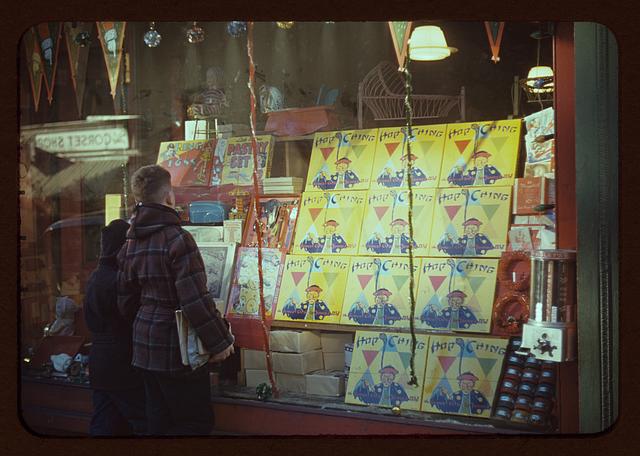
Think of the opening scene in the wonderful movie A Christmas Story, where Ralphie and friends press their cold noses against the snowy window of the toy store watching the trains circle. Today, kids don’t have toy trains. They would rather “operate” one on a computer screen.
A Christmas Story is set in 1940s America, when moms and dads had lots of kids. A big family had 10 kids. Kids were everywhere, and thus the demand for toy stores (and no competing demand from cellphones and laptops).
All of which brings me to a sadder cultural observation: What else is gone, and what has replaced it?
Our idyllic downtowns, many of them Norman Rockwell-esque images — lined with hardware stores, malt shops, the Elk’s, the VFW — are now pockmarked by paragons of ugliness such as tattoo joints and vape shops. Vape shops have become so prolific that the likes of Pittsburgh Mayor Corey O’Connor just signed a zoning ordinance restricting them. One really does have to wonder how many of the damned things the market can sustain. How are they all staying in business? What are they selling?
And what else isn’t being built downtown anymore? How about churches? Oh, they’re there, but they were erected a century ago and now stand conspicuous for their empty pews, or they’re being closed or converted into something else. One ornate old church that I drive by in Pittsburgh was turned into a beer pub. In Europe, many have become mosques. In our town of Grove City, the former Catholic church (we built a new one outside of town about 20 years ago) is up for sale because of the small Sunday attendance at the local denomination that bought the church. The sale price is cheaper than most new “gated community” houses, but finding a buyer (i.e., another church congregation) is going to be very difficult.
That reminds me of another church situation that’s culturally revealing.
Our family recently had a stayover in Washington, D.C. en route to a beach vacation on the East Coast. I’m in the area often as editor of The American Spectator, though I stay at hotels near our office in historic Old Town Alexandria, which is safe and nice. I avoid D.C. like the plague.
If my family is with me, we usually stay in Alexandria, where we attend St. Mary’s Basilica for Mass. But this time, our regular hotels were booked. So instead, we stayed at National Harbor, a lively new town constructed along the Potomac. Lots of entertainment — restaurants, piers, paths, waterfront, boutiques, coffee shops … but minus something else. What else?
Yes, a church.
That reality hit as one of the kids asked whether we would be attending daily Mass the next morning at National Harbor — walking down the street to the nearest parish like we do in Alexandria. No, it dawned on me, because this new town has no church.
How symptomatic of modern America. Once upon a time, the first public thing the community built was a church. When the immigrants settled the village, they eyed up sites for places of worship. Moreover, in those days, folks from the old country had real skills. Men knew how to work with their hands. Little chapels in little towns were so architecturally impressive and pretty inside because parishioners included bricklayers and stonemasons. Catholic churches featured stained glass, marble, columns, lofts, artwork, and statues because immigrants from Italy and Ireland and Germany knew how to do that stuff.
Today, the folks in the pews can’t do that kind of work (me included).
But that aside, it says something that a new community like a National Harbor is filled with coffee shops and bars but not a single church. It’s a testimony to what we value — our priorities. In today’s post-Christendom America, it’s not a chapel but a Starbucks. Or a vape shop or some ridiculous “body art” bunkum.
A sign of the times.
All of this, from my musings on missing toy stores to churches, isn’t just some nostalgia, I’m afraid. It’s yet another sad testimony to cultural decline.
Read more Trump’s Ceasefire Trap: Iran, Gaza, and the Politics of Peace
READ MORE from Paul Kengor:
How Anthony Fauci and the 1980s AIDS Scare Shaped Public Fear
Meet America’s New Un-Americans… the DSA
Richard Payne and the Lost Art of the Sacred Voice
About the Author