The movie The Story of Everything, which opened in over 1,000 theaters nationwide on April 30, is based on the 2021 best seller, Return of the God Hypothesis: Three Scientific Discoveries that Reveal the Mind Behind the Universe,” by Stephen Meyer. In the movie, Jay Richards elaborates on the title:
So we have two great competing stories about reality. One posits a purposeful Creator behind the universe. The other envisions mindless processes producing everything we see. But which of these stories is true? What explains all of this? What’s the story of everything?”
I would add that the second story, that mindless processes have produced everything we see, now dominates our academic world and we see the result of this domination everywhere around us.
We would still be here to wonder if the conditions on Earth had not been so finely tuned as to make possible the development of technology and scientific discovery.
But is this second story true? The three scientific discoveries of Meyer’s book which argue otherwise are:
The Discovery That the Universe Had a Beginning
It is now widely believed by scientists that the universe (space, time, matter, and energy) came into existence suddenly from nothing about 14 billion years ago. Since there were no natural causes before nature came into existence, we cannot hope to ever find a “natural” explanation for this “big bang.” Albert Einstein’s general theory of relativity showed that a beginning was theoretically possible, and other scientists discovered powerful evidence of such a beginning. But if it is hard to imagine that the universe had a beginning, it is equally hard to imagine that it did not. For example, if the universe were infinitely old, shouldn’t all stars have burned out long ago, as hydrogen fused into helium and heavier elements? How long ago — a quadrillion years ago? Why not long before that?
The Discovery That the Laws of Physics Are ‘Fine-Tuned’ for Life
The universe that came into being from nothing is finely tuned to allow life to exist and flourish. It is now known that the values of many basic physical constants, such as the strengths of the four fundamental forces, the masses and charges of the basic particles of physics, the speed of light, and Planck’s quantum physics constant, had to be almost exactly what they are in order for any conceivable form of life to exist in our universe. As physicist Stephen Hawking wrote, “the remarkable fact is that the values of these numbers seem to have been very finely adjusted to make possible the development of life.”
The Discovery That Living Cells are Astonishingly Complex Machines
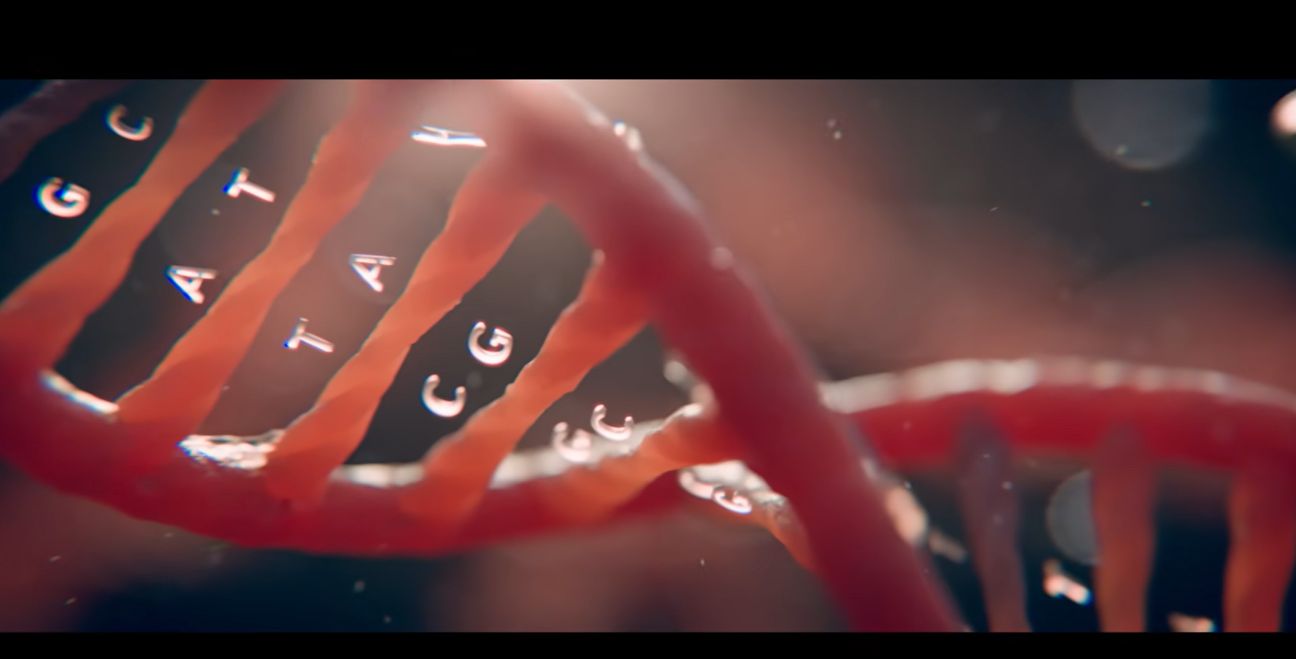
Darwin’s implausible theory has become more implausible with every new biological and biochemical discovery, and the astonishing molecular machinery discovered in every living cell strains the Darwinist’s imagination to the breaking point.
The first three “chapters” of the movie, which is now available via streaming and on DVD and Blu-Ray, document these three discoveries with spectacular visual effects. The fourth chapter deals primarily with the problem of gratuitous beauty.
Read more Trump’s Ceasefire Trap: Iran, Gaza, and the Politics of Peace
The “problem of pain” is a problem for those of us who believe in God; in fact, for many people it is the strongest objection to design. The “problem of gratuitous beauty,” on the other hand, is a problem for atheists. Nearly every nature documentary, after documenting the astonishing cleverness of living species, ends with the obligatory “hard to believe, but all of this is the result of the survival of the fittest.” Most laymen agree that it is hard to believe.
But it is not just the layman who sees that there is so much cleverness and beauty in the living world that seems to go far beyond any survival value, that seems to have only artistic value. German geneticist Wolf-Ekkehard Lönnig, in his book The Evolution of the Long-Necked Giraffe, analyzes many Darwinian attempts to explain biological features (such as its long neck!) and behavior of giraffes in terms of the advantages they might convey for survival and shows that all are false or unsupported by the evidence. Then he concludes: “If, on the other hand, one views nature as ingenious artwork that cannot be reduced to the question of utility alone, these problems disappear.”
But gratuitous beauty is not just a problem for the Darwinists. It is also a problem for the atheists’ explanations for the “local” fine-tuning of conditions on Earth, and the “global” fine-tuning of the laws and constants of physics in our universe, discussed in Chapter 2 of the movie. They argue that there are many planets in the universe, and our planet is so well-suited for the development of life because otherwise we would not be here.
Well, there are a lot of planets in the universe, so this seems to make some sense. But for the global fine tuning, they have to make a similar argument and say, there must be many other universes with random laws of physics and/or random values for the constants of physics, and our universe is finely tuned for life because otherwise we would not be here to wonder about it. This “anthropic” explanation for the global fine-tuning is much weaker, since now there is no scientific evidence — there can never be any evidence — that there are other unobservable universes, or that they would have random laws and physical constants if they did exist.
But the problem of gratuitous beauty challenges attempts to explain both local and global fine-tuning without design. As Michael Behe reminds us, in The Edge of Evolution, these explanations only attempt to explain why we live in a universe, and on a planet, where intelligent beings can survive, not why we live in such a “lush” world, where the fundamental laws and conditions not only make life possible, but also make it interesting and beautiful. As Behe writes, “It is difficult to make a rigorous argument on such a question. Yet it seems that our world is quite lush and contains much more than what’s absolutely needed for intelligence.” Indeed.
For example, the books The Privileged Planet: How our Place in the Cosmos is Designed for Discovery by astronomer Guillermo Gonzalez and Fire-Maker: How Humans were Designed to Harness Fire and Transform our Planet by biologist Michael Denton, detail many ways in which the conditions on our planet and its location, and the laws of our universe, are fine-tuned not only for our survival but also for scientific discovery and technological progress. These fine tunings cannot be explained by “the conditions were just right for life because otherwise we would not be here to wonder about it” arguments.
We would still be here to wonder if the conditions on Earth had not been so finely tuned as to make possible the development of technology and scientific discovery. The only explanation for these remarkable fine-tunings, it seems to me, is that they are gratuitous gifts from our Designer, given to challenge and entertain us. That is why I find the fine-tuning discovery especially satisfying: not only does it defeat the “anthropic” arguments, but it also provides a humbling lesson to those scientists who insist that nothing can lie beyond the reach of science. They have been able to reach as far as they have only because, in the first place, they were set up to succeed.
Read more IQ Tests Were Meant to Help Children, Not Rank People
READ MORE from Granville Sewell:
After Man Came Rest
The Story of Everything: A Cinematic Exploration of Design in Nature
What Science Now Knows — and the Public Rarely Hears
About the Author