On Oct. 18, a drone exploded in northern Lithuania, triggering the latest regional alarm in a conflict that, as of this writing, might mercifully be reaching its conclusion.
Read more November’s Stark Choice: Two Visions for Justice and the Rule of Law
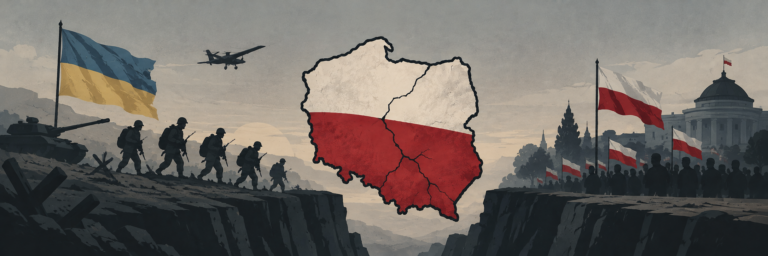
Regional government officials have concluded the drone was Ukrainian, but there certainties end. Lithuanian officials insist the drone crossed into the country from Polish territory, a scenario that raises questions of Polish military preparedness and kindles fears that Warsaw might be allowing Ukraine or other foreign powers to operate on its territory. Polish officials have denied the claim and insisted they have complete control over their airspace. Ukraine’s Foreign Ministry has apologized for the incident and speculated that Russian electronic warfare might have diverted the drone from its intended course. “Russia’s war of aggression against Ukraine is spilling over onto the Eastern flank of NATO and EU,” wrote Lithuanian President Gitanas Nausėda.
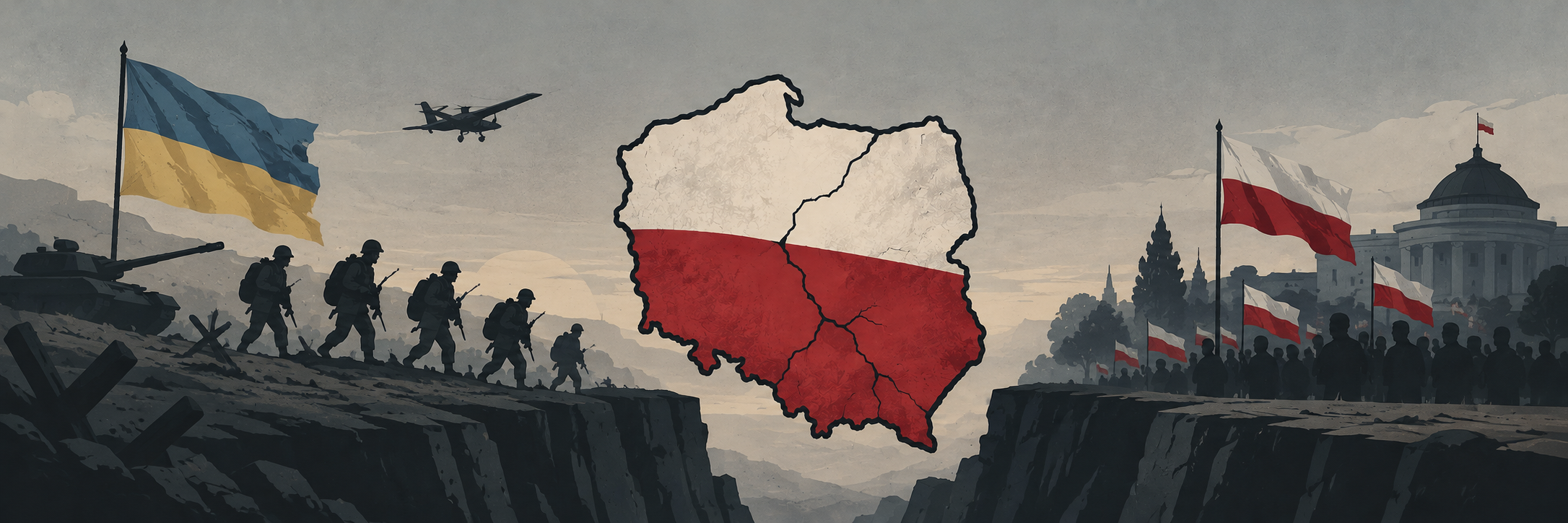
This official rhetoric masks signs that regional populations have tired of nearly a half-decade of warfare on their doorstep. Poland, in particular, has offered Ukraine a virtual “blank check” since the war commenced in 2022. Poland’s Ukrainian population rose from an estimated 1.4 million at the start of the war to an 3.2 million within the first year, before subsiding to something closer to the former number today. Over eight million Ukrainians crossed onto Polish territory in the war’s early days. (RELATED: The Chink in Ukraine’s Armor)
[S]upport for accepting Ukrainian refugees declined from an initial 94 percent in March 2022 to 48 percent in late 2025…
Both of Poland’s largest – and otherwise bitterly divided – political camps have been generous with financial and military assistance. Such a scenario cannot endure indefinitely. Instances of Ukrainian involvement in crime, fraud, and migrant-trafficking have mounted, and Poland’s less-wealthy residents have watched Ukrainian arrivals receive substantial benefits.
CBOS, Poland’s state polling agency, support for accepting Ukrainian refugees declined from an initial 94 percent in March 2022 to 48 percent in late 2025; a July 2026 poll found a majority opposed (52 percent) for the first time. In that same poll, 54 percent called Polish state aid to Ukrainian refugees excessive, and 87 percent opposed medical care for Ukrainians not contributing to the state treasury.
On the diplomatic front, bilateral relations have also soured. In May, President Volodymyr Zelenskyy announced a military unit named for the “Heroes of the UPA,” a reference to a nationalist partisan group responsible for the genocide of Poles in Volhynia and Galicia in 1943-44, as well as armed conflict with Poland’s Home Army. In response, Polish President Karol Nawrocki stripped Zelenskyy of the Order of the White Eagle, Poland’s highest state honor, triggering a series of insults and further medal revocations. Nawrocki’s popularity rose to a record high after the incident, and Poland’s major political figures quarreled over the details.
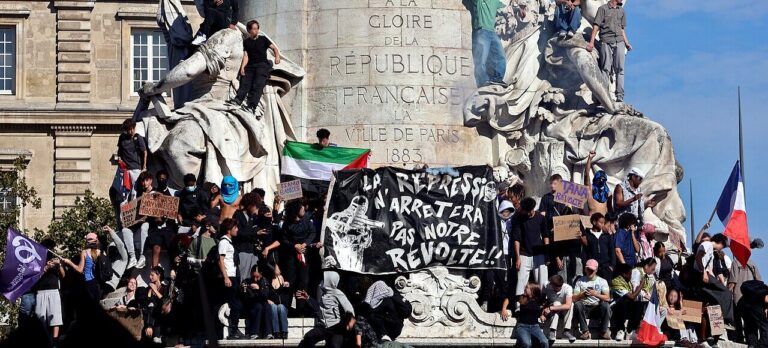
This is particularly important because Poland is entering a key political season, with parliamentary elections slated for no later than November 2027. Joining Poland at the ballot box will be neighboring Slovakia, whose prime minister, Robert Fico, has been among the European leaders most critical of EU/NATO belligerence, and France, which pairs the continent’s largest military with a deeply agitated populace. The results in all three will resonate far beyond these state borders. (RELATED: The French Revolution of the 21st Century: From the Guillotine to the Suicide Vest)
Read more The Spectacle Ep. 482: Apple Homeview: The Device You Don’t Want or Need
In 2023, following eight years of governments led by the nationalist Law and Justice (PiS), Prime Minister Donald Tusk cobbled together a coalition of leftists and agrarians to govern with his liberal Civic Coalition (KO) after PiS won a plurality but found no willing partners. Despite its unwieldiness, this anti-PiS government has not toppled, while the Polish Right has further fragmented. This month, the Tusk government felt emboldened enough to offer its latest example of “militant democracy” when police and prosecutors entered the Constitutional Tribunal building to demand documents and video footage, a move President Nawrocki denounced as unlawful. (RELATED: What Next for Poland After Nawrocki Victory?)
Recent polls suggest a mirror image of 2023, with KO projected to win a plurality but struggle to form a government. The outcome will hinge on which smaller parties clear the five-percent threshold (eight-percent for coalitions) for entering the Sejm (Parliament). Under present circumstances, KO and the Left (Lewica) alliance look unlikely to win enough seats to govern alone.
On paper, the Polish Right possesses an embarrassment of riches by European standards, but a path to governance is not straightforward. PiS has lost support since its height early in the decade. This year, a faction led by former Prime Minister Mateusz Morawiecki split from the party. The Confederation (Konfederacja) alliance and the Confederation of the Polish Crown (KKP — a party that previously left the Confederation) are vying for many of the same conservative voters. Even when the right-wing landscape featured just PiS and Confederation, collaboration was problematic. Ideological differences surely would rule out participation in a government featuring the Left, but personal rivalries could have the same effect on cooperation within the Right. Furthermore, the 2027 elections could yield a government with parties (Confederation and KKP) of belligerence on behalf of Ukraine, a dynamic that has not existed in this government or its PiS predecessor.
Prime Minister Tusk has recently made statements promising strict measures combating illegal immigration, drawing approval from some conservative voices abroad. It is a tactic he has pursued regularly during this electoral term. The rhetoric is misleading, as both Tusk’s government and its PiS predecessor have overseen an influx of so-called “legal” immigrants, vessels of cheap labor for Polish corporate interests. The phenomenon is increasingly visible in both city and village life, and Poland is no longer immune to even the most loathsome experiences of its Western European neighbors. Earlier this month, a Venezuelan migrant was sentenced to 25 years in prison for murdering a young Polish woman following a botched rape attempt. Both the crime and the relative leniency of the sentence reflect horrors of the liberal order that Poles long regarded as foreign.
Ultimately, the Ukraine war is the factor most likely to agitate Polish society in the coming year of bitter politics. Radosław Sikorski, the arrogant, combustible foreign minister who infamously tweeted “Thank you, USA” after the Nord Stream 2 explosion in 2022, has been among the loudest cheerleaders of escalation. He has made a point recently to bicker with Elon Musk and U.S. officials and tout himself as an important player to Trump administration officials. If Poland plays any role in the speculated talks between the warring parties, his participation will present a complication.
In recent years, Polish leaders have basked in foreign adulation and relished the status of a rising power. One year from a critical election, this government has an opportunity to confirm that status — or crash and burn like a wayward Ukrainian drone.
READ MORE from Michael O’Shea:
Iceland Rushes Aboard the EU Sinking Ship
The ‘Black Insurgent’ and Americanization of Polish Society
‘Africa Days’ in Eastern Poland
Michael O’Shea is an American-Polish writer and translator. He is a former Visiting Fellow at the Danube Institute in Budapest.
Read more The War Iran Chose: Remembering the Beirut Bombing
About the Author