We have five predictions for you:
1. Glacier National Park will be glacier-free by 2020.
2. The Arctic summer will be ice-free by 2020.
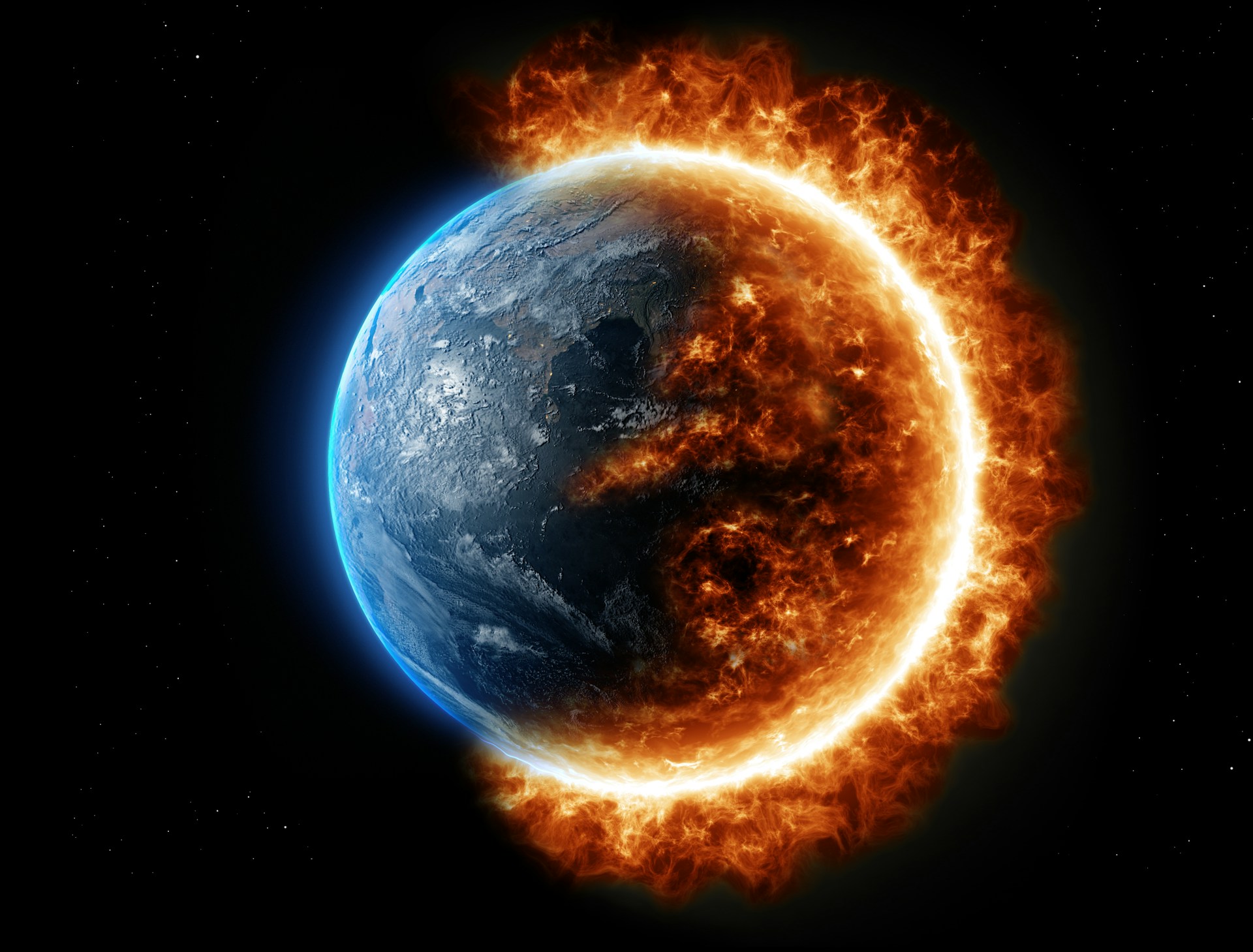
3. Unless we reverse global warming first, entire nations will be wiped off the face of the Earth by 2020.
Read more When California Took the Lead on Civil Rights
4. New England’s sugar maple industry will disappear by 2021 because of climate change.
5. All humans on Earth will die on or about November 13, 2026.
All were made — by real scientists — in the past.
So, here’s the rundown:
1. Glacier National Park personnel put up signs sometime in the late 2000s claiming the park would be glacier-free by 2020. On January 1, 2020, the signs were removed since the glaciers were still there.
2. An article in Geophysical Research Letters in 2013 predicted an ice-free Arctic by 2020. Even today, the Arctic is not ice-free in the summer.
3. In 1989, Noel Brown of the United Nations claimed we had a 10-year window to reverse the greenhouse effect or “entire nations could be wiped off the face of the Earth by 2020.” No nation has been “wiped off the face of the Earth” even today.
4. In 2001, the New England Regional Assessment, prepared under the U.S. Global Change Research Program, said, “Within twenty years … the changes in climate could potentially extirpate the sugar maple industry in New England.” The New England maple syrup industry is flourishing, not nearly extirpated. In fact, maple syrup production remains a substantial agricultural enterprise in northern New England, particularly Vermont, Maine, and New Hampshire.
As you can see, not one of these dire predictions was fulfilled. Yet all raised grave public concern for years after they were made.
Okay, but what about that fifth one?
On November 4, 1960, the highly prestigious journal Science published a paper — never retracted — warning that, if trends continued as they were, all humans would die by November 13, 2026. So, we have less than a month before we know whether that prediction will pan out.
How are we all supposed to die on November 13? Run out of food or fresh water? Run out of oil and gas? A global revolt and widespread anarchy? Nuclear apocalypse? Runaway artificial intelligence? (Oops, that didn’t exist in 1960 — unless perhaps the authors of the article were prophetic.)
No, none of those will kill us all. According to the article, we’ll all die because, by November 13, 2026, the human population will run out of space on which to stand. Literally. The article asserts the population of the Earth on that date will reach … infinity.
It’s called a “crush.” The classic example occurred on April 15, 1989, at Hillsborough Stadium in Sheffield, England. Shortly before kickoff, a large number of fans entered through an exit gate after crowd pressure developed outside. They were directed into the central standing pens. Liverpool supporters, coming in late due to a delay of trains, heard the game had started and pushed into the stadium. Unbeknownst to them, the central standing pen was full, and as more people attempted to push into it, a severe human crush developed against the perimeter fencing. Ninety-six people died. Most died standing because they couldn’t breathe.
So, this is how it will all end on November 13. We will all be crushed by the population of humans on Earth. Guaranteed.
Read more Why Prediction Markets Are a Safe Bet
Wait a minute. Look around you. Are you on the verge of being crushed?
But not so fast. That’s just anecdote, not statistics. Science thrives on statistics and mocks anecdotes. The prediction was science … published in Science.
Who made that prognostication? The authors were all electrical engineers from the University of Illinois. The lead author was Dr. Heinz von Foerster, an Austrian-born physicist, cybernetician, and interdisciplinary scholar who spent most of his American career at the University of Illinois Urbana-Champaign, where he founded and directed the Biological Computer Laboratory beginning in 1958.
It turns out that if you read the fine print, von Foerster and his colleagues gave themselves an out. They noted that to determine the future size of a closed biological population, such as humans, two fundamental facts must exist. First, each element (unit) of the population must come into existence by a sexual or asexual process performed by another element of the population — birth. Second, and after a finite time, each element will cease to be a distinguishable member of this population and has to be excluded from the count — death.
Let’s assume that humans don’t reproduce asexually. (That’s a big assumption if men can become pregnant, but we digress.)
Now, how did the authors give themselves an out? They wrote:
Under conditions which come close to being paradise — that is, no environmental hazards, unlimited food supply, and no detrimental interaction between elements [that is, people]—the fate of a biological population as a whole is completely determined at all times by reference to the two fundamental properties of an individual element: its fertility and its mortality.
So, if the world doesn’t end on November 13, then on November 14 you can thank global warming, pollution, and all the wars since 1960 (and any other problem you might imagine) for destroying the paradise assumption and guaranteeing that life will go on.
Surprisingly, the article was regularly cited until the early 1990s, when the global total fertility rate (TFR), which was about 4.95 births per woman in 1960 and had been falling for years, fell to about 3.27 births per woman. By 2024 it was about 2.2 — less than half what it was in 1960. The replacement rate is 2.1, and, depending on how you count, anywhere from 100 to 152 nations and territories have already fallen below that. According to standard UN median projections, the global TFR is likely to fall below replacement level around 2050. Global population decline is coming.
So, the warning “unless things change between 1960 and 2026, the world’s population will hit infinity” turned out useless, since things changed — which they always do. Consequently, so did the prognostication. For us, conveniently so.
But wait. We’re constantly told to “follow the science.” During the COVID-19 pandemic, British Prime Minister Boris Johnson repeatedly said his government would be “led by the science.” The article just discussed was published in Science, for Pete’s sake! So, if you don’t believe the world will come to a crushing end on November 13, you must be a … science denier!
Someone named Joshua once said, “As for me and my house, we will follow the Science.” No, not the Joshua who succeeded Moses as leader of Israel. He followed a much higher authority. A much higher authority, who, unlike the journal Science and the University of Illinois electrical engineering faculty, is truly omniscient.
David R. Legates, Ph.D. (Climatology), retired University of Delaware Professor of Climatology, is Director of Research and Education for the Cornwall Alliance for the Stewardship of Creation. E. Calvin Beisner, Ph.D. (Scottish History), former Knox Theological Seminary Associate Professor of Historical Theology and Social Ethics, is President of the Cornwall Alliance.
Read more Take the Wilderness Road and You’ll Find the Appalachian First Lady Who Fooled Washington
About the Author