One way or another, the Iran War will eventually end. It can be assumed that Iran’s status as a major regional threat will be severely reduced for at least the rest of Trump’s time in office. This raises the issue of what American grand strategy should be for the next two years. With the administration’s renewed interest in Central and South America, we now have four major theaters to contend with: those being Europe, the Middle East, Indo-Pacific — particularly China — and the Americas. Grand strategy has political, military, and economic components. And we are seeing major strategy shifts in each major theater. Below are items in each theater that need attention.
Read more There Used to Be a Ballpark Here
The Middle East
Minus Iran as an immediate concern, Israel appears to be building partnerships in the Middle East. The Middle East will probably be relatively stable for the rest of the Trump tenure. We have adequate military forces to contend with most foreseeable contingencies if we keep the airpower and sea-based forces we have there postwar. We should encourage Israel’s continued outreach to its regional neighbors, and that might eventually allow us to significantly reduce our military footprint in the region.
However, the cornerstone of any grand strategy is the military ability to carry out a nation’s commitments. There remains much to do in this area.
The Indo-Pacific (China)
Trump’s apparent detente with China’s Xi eases tensions in the Indo-Pacific, but the elephant in the room remains Taiwan. Superpower economic rivalry is one thing, but losing Taiwan to China would do to any Republican administration what the Communist takeover in China did to the Democrats for over 10 years. Trump would do well to remind Xi that we can close Hormuz and the Red Sea at any time the Chinese leader rattles sabers toward Taipei. We can also impose a blockade on all Chinese shipping in a Taiwan crisis. Xi understands the damage we would do to his economy if we wage maritime economic warfare over a Taiwan invasion. Détente always came with a threat of the consequences of Soviet misbehavior. There is a lesson in that. (RELATED: China’s Threat to Taiwan: Intentions and Capabilities)
The Americas and Europe
With Venezuela in a box and Cuba on the economic ropes, the Trump administration seems to have a good handle on the Americas, but Europe remains a thorn in the administration’s side. A Russo-Ukrainian peace deal has eluded the president, and NATO remains deeply divided on defense issues. Even if a peace agreement is worked out, Putin will likely turn his ire on our Western allies. Mr. Trump would be well advised to continue to press the European allies to continue to increase defense spending. Moving some army forces into Poland sends a strong message to Putin that we are committed to the defense of Europe.
All Rests on Our Military
However, the cornerstone of any grand strategy is the military ability to carry out a nation’s commitments. There remains much to do in this area. The U.S. Army is perhaps the most innovative and forward-looking of the services at the present time. Its investment in long-range hypersonic missiles and multi-domain task forces has vastly improved its future capabilities, particularly in the Indo-Pacific theater.
As George Will pointed out in a recent column, the Air Force badly needs modernization and more aircrews to meet its many overseas requirements. The venerable B-52 is almost as old as I am … and I’m old. The F-16s and F-15s date back to the 1980s. The shortage of pilots is troubling. ROTC and the service academies cannot provide enough. My alma mater — the Embry-Riddle Aeronautical University — turns out many qualified aviators every year, but they are heavily wooed by the airlines.
Read more The New York Times Is Late to the Masculinity Crisis
Rising juniors with the right flight credentials can have the last two years of his or her tuition paid along with a healthy bonus if they commit to post-graduation hire. The development of AI “wingman” drones will help, but the air service will need to develop innovative inducements to fill the aircrew gap. Perhaps earlier inducements to promising aviation-oriented college freshmen could help.
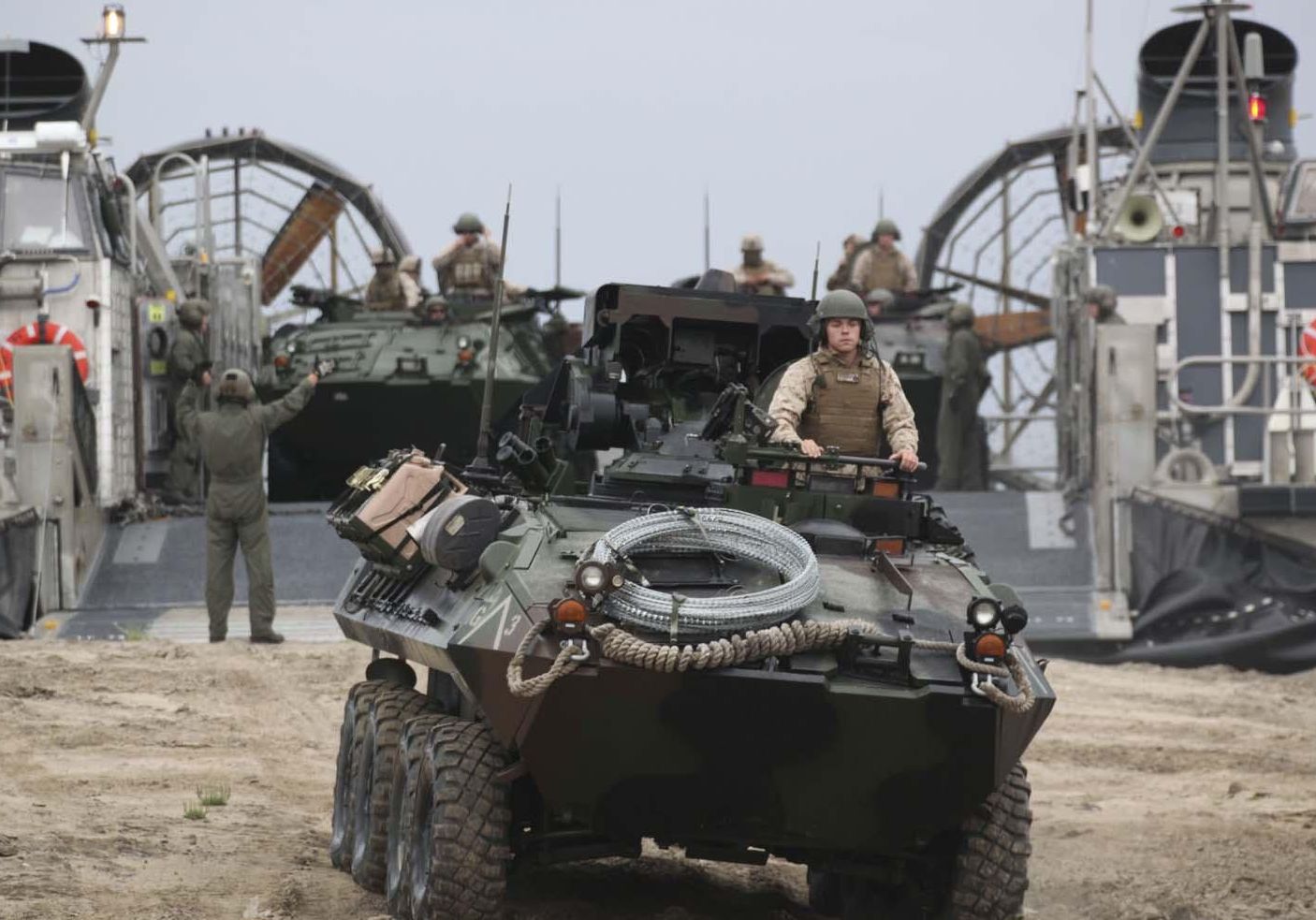
The sea services pose perhaps the most problematic challenge to strategic readiness. The Navy’s shipbuilding and maintenance problems call for major reform. Now that the administration has added the Americas to its list of vital regions, the Navy will need 50 well-maintained amphibious ships to field its amphibious ready groups. It now has 31, and many of those need maintenance that the Navy cannot provide. Allies can help with maintenance if we let them, but our shipbuilding and maintenance policies are badly in need of reform. (RELATED: Choke Points and the Future of Naval Power)
If the Marine Corps does not scrap its failed 2019 Force Design reform, it teeters on the brink of irrelevance. The attempt to shift the Marine Corps from a worldwide middle-weight force-in-readiness to a China-centric missile-firing force has been a debacle. In a recent exercise in the Philippines, the Army live-fired several anti-ship missiles. After seven years, the Marine Corps could fire none. Marines were relegated to a command and control role. (RELATED: A To-Do List for the Next Marine Corps Commandant)
The Marine Corps can contribute to choke point warfare in a significant manner if it gets back to basics as a combined arms force and ditches the missile fascination. But that will not happen under the current leadership.
When the current Iran conflict ends, the nation will have time to absorb the lessons of that war and the Russo-Ukraine confrontation. If we are wise, we will learn them and implement a truly effective grand strategy.
Read more The New York Times and the Credulity Problem
READ MORE from Gary Anderson:
A To-Do List for the Next Marine Corps Commandant
The Turtle Nazis
The Marine Corps Is No Longer Ready for Urban Warfare
Gary Anderson writes extensively on strategic issues for The American Spectator.
About the Author