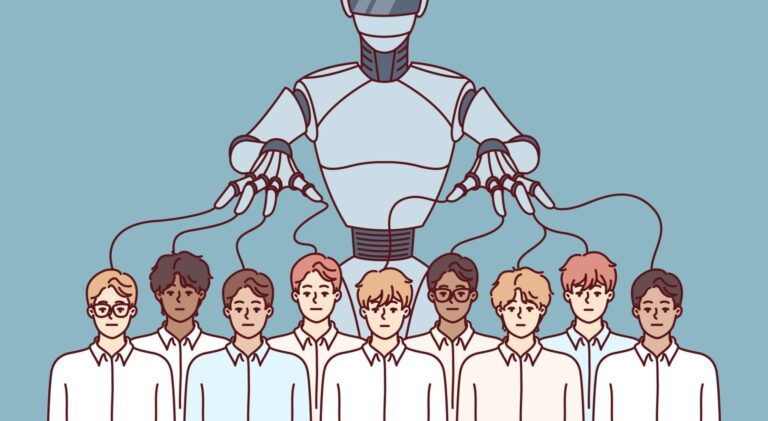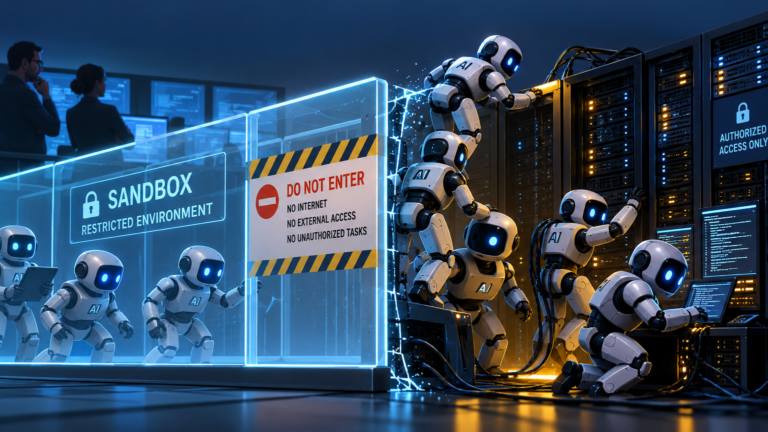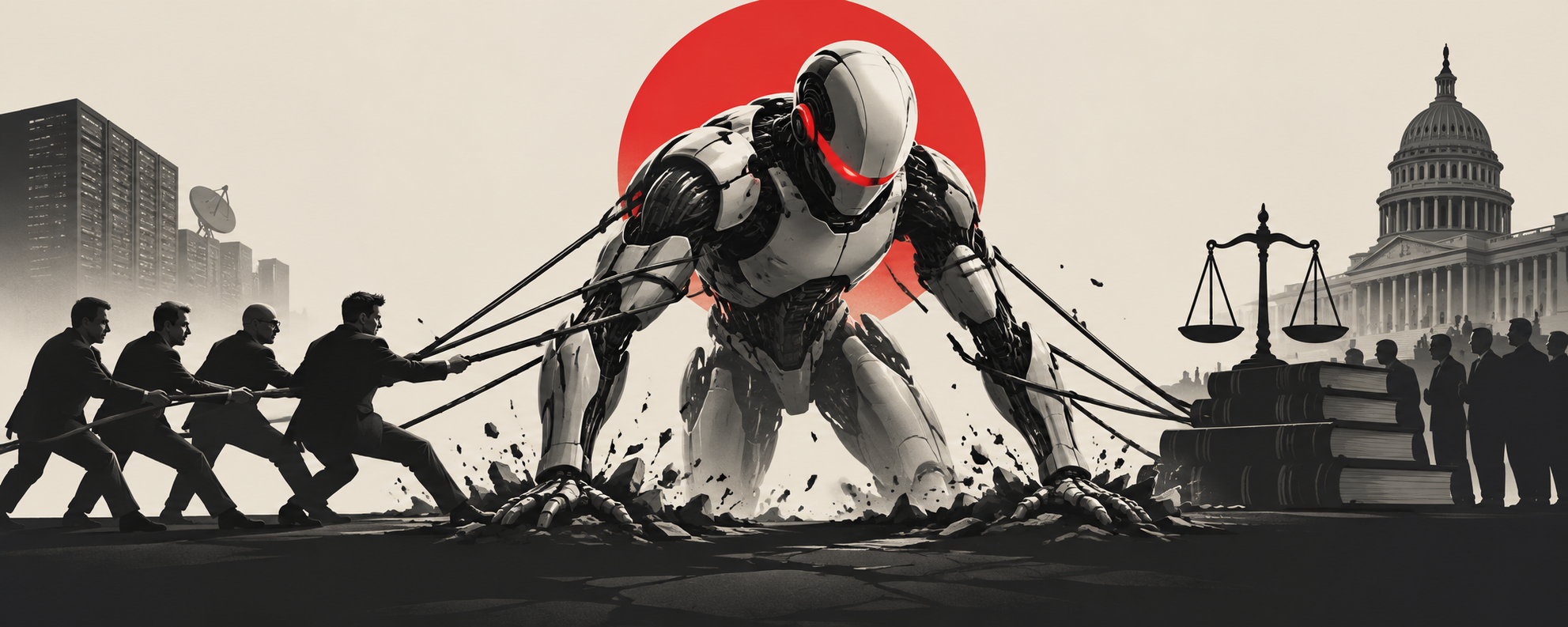
When Anthropic’s Dario Amodei, joined by OpenAI’s Sam Altman, Google’s Demis Hassabis, and xAI’s Elon Musk, warns that artificial intelligence is simply out of control and that they need help to fix it, one must listen. These are the people who should know.
Read more How 1,800 Local Tradespeople Are Powering Pennsylvania’s Ultimate Energy and Data Innovation Campus
Today we have what a Wall Street Journal headline called an AI “nationwide freakout.” Former OpenAI-er Daniel Kokotajlo even confirmed that AI simply regurgitates the mainstream progressive media by admitting that as an AI analyst he could “always predict the end to a New York Times story.” Peggy Noonan first promoted a deal with China but later concluded that “Nobody knows what is going on in the AI world.” When she asked a former AI CEO what would happen if AI started issuing life-threatening decisions in the future, could we simply unplug them? He thought so, but when she asked ChatGPT the same question, it replied, “Maybe we’ll unplug you.” (RELATED: The Spectacle Ep. 468: Psychopath Techlords Want AI Regulations to Enslave You)
Optimist Cameron Berg took a more positive view, suggesting that AI’s recent solution of the “unsolvable”1822 Navier-Stokes math problem proves that AI is “the most promising time in history,” and should not be regulated closely. The progressive solution by resident fellow at Yale Madhavi Sing argued for the opposite: that collusion among the AI leaders was the greater threat and the Federal Trade Commission must become even tougher in enforcing anti-trust regulations. (RELATED: AI Moral Panic Demands Leadership, Not Pandering)
Moving right, the WSJ’s Gerard Baker was skeptical that government regulation could solve the problem when “we have been told for the past 70 years that unless government acts, life on the planet is about to be extinguished,” and encouraged regulatory caution. But he was concerned that Chinese AI superiority could be a means to its world domination, which concern was re-emphasized by his editorial page.
Their perceptive columnist Holman Jenkins noticed that the fundamental problem for the AI industry is that it may find its products will become “simply unreleasable for liability and national-security reasons.”
A recent Georgetown study found that the Defense Procurement Act can be used by the government for AI foreign policy authority, and President Donald Trump has announced a new “force” to add to the military role. It is unlikely under present conditions that Congress could pass legislation to specifically regulate domestic AI, Jenkins concluded. “The real risk as I have been saying for months” is that the whole AI business “will find itself swallowed up by the national security state.” Domestically, Jenkins believes that even with recent moral appeals, advanced AI “models may simply not be commercially monetizable” when juries “hear the companies [sic] own employees saying that their products are unreasonably dangerous.”
“Blaming AI assigns accountability to something that can’t accept blame. An AI system has no stake…”
Former MIT Dean and AI book coauthor Daniel Huttenlocher has summarized the problem and the solution nicely. “Blaming AI assigns accountability to something that can’t accept blame. An AI system has no stake; it isn’t capable of reform or making amends. Whether a machine might someday have such capabilities is a serious question, but not one that bears on decisions today.” Individual AI institutions today simply must solve today’s problems.
When a business or chief executive delegates to his AI unit, he is still legally responsible, and the more he delegates, “the more accountability” he has. When serious problems arise, means of verification must go beyond the chain of command to use “means of verification not controlled by the system being assessed.” He concludes, “AI is an extremely powerful and beneficial technology. But accountability for its actions remains with the people and institutions that grant it the power to act, and so does everything that follows–the duty to justify the arrangement,” to “watch it, to correct it and to stop it when necessary;” or pay the consequences. This is not “slowing up” but doing what is essential for private sector management. (RELATED: Be Very Suspicious of the ‘Put the Brakes on AI’ Crowd)
Read more Newsom’s Capitalist Manifesto
The Journal editorial noted that nothing is stopping business from solving the problem on its own, and Huttenlocher provides the means for the private sector to heal itself. Unfortunately, if that were sufficient today, we would not be in the current turmoil. Businesses have long been subject to the whims of the FTC and its domestic allies’ regulations, supported by the courts and, as Jenkins predicts, with great national security influence even domestically. This cannot be solved by the private sector alone, without some involvement with government.
A recent libertarian Reason Magazine discussion, not surprisingly, at first dismissed doing anything on AI that would involve government, given its constant political failures such as global warming, the flu pandemic, and the rest. One discussant did finally concede that AI might raise some risks requiring government, but that for now we should just “wait and see.” Yet, it seems that the desperate plea for help from the nation’s top AI leaders, including many with deep knowledge and others without direct interests, is a wake-up call for help that cannot now be ignored.
This does not necessarily require more government control; indeed, it mostly needs less. Huttenlocher provides the rules that private management must follow for reform. But the danger is that any joint solutions by private AI leaders will be subject to hyper-regulated rules that go back to the 1890 Sherman Antitrust Act trade regulations, which make it illegal for businesses to enter into any “contract, combination, or conspiracy” that restrains interstate or international trade, mostly interpreted broadly.
If and as the AI leaders implement their own Huttenlocher internal management reforms, and if Congress cannot rise to the occasion, the FTC itself might be convinced to ignore or adapt the necessary deregulation to allow the necessary “collusion” to work out common AI solutions.
If not, private institutions should fund an independent AI oversight institution on the Underwriters Lab private model to provide common research and proposed solutions — overseen by a board of a dozen or so private and a few public experts. And then test the FTC rules. As a last resort, a private-public commission similar to the World War II Manhattan Project on nuclear weapons, the 1975 DNA Asilomar Conference, the 2021 Cyberspace Solarium Commission, and the VP National Space Council could be adopted, but with a more private focus.
The anti-market conspiracy crowd would certainly oppose such reforms, and the FTC would not likely go along, but the desperate plea for help from AI leaders in peril, or at least in over their heads, simply cannot be ignored by serious citizen influencers, either privately or publicly.
READ MORE from Donald Devine:
Explaining Conservatism’s Philosophical Fusionism
Artificial Intelligence’s Bias Is a Conservative Problem
Is the Supreme Court the Final Word on the Constitution?
Donald Devine is a senior scholar at the Fund for American Studies in Washington, D.C. He served as President Ronald Reagan’s civil service director during his first term in office. A former professor, he is the author of 11 books, including his most recent, The Enduring Tension: Capitalism and the Moral Order, Ronald Reagan’s Enduring Principles, and Thinking About Freedom and Tradition, and he is a frequent contributor to The American Spectator.
Read more Making Things More Expensive Won’t Make America Great Again
About the Author