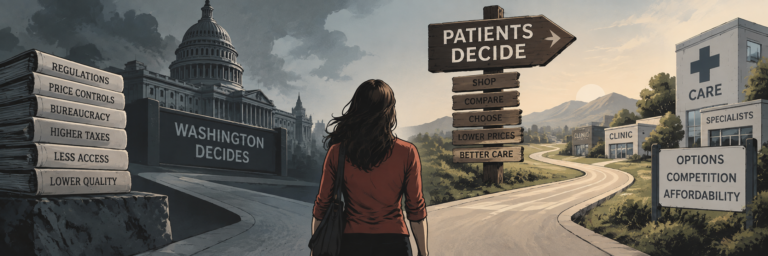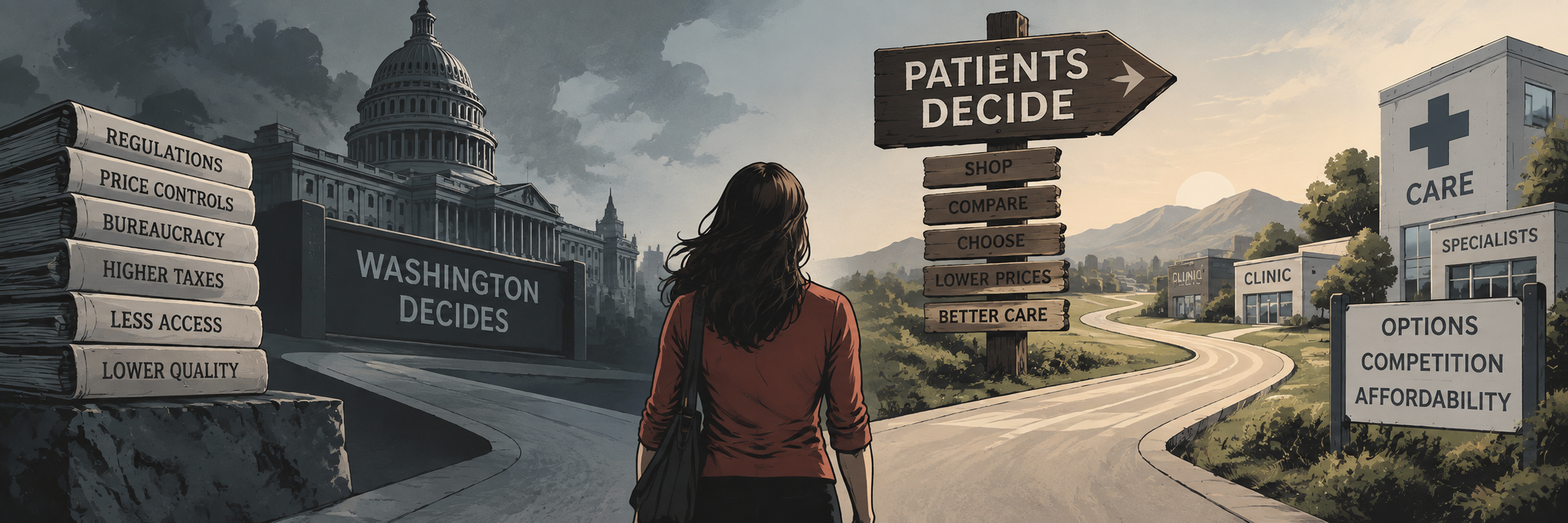
Health insurance costs are at the heart of our current consumer financial “crisis.” A recent poll asked 2533 Americans what to do about unaffordability. Fifty-nine percent responded, “government should limit healthcare prices to make care more affordable.” In other words, Washington should impose price controls on services, goods, and insurance in healthcare. Even states like Indiana and Vermont are considering price caps to address the problem.
Read more Fixing the Right to Repair
Unaffordability in healthcare is certainly not new. Insurance rates have been rising 2-3 times the rate of inflation for the past 25 years. While median household income doubled from 2000 to 2025, insurance prices quadrupled. Drug prices behaved similarly, priced beyond all but the fattest of pocketbooks. Furthermore, increased drug costs contribute to the rise in insurance prices. (RELATED: Health Insurance Costs Are Soaring. Here’s Why)
Americans don’t care who broke it. They don’t care who fixes it. They just want prices to come down, NOW!
Affordability is now touted as a “crisis.” The party out of power, Democrats, can use it as a political bludgeon against the ascendant Republicans. Americans don’t care who broke it. They don’t care who fixes it. They just want prices to come down, NOW! Last year, healthcare costs, mostly insurance, consumed per family. In 2026, those costs are projected to increase another 7.9 percent to $37,824 for a family of four.
In the poll above, respondents were presumably referring to consumer prices — what a consumer pays and not the prices that third parties pay. The following analysis focuses solely on the consumer, using “price” to indicate what an average consumer pays out of pocket.
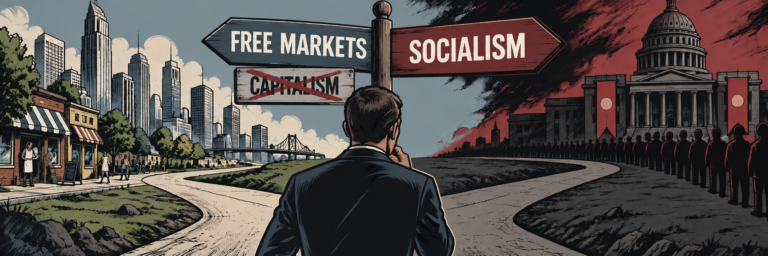
There are two ways to control consumer prices: centrally or dispersed (decentralized). Central economic control means government fixing of prices as practiced in the now-defunct U.S.S.R. Central price fixing is currently in use in North Korea, Cuba, and seems to be coming to our own New York City per newly elected Mayor Zohran Mamdani’s plans, viz., government grocery stores. (RELATED: Why Healthcare Price Transparency Will Fail)
Central control in healthcare means the government sets an arbitrary, presumably low and therefore affordable, consumer price for a drug, a doctor visit, or an insurance policy. The manufacturer, provider, or seller must adjust cost structure to compensate for reduced revenue. Manufacturers can cut spending on goods or labor, thereby reducing quality. Providers can increase billing by seeing more patients per hour and thereby spending less time with each patient. Insurance companies can reduce benefits covered and/or payments to providers. Failure to adequately lower their cost of doing business will result in the manufacturer, provider, or insurance company spending money more than they take in. That will drive them out of business since, unlike Washington, private entities cannot print money.
History confirms the following effects of government price controls: low quality, shortages, slow service, lack of innovation, and black markets. These economic consequences exist today in the countries mentioned above that have central economic controls.
Read more First Toddler Euthanized in the Netherlands
In the same survey where 59 percent favored price controls, 29 percent recognized the dangers noted previously. They feared that “government price controls could reduce access to care.”
The second way to control prices is dispersed, a free market, where consumers control their own spending. They decide what to pay and to whom. In such a market, sellers must lower their prices to meet consumers’ willingness to pay, or consumers won’t buy from the higher-priced seller and will find one with a lower price. Instead of a single controller of prices, viz., Washington, a free market in the U.S. would have 340 million price controllers.
Disease-curing and life-extending medical miracles produced in the past 50 years are costly to produce. While a free market will dramatically lower prices, medical care, especially high-tech, will remain expensive. Consumers still need enough money to pay the $700 for an MRI even though it used to cost $2500. To have sufficient money to pay for care necessities and catastrophic insurance will require a single act of Congress: repeal of the last remnant of the 1942 Economic Stabilization Act.
At the start of World War II, Congress froze all prices and wages. Employers could not pay more to recruit, retain, or reward workers. To allow employers to compensate workers without paying full, competitive wages, Congress included an accommodation called employer-sponsored health insurance benefit (ESHI). This allowed employers to pay, tax-free, for employees’ health insurance in lieu of paying full wages.
After WW II ended, all the freezes and accommodations in the Stabilization Act were repealed except one – ESHI. Thus, for more than 80 years, American employers have been sending money to insurance companies misnamed as “employer-sponsored” because that is not the employer’s money. It is wages earned by employees but paid to an insurance company. In 2025, those diverted wages averaged $26,993 for each of 84 million Americans.
By finally repealing ESHI, paying workers their full wages, and putting those funds in a new Americans will have sufficient funds to pay tax-free for their care and for catastrophic insurance. When consumers control their own spending, they will shop for care as they do for everything else. Sellers will lower their prices to make care affordable. Sellers who do not adjust their prices downward will find their waiting rooms and their bank accounts empty.
Price controls, yes, but the controller should be you, not Washington.
READ MORE from Deane Waldman:
Health Insurance Costs Are Soaring. Here’s Why
Why Healthcare Price Transparency Will Fail
The Wrong People Hold Health Care Purse Strings
Deane Waldman, M.D., MBA, is Professor Emeritus of Pediatrics, Pathology, and Decision Science; former Director of the Center for Healthcare Policy at Texas Public Policy Foundation; founding Director of the New Mexico Health Insurance Exchange; and author of multi-award-winning, “Become an Empowered Patient.” Follow him on X.com@DrDeaneW or visit website www.empowerpatients.info.
Read more The Spectacle Ep. 466: The 2026 College Football Season Has Begun, and It’s Already a Banger
About the Author