When I was six years old in Cuba, our parents gave my younger brother George and me identical costumes. I remember being puzzled by this. I hadn’t asked for a new costume. My Superman one still fit me fine, and went with my attitude. And wearing the same costume as my kid brother was grounds for mockery in the neighborhood — a rich Havana suburb suitable for our mom’s Cuban royalty family, the Mestres. And this costume was drab — an olive shirt and pants, an ugly cap of the same color, and a stupid string black beard. I smelled a rat. And, boy, did history prove me right.
Read more The Spectator P.M. Ep. 245: Democrats Are Regretting Their Wokespeak
But at the time, the popular excitement was palpable even to a little boy. I knew something big had happened, and it seemed to be something good. I didn’t know how horrible it was or how much it would change the world for the worse — and my life for the far better.
My newspaper columnist father — you might call him a pre–social media influencer — appeared upbeat. In hindsight, my patrician mother did not. Her trepidation proved justified. A few months after costume day, our whole family was on a plane to Miami, my father’s name on the firing squad list.
What happened in the interim is what always happens in a Marxist revolution. A populist leader emerges, enthralls the people with words like “liberty” and “destiny,” and then turns the country into a socialist hellhole. Today, I always snicker when the press and eminent Democrats compare Donald Trump to Hitler, knowing that for half a century they never once said the same about a dictator who spellbound crowds with long-winded screeching speeches about the Fatherland (la patria) and almost blew up the world. On the contrary, they revere him.
This article is from The American Spectator’s summer 2026 print magazine. Subscribe to The American Spectator to receive the magazine.
My father’s initial support for la Revolución — hence the guerrilla costumes — could be justified if not excused. As a historian, he might have known better. Fulgencio Batista was a corrupt and ruthless dictator, yet under him Cuba became one of the most prosperous countries in Latin America, just behind oil-rich Venezuela. Remember that bit of irony since it will link the nations later. U.S. investment alone accounted for $800 million. Sure, a large cut of it went into Batista’s bank account, but everyone benefited, including the vast majority of the Cuban people.
They had the fourth-highest literacy rate in the hemisphere (76 percent) and one of the finest medical systems in the whole world, ranking eleventh. Wages were uniformly high and material goods — cars, TVs, radios, phones, etc. — plentiful. I saw and heard a lot of cheerful, boisterous folks of every class on my weekend movie trips to Havana. They were always Hollywood movies, though Cuban nightlife entertainment was literally rocking.
I couldn’t attend the thriving cabarets and shows, but their music, drinking, and dancing followed my young parents home. George and I would go to bed often to the rhythm of Mambo king Pérez Prado, Mambo prince Benny Moré, and singer Celia Cruz — sometimes Celia in person, as she was a good friend of my father’s.
Dad had another friend of greater consequence, Fidel Castro. They were classmates in the Jesuit grade school Dolores, the Jesuit high school Belén, and at the University of Havana Law School. But while my father later talked the talk as a scholar critical of Batista, Castro walked the walk, fighting his forces in the Sierra Maestra Mountains, along with his brother Raúl and a less intellectual friend than my father, Che Guevara.
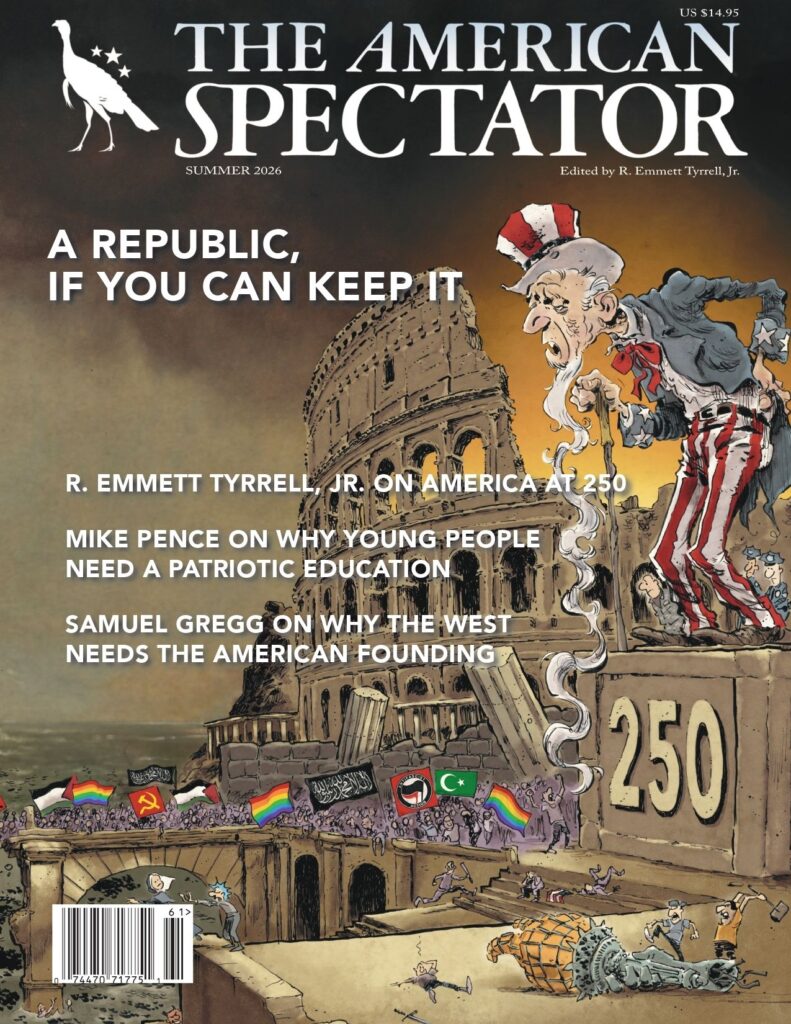
Subscribe to The American Spectator to receive our summer 2026 print magazine.
The rebels achieved victory on New Year’s Eve 1958, and Batista then fled Havana. Castro rode a jeep into the city through jubilant street crowds. If only the people in the crowd could have foreseen the forlorn faces of their children and grandchildren on the same street generations later. They might have wept instead.
Dad had some misgivings about his old friend, but Batista was a corrupt ruthless dictator, and anything would be better than that — except of course a communist. And Fidel was no communist — or so he kept saying. “I am not a Communist,” Castro told Meet the Press in April 1959. “I am not agreed with Communist[s].”
However, that Che guy with him gave my father the creeps. He was an open Marxist and, rumor had it, a vicious killer. Surely, Fidel would sideline him now that they’d won the revolution, Dad hoped. Fidel did the opposite. He made Che Guevara commandant of La Cabaña prison in Havana. And the sound of firing squad riflery soon drowned out guitars in the capital.
“All executions at La Cabaña are carried out under my express orders,” Che said on Cuban television. He added a couple of Guevarist mottos: “Evidence is secondary” and “If in doubt, kill him.”
Eventually, my father had little choice but to use his column in La Prensa Libre (The Free Press) to question his old friend. He began diplomatically seeking to nudge Fidel in the right direction. He argued for open debate, a clear agenda, and no more ruling by decree. When his entreaties went unheeded, Dad hardened the criticism, most significantly in his column “La Hora de la Unanimidad” (Time for Unanimity).
“Freedom of expression must extend to everyone,” Dad wrote. “And cannot be the prerogative or gift of anyone.” He added, “The method is old, its results are well known. Behold, the hour of unanimity is arriving in Cuba: the solid and impenetrable totalitarian unanimity.”
Read more From Truman to Trump: Why Election Polls Keep Getting It Wrong
Dad’s piece caused something of an uproar. Fidel finally responded to his missives — by shutting down La Prensa Libre and every other independent newspaper. He didn’t single out my father by name — I suppose out of old friendship — but the regime-friendly Committee of Revolutionary Freedom did, by calling for Dad’s execution. And the cry echoed on the streets, “¡Al paredón!” (“To the wall!”) It was a good time to leave Cuba, and we did.
So did Mom’s extended family, including her two uncles, Abel and Guar Mestre, who’d controlled the pharmaceutical and broadcast industries in Cuba. They knew capitalism wasn’t long for the island, or tycoons for this world. Mom’s father, Luis Augusto, had died of a heart attack, so there was no investment in America.
To our parents’ credit, my brother and I barely noticed the economic dive the family had taken, such as going from a mansion near Havana to a little Mackle house in Miami. We didn’t learn English so much as absorb it, and in one year we spoke it better than Spanish. This opened up a wonderful new universe for me of literature and screen fare that shaped my life. Today, you can live your whole life in Miami or elsewhere in the country and speak no English, but not back then.
My parents had plenty of good boisterous company in the early sixties — the whole first-wave exile community. So we kids still went to sleep to Prado and Celia Cruz, with some new additions like the Twist. The visitors weren’t welfare-seeking, crime-committing immigrants. They were the best-educated, most ambitious, most Catholic, most family-centric people ever to come en masse to America — and the first nail in the coffin of la Revolución.
A quarter million had arrived by 1962 — doctors, lawyers, architects, bankers, bakers, entrepreneurs. They took any job available, then created even more — restaurants, shops, hotels, clinics — and transformed sleepy Miami into a boom town. By the 1980s, Cubans owned a disproportionately large share of its small to medium businesses and were leaders in U.S. megacorporations like PepsiCo (Nestor Carbonell, vice president), Coca-Cola (Roberto Goizueta, chairman of the board), and Analog (Modesto Maidique, CEO). None of these men ever heard of DEI.
Meanwhile, in Cuba, Castro shirked America and went full commie. He spurned the country that had helped enrich his island and embraced the Soviet Union. “I am a Marxist-Leninist,” Fidel finally proclaimed. “And shall be one until the end of my life.” And the American left loved it and celebrated him. Although no Democrat did. They were still patriots back then.
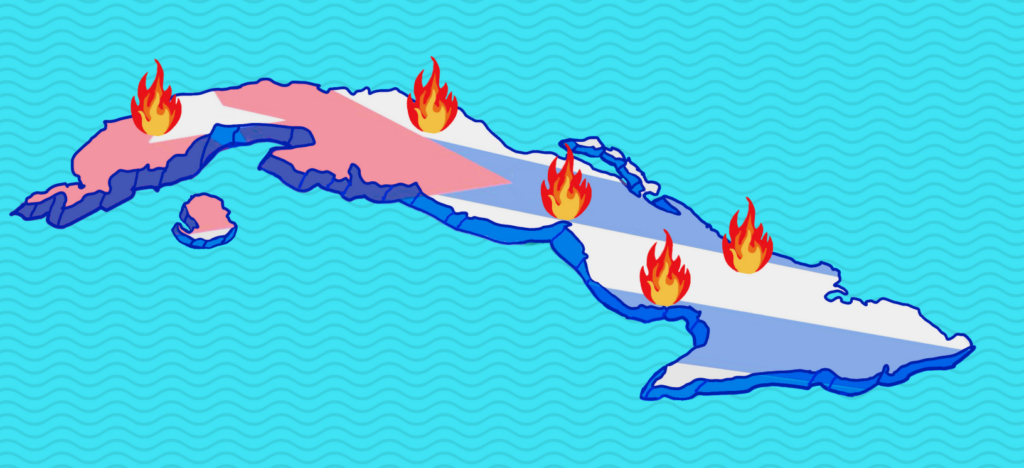
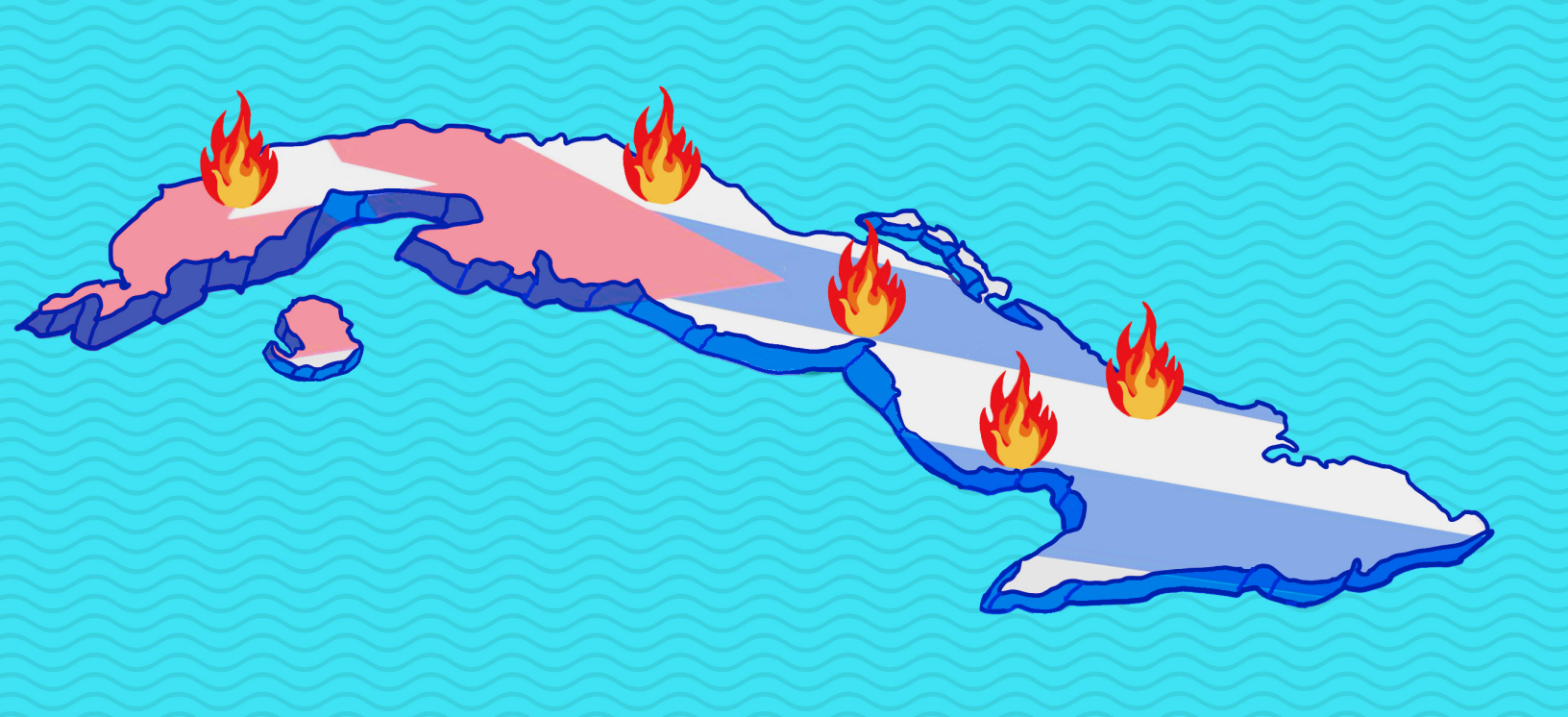
Art by Bill Wilson for The American Spectator
As a little kid, I was ignorant of the geopolitical forces swirling around my birthplace, until they intruded into my new world. I learned about the Cold War the hard way, on October 22, 1962. It was unusually quiet at our house that evening, despite a bunch of Cubans in the living room. They weren’t drinking, chatting, or listening to music but somberly glued to the TV set.
I recognized the handsome man on the screen as the president of the United States, looking just as grim as the audience around me. And when he spoke, I understood enough to feel fright: “It shall be the policy of this nation to regard any nuclear missile launched from Cuba against any nation in the Western Hemisphere as an attack by the Soviet Union on the United States, requiring a full retaliatory response upon the Soviet Union.”
The Cuban Missile Crisis ended six days later. But from then on, I knew who the bad guys were, if not that I’d be fighting them my whole adult life — at least their lies and ideas. Fidel Castro embodied them, and the dreams of the left. But they were Dad’s problem, not yet mine. And he did his part.
For thirty years as a Georgetown University professor of Latin American Affairs, my father was a thorn in his former buddy’s side. He wrote articles and books slamming Fidel. He faced down angry Castro-worshipping students in the volatile late sixties, dismissing their beloved Che as a homicidal psychopath. He appeared on almost every network news and talk show blasting Castro’s follies, such as his military incursions into Africa, where at least 2,000 Cuban troops died for nothing. He inspired one of his students, Bill Clinton, so much that the president invited him to a major White House dinner and showered him with praise.
Castro outlived my father — long enough to witness his precious Soviet Union collapse like a house of cards, then have to beg his mini-me Hugo Chavez for help. And he lived just long enough to see the ultimate threat to his power and legacy get elected president.
“All of the concessions that Barack Obama has granted the Castro regime were done with executive order, which means the next president can reverse them,” Donald Trump said shortly before Election Day. “And that is what I will do unless the Castro regime meets our demands. Those demands will include religious and political freedom for the Cuban people, and the freeing of political prisoners.”
Castro did not hear President Trump’s latest announcements about Cuba — unless they were reported in hell. But his brother Raúl did. He learned that U.S. troops snatched Chavez’s successor and acolyte, Nicolás Maduro, from a fortress, killing thirty-two Cuban security men in the process. He can see the oil once destined for Cuba now flowing into America. Castro, too, can parse the words of the Cuban American U.S. secretary of state: “[T]hey’re in a lot of trouble.” And he can ponder Trump’s three words from March: “Cuba is next.”
Read more The Questions We Must Ask About Islam
Subscribe to The American Spectator to receive our summer 2026 print magazine.
About the Author