Welcome back to the world of Mike Holman.
If this is your first stop, here’s what you need to know: Mike Holman is the independent journalist, podcaster, and inveterate maker-of-enemies at the center of Scott McKay’s bitingly satirical thriller series — four novels (so far) chronicling one man’s habit of ending up in the middle of the very stories the rest of the media is too scared, too compromised, or too incurious to tell. Catch up on the whole series, read past episodes, and find links to every book at “The Mike Holman Novels at The American Spectator,” and soon, see the video-novel version of this and the previous books at MikeHolman.com.
Read more Disembodied Autonomy
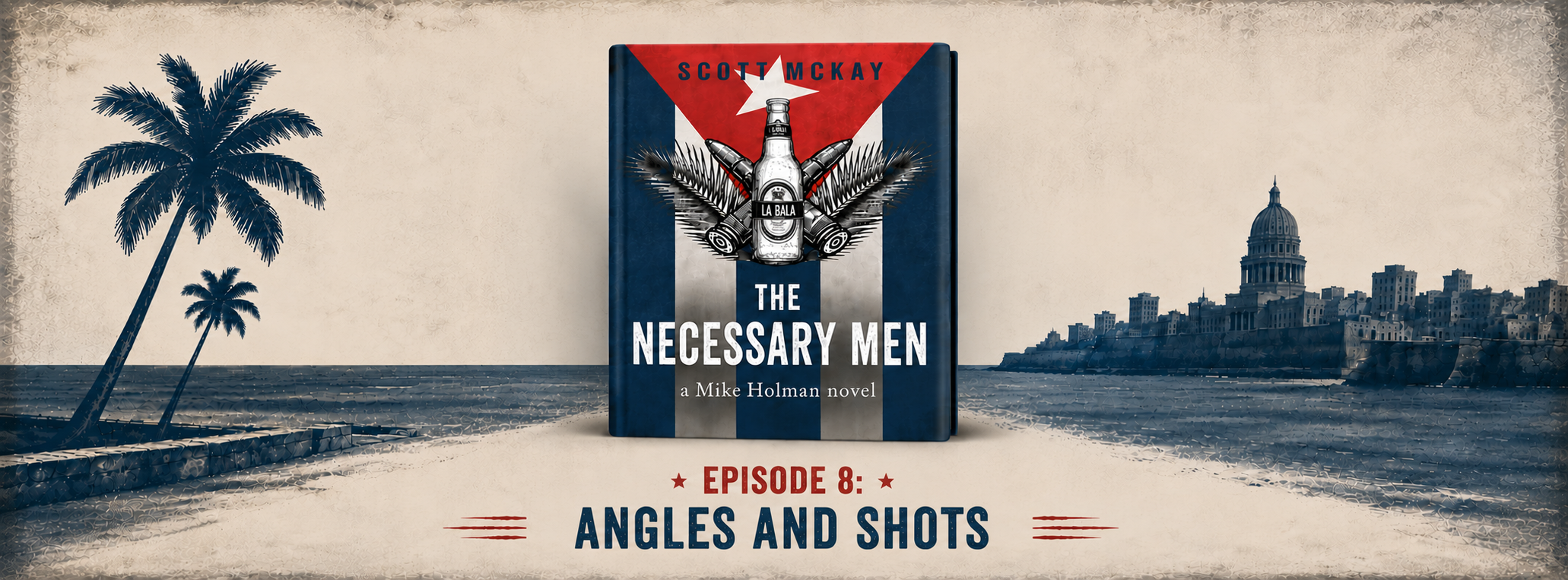
We’re now serializing the fourth Mike Holman novel, The Necessary Men, right here at The American Spectator — new episodes dropping every Wednesday and Saturday. The full book goes on sale September 26th at Amazon and the new MikeHolman.com site, and you can pre-order a signed copy right now.
Where we left off: As the Cuban regime teeters and the TODO Corporation begins expanding its impact, investors begin considering their next moves, and so do the tyrants in Havana.
Here are Chapters Fifteen and Sixteen of The Necessary Men.
Chapter Fifteen
Nueva Gerona, Isla de la Juventud, Cuba — September 18, 2026
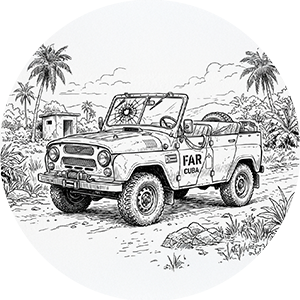
Cabrillo arrived by speedboat at the dock in town just before dusk, and he was met at the wharf by a lieutenant in an old Soviet jeep.
The lieutenant was known to Cabrillo.
“How goes your wife, Eusebio?” Cabrillo asked him.
“She survives,” said the lieutenant. “Though this is not the time for diabetes in Cuba.”
“This is quite true,” said Cabrillo, as he deposited his briefcase in the back and climbed in the passenger seat. “You have my prayers. Where is the meeting with the major?”
“At the Presidio Modelo,” said Eusebio, throwing the jeep in drive and heading south to the Calle 32 bridge over the Arroyo Ocuje. “We will be there in just a few minutes.”
“The Presidio Modelo? Where Fidel was imprisoned? This is a bit dramatic, no?”
“He thought you would enjoy the symbolism. The prison is now a museum, as it appears the Republic has become.”
“This kind of defeatism, Eusebio! I am surprised at you!”
“These are not the days of Fidel, or of Chavismo,” said the lieutenant. “We are no longer ascendant. The power on the island is on just six hours a day. The Isle of Youth had the most reliable power in the Republic. Now our food spoils and we sweat in our sleep.”
“Better times are ahead,” said Cabrillo.
“So you say,” said the lieutenant. “I hope you are right.”
Just as Eusebio took the left turn to go over the bridge, a rock hit the hood of the jeep and bounced into the windshield, cracking it. Cabrillo turned to watch two young men running and ducking into the trees. Eusebio let out a string of curses and hit the gas as the jeep hurtled over the bridge.
“What was that?” asked Cabrillo, his heart descending from his throat.
“That was the voice of the people,” said the lieutenant. “This island is near to a revolt. The townsfolk took a vote yesterday to issue a formal request that TODO set up shop here.”
“They can’t. Isla de la Juventud is administered directly by Havana.”
“Manuel, they don’t care. They know what the people have in La Coloma, and they want it. This is why the major wants your help.”
“Ay dios mio,” Cabrillo muttered as the jeep navigated the pockmarked road to the Presidio Modelo.
In Fidel’s glory days, some 20,000 communist warriors had been trained at a camp south of town to spread the revolution across Latin America. Now the revolution was having rocks thrown at it by the people of the Isle of Youth.
“Colonel Cabrillo,” said Major Espero Schoffner, the man in charge of the small garrison on the Isle of Youth. “It is very good to see you, though I am surprised that you came all this way.”
“Nonsense, Espero,” said Cabrillo. “It is good to see an old friend. It has been some time since Maracaibo, sí?”
“Sí,” said Schoffner. “Please, come and sit down.”
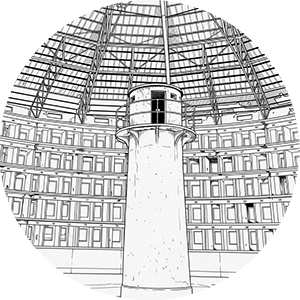
Schoffner led Cabrillo to a card table set up in one of the four main prison buildings, under the observation tower. The Presidio Modelo was set up in a panopticon design; the cells were open for viewing by the guards in the tower placed in the middle, giving the guards a 360-degree view into each cell.
But there were no cells anymore. The concrete shells of the cells remained, but the metal for the bars had long since been stripped away after the Castros closed the prison and turned it into a monument in 1967.
The Presidio Modelo was itself a hollow shell. As was the regime, Cabrillo thought.
“So,” he said to Schoffner as the two sat down. “As we were driving from the dock to the bridge, two punks threw a rock at the jeep. It hit the hood and caromed into the windshield. Eusebio worried he would be fined for the damage.”
“Eusebio doesn’t get paid enough to fine him,” said Schoffner. “And the locals would do worse if they could. Things are not satisfactory, Manuel. I suppose Eusebio told you about the TODO vote?”
“How does this happen? They just held a meeting? No one stopped them?”
“The townsfolk met at the baseball diamond at El Palmar. Initially, it was thought this was to be a youth sports event. Instead, it was an unlawful public assembly. By the time we got there, it had broken up, but the vote had been taken, and the demand was in the air. That’s when I called you.”
“And you want me to bring TODO to Nueva Gerona,” said Cabrillo.
“It’s in 20 other places,” said Schoffner.
“Twenty-five, actually. Unfortunately, I can’t do this. I have been sidelined. TODO is now Diego Maceo’s, along with his American friends.”
“Well, can you connect me with them?”
“Would you give up Cuban sovereignty so easily, Espero?”
“Sovereignty is a very large word,” said Schoffner. “The lives of the people here revolve around smaller words, like electricity, running water, food, jobs. Without those things, sovereignty means much less to the people. They know exactly what TODO means, and they want it anyway.”
“What if I could offer something similar to TODO but still within the revolution? What if we created state capitalism with a Cuban face?”
Schoffner looked around wistfully.
“You know, in 1955 Fidel and Raul were prisoners here,” he said. “Because the Presidio Modelo was overcrowded, they were housed in the hospital wing, where conditions were more humane. The Castros were not violent criminals like the other inmates.”
“Yes,” said Cabrillo. “I knew this.”
“The political prisoners in the hospital wing turned the Presidio Modelo into a finishing school for the revolution. Fidel wrote in a letter the words…”
“What a fantastic school this prison is!” Cabrillo finished Schoffner’s sentence. “From here I’m able to finish forging my vision of the world…”
“From here we cannot see Fidel’s vision,” said Schoffner. “The people on this island want to be Salvadorans or Argentines. They want nothing further of the revolution. My men don’t go into town in uniform anymore.”
“You still control the airport.”
“And the ferry terminal, on the one day a week the ferry runs from La Coloma.”
“Something better is coming,” said Cabrillo. “But I want your word that you will deliver la isla de la Juventud when I have it in hand to show you.”
“If it is not TODO, then…” Schoffner stopped himself.
Cabrillo just stared at him.
“Then this is…” Schoffner stopped again.
“I have meetings scheduled. But I must be able to claim alliances.”
“Which cities are pledged to the cause?”
“I will not say as yet. Only that you are not the first.”
“And your meetings are with… military men?”
“The military holds the key to the future of Cuba. Not negrata ballplayers or American running-dog capitalists.”
“I should like to hear more. But for me to help my men will need weapons, vehicles, cash. What you would ask, I would have to order. And I will not do so without the resources to control this island.”
Cabrillo scowled. This meeting should have gone considerably more smoothly.
Espero Schoffner had idolized Manuel Cabrillo. But for Schoffner’s loyalty, he would have never made such a long trip to such an insignificant place. Cabrillo needed allies for what he had planned, and while Schoffner wasn’t first on the list, he wasn’t far from the top.
He couldn’t afford to hear a “no” from Schoffner.
So he determined to do what was necessary to hear a “yes.”
“As I said, I have meetings scheduled,” he said, a brighter tone to his voice. “Be of good cheer. We are the ones we’ve been waiting for.”
“TODO would be easier, Colonel Cabrillo.”
“Those things which are easy are easy for a reason. They are usually not worth what little effort they require. Would you have our people become fat and decadent like the Americans?”
Schoffner made no response other than a sigh.
“I will deliver your resources,” said Cabrillo.
That elicited a nod from the major.
“Will you stay for dinner?” he asked.
“No,” said Cabrillo. “I apologize, but I am in and out on this trip. I have to be back to Havana in the morning.”
“A grueling amount of travel. Where do you get the fuel?”
“Alliances, Espero,” Cabrillo said with a smile, holding out his hand.
Schoffner shook it.
“I welcome further news of your exploits,” he said.
Three hours later, Cabrillo docked the speedboat at the brightly-lit pier at La Coloma. A large TODO sign in blue neon was visible above the shipyard. Cabrillo climbed out of the boat as the shipyard attendant climbed on to pilot it to its space in the boathouse east of downtown, and he hustled to the curb next to the wharf.
Lido was waiting for him in the Mercedes SUV. Cabrillo climbed into the back seat and immediately smelled something greasy.
“What is that?” he asked.
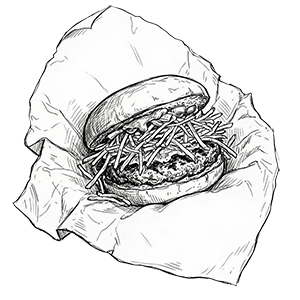
“Frita,” Lido said, not taking his eyes off the road as he pulled away from the dock. “From that place by the shipyard. I figured you hadn’t eaten.”
Cabrillo opened the paper bag and made a face. The bun was already going soft from the grease. The patty looked dry around the edges, and the shoestring fries on top had gone limp. He picked it up anyway and took a bite, then immediately regretted it.
“This tastes like shit,” he said, chewing with obvious distaste.
“Sorry, boss,” Lido said. “It was the best thing open this late. Even in La Coloma, after nine o’clock the options are limited.”
Cabrillo took another bite and scowled. “This is what TODO has done for the food here? Even the fritas are terrible now?”
“They’re better than they were six months ago,” Lido offered. “At least there’s meat in it.”
“Barely.” Cabrillo wrapped the rest of the sandwich and dropped it back in the bag. “This is an insult to the name of a frita. I’ve had better ones in the jungle.”
“You want me to throw it out the window?” Lido said.
“No,” Cabrillo muttered. “Leave it. Maybe it will improve with age.”
Lido shrugged and looked at him from the rear-view mirror.
“How did it go at Nueva Gerona?” he asked, a few moments later.
“Well enough,” said Cabrillo. “Drive fast. If we get to Havana by midnight, I’ll be ecstatic. Big day tomorrow.”
Lido nodded and rocketed the Mercedes onto the road. It was empty. Even in a suddenly prosperous TODO town like La Coloma, few people had cars in Cuba.
“When will you see Candela, boss?” said Lido.
“In the morning. Why?”
“Because the crisis is growing and the moment is passing.”
Lido explained that across Cuba, things were turning. Especially in the TODO towns.
The TODO app had a citizen participation feature which had just debuted, and it was being used for lots of subversive purposes. In Moa, people with the TODO app had voted to create a citizens’ police force that they funded with a tax on TODO transactions. Half the city’s police force had defected to the new organization; the local police commander was powerless to stop it.
In Gibara, someone had defaced the mural of Fidel saying that “The achievements of our times and the hope of all times depends on us.” Spray-painted over that was a line from a Shelley poem: “Look upon my works, ye mighty, and despair.”
In Cayo Cruz, which was a TODO resort town on a barrier island off the north coast of Cuba, the locals had dynamited the bridge to the mainland, declared themselves an independent city-state, and proclaimed a trade alliance with Exuma.
In the non-TODO towns, things were worse. Pots and pans were banging together all over the country as marchers yelled “Danos todo!”
Or maybe it was “Danos TODO!”
The marchers were demanding either everything or The Everything Company.
“It’s coming apart,” Lido said after recounting the news. “And the eastern side of the country is… gone.”
“You’re talking about Maceo.”
“He’s begun touring the east in a bus convoy. People are coming out by the thousands to line the roads. Massive crowds have come out. The Army was setting up roadblocks to stop it initially, but those have gone away.”
That, Cabrillo knew. The day before, he had called Mendoza, the general in charge of the Ejercito Oriental in Holguín, and received no answer.
“If Mendoza has flipped to Maceo,” Cabrillo said, “then time is growing short indeed.”
“Candela can’t hold this, can he?” Lido asked.
“Candela is not the answer to a question worth asking,” Cabrillo sighed. “Who is this man, after all? He is not the revolution. He isn’t a revolutionary. He’s a bureaucrat. He rose because he was the most adept ass-kisser in Raul’s stable. Yes, he’s a brutal hijo de puta, but does that keep the lights on or food on the table? No.”
Lido didn’t say anything. He just eyed Cabrillo from the rear-view mirror as he drove.
“Think about it, Lido. I went from selling him on giving up the submarine base at Cienfuegos to our Colombian friends to selling him the Chinese investment, which turned out not to be Chinese. And now chaos reigns in two dozen cities the regime does not control.”
“But that was your influence, jefe.”
“That’s right, it was. And why is he listening to me? You know why. He fears me. And he should. The American, Jack Gray, whom he arrested…”
“Gray Jackson. Of Fredericton, New Brunswick, Canada,” Lido said sarcastically.
“Gray Jackson. A CIA spy and electronics specialist. Candela let him into the country on the thinnest of disguises, and now who knows what horrors he’s already inflicted on Cuba.”
“Because you vouched for him.”
“It’s not my place to vet the employees of LCTC, Lido. That’s for Candela’s people to do. And they let Mike Holman, the journalist, into the country and made him the Prince of Gibara. That didn’t make a fool out of me. Candela’s the one.”
“As you say, jefe.”
“You’re not convinced. Remember, it’s Mike Holman and Pierce Polk, los Americanos, who are paying us. We are not the ones making mistakes here. We are the ones seeing the angles and setting up the next shots.”
Lido nodded.
“Candela’s not stupid in the way that makes him incompetent at everything,” Cabrillo said. “He survived in Havana politics for years, and this requires a certain animal cunning. But Candela is a poor leader. He mistakes stubbornness for strength and confuses loyalty to the revolution’s aesthetics with actual governing ability. He believes what he wants to believe, and that is why I can move him in the direction I wish.”
“If he is so different from the Castros, then why is he in control?” Lido asked.
“He is not in control.”
“Fair enough.”
“But to answer your question, there is a long tradition of this in Cuban political history. Fidel is the spirit of the revolution, but even I must admit that the regime has survived for decades partly by telling ourselves stories about imminent rescue that has never come. First it was Soviet support. Then it was Venezuelan oil, bought by the sweat and toil of those of us in the military and intelligence who lived and worked there to prop up Chavez and Madeira. Then it was Putin. And the Chinese.
“Every generation of Cuban leadership from Fidel on down has been waiting for the cavalry that would let them stop having to actually govern.”
“So your plan is to sell Candela a new version of that same story.”
“Our plan, Lido.”
“Yes, jefe. Our plan.”
“It’s already worked once. And that time it was a lie. This time it might actually be true.”
“I’m with you, jefe.”
“Good boy, Lido.”
Cabrillo stretched out in the back seat of the SUV. It would be a late-night ride into Havana, and he had little time available for sleep – especially with the phone call to Beijing he’d be making long before sunrise in advance of his meeting with Candela in the morning.
Cabrillo’s phone call was at three in the morning, and it went reasonably well, he thought.
But he was scheduled to meet Candela at nine. At six, Cabrillo got a call summoning him to the presidential palace at seven. That meant he was driving himself in the Mercedes – something he would normally not have cared about, but making a show of having a driver when arriving to see Candela was more the image he wanted to present.
It turned out that Cabrillo wasn’t going to be in control of his image that morning. Not at any level he would have been comfortable with.
“You fucking cabron!” Candela shouted at him when he was shown in to see the president. “I should never have listened to you! You’ve bent me over and had your way with me, haven’t you?”
“I must protest,” said Cabrillo. “I have no idea what you’re talking about.”
“The fucking internet!” Candela screamed. “It’s your company, isn’t it? You don’t even know what they’re doing!”
“You know that it isn’t my company anymore,” said Cabrillo. “Peter Chang betrayed me as well as you.”
“Oh, and you’re blameless. Of course!”
“What is this about the internet, Señor Presidente? I hadn’t even had my coffee this morning, and I was on the road until all hours last night, so I’m at a loss…”
“TODO turned on the fucking internet at midnight last night. It’s wide open. Wi-fi connections on every block of every town they control.”
“Just jam the signal. It isn’t…”
“No,” Candela said. “They tell me it doesn’t work that way. They have a satellite downlink, and it broadcasts to wi-fi nodes set up everywhere in these towns. Taking it down can’t be done without physically doing it street by street.”
Cabrillo rubbed his eyes.
This was a problem.
Candela was ranting. He said that all over Cuba, in the TODO towns, people were calling relatives in the diaspora and having open, unmonitored conversations. Speaking freely.
“They’re singing Manolo Pendejo!” he said. “Do you think that’s funny?”
“I don’t, jefe.”
“This is catastrophic. The roads are jammed with people trying to get to the TODO towns so they can make calls, upload videos, surf the internet. We are wide open. No control. Now you tell me what to do about this now that you have fucked me with a gorilla dick.”
“I’ll tell you what you do about this. Arrest Diego Maceo. Hold him, negotiate with Pierce Polk and Mike Holman that when they turn off their internet, Maceo will be released and put on a plane back to Miami. Then nationalize everything TODO has built.”
“That is a wonderful dream,” said Candela. “I would love to do that. You know as well as I do that if I tried, I would be hung from a light pole on the Malecón.”
“Aquí mandan los cojones,” Cabrillo said with a shrug.
“Oh, don’t you fucking dare say that to me!” Candela screamed. “If you were in my position, you would do no such thing. This is not about cojones; it’s about strategy.”
“Fine,” said Cabrillo. “Take this Jack Gray, this CIA spy who caused this problem, and put him against a wall. Today. Before noon.”
“Are you mad, Cabrillo?”
“No,” said Cabrillo, an idea germinating rapidly in his head. “What has Gray confessed to?”
“Nothing.”
“Naturally. Well, I’ll tell you what he did and why the internet is turned on in the TODO towns. Streetlights.”
“What does that mean?”
“They installed solar-powered streetlights in all those towns. The batteries on those streetlights are abnormally large. Why? Because the battery rigs double as wi-fi relays.”
“Ay dios mio,” Candela groaned. “And no one knew anything. Even you, Manuel. How do you know this now but not before?”
“It wasn’t included in the corporate literature, jefe. But I have been to every TODO town, and I have seen the streetlights. It’s the only thing that makes sense, and it explains the perfect wi-fi coverage. And you cannot take those streetlights down. Ay caramba, these Americans are cunning.”
“If I send the Army after streetlights, I will be seen as a fool, Manuel.”
“No, you cannot do it. Block the roads leading into the TODO towns. Let no one in or out.”
“What if the Army will not follow that order? Ejército Oriental is now incommunicado. We don’t know if they are with us or with TODO. And what of Maceo? He’s touring the East? What are his intentions?”
“I already told you what to do to Maceo, jefe.”
“Cabrillo, I cannot arrest him. Not when the arrest will be filmed and livestreamed to the world over the internet.”
“This was Jack Gray’s doing. Put him against the wall and shoot him. Now.”
“I already have the Canadians and the Mexicans and the Spanish telling me to let Gray go.”
“Which is the last thing you can do. Manolo, you have to show that your regime still has teeth. Gray has already served his purpose for los Americanos. Now he can serve our purpose. Shoot him and deliver his casket to the Canadian embassy. He claimed to be Canadian, correct? Deposit the body with them and let them explain how they were used.”
He could see Candela softening. The president was considering Cabrillo’s advice. He didn’t think the man would actually take the idea of executing Gray seriously, but then again, Manolo Candela was nothing if not brutal.
“If I shoot this man Gray, it will bring the U.S. Marines. The Americans invaded Cuba over a boiler explosion on a ship moored in the harbor, Manuel. Would they not invade over a CIA man’s execution?”
“You tell me, Señor Presidente. Do you not have their politicians in your pocket?”
“I have some, yes.”
“Will those politicians not create trouble if Trumbull moves against us?”
“Yes, and with their elections coming up in November…”
“Executing Gray and Trumbull, doing nothing, will show the Americans as weak. Their media has been touting an invasion of Cuba since the spring, and it has not come.”
“It did come! It came under the guise of a Chinese from San Francisco, that mentiroso Chang and Pierce Polk.”
“And the antidote, Señor Presidente, is to bring the real Chinese. Which I can do. And with real Chinese backing you can take back Cuba, complete with all of the improvements that Pierce Polk made.”
“I don’t need you for the Chinese, Cabrillo. I can make that call myself.”
“And if you make it, you will get a polite declaration of their policy of non-intervention.”
“That policy is bullshit, Cabrillo.”
“Yes, it is. But that’s why this must be negotiated unofficially. Which is why you need me.”
“And you think if I execute this man Gray, the Chinese will come.”
“By executing him, you will prove that you have the cojones to rule. This is what the Chinese respect. They didn’t roll over and die like the Russians, you know. In Tiananmen Square, they brought the tanks. Execute Gray, and they will realize you are cut from the same cloth.”
Candela paused.
And then he began nodding. First subtly, then demonstrably.
“It will be as you say,” he said. “But you had better be right about the Chinese.”
By noon, “Gray Jackson” was dead.
By sundown, his body had been delivered to the Canadian embassy in Havana.
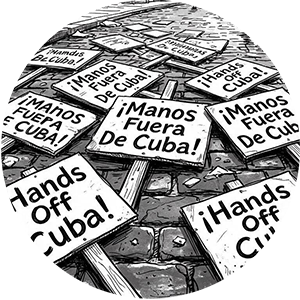
That night, several hundred protesters holding printed signs which read “Hands Off Cuba!” on one side and “¡Manos fuera de Cuba!” on the other descended on the U.S. embassy in Havana.
But shortly thereafter, several thousand people surrounded the protesters. A street melee began which turned into a rout, and before the police and Army could be summoned from their beds to break up the riot, the pro-regime protesters had scattered, littering the streets around the embassy with their signs.
And when one young woman who had filmed everything from a rooftop across Avenue Calzada from the embassy made her way to Bahia Honda late that night, stood under a street light, and uploaded the footage to Instagram, the images of the “Hands Off Cuba!” signs dropped in the streets went viral all over the world.
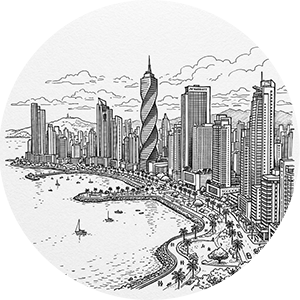
The Chinese safe house wasn’t actually a house. It was a penthouse apartment in a skyscraper on the Punta Pacifica in Panama City, and it was ostentatious on an obnoxious scale.
Cabrillo expected no less of his Chinese contact. He knew the man only as Xing, but Cabrillo had his measure far beyond names.
Xing had been the Chinese operative – military, intelligence, something – who had embedded with Cabrillo’s unit in advance of the Venezuelan invasion of Guyana. When that had gone wrong, Xing had vanished into the ether. But he had sent Cabrillo occasional messages, telling him “keep me apprised of what you’re doing; if there’s an opportunity to work together, let me know and maybe I’ll put it up the line.”
Xing knew Cabrillo was working with the cartels. He was interested in that aspect of Cabrillo’s work. But he’d never responded when Cabrillo messaged him about LCTC.
And after the meeting between the two began, Cabrillo asked him about that.
“That was a sticky situation,” said Xing. “LCTC was… off the books. Simon Lim took that thing on as a personal project, and it wasn’t sanctioned by the bosses.”
“Then why didn’t you warn me off?”
“Because we didn’t know what was going on. We had no reason to think Lim was a traitor. Not after what he’d done for the People’s Republic all those years.”
“So you hung me out to dry and just executed him.”
“You certainly don’t have a problem with executions, Cabrillo. You think it’s a secret to anybody what you did to that American in Havana?”
Cabrillo chuckled.
Xing was an asshole. But he did have his amusing moments.
“You told Candela that killing the American would make him look like a boss. You didn’t mean that, did you?”
“Of course not. It was bait; he took it, and now we’re sitting here.”
“What do you want?”
“I want to be the next leader of Cuba. I have a chunk of the military backing me, and if your government will agree to support my move, I’ll run a coup and have the country under control in two weeks.”
“That would mean a lot of blood,” said Xing.
“You certainly don’t have a problem with blood, Xing.”
Now it was Xing’s turn to chuckle.
“What’s this going to cost?” was his response instead.
“I don’t really need cash. My Mexican and Colombian friends can supply that. What I need more than that are weapons and ammunition. And I know you have stashes of those all over the Caribbean. And elsewhere in North America.”
Xing laughed. “How would you know this?” he said.
“Because I’m not stupid, Xing. I was in Venezuela for 20 years. You don’t think I saw the rat lines your people established? You probably have enough hardware here in Panama to take out every dissident in Cuba.”
Xing shrugged.
“And you think the Americans will just let you walk right in and take Cuba. After everything.”
“Trumbull can’t do a thing. He’s tied up with Iran. He subcontracted Cuba to Pierce Polk, and they think they can just stage a color revolution in Cuba with no blood spilled. When the voters in America find out that’s a debacle, it’ll destroy Trumbull and our friends will take the Congress. That will destroy his presidency. And then when our friends succeed him in two years, I’ll welcome the new American president with open arms. We’ll have friendly relations with America, and lots of trade with them…”
“You mean more trade like you’re having with them now,” Xing said.
“For certain. You should come and see the submarine factory at Cienfuegos. It’s a marvel of Cuban manufacturing.”
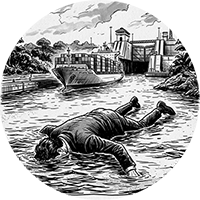
“It would play well with Beijing to hand Polk a dose of humiliation,” said Xing. “After Guyana, then Venezuela, then the Panama Canal, then Dragon Harvest and now LCTC… if it was possible, they would want him floating like Lim.”
“You can’t get to Polk.”
“No. Beating him in Cuba, though, is… something.”
“So do we have a deal?”
“Maybe,” said Xing. “No guarantees. But I’ll take it to my people.”
“We’re going to have to move fast if we want this to happen, though,” said Cabrillo. “That negrata ballplayer touring the East… when his aspirations turn political, if they do, the window may close.”
“All right,” said Xing. “Well, I’m for the Jacuzzi. I trust you can show yourself out.”
“Jinga tu madre, Xing,” Cabrillo said, chuckling as he stood.
He had a room waiting at Le Méridien Panama, and he had arranged companionship of a far more delightful sort than Xing would offer. And he was looking forward to that reward, even if it was a bit premature.
The wheels had begun spinning in a slightly different way. Cabrillo could feel them. And he silently congratulated himself on an expertly played strategy as he rode the elevator to the ground floor of the condominium overlooking the Pacific Ocean.
“El Presidente Cabrillo,” he said to himself as he climbed into the limousine. “Maceo. Marti. Castro. Cabrillo. Héroe de la Revolución.”
His statue in Havana would be glorious. It would be bronze, and taller than the Statue of the Republic inside El Capitolio.
Or perhaps taller than El Capitolio itself. After all, it would be Cabrillo who would preserve Cuban independence against los Yanquis.
“So that’s the news, gentlemen,” Roman Jefferson said on the Zoom.
Roman was in Panama City. He’d been tracking Cabrillo with geolocation from his phone, and that had placed him with Candela on the morning Jack Gray was murdered by the regime. When Cabrillo boarded that plane for Panama City, Roman had beaten him there by flying on Pierce’s Gulfstream from Liberty Point.
And that penthouse the Chinese thought they’d secured was anything but a safe house. Sentinel Security had penetrated it months earlier. Liberty Point had listened to the entire conversation between Cabrillo and Xing in real time.
“That greasy sonofabitch,” said Pierce from the command center. “Dirty motherfucker. He’s gonna run a military coup with Chinese arms and kill…”
“Thousands,” I said, from my kitchen in Jupiter.
“It’ll be like Tiananmen Square all over Cuba,” said Hal, from Ragged Island.
“That would be a disaster of…” Pierce started to say.
“Let’s just cut through the shit,” said Roman. “Y’all know what’s gotta happen now, right?”
Read more In China You Go to Prison for ‘Slandering’ History’s Greatest Killer
Nobody had anything to say to that. The room went quiet.
Chapter Sixteen
Jupiter, Florida, October 4, 2026
Danny Fuentes was 16 years old. He was a junior at Dr. Phillips High School in Orlando, Florida.
Nothing about Danny or his family was exceptional or unusual, at least from outward appearances. Danny’s dad, a second-generation immigrant from Honduras, was an electrician. His mom, a legal secretary, had immigrated from Cuba in a tiny boat when she was only two years old.
So nobody really believed that Danny was the one who took down Cuba’s entire telecommunications system with a retrofitted derivative of the Stuxnet virus two days after the Candela regime murdered Jack Gray. But he was.
ETECSA, the state-owned corporation which controlled everything having to do with phones and the internet – at least before TODO showed up in Cuba – rode on a Chinese-built tech infrastructure. It was really more of a surveillance company that also had a phone system than anything else. And because it was so focused on internal security, ETECSA’s external protections were pretty soft.
Danny was a reasonably decent high school tennis player, but his real passion was that he could hack just about anything from the comfort of his bedroom. He proved that when he knocked out the Cuban regime’s telecommunications.
And when he did, he called Colby Igboizwe at Holman Media and left him a voicemail.
“Yeah, ummm, hi,” the message said. “If you can call me back, I think I might have a story for you.”
It turned out that Colby wasn’t his first call. Danny had also called the Orlando Sentinel, Vox, CNN, and Wired, but nobody gave him the time of day.
Colby was just the first one to answer, and while Candela was screeching about the evil deeds of Pierce Polk and Mike Holman, from a press conference in Havana with Dolores Gramsci-Ramos and Naomi Yanko-Munsch flanking him, all three blaming Pierce and me for robbing the Cuban people of their connectivity, there was Danny Fuentes on Colby’s podcast explaining exactly how he managed the hack.
“So, are you a fan of Pierce Polk and PGFI?” asked Colby. “Are you an activist of any kind?”
“Naw,” said Danny. “I mean, not really. I’m actually more of a reggaeton fan, though. The Manolo Pendejo song… I can’t get that beat out of my head. And, y’know, I agree with the song, and all, and then they killed that guy for turning on the internet in their country? For real? That’s crazy, bro. So I just, like, did my thing and there you go.”
That interview went extremely viral. There were protesters blocking the street leading into Danny’s neighborhood a day later, holding “Hands Off Cuba!” signs. The Orlando cops got rid of the protesters after some pushing and shoving. A couple of arrests followed, including an illegal-alien Syrian woman in a hijab who found herself deported by the end of the week.
The FBI got involved in the ETECSA hack case, and after a couple of days the special agent in charge of the Orlando office said their investigation confirmed Danny Fuentes had done what he said he’d done. Asked what charges would be filed against him, the special agent deferred the question to the U.S. Attorney.
And the U.S. Attorney said, “That matter is under consideration.”
And Hank Chang offered Danny a job with his app company and wrote a check to cover all of his legal costs. I called Hank and told him he beat me to it.
Back in New York, Gramsci-Ramos called it a “travesty” that Danny Fuentes wasn’t behind bars.
But by then, the Cubans had phone and internet service back online.
Not from ETECSA. From Shining Star, the cellular and web provider that Pierce owned.
Pierce and the Sentinel Telecommunications people rigged up an onboarding protocol which allowed all ETECSA customers to access Shining Star’s satellite phone and internet service through the Conduit app, and in one fell swoop there was pretty universal phone service and the World Wide Web that the regime had no control over.
Candela’s response was to put the country under martial law. And that was… less than successful in its implementation.
We’ll get to that in a second.
Back home in Jupiter, I was amid significant domestic bliss. Little Mike had progressed beyond his first steps and was now spending most of his time in a baby walker that Grandma Mary had bought him. And that kid was pumping his little legs for all the world, roaming all over the house with the three dogs following him.
He hadn’t quite gotten the hang of not bumping into the furniture, though. Little Mike seemed to enjoy crashing into things.
And when he knocked over a TV tray PJ had set up in the living room while she was watching – thankfully – a new series of telenovelas (she said she was addicted and it was totally Essie’s fault), spilling grapes and cottage cheese all over the Persian rug, I suggested that Little Mike’s professional future was coming into focus.
“That kid likes contact,” I said. “He’s gonna make one hell of a linebacker.”
“You’re probably right,” she groused.
Little Mike just laughed. It was hard to get mad at him. The tray was there and it was in his way, so he asked it to move. That was all.
We’d gotten a package from Singapore. It was a large flat wooden crate. I knew instantly what it was.
PJ was in her spinning studio when DHL delivered it. I’d brought it into the utility room and laid it out on the floor, prying open the crate with a crowbar and revealing Simon’s cross. It had been wrapped in bubble wrap and encased in foam to boot, which made a colossal mess when I opened the box.
Inside was an envelope. There was a letter from Simon.
“Mike,” it read…
If you’re getting this, the news is probably both good and bad. I’m assuming that the switch has been flipped and my friends in Beijing didn’t take it well. So, greetings from heaven, I hope.
I’ve known from the beginning how this would end. There was no world in which I could facilitate the ruse we managed to pull off and not pay the ultimate price for it. And I have no illusions but that the regime back home is going to call me a traitor.
So be it. My answer is St. Thomas Aquinas’ answer: “to a tyrant no obedience is owed.”
I never wanted to be one of those dissidents who turns out to be a grifter, giving speeches at foreign colleges badmouthing my country’s government. That was never my style. Instead, I picked my moment, shot my shot, and I accept the consequences.
I’m enclosing three things along with this letter. The first, and it’s the most boring but you’ll find this helpful, is a copy of my will. You’ll find that I’m leaving all of the assets of LCTC, including its bank accounts and other financial properties, to PGFI. There’s about $5.8 billion left of the $10 billion I originally staked it with, so while I know Pierce is funding your operation going forward, this is my continuing contribution to the cause.
Second is the cross. Pierce tells me you have a beautiful house with your backyard facing the water, and that seems to afford you a good opportunity to make this item your own, if that’s what you choose, in the same way I did. I hope that you find it helpful in growing your faith. I’m astounded that you’ve managed to do the things you’ve done without having your Catholicism as a bedrock; I do think your next step might be embracing it more fully.
And I think you ought to.
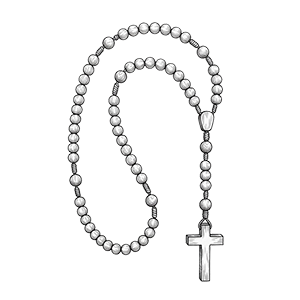
Also enclosed is a set of rosary beads I think you’ll agree will feel heavier than they should. There’s a reason for this.
That rosary belonged to Father Rafael Soto. He was a priest in the town of Sancti Spíritus in central Cuba, which, as you know, is one of our locations. Father Soto was never political, but he became notorious nonetheless. His sin? He refused to stop ministering to people the government considered enemies of the revolution — dissidents, former landowners, families of political prisoners, and anyone who still practiced their faith openly.
People came to him broken by arrests, beatings, or the loss of their homes, and Father Soto told them that their suffering was not invisible to God. The regime called this “harboring counter-revolutionaries” and warned him repeatedly to stop.
He would not.
In 1983, Father Soto was arrested on fabricated charges of “conspiring against the state.” He spent the next four years in prison, much of it in solitary confinement. Even there, he continued to pray the rosary – the very rosary I’m giving you – every day and ministered to other prisoners when he could. Other inmates later said that the sound of his rosary beads clicking was sometimes the only thing that kept them from giving up.
Fidel Castro ordered Father Soto executed by firing squad in 1987.
The official story was that he had been trying to escape. The real reason was that he had become too well-known among the political prisoners and too stubborn to break.
Before his execution, Father Soto gave his rosary to another prisoner – a young man who was eventually released during one of the periodic amnesties. That young man kept the beads for years, eventually passing them to a contact in the Cuban exile community in Miami. And they were given to me in consideration for a favor I did for someone years ago.
These belonged to a man who understood that evil does not die with one regime. He paid for that understanding with his life. I carried them for years, hoping they would remind me what real courage looks like. Now I’m giving them to you, because I suspect you may need them more than I do.
Because our success, and I believe it is inevitable, in bringing down Candela will not eliminate the evil that created him and the tyrants who came before him. Beware of that evil and guard against it coming to you.
Be well, Mike. It’s been a pleasure knowing you. Vaya con Dios.
Simon
“What is this mess?” PJ fussed as she came in, seeing the pieces of foam scattered on the utility room floor.
“Here,” I said, passing her the letter and watching her face as she read it.
“Oh, wow,” she said after a long pause. “Like… I don’t know what to say.”
“First, say yes to letting me build something to house this thing in the backyard,” I said.
“You don’t think it should maybe go to a church? Or even a museum. I mean, this cross has to be priceless, right?”
So I unpacked it and stood it up against the corner.
“Never mind,” she said. “It’s beautiful.”
“Simon didn’t give it to a church,” I said. “He gave it to us for a reason.”
She opened the plastic bag containing Father Soto’s rosary beads. They were simple wooden beads on a string. Nothing fancy. Exactly what one would expect a Cuban country priest to have.
And there were tears in her eyes.
“I only met him once,” she said. “But I miss him. A lot.”
“I do, too, PJ.”
“You and I are both, like, bad Catholics,” she said. “This is a pretty obvious sign that has to change, right?”
“I don’t think there’s any way around that, babe.”
A few days later I got a phone call from Gibara.
“Mr. Holman?” the caller said when I answered. “My name is Theodore Ontiveros. I’m a retired cop from Miami, but I was just recently hired as the police chief in Gibara. I’m calling to invite you back here, and to tell you I can guarantee your safety.”
“Do I still have a warrant out for my arrest in Cuba, Chief Ontiveros?” I asked him after thanking him for his offer.
“As I said,” came the response, “I can guarantee your safety. We have made arrangements to that effect. In fact, the whole of eastern Cuba is pretty safe territory for you.”
That wasn’t a surprise based on what I’d been hearing.
Diego’s bus tour had started very, very low-key. He’d been going around to all the little towns around Gibara, bringing people supplies and humanitarian aid, passing out TODO de Cuba t-shirts, and trailing a beer truck behind his convoy to dole out little cups of La Bala on draft. Initially, the regime didn’t take him all that seriously. They took his tour as a promotional stunt for his beer company.
And while Diego was serious about selling his beer, he was also crafty as hell about how he did it.
“I want them to dismiss me as a beer salesman,” he said on a Zoom with Stan, Trent, Pierce, and me. “They’ll look stupid calling me a threat to the revolution if I’m signing baseballs and giving away free beer. I’m not gonna say a word about politics, at least not publicly. I’m just gonna talk about how much I’ve missed Cuba, how much I love these people, how I want the country to get access to TODO.”
“TODO de Cuba,” said Stan. “I absolutely freaking love that.”
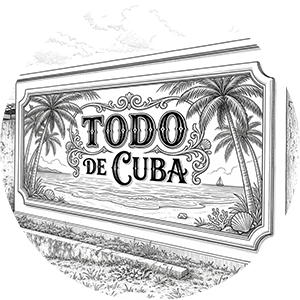
In all of the towns of the “todosphere,” which was a word I coined to encompass the places where the company was doing business – and on his tour, Diego was signing up the little villages and hamlets in Holguín Province one by one – they were putting up “TODO de Cuba” signs. Diego had suggested, and because it was his suggestion we immediately executed it, that each town in the todosphere come up with its own design for a “TODO de Cuba” representation. The local project managers were setting prize money aside and running competitions for local artists to render it. Some of the resulting manifestations were absolutely gorgeous.
The thing was, there were multiple meanings to TODO de Cuba.
The straightforward one was that the TODO Corporation was The Everything Company for Cuba, in that it was built to provide all manner of goods and services the country needed.
On another level, it was a promise. Everything to Cuba. Born from hurricane recovery, TODO was a helping hand. Not just for washing machines and Nike sneakers. Everything.
But the third meaning was the one the regime couldn’t stand but had no ability to defend against. Namely, that TODO de Cuba meant “All of Cuba.” That the whole country should have what the TODO Corporation offered, which was something very different from what the regime could provide.
And TODO de Cuba signs, painted murals, graffiti art, and all kinds of other representations were popping up all over the country.
That and the Diego La Bala song, which was the anthem of his bus tour. Absolutely everybody recognized that the beat and the melody were identical to the Manolo Pendejo song, but the regime couldn’t stop it. How do you make a dembow beat illegal?
Candela gave a speech at the University of Havana denouncing the “encroachment of Yanqui consumerism” and its “vulgar effects on the Cuban people.” Asked about that in San Felipe de Uñas, Diego said, “I get it. He drinks Bucanero.”
Bucanero being the state-owned beer company in Cuba.
Ontiveros suggested a specific day that I come back to Gibara. I understood the time frame, so I took him up on it.
PJ was pissed because she wanted to come as well. But PJ was way too pregnant to travel, and this pregnancy was turning into a little more difficult one than the first time around.
So I kissed her and left her with the three dogs and the kid who liked to play bumper cars with the furniture all day, and I boarded the King Air 350 with Stan and Ferdinand, Trent, and Sam Uribe, heading to Gibara.
And we landed at Diego Maceo International Airport. It seemed that the locals didn’t find PCIA to be all that amusing anymore. They’d used the TODO app on their phones to vote on a proposal somebody had made to officially name the airfield for Diego. He’d done the ribbon-cutting while I was in my exile back home in Florida.
And they’d made a very large concrete and stone mural for the airport entrance sign, which had Diego’s face and the lettering made of little pieces of colored stone embedded into the concrete. It was an extraordinary piece of art.
We were greeted with a little Cuban band playing in the terminal building. They were playing Guantanamera.
“Isn’t that, like, a left-wing song?” asked Stan.
“Nah,” Sam said. “It’s a song for regular folks. The commies stole it from Jose Marti, but they don’t own it.”
“Like Bono said about Helter Skelter,” said Trent. “Charlie Manson stole it from the Beatles. We’re stealin’ it back.”
“Yeah,” I said. “Something like that.”
“Mr. Mike!” said a voice in a very fetching white-and-tan police uniform. “Welcome to Gibara. I’m Ted Ontiveros. I don’t think you met my cousin Luis Contreras. He’s the mayor.”
“¿El alcalde?” I asked, shaking his hand and hoping my Spanish had progressed beyond kindergarten level. “Eso es nuevo. Yo no sabía que Gibara tiene alcalde.”
“It’s all right, Mr. Mike,” said Contreras, in a thick accent. “I speak OK English. I make it easy on you.”
“Gracias,” I said. “When did you guys set up a mayor?”
“We had to,” said Contreras. “Señor Pupo left, and then so did you, so there was really nobody in charge but Mr. Belcher and we don’t want to get in his way. So we have an election and Mr. Diego endorse me. I win.”
“I see,” I said. “What did you do before you were mayor?”
“Well, I used to be… el jefe de obras.”
“That’s the… public works director, right?”
“Yeah,” said Ted. “But now he’s got a plumbing business, and he’s doing great, right, Jose?”
“Sí,” said the mayor proudly.
“I imagine so. And you hired Ted as the police chief?”
“Mr. Diego hired him. But I endorse him.”
We laughed at that, and then Ted asked me if I wanted to ride with him. The others got in a big Ford Expedition that looked like it might have come off a used car lot in Miami recently.
But my ride – Ted’s ride – was familiar.
“I wondered who inherited my F-250,” I said. “Nice paint job.”
“Yeah, there’s a guy who skins vehicles here in Gibara and TODO set him up with the equipment. So he does all our trucks and vehicles at cost and he makes a nice little chunk on the rest of the vehicles in town.”
“Are there many of those?” I asked.
Ted laughed as he turned off the airport access road onto the Caraterra Gibara, where traffic reminded me of all those years I lived in Atlanta.
“What the…” I said.
“We’re gonna get your guy Belcher to build a ring road up the hill west of town,” said Ted, “because this little two-lane thing as the only artery in and out might work in a communist dictatorship, but it definitely won’t work now.”
As we inched into the city, I noticed that the Tanner’s Outpost Tower had been completely refurbished and they were building something connected to it. On the water side of the street, Belcher’s receiving yard had been turned into a boardwalk with a large parking lot. They’d built a pedestrian bridge over the roadway connecting the two.
“I missed all of this,” I said. “What’s going on here?”
“The tower and the building around it are going to be the new TODO Supercenter,” he said, “and the boardwalk is going to be an open-air seaside market.”
“That’s very cool. But where’s the receiving yard?”
“In Vita. They moved all of the freight over there.”
“I need to check on Belcher’s road,” I said. “How’s that going?”
“Like two weeks ahead of schedule. He got more equipment in and they’re hiring pretty much everybody who shows up looking for work. It’s a hell of an operation they’re running down there.”
We were inching toward downtown Gibara, and I could see that building after building had a new roof, a fresh coat of paint; there were plants everywhere, freshly-planted trees in every open space. People were riding around on bikes; there were smiles everywhere. People waved to Ted and me as we drove past.
“Good grief,” I said.
“It’s a whole different place, Mike. And you know, you’re the guy who set all this in motion.”
I didn’t have anything to say to that. Then I noticed that the piers into the bay, which had stood when we first arrived, were all gone. Not just the big pier that Belcher had jackhammered; the little walking pier in the middle and the long eastern pier, too.
In their place was a full-fledged marina. It didn’t have many boats docked there, but I counted more than a dozen. And a couple of them were decent-sized.
“Whoa,” I said.
“Yeah. That’s also new. Next year we’re gonna have a regatta. Here to Exuma and back.”
The traffic snarled again, right in front of the mural with Fidel’s old quote. I’d seen the picture of somebody defacing it with the Ozymandias poem. All of that was gone. The mural had been completely repainted with a very decorative TODO de Cuba sign.
“This is cool,” I said.
“Jose’s daughter did it. She’s 16.”
“What?”
“Yeah. Very talented girl. People love that mural.”
The closer we got to the Hotel Ordoño, the more complete the transformation was. Many of the houses along Calle Donato Marmol, the street the hotel was on, had added a second story with a terrace. People were having siestas on their terraces and waving at us.
The parking space in front of the Hotel still said “RESERVADO EXCLUSIVAMENTE PARA MIKE HOLMAN.” Ted parked the truck in it.
“They won’t mind,” he said. “It’s still your ride. Your room is how you left it. It’s basically a shrine to you at this point.”
“Thanks, Ted,” I told him and grabbed my bag out of the bed.
“See you tonight,” he said.
“What’s tonight?”
“In the ballroom,” said Ted, smiling before heading off to make his rounds.
So I walked through the open door, and…
“¡Señor Mike! You’re back!”
“Hey, Claudio,” I said to my old friend, the concierge. “I understand you saved my room for me.”
“It’s had no guests since you left, Señor Mike. We thought it would be wrong.”
“Well, you have my permission to book it from here on in. Wouldn’t want you guys to lose money on my account.”
Claudio smiled. Then I got mobbed by the rest of the hotel staff as the word got out that I was back.
That night there was a big “Welcome Back” party for me in the Hotel Ordoño ballroom, and there were tons of locals there; most were early adopters of the TODO card and people who had begun transitioning from TODO employees to small business owners as the company was spinning them off and essentially taking a role as a minority silent partner in their businesses. So it felt a little like a Chamber of Commerce mixer. Maybe I was the excuse for these guys to do that. If so, I didn’t mind. And it was nice to see these folks, with whom I’d spent a big chunk of that year living and working, once again.
Especially as happy and optimistic as they were.
Diego put in an appearance as well. He’d taken over a house on the hill north of downtown that had been a rooms-for-rent place, and they’d gutted it and retrofitted it to Essie’s standards. That was where Diego was staying most nights. He’d make forays into the towns all around Holguín every other day, and the days he was home he’d receive visitors from all over. It was very low-key, and he was extremely security-conscious, as he should have been, and he had a helicopter parked in the side yard of the house just in case things got heavy and he needed to bug out.
But at the afterparty, which was on the rooftop terrace of the hotel, Diego sat me down and gave me a serious look.
“Tomorrow morning,” he said, “will be the first real test of this next stage of the project.”
“Hey,” I told him. “This is your show now. We built the infrastructure, and we gave it to you, and we’re here with money and logistics and whatever, but you lead it. So where you go, I follow. This is about Holguín?”
“We’re going into the city,” he said. “And I expect good things to happen. But there’s a chance it could go very wrong.”
“I suppose you’re right,” I said, “but my guess is you’re gonna get the palm frond treatment like you’ve never seen.”
Diego smiled. “I hope so,” he said.
Palm fronds.
When Diego had first arrived in Gibara, the people laid down palm fronds on the pier sort of as a way to mark his path into town. And then he started his tour around the little towns of Holguín Province, and everywhere he went they were doing the same thing. Either they were decorating the stage where he’d speak, or they’d line the road waving them, or they’d drop them alongside his path from the bus to where he would speak or meet people.
It was a Palm Sunday kind of thing. That much was for sure. But when I asked Marisol about it – she was shuttling back and forth from Miami to Gibara and didn’t make this trip because her uncle came down with a bad case of gallstones and she wanted to be with him – she told me there was something else going on.
“These people have nothing, Mike. They love Diego, but they can’t give him anything. What they can do is cut palm fronds from out in the country. They’re available and they’re everywhere, and a royal palm is quintessentially Cuban. So that’s what they offer him.”
Going into Holguín was something of a roll of the dice. Which, admittedly, were loaded in our favor, but they hadn’t been fully tested yet.
On one hand, Holguín was where Diego’s legend was born. He might have been born and raised in Gibara, but Diego’s baseball career had launched as a pitcher with the Holguín Sabuesos — the Holguín Hounds — before defecting and making it to the Red Sox.
The Sabuesos, I found out, are an historically terrible team in the Cuban Serie Nacional, which is the top amateur league in the country and has been since Fidel banned pro baseball in 1961. But when Diego played for them, wielding that 100 mph heat and his devastating slider, it was different. He carried them to a league title in 2002 at 23 years old, going 16-1 with a 1.64 earned run average and posting 210 strikeouts in 125 innings. Not to mention his no-hitter in the final game of the championship series against the Santiago de Cuba Avispas, who were the dominant team of that era.
That city embraced Diego as its own, because he gave them the greatest moment Holguín ever had. But when he defected and made his way to the Red Sox, it was a terrible blow to their morale. And the statue the city commissioned was demolished by the local party boss in retaliation.
Nobody ever took a poll of the folks in Holguín as to whether they wanted the statue done away with.
Diego had sent some scouts into Holguín to check the place out and see if it was safe to go in. And he’d invited Hamza, the provincial party boss, to Gibara for dinner at the house on the hill.
Hamza had played the hardass with Diego. And Diego’s response was to invite him to the TV room, where he played the video of me bribing him with a microwave oven that might or might not have shared a box with five grand Canadian. After that, he said Hamza was more cooperative.
But we didn’t assume we could trust anything Hamza said.
“I trust the people of Holguín more than the mierda in charge,” he said.
And then there was the Army.
Alejandro Mendoza, the general in charge of the Ejército Oriental, the Eastern Army, which was based in Holguín, was known as a pro-regime hardass. Best we could tell, he was still in charge. But Diego was doing his tour all over the province, and the Army wasn’t stopping those buses. Nor was the Army stopping people from traveling to Gibara or the other towns where Diego had pushed TODO into place.
We just didn’t have intel sufficient to know what was happening.
“I’m a little worried,” Hal had said on the last Zoom call before I’d come back down to Gibara, “that they’re lying in wait in Holguín and the minute Diego goes onto their turf they’ll pounce.”
“It’s a concern,” said Diego. “But on the other hand, I can’t just go to every little town in Cuba and not press the population centers. We have to do this now or the momentum will fall off.”
Hal ultimately agreed, though he did say it infuriated him that he couldn’t send a little army of guys with M4s and an armored vehicle or two, just in case. Going in heavy like that was a guarantee that the regime would go kinetic on us, though.
So when we loaded the buses, there was an element of risk inherent in the trip to Holguín.
I sat with Stan and Sam for the ride into Holguín. It was only an 18-mile distance between the two towns, though on the NR 221 that ride took us nearly an hour. We were setting up on a sports field in the middle of town, a big open area more or less next door to Calixto Garcia Stadium, the baseball park where Diego’s La Bala legend was born and just down the street from the provincial communist party headquarters.
We had no firm idea what was waiting for us. But Stan and Sam were talking excitedly anyway.
“Wait, hang on,” I said. “I thought you guys weren’t going to get a deal done on the sugar mill and the rum distillery.”
“Well,” said Sam, “it’s still all theoretical, because you’ve got to have a government in place first, but we think we have something that’s gonna work.”
“Two distilleries,” said Stan. “Two brands. Actually, five brands under two labels. One is Cuba Rica, the other is Santa Cruz. We’ll do three brands of the agricole and two of the Santa Cruz.”
“Well, that’s all right,” I said.
“And I got my Dad to set up a deal with Pierce,” said Sam. “He gets the Vita port, and we just take a piece of it. It’s a lot more valuable if you’ve got Sentinel Ports Management running it.”
“We just need to have somebody in charge that we can get to stamp the deal, and we’re rolling,” said Stan.
The terrain along the NR 221 changed from hillsides and scrub brush to farmlands and then what passed for suburbs in Cuba, and then we came into the city of Holguin itself.
And there were smiles all around.
People were lining up on the street waving palm fronds and cheering.
“Oh, there we go,” said Sam. “Exactly the way we planned it.”
People had painted “TODO de Cuba” on half the walls in town. I noticed that Holguín, which had a population of around 350,000, looked as beat-up as Gibara had when we arrived. Buildings had descended into rubble, the streets were pockmarked, power lines were down where people had cut the conductor for scrap metal – there wasn’t much danger of getting electrocuted, seeing as though the power was out 22 hours a day.
We kept waiting for the police or the army to stop the convoy. They didn’t. And when we got off the buses at the poorly-kept sports field where a stage had been set up, and big TVs connected to generators were playing highlights from Diego’s baseball career, I looked out across the field, and there had to be…
Fifty thousand people? Eighty?
I’m not good with crowd counts.
All I know is they went through 976 kegs of La Bala beer that day. Diego had made sure there were a thousand on hand. They almost drank it all.
And he gave a speech which didn’t have a word of politics in it but was so subversive I could hear heads exploding all the way in Havana. Diego talked about family, about home, about the joy of life, about the adventure that his career had been, and how his heart had never left Cuba and never would, but how grateful he was that the Lord had let him follow his dreams.
None of it was political. Everybody there could see it was all a full-frontal attack on the regime and the shitty quality of life it afforded to the Cuban people.
There weren’t a lot of dry eyes on that field. And it wasn’t that the crowd was drunk on Diego’s beer.
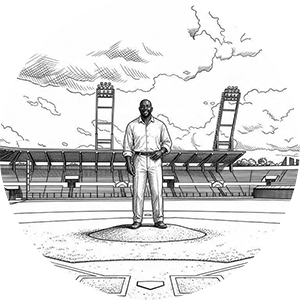
After his speech, he walked through the throng, shaking everybody’s hand that he could, on the way to the baseball stadium. They let him go in, alone, in silence.
At least at first.
And as he stood on the pitcher’s mound, people began filtering in. That’s when you could hear it.
“Boom-badaba, Boom-badaba, Boom-Di-E-Go, Boom-La-Ba-La.”
It started quietly. Then it built. As people filtered in, overcrowding the stadium and singing his song, I could see the tears in his eyes.
He was home. And nothing about the love affair Holguín had with Diego Maceo had changed.
Coming Wednesday, September 9: Episode 9 of Scott McKay’s The Necessary Men.
Catch up and follow along at “The Mike Holman Novels at The American Spectator.” Signed copies are available for pre-order at MikeHolman.com!
Read more September Vacation Tribes
About the Author