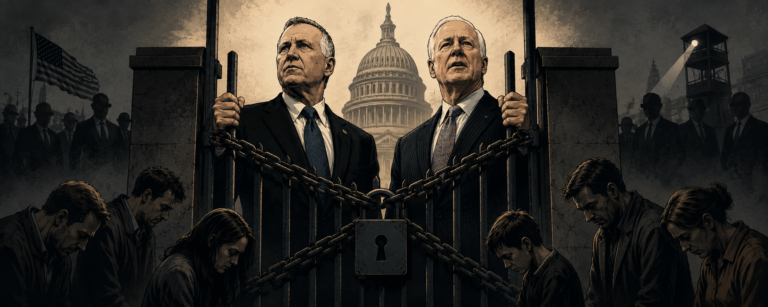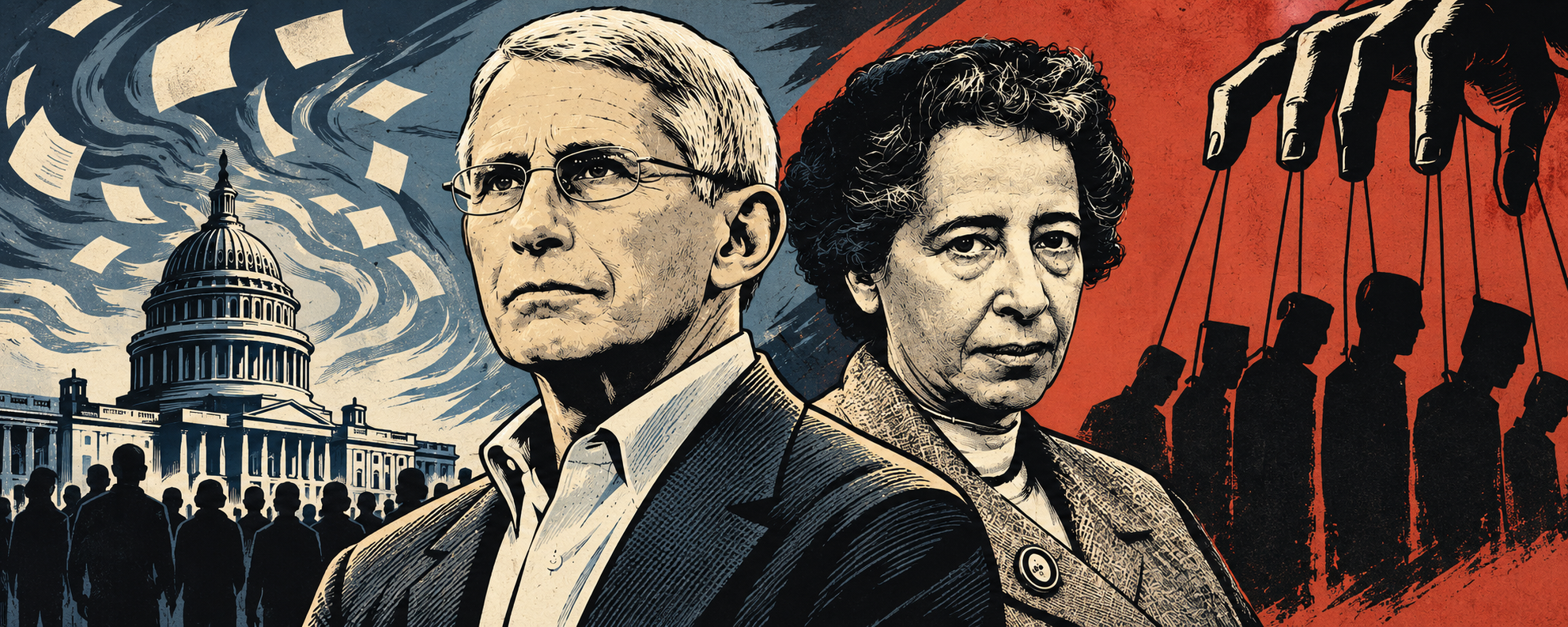
In the most recent issue of The New Yorker, there is a long, reflective essay on Hannah Arendt, one of the 20th century’s most important analysts of the forces that give rise to totalitarianism. The essay emphasized Arendt’s most important insight on the danger of pervasive lying by government officials. She warned that when the government tells lies, the real risk is not that citizens may begin to believe falsehoods, but that they may lose the ability to believe anything at all.
Read more The Endless Horizon: Why Generations of Landlocked Appalachians Keep Coming Back to Erie
When government official narratives shift constantly, and when elite authorities rewrite their own narratives — repeatedly reversing their own public statements — people become confused and unable to judge what is real from what is false. They begin to become susceptible to whatever authority speaks most confidently in the moment.
This renewed attention to Arendt is especially timely as a United States Senate Committee is currently reassessing the government’s response to the COVID era and the role that Dr. Anthony Fauci played in shaping public perception. (RELATED: Fifth Amendment Fauci’s Narcissism Destroyed Faith in Scientific Methodology)
Fauci, the long-time head of the National Institute of Allergy and Infectious Diseases, and the public face of America’s COVID policies, became the symbolic leader of pandemic policy for the country. Throughout the pandemic, Fauci’s statements carried the most weight, and the resonance of Arendt’s warning becomes evident when we turn to Fauci’s role in shaping the ever-evolving narrative surrounding COVID. His constant reversals in prescriptive policy created the Arendtian dynamic of disorientation about what is true. (RELATED: Was Anthony Fauci Too Powerful?)
Fauci routinely replaced one narrative with another, contradicting what he had previously insisted was true. His statements carried enormous weight, and he repeatedly walked back earlier positions on masks, school closures, social distancing, and school reopening.
Originally, he promised that we needed to take “two weeks to flatten the curve” by closing schools, businesses, and churches (but not liquor stores and cannabis shops) for 14 days. Two weeks stretched into months during the spring of 2020, and then schools remained closed for the following year when most students had to endure virtual learning as teachers’ unions demanded that schools remain closed. The unions had Fauci’s full support as he noted in his own diary that he urged both the mayor of New York City and the governor of California to close the schools — even though he also acknowledged that COVID posed little risk to students.
From an Arendtian perspective, COVID was not only a medical crisis; it was an epistemological one also. Arendt argued that totalitarianism begins with the destruction of a shared reality. When officials like Fauci treat truth as malleable — changing it to fit political needs, union demands, or bureaucratic convenience — we all begin to lose the capacity to judge. This is the precondition for what Arendt called the “totalitarian impulse,” a moving toward governance by confusion, fear, and moral certainties instead of the truth.
Read more Scott McKay’s The Necessary Men — Episode 3: La Bala de Gibara
Her famous quote, which is excerpted in The New Yorker article, perfectly captures the Faucian moment: “A lying government which pursues different goals at different times has constantly to rewrite its own history. That means that people are deprived not only of their capacity to act, but also of their capacity to think and to judge. And with such a people you can then do what you please.”
Declining the vaccine became a sign of selfishness or moral defect as the unvaccinated became social pariahs — the true scapegoats in our society.
In Arendt’s Origins of Totalitarianism, she observes that bureaucratic despotism hollows out legislatures as executives rule by decree. Like a dictator, Fauci became the “infallible leader” whose words could never be questioned and whose lies were turned into a functioning reality. We all had to accommodate ourselves to Fauci’s fictions — some of us with a growing cynicism as he denigrated President Trump and publicly insulted one of our own Senators, telling him that the senator “did not know what he was talking about.”
Fauci then turned his ire on those who were skeptical about the vaccines by deriding them and dehumanizing them — advising businesses and schools to bar the unvaccinated from their spaces. Careers were destroyed, and service members in all branches of the military who refused the vaccine were discharged — losing pensions, military housing and medical benefits for their families as the unvaccinated became the country’s scapegoats. (RELATED: The Wages of COVID — Part One)
Societies under stress instinctively search for a group to blame — the surrogate victim who can absorb collective fear and frustration. Since Fauci was still viewed as authoritative and beyond criticism, and he continued to deceptively claim that the virus emerged spontaneously from a wet market in China, the blame for the continued COVID cases shifted to the unvaccinated, who became viewed as the real reason why normal life had not returned. The unvaccinated became the symbolic obstacle to reopening schools, churches, and businesses. Vaccination then became a marker of virtue. Declining the vaccine became a sign of selfishness or moral defect as the unvaccinated became social pariahs — the true scapegoats in our society.
Arendt reminds us that the constant revisions of official truth throughout the COVID crisis left citizens unable to judge at all. When arrogant authorities treat truth as flexible, and scapegoats are created from within our own families, friends, co-workers, and neighbors, to absorb public frustration, the conditions Arendt identified as precursors to totalitarianism emerge. We did not become a totalitarian society during those dark days, but Arendt shows how quickly democratic judgment can deteriorate when truth becomes second to political expediency. Her work resonates today because it teaches us to recognize the danger before societal divisions and fearful acquiescence to government power harden into something far more destructive.
Read more From DSA to Fishback: Why Young Voters Feel Disenfranchised
READ MORE from Anne Hendershott:
Has Support for Israel Become Gen Z’s Scapegoat?
The Borrowed Life of Gavin Newsom
Keeping Up With the Congresswoman
About the Author