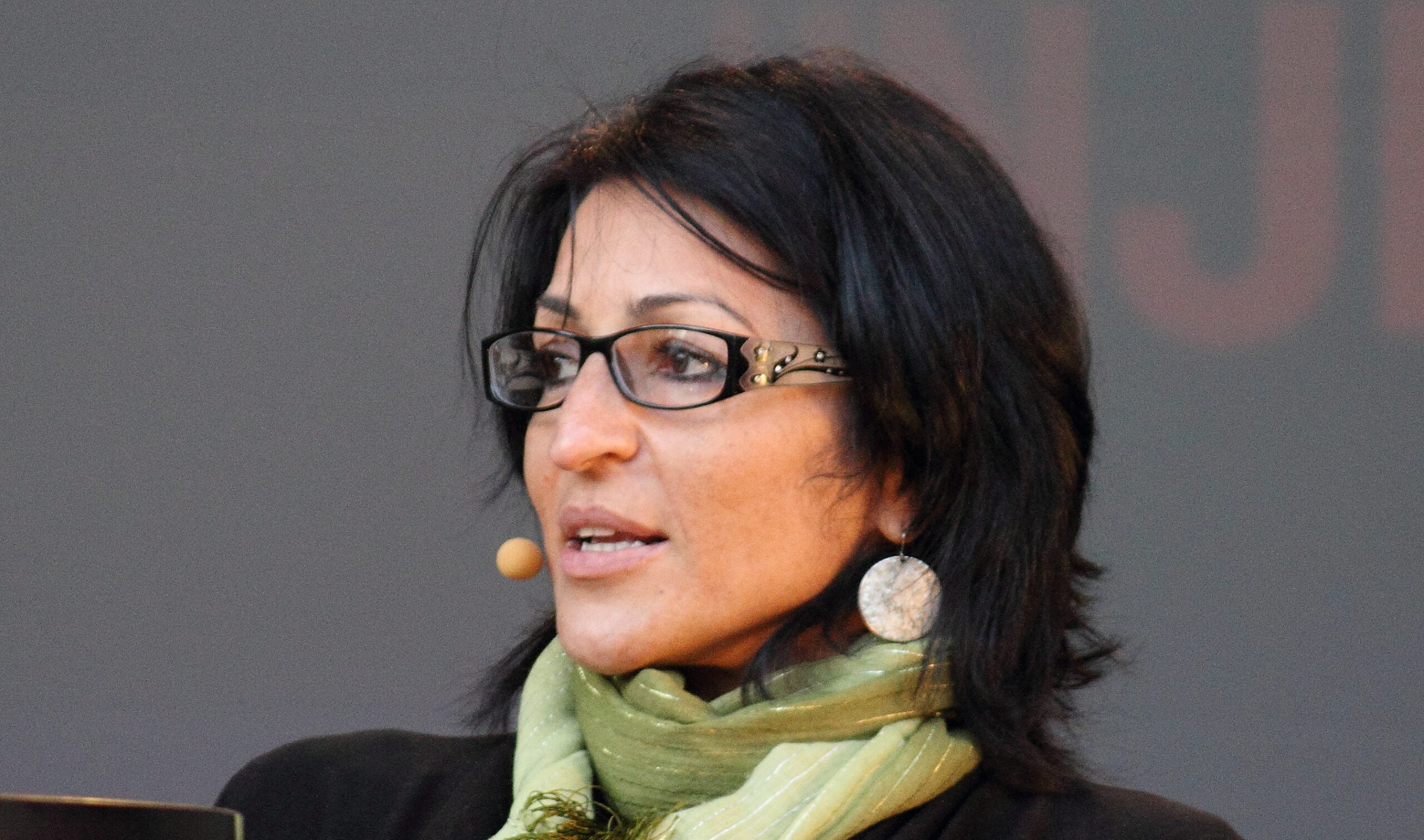
Susan Abulhawa appears to understand that her public rhetoric has made her a liability.
Read more California After George Floyd: What Happened to Black Homicide?
In a recent interview, the Palestinian-American novelist discussed how people connected to her have distanced themselves, including Zohran Mamdani, who publicly called her rhetoric “patently unacceptable” and “reprehensible.” Abulhawa may disagree with that judgment, but she clearly understands the consequence: association with her has become politically damaging, even for people who broadly share her views on Israel.
At this point, Abulhawa has made her position unmistakable. Simon & Schuster, Atria Books, and Pande Lecture Management should make theirs equally clear.
That recognition has not caused her to reconsider her language. She has continued using dehumanizing rhetoric about Jews and Israelis, promoting antisemitic ideas about Jewish power and embracing political violence.
Yet while political allies are stepping back, literary institutions are moving forward.
Atria Books, an imprint of Simon & Schuster, plans to republish two of Abulhawa’s novels, Mornings in Jenin and The Blue Between Sky and Water, on September 29, 2026. In promotional material announcing the release, Simon & Schuster praised Abulhawa’s “signature lyrical voice” and “nuanced characters.”
The question is no longer whether publishers know who Abulhawa is. Her record is public, extensive and ongoing.
The question is how much antisemitic rhetoric an author must produce before literary institutions stop describing her as merely “controversial.”
The word “controversial” can describe a writer who takes provocative political positions or challenges accepted ideas. It should not become a polite substitute for repeated dehumanization.
Abulhawa has described Israelis and Jews as “demons,” “monsters,” “parasites,” “ghouls” and “cockroaches.” She has complained about the supposed “extreme overrepresentation of Jews” in government, media, and culture. She has spoken about “dual loyalty” and “Jewish supremacist vampires.”
In a recent post, she declared that Europe’s Holocaust had “lost its meaning,” complained about “holocaust whining” and said the world was tired of hearing about it. In another post, she suggested that Jewish behavior helped produce the conditions that led to the Holocaust and warned that history could repeat itself.
These are not difficult observations about Israeli policy. They draw from familiar antisemitic ideas portraying Jews as overpowered, disloyal, parasitic, and collectively responsible for the hostility directed toward them.
Abulhawa also continues to glorify violence. During a May 2026 public conversation in Slovenia, she said she “wholeheartedly” embraced armed and violent resistance and described it as “the only way” forward. More recently, she praised Kozo Okamoto, a participant in the 1972 Lod Airport massacre that killed 26 people, as an embodiment of solidarity and love.
None of this is hidden in an obscure archive. It is part of her active public identity.
There is an important difference between refusing to remove an existing book and deciding to relaunch it.
Simon & Schuster is not simply allowing Abulhawa’s novels to remain available. Its Atria imprint is preparing new editions, issuing promotional material and presenting the books to a new generation of readers.
Read more CIA Files Raise New Questions About Smartmatic and Venezuela’s Elections
That requires active decisions. Editors approve the project. Publicists prepare campaigns. Sales teams approach booksellers. Review copies are distributed. Interviews and appearances may be arranged. The author’s reputation is packaged alongside the work.
Calling that process neutrality is misleading.
Publishers do not endorse every opinion held by every author they publish. But an active republication campaign still gives an author renewed prestige, attention, and institutional legitimacy. When the author is simultaneously using dehumanizing language about Jews and celebrating political violence, the publisher should be able to explain the standards behind that decision.
Did Simon & Schuster review Abulhawa’s public statements before agreeing to republish her books? Did Atria reconsider after her latest Holocaust remarks? Is there any language directed toward Jews that would cause the publisher to withdraw its promotional support?
So far, the public has received praise for her “lyrical voice,” but no meaningful explanation of where the publisher draws the line.
The same questions apply to Abulhawa’s representatives.
She is represented for speaking engagements by Pande Lecture Management, an agency affiliated with Pande Literary. PLM says it works with universities, libraries, nonprofits, and other institutions to create events that deepen understanding and inspire change. It promotes speakers as voices capable of bringing compassion and imagination to conversations about equity, belonging and pluralistic society.
Those words are difficult to reconcile with the rhetoric of a speaker who repeatedly describes Jews and Israelis as demons, parasites, and monsters.
A speakers’ agency does more than maintain a name on a website. It helps turn notoriety into bookings, fees, and institutional access. It gives universities and cultural organizations a professional channel through which to present Abulhawa not simply as a novelist, but as a voice on justice, identity, and human rights.
PLM should therefore answer a basic question: does it believe Abulhawa’s language is compatible with the values it claims to promote?
Universities, libraries, and nonprofits considering her for events should ask the same question before placing her on their stages.
Abulhawa has now seen the consequences of her rhetoric. She knows that people associated with her may face questions about that relationship. She knows Mamdani publicly condemned her statements. She knows her posts have drawn growing scrutiny.
She has chosen to continue. That is her decision. But publishers, agents, and cultural institutions are also making decisions.
They are choosing whether to promote her work, arrange her appearances, and present her as a credible participant in conversations about justice and belonging. Those choices cannot be separated from a public record that is not only offensive but actively escalating.
Of course her books should be available to those who want them. The issue is whether institutions should continue investing their money, prestige, and professional resources in actively elevating her.
Protect Our Campus, a nonpartisan organization that documents antisemitism, extremism and institutional accountability concerns in academic and public-facing spaces, has contacted Abulhawa’s publishers and representatives to ask why they continue to promote her despite her public record. None has responded.
At this point, Abulhawa has made her position unmistakable. Simon & Schuster, Atria Books, and Pande Lecture Management should make theirs equally clear.
Read more Why All Leftism Is Now Far Left
READ MORE from Anna Miller:
Academic Freedom and Public Accountability at Rutgers
Columbia Learns Nothing
Qatar’s Billion-Dollar Bet on American Universities
About the Author